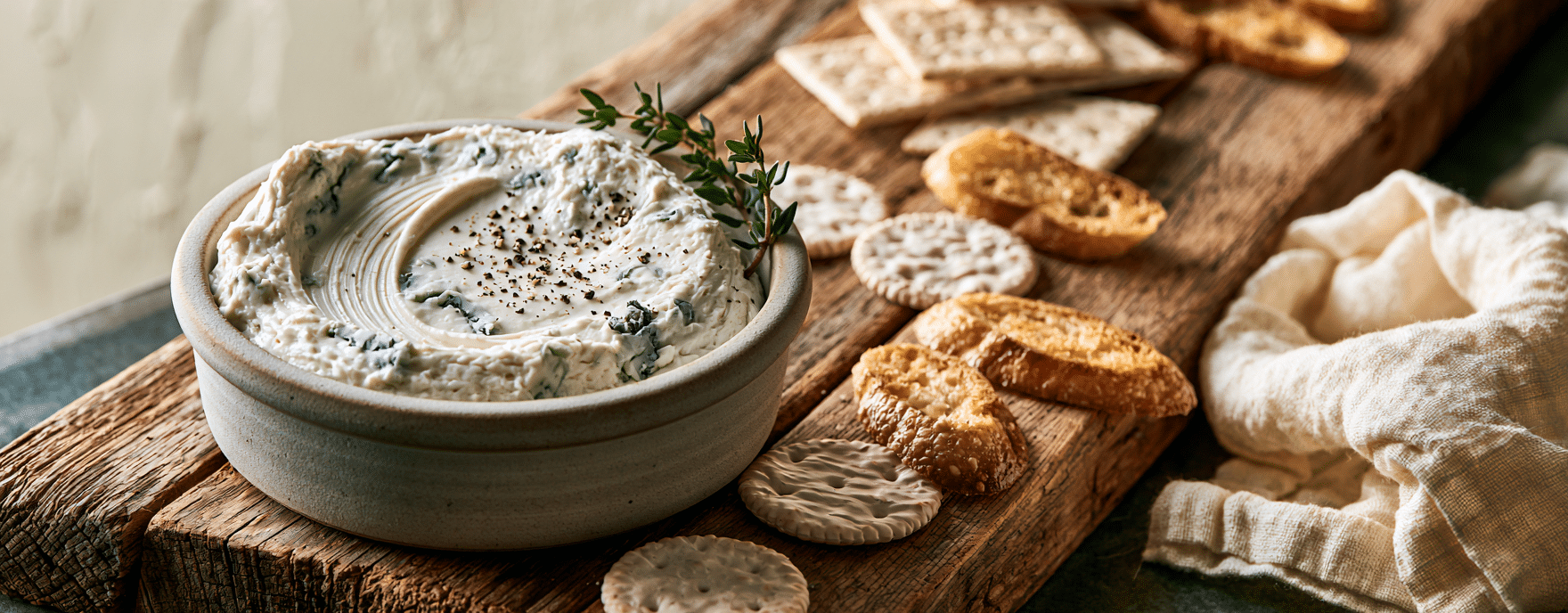
Blue cheese mousse is a spreadable, creamy topping made from blue cheese, Greek yogurt, and whipped cream cheese — mixed together in about five minutes with no cooking required. It gives you precise control over how much blue cheese flavor lands in each bite, which a plain crumbled slice never does. One bowl, one spoon, done.
What makes this version work
The real trick here is the combination of three dairy textures rather than just one. Blue cheese alone is crumbly and sharp; Greek yogurt thins it and adds a mild tang; whipped cream cheese pulls everything into a smooth, spreadable consistency that clings to a bun instead of falling apart. Because the cream cheese is already whipped, it folds in without any beating — which means you get a uniform mousse without overworking it into something gluey. That balance of textures is what makes this spread instead of crumble.
About the ingredients
- Blue cheese: Gorgonzola dolce is milder and blends smoothest. Roquefort is sharper and saltier — taste before adding pepper if you go that route. Pre-crumbled blue cheese works fine here since it’s being mixed anyway.
- Non-fat Greek yogurt: Non-fat keeps the mousse light and lets the blue cheese flavor come through clearly. Full-fat Greek yogurt makes it richer but noticeably thicker — you may need to stir a little longer.
- Whipped cream cheese: Do not substitute block cream cheese straight from the fridge. It won’t blend smoothly at cold temperature and you’ll end up with lumps. If whipped isn’t available, let block cream cheese sit at room temperature for 30 minutes first.
What can go wrong
- Mousse turns watery after sitting: Greek yogurt releases liquid over time. Give it a quick stir before using. If it’s been in the fridge overnight, drain off any pooled liquid and stir again — it comes back together.
- Too salty to eat: Blue cheese and cream cheese are both already salted. Add black pepper at the end and taste first before reaching for any salt.
- Flavor is too sharp or too mild: Blue cheese varies a lot by brand. Mix in half the blue cheese, taste, then add more until it hits where you want it. You can always add; you can’t take it out.
- Spread slides off the bun: Apply the mousse to the cut side of a lightly toasted bun. The toasted surface grips it. A cold, soft bun lets it slide straight out on the first bite.
- Grainy texture: This usually means the cream cheese was too cold. Let all three ingredients sit at room temperature for 10 minutes before mixing and the mousse will come together smoothly.
Make-ahead notes
This mousse keeps well in an airtight container in the fridge for up to four days — the flavor actually sharpens a little by day two, which most people prefer. Press a piece of plastic wrap directly onto the surface before sealing the container to slow any skin from forming. Freezing is not recommended; the Greek yogurt separates on thawing and the texture doesn’t recover. There’s no reheating needed — serve it straight from the fridge or let it sit out for five minutes if you want it slightly softer and easier to spread.
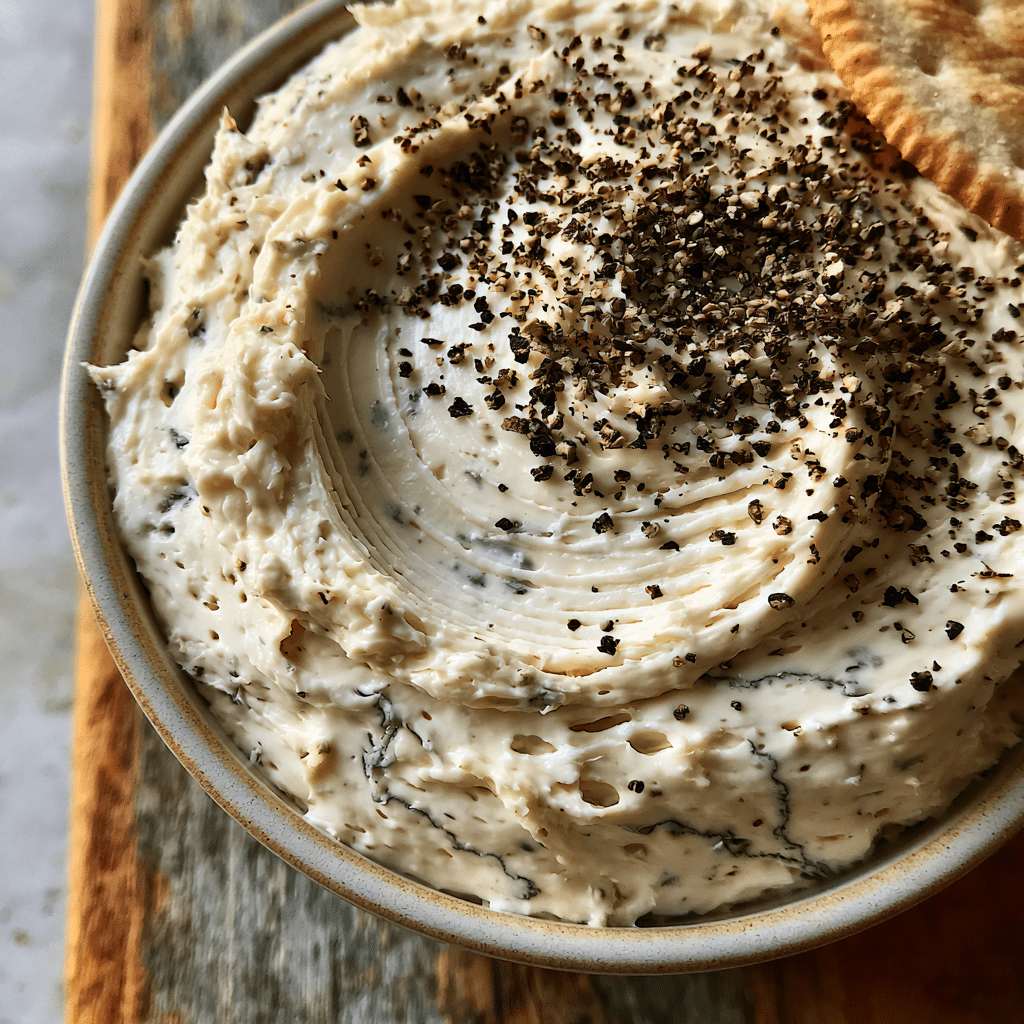
Blue Cheese Mousse

Equipment
- Medium mixing bowl
- Fork or spoon
- Airtight storage container
- Plastic wrap
Ingredients
- ½ cup blue cheese crumbled, 60g
- ½ cup Greek yogurt non-fat, 120g
- ½ cup whipped cream cheese 115g
- 1 pinch freshly cracked black pepper to taste
Instructions
- Add the crumbled blue cheese, Greek yogurt, and whipped cream cheese to a medium mixing bowl.½ cup blue cheese, ½ cup Greek yogurt, ½ cup whipped cream cheese
- Stir with a fork or spoon until the mixture is smooth and evenly combined — about 1-2 minutes. Avoid overworking; stop as soon as no large lumps of blue cheese remain.
- Season with freshly cracked black pepper to taste.1 pinch freshly cracked black pepper
- Serve immediately or transfer to an airtight container, press plastic wrap directly onto the surface, and refrigerate for up to 4 days.
Notes
Nutrition
Common questions
Can I use regular yogurt instead of Greek yogurt?
Regular yogurt will make the mousse noticeably thinner and harder to spread. Greek yogurt is strained, so it’s thick enough to hold the mixture together — if regular is all you have, strain it through a cheesecloth or fine mesh sieve for 30 minutes first.
How much mousse should I put on each burger?
About two tablespoons per burger is a good starting point — enough to taste clearly without overwhelming the patty. Because it’s spreadable, you can adjust bite by bite, which is exactly the point of using a mousse instead of a slice.
Does this work on veggie burgers or only beef?
It works on any burger. The mousse pairs especially well with beef patties and with hearty veggie burgers like black bean or portobello, where the bold blue cheese flavor has something to push against.
My blue cheese has a very strong smell — is it still good?
Blue cheese is supposed to smell pungent; that’s the mold culture doing its job. Check for any pink or black discoloration or a slimy texture — those are signs it’s turned. A strong smell alone is normal.
Can I make this less tangy for people who don’t love blue cheese?
Yes — use less blue cheese and increase the whipped cream cheese to compensate. Skip the non-fat Greek yogurt and use full-fat instead, which softens the sharpness. The result is milder but still has enough blue cheese character to be worth making.
More burger recipes to try
- Angus Bacon Guacamole Burger
- Ultimate Guacamole Bacon Burger
- Mushroom Swiss King Copycat
- Pretzel Bacon Pub Chicken