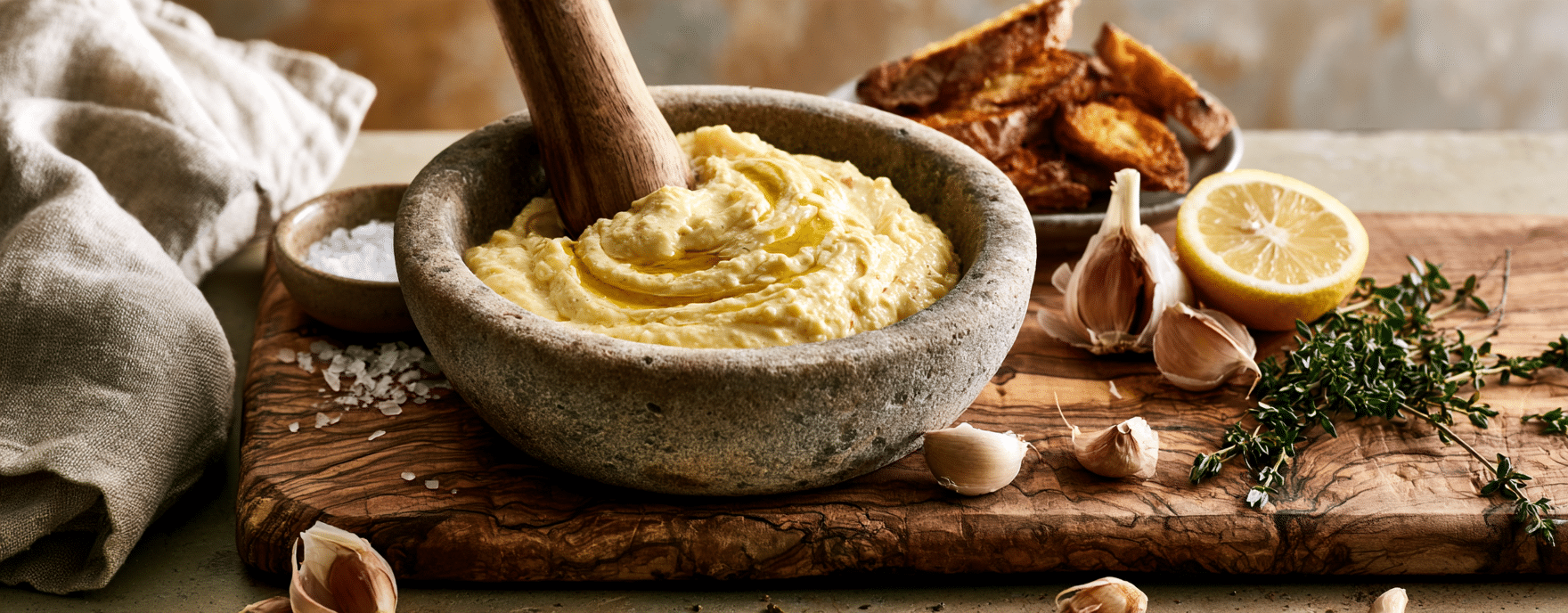
Aioli is a thick, garlicky emulsion sauce made from just garlic, egg yolks, and olive oil — no mayonnaise shortcuts. It takes about 10 minutes and makes a serious upgrade to burgers, fries, or anything else on the plate.
Why this recipe works
Two things make this aioli succeed. First, grinding the garlic and salt together into a completely smooth paste in the mortar gives the emulsion a stable, uniform base — any chunks of raw garlic will create weak spots where the sauce breaks. Second, adding the olive oil in tiny drops at the very start forces the fat to disperse evenly through the egg yolks before it has a chance to pool and separate. Once the mixture thickens and turns opaque, you can add the oil slightly faster, but those first few tablespoons are what determine whether you end up with a sauce or a greasy mess.
Mistakes to avoid
- Using cold eggs straight from the fridge. Cold egg yolks resist emulsification. Let them sit at room temperature for 15 minutes before you start — the sauce comes together much more reliably.
- Using a strongly flavored extra-virgin olive oil. A robust, peppery EVOO can turn the finished aioli bitter. A mild or light olive oil gives you clean garlic flavor without the harsh edge.
- Rushing after the first split. If the sauce breaks and turns greasy, don’t keep stirring — you’ll make it worse. Start fresh with a new egg yolk in a clean bowl and slowly work the broken mixture back in, drop by drop.
- Skipping the lemon juice entirely. A tablespoon or two of lemon juice at the end doesn’t just add flavor — it slightly loosens the texture, making the aioli easier to spread straight from the mortar.
- Making it too far in advance without covering it properly. Raw garlic oxidizes fast. Press plastic wrap directly onto the surface of the aioli before refrigerating, or the top layer will discolor and pick up fridge odors.
Leftovers and meal prep
Store aioli in an airtight container in the fridge for up to 3 days — press plastic wrap directly onto the surface to prevent a skin forming. Give it a quick stir before serving, as it can firm up when cold. Do not freeze aioli; the emulsion breaks on thawing and you’ll end up with a separated, oily liquid that can’t be rescued. Because this recipe makes enough for 4 servings, it’s easy to scale up to a full cup-and-a-half batch at the start of the week and use it across multiple meals without any extra effort.
Classic Garlic Aioli Recipe (Mortar & Pestle Method)

Equipment
- Mortar and pestle (at least 2-cup capacity)
- Small measuring jug or squeeze bottle (for controlled oil drizzling)
- Airtight storage container
- Plastic wrap
Ingredients
- 3 cloves garlic about 10g, peeled
- ½ teaspoon fine sea salt
- 2 medium egg yolks at room temperature
- 1 cup extra-virgin olive oil 240ml
- 1-2 tablespoons fresh lemon juice optional, for brightness
Instructions
- In a mortar and pestle, grind up the garlic and salt to a very smooth paste, don’t cheat here; it has to be very smooth.3 cloves garlic, 1/2 teaspoon fine sea salt
- Add one egg yolk to the garlic paste and stir continuously with the pestle until fully incorporated and the mixture is thick and smooth. Add the second egg yolk and repeat. Then begin adding the olive oil a few drops at a time, stirring constantly with the pestle. Do not rush — the first 2-3 tablespoons of oil must go in drop by drop to establish the emulsion. Once the mixture is noticeably thick and opaque, you can increase to a thin, steady stream. Continue until all the oil is incorporated.2 medium egg yolks, 1 cup extra-virgin olive oil
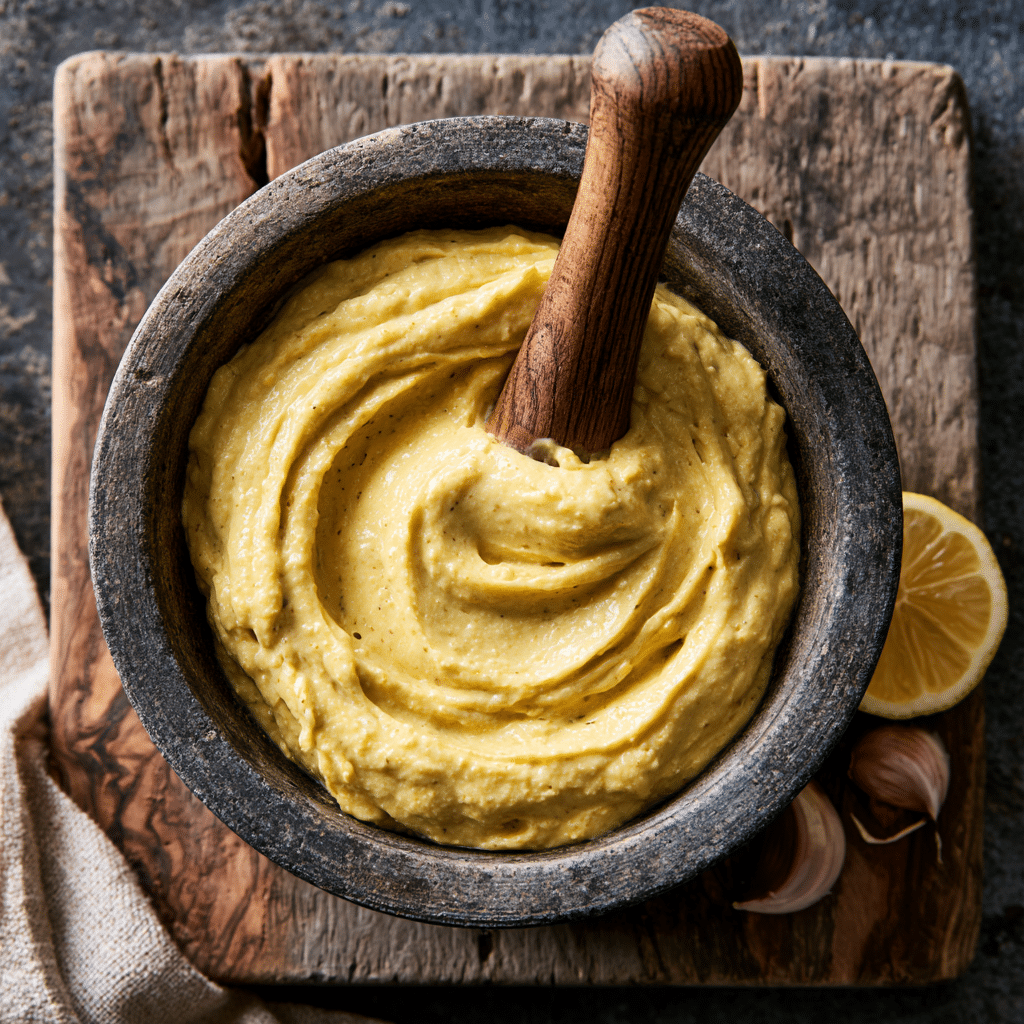
- The finished aioli should be thick enough to hold the pestle upright. If it seems too thick, stir in a few drops of water to loosen it slightly.
- Stir in 1-2 tablespoons of fresh lemon juice if desired — it brightens the flavour and helps the aioli hold its emulsion longer. Serve immediately or transfer to an airtight container and refrigerate for up to 3 days.1-2 tablespoons fresh lemon juice
Notes
Nutrition
FAQ
Can I make aioli with a whisk or blender instead of a mortar and pestle?
A whisk works, but you’ll need to mince the garlic extremely fine first and then mash it with the salt using the flat of a knife until it forms a paste. A blender or food processor can technically do the job, but the volume of ingredients here is too small for most machines to emulsify properly — you’ll likely end up with a thin, uneven sauce.
Is it safe to eat aioli made with raw egg yolks?
Raw egg yolks carry a small risk of Salmonella. To reduce that risk, use the freshest eggs you can find, keep the finished aioli refrigerated, and consume it within 3 days. If you’re serving anyone who is pregnant, elderly, or immunocompromised, use pasteurized eggs instead.
My aioli turned out very thick — is that right?
Yes, properly made aioli is very thick — thick enough to hold a pestle upright, as the recipe notes. If it’s thicker than you’d like for spreading on a burger, stir in a teaspoon of lemon juice or a few drops of water to loosen it slightly without breaking the emulsion.
Can I use pre-minced jarred garlic instead of fresh cloves?
Fresh cloves are strongly recommended here. Jarred garlic is often stored in citric acid or water, which changes the flavor and adds moisture that can interfere with the emulsion. Since garlic is one of only three ingredients, the quality difference is noticeable in the final sauce.
How do I use aioli on a burger without it sliding off?
Spread it on the cut side of the top bun rather than directly on the patty — it grips the bread and stays put better that way. Because aioli is much thicker than standard mayo, a thin, even layer goes a long way and won’t make the bun soggy.
What to cook next
- Animal Style Burger Recipe
- Ultimate Avocado Bacon Smash Burger
- Angus Bacon Guacamole Burger
- Halloumi King Burger Homage