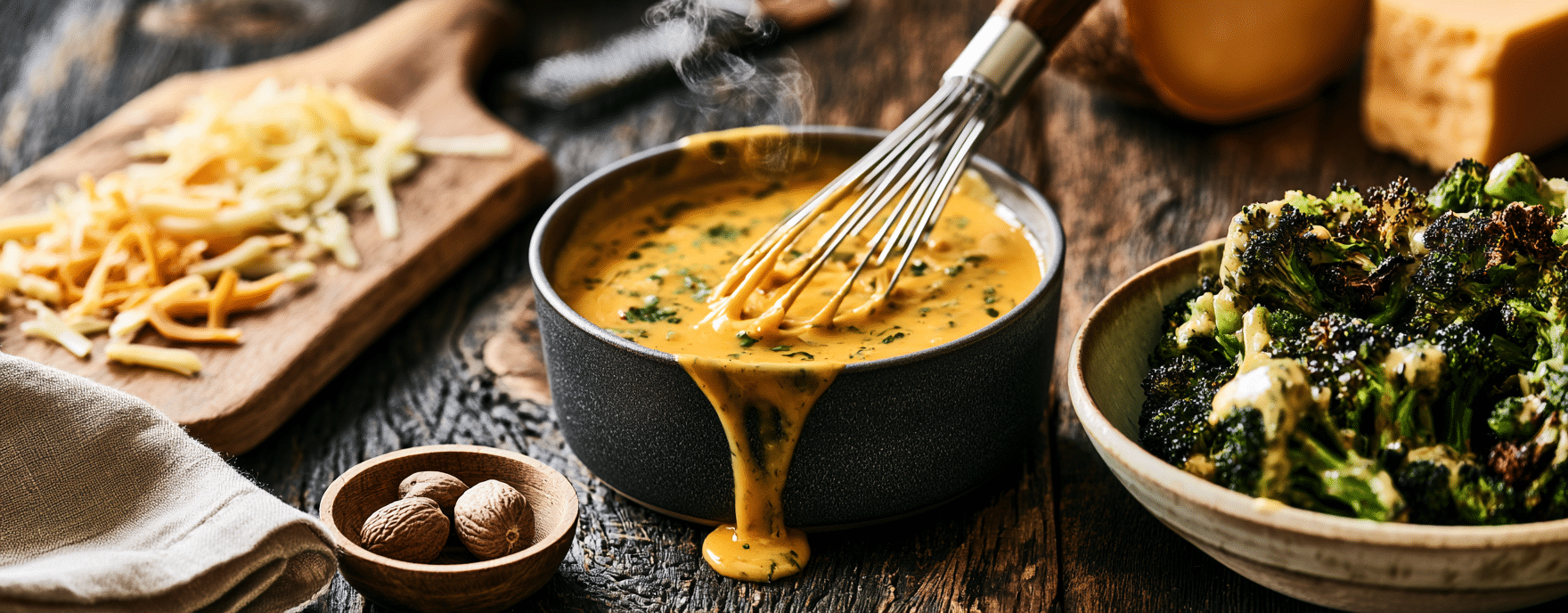
This is a three-cheese sauce — cheddar, gouda, and fontina — built on a heavy cream and cream cheese base. It comes together in one saucepan in about 25 minutes, and it skips every processed ingredient a standard queso relies on. If you want real cheese flavor on a burger without the neon-orange stuff, this is the straightforward way to get it.
Why this recipe works
The cream cheese does two jobs at once: it stabilizes the sauce so it doesn’t break into greasy puddles, and it thickens the base before the grated cheeses even go in. That means you don’t need a roux, a double boiler, or a second pan. Keeping the heat at a steady medium — never letting it boil — is what holds the emulsion together. Boiling forces the fat to separate from the proteins, and once that happens the sauce turns grainy and no amount of whisking fixes it. Low, patient heat is the whole game here.
Mistakes to avoid
- Adding cold cheese straight from the fridge. Cold shredded cheese hits the warm cream and drops the temperature fast, which causes clumping. Let your grated cheeses sit out for 10 minutes before they go in.
- Using pre-shredded bags. Bagged shredded cheese is coated in anti-caking starch, which makes the finished sauce gritty. Grate the blocks yourself — it takes two minutes and the texture difference is obvious.
- Skipping the fontina because it’s harder to find. Fontina is the meltiest of the three cheeses here; it’s what gives the sauce its smooth, pourable consistency. Swap it out and the sauce gets noticeably thicker and stickier. Most grocery stores carry it near the specialty cheese section.
- Reducing too long. The sauce thickens quickly once all three cheeses are melted. Pull it off the heat as soon as it coats the back of a spoon — another two or three minutes past that point and it gets too thick to pour cleanly over a burger.
- Salting before you taste. Cheddar and gouda both carry significant salt. Taste the finished sauce before adding anything — in most cases it needs nothing extra.
Make-ahead notes
The sauce keeps in an airtight container in the fridge for up to four days. It will solidify completely when cold, which is fine — reheat it gently in the same saucepan over low heat, adding a small splash of heavy cream (a tablespoon or two) and whisking as it warms. It comes back together cleanly without going grainy. Freezing is not recommended: the emulsion doesn’t survive the freeze-thaw cycle and the sauce will separate when reheated, leaving an oily mess that won’t whisk back into shape.
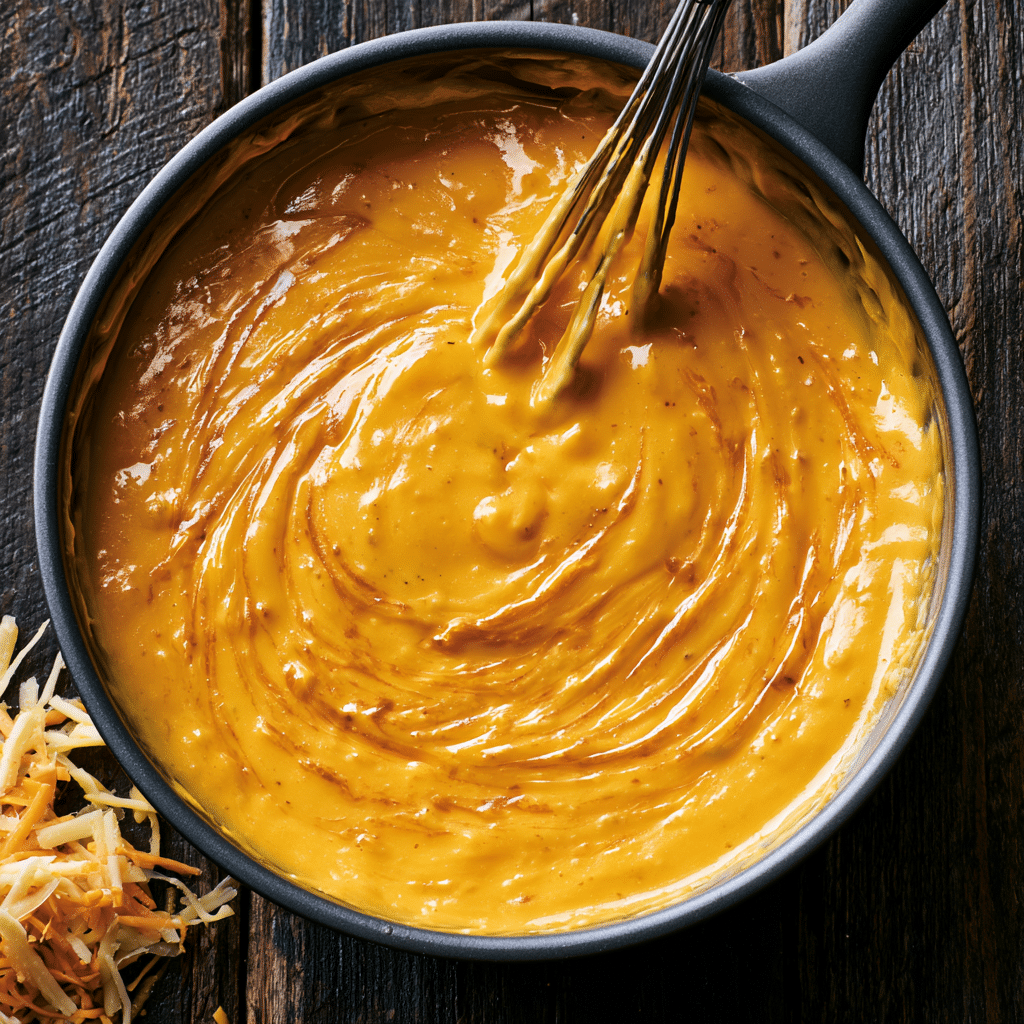
Three-Cheese Paleo Sauce (Cheddar, Gouda & Fontina)

Equipment
- Small saucepan (2-quart / 1.9L)
- Whisk
- Box grater
- Measuring cups and spoons
- Airtight storage container
Ingredients
- 4 ounces cream cheese organic, full-fat, 113g
- 1 cup heavy cream pastured, 240ml
- 1 cup cheddar cheese finely grated, 113g
- 1 cup gouda finely grated, 113g
- ½ cup fontina finely grated, 56g
- ⅛ teaspoon nutmeg freshly ground, 0.3g
Instructions
- Grate the cheddar, gouda, and fontina on the fine side of a box grater. Combine all three cheeses in a bowl and set aside.1 cup cheddar cheese, 1 cup gouda, 1/2 cup fontina
- Cut the cream cheese into small cubes (about 1-inch / 2.5cm pieces) so it melts evenly.4 ounces cream cheese
- Pour the heavy cream into a small saucepan over medium heat. Add the cream cheese cubes. Heat until the cream just begins to simmer — small bubbles around the edges, never a full boil.1 cup heavy cream, 4 ounces cream cheese
- Whisk constantly until the cream cheese is fully dissolved and the base is smooth, about 2-3 minutes.4 ounces cream cheese
- Reduce heat to medium-low. Add the grated cheese mixture a handful at a time, whisking continuously after each addition until fully melted before adding more.1 cup cheddar cheese, 1 cup gouda, 1/2 cup fontina
- Add the ground nutmeg and whisk to combine.1/8 teaspoon nutmeg
- Continue whisking over medium-low heat for 2-3 minutes until the sauce is glossy, smooth, and coats the back of a spoon. Remove from heat immediately and serve.
Notes
Nutrition
Common questions
Is this sauce actually paleo if it has dairy?
That depends on which version of paleo you follow. Strict paleo excludes all dairy, but a large number of people eating paleo include high-quality dairy — particularly pastured heavy cream and organic cream cheese — which is exactly what this recipe calls for. If you follow a dairy-free paleo approach, this sauce isn’t for you.
Can I use only one type of cheese instead of three?
You can, but the sauce will be noticeably different. The three cheeses each contribute something specific — cheddar for sharpness, gouda for depth, fontina for smooth meltability. Using only cheddar, for example, produces a sharper, thicker sauce that’s harder to pour and less creamy.
How do I keep the sauce warm while I finish building the burgers?
Leave it in the saucepan on the lowest heat setting your stove has, and stir it every minute or two. If it starts to thicken too much, add a small splash of heavy cream and stir it back to the right consistency — don’t crank the heat to speed things up.
What burgers does this sauce actually work best on?
It works best on beef burgers with bold toppings — bacon, caramelized onions, or jalapeños — because the three-cheese blend is rich enough to hold its own against strong flavors. On a lightly dressed burger it can overwhelm the patty, so go easy on the pour.
What to cook next
- Angus Bacon Guacamole Burger
- Cheddar Bacon King Copycat
- Perfect Bacon Double Cheeseburger
- Carl’s Jr Philly Cheesesteak Burger