These chickpea patties are a pantry-friendly vegetarian burger built from canned chickpeas, fresh herbs, and a handful of crackers. They come together in 30 minutes and cost a fraction of store-bought veggie patties. If you keep a can of chickpeas in the cupboard, you’re most of the way there.
The technique that matters
The texture of the blend is everything here. Pulse the chickpeas to a rough, lumpy paste — not hummus. If you go too smooth, the patties turn dense and gummy in the center. The same rule applies to the onion and green pepper: you want small, moist chunks that hold moisture without making the mix soupy. Do the blending in short bursts and stop early. A few whole chickpea pieces in the mix are a good sign, not a problem.
Smart swaps
- Crackers: The recipe uses whole wheat crackers as a binder top-up. Any dry, plain cracker works — saltines, rice crackers, or even stale bread broken up small. Avoid flavored varieties like cheddar crackers, which throw off the seasoning.
- Mayo dressing: Regular mayo, vegan mayo, or plain Greek yogurt all work as the binding fat here. Vegan mayo keeps the whole recipe plant-based if that matters to you.
- Fresh herbs: If you don’t have fresh dill and thyme, dried herbs work — use about one-third the amount since dried is more concentrated. Skip the fresh dill seeds if you can’t find them; the flavor difference is minor.
- Egg: The egg helps bind the patties. A flax egg (1 tablespoon ground flaxseed mixed with 3 tablespoons water, rested 5 minutes) is a reliable swap if you’re cooking vegan.
Mistakes to avoid
- Skipping the drain and dry step on the chickpeas: Excess liquid from the can makes the mix too wet to hold shape. Drain well and give them a quick pat with a paper towel before blending.
- Making the patties too thick: Thick patties don’t cook through evenly in a pan — aim for about three-quarters of an inch. Thinner patties brown better and hold together more reliably.
- Cranking the heat too high: Medium heat is right for these. High heat scorches the outside before the inside sets, and you end up with a patty that falls apart when you flip it.
- Flipping too early: Wait until the bottom has a firm, golden crust before you flip — usually 4 to 5 minutes. Flipping a patty that hasn’t set is the most common reason they break.
- Over-seasoning with garlic salt without tasting first: The recipe calls for 2¼ teaspoons of garlic salt, which is the dominant flavor. If your crackers are salted, taste the mix before adding all of it — the sodium adds up fast and the nutrition info reflects that.
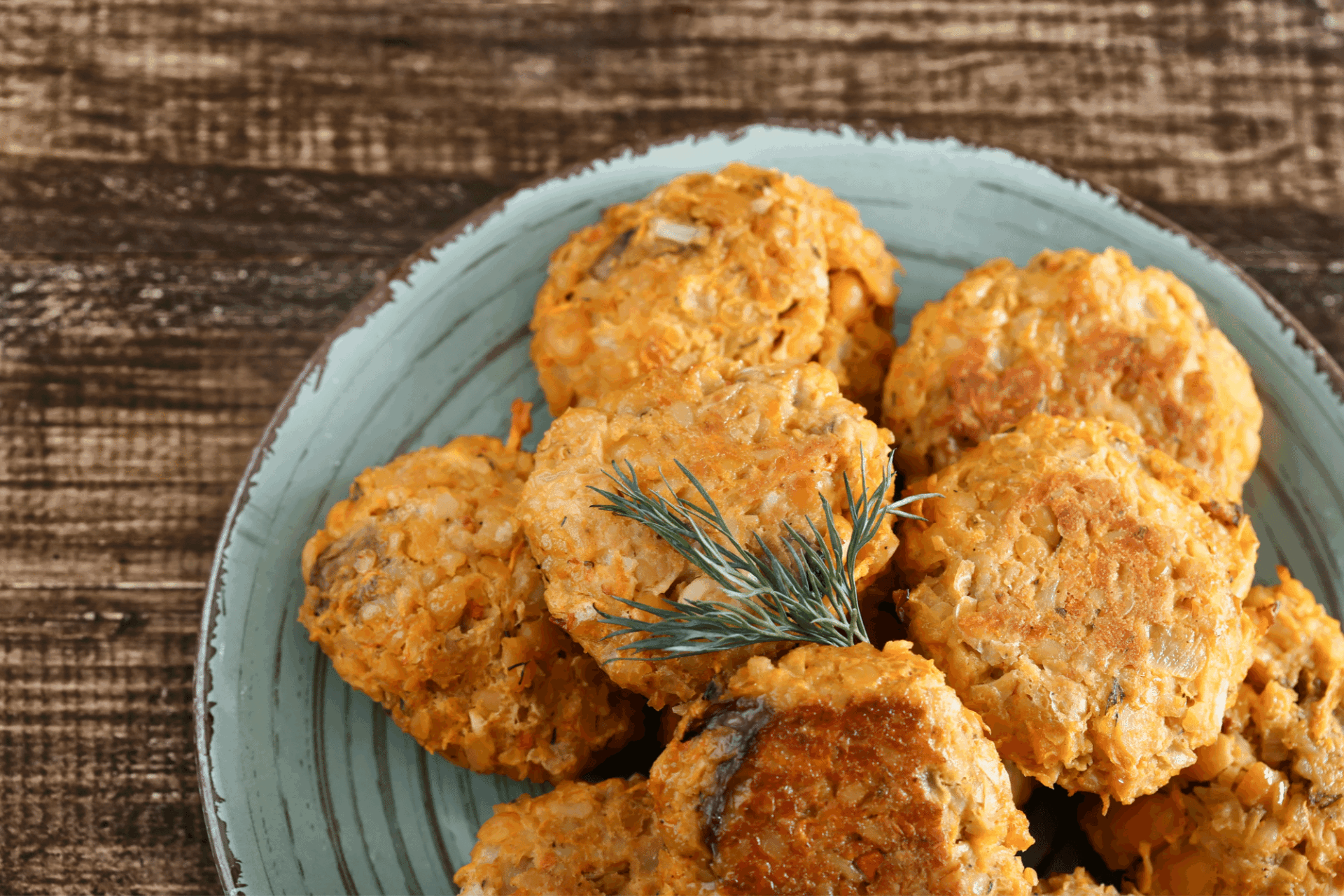
Vegetarian Chickpea Patties

Ingredients
- 1 can chickpeas
- ½ large onion
- ½ medium green pepper
- 2 tablespoons dill chopped fine
- 1 tablespoon thyme chopped fine
- ¼ teaspoon dill seeds
- ¼ teaspoon ground black pepper
- ⅛ teaspoon red bell pepper
- 2 ¼ teaspoons garlic salt
- 1 tablespoon mayo dressing
- 1 medium egg
- ½ cup breadcrumbs
- 15 pieces crackers whole wheat
Instructions
- Blend the chickpeas into a lumpy paste (you don’t want it fully smooth).
- Mix onions and peppers together and blend them to a lumpy paste consistency as well.
- Mix the two pastes together.
- Mix in your finely chopped fresh herbs.
- Add the breadcrumbs, dressing, and egg and mix well, add Ritz crackers until the desired patty consistency is achieved. For me, it took 15 crackers.
- Fry the patties up and enjoy!
Nutrition
Your questions, answered
Can I make the patty mix ahead of time?
Yes — the mix keeps in the fridge for up to 24 hours before cooking. Cover it tightly; the breadcrumbs will absorb moisture overnight, which actually makes the patties easier to shape and less likely to fall apart.
Can I bake these instead of frying them?
You can bake them at 400°F for about 20 minutes, flipping once halfway through. They won’t get the same golden crust as pan-frying, but a light brush of oil on each side before they go in helps.
My mix is too wet to shape into patties — what do I do?
Crush in a few more crackers and let the mix sit for five minutes so they absorb the moisture. Adding crackers a little at a time is easier than trying to fix a mix that’s gone too dry, which is why the recipe gives a target number rather than a fixed amount.