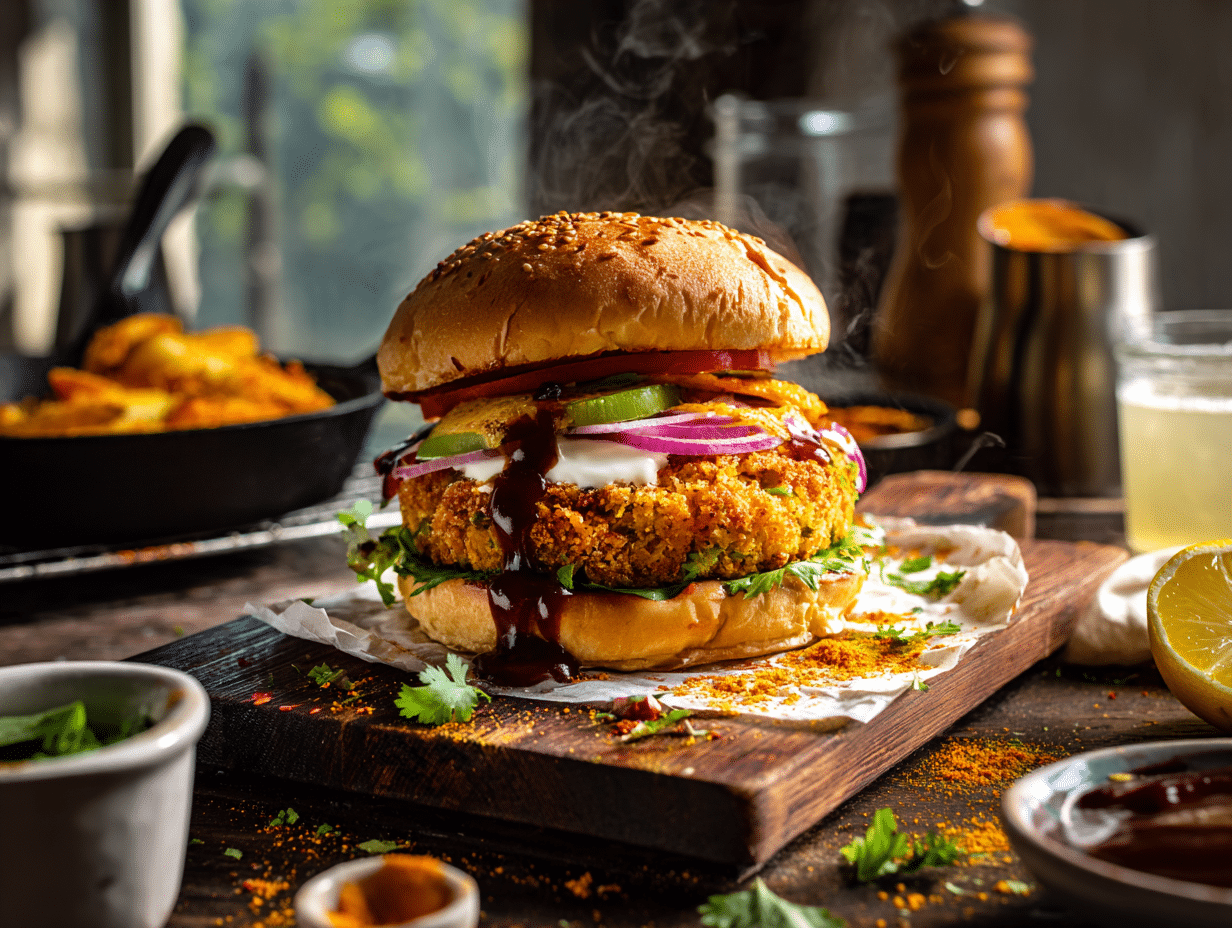
The McAloo Tikki is McDonald’s India vegetarian burger — a spiced potato-and-pea patty with tamarind chutney, green chutney, and masala mayo on a soft bun. It’s genuinely good, and the homemade version lets you make a big batch of patties ahead of time so you’re not stuck frying to order while everyone waits.
Ingredient notes
- Chaat masala: Don’t skip this or substitute regular spice blends. It contains dried mango powder (amchur) and black salt (kala namak), which give the patty its distinctive tangy, slightly sulfurous edge. Find it at any Indian grocery or online.
- Tamarind chutney: Jarred store-bought works fine here — look for it at Indian or South Asian grocery stores. Thin it with a few drops of water if it’s too thick to spread.
- Green chutney: Blended fresh cilantro, mint, green chili, garlic, and lemon juice. Make it the day before; it keeps well and the flavor actually improves overnight.
- Cornstarch: Helps the patty hold together and crisps the exterior. Don’t swap it out for flour — the texture won’t be the same.
- Potatoes: Use a starchy variety like Russets. Waxy potatoes hold too much moisture and the patties will fall apart in the oil.
The technique that matters
Getting the potato mixture dry enough is the whole game. After boiling and mashing, spread the potatoes on a baking sheet and let them steam-dry for at least 10 minutes before mixing in the other ingredients — skip this step and you’ll end up with patties that splatter and break apart in the oil. When you’re making a large batch, chill the shaped patties on a parchment-lined tray in the fridge for 30 minutes before frying. Cold patties hold their shape far better than room-temperature ones, and you can prep them hours ahead so frying goes fast when it’s time to serve.
Common problems and fixes
- Patties falling apart in the oil: The mix is too wet. Return it to the pan over low heat and stir for a couple of minutes to drive off moisture, then re-shape and chill before frying again.
- Greasy, soggy crust: Oil temperature dropped too low, usually from adding too many patties at once. Fry in smaller batches and let the oil come back up to temperature between rounds.
- Bland interior: Taste the raw mix before shaping — potato dulls seasoning, so the mix should taste slightly over-seasoned at this stage. Adjust salt and chaat masala now, not after frying.
- Patties sticking to the pan: Don’t move them too early. Let them fry undisturbed for the full time on the first side until a crust forms; they’ll release cleanly on their own.
- Buns getting soggy fast: Spread the masala mayo on both cut sides of the bun — it acts as a moisture barrier between the sauces and the bread, buying you extra time before things get soft.
Keeping and reheating
Shaped, uncooked patties keep in the fridge for up to 24 hours on a parchment-lined tray, loosely covered — ideal if you’re prepping for a group. Cooked patties keep for 3 days in an airtight container in the fridge. To reheat, use a dry skillet over medium heat for 3–4 minutes per side; this brings the crust back. A microwave will make them soft and dense. For longer storage, freeze shaped raw patties separated by parchment for up to 6 weeks — fry straight from frozen over medium-low heat, adding a couple of extra minutes per side. The chutneys keep separately in the fridge for up to 5 days.
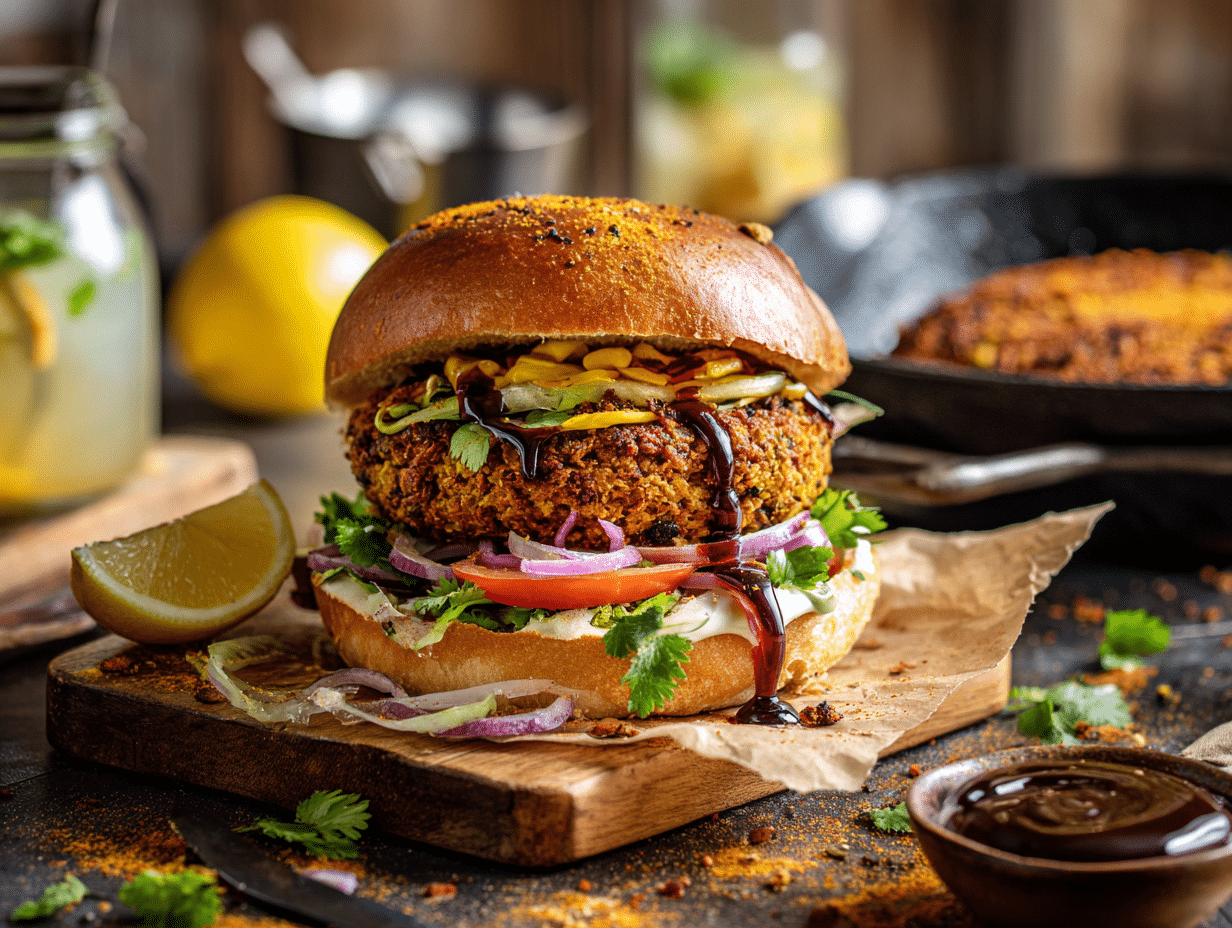
McAloo Tikki Burger (Inspired by McDonald’s India)

Ingredients
For the Spiced Potato–Pea Patties:
- 1.5 lb russet potatoes, peeled and cut into 1-inch chunks starchy potatoes crisp best
- 1 tbsp kosher salt for boiling water
- 1 tbsp neutral oil for sautéing spices and peas (e.g., canola, sunflower)
- 1 tsp cumin seeds bloom for nuttiness
- 1 tbsp fresh ginger, finely grated bright heat and aroma
- 1 tsp green chili, minced adjust to heat preference (serrano or Thai chili)
- 1 cup frozen green peas, thawed and patted dry dry peas crisp better in the patty
- 1.5 tsp ground coriander
- 1 tsp ground cumin
- 0.5 tsp ground turmeric warm color and earthy aroma
- 1 tsp mild chili powder (Kashmiri or paprika) color without too much heat
- 1 tsp garam masala choose a fragrant, balanced blend
- 1.5 tsp chaat masala signature tang; adjusts seasoning at the end too
- 1.25 tsp fine sea salt for the patty mixture
- 1 tbsp fresh lemon juice lifts and balances the spices
- 0.25 cup fresh cilantro, finely chopped stems are flavorful—chop finely
- 3 tbsp cornstarch key binder for a crisp crust
- 0.5 cup plain breadcrumbs for binding inside the patty
- 0.5 cup plain breadcrumbs for coating the patties
- 2 tbsp fine semolina (optional) mix with breadcrumbs for extra crunch
- 0.5 cup neutral oil for shallow-frying, as needed
For the Masala Mayo:
- 0.5 cup mayonnaise full-fat for best texture
- 2 tbsp ketchup adds sweet-tangy body
- 0.5 tsp chaat masala signature zing for the sauce
- 1 tsp fresh lemon juice balances richness
- 0.5 tsp granulated sugar (optional) round off acidity if desired
For Assembly:
- 4 whole soft burger buns potato buns or milk buns are ideal
- 2 tbsp unsalted butter or ghee for toasting buns
- 0.25 cup green chutney store-bought or homemade; see optional quick recipe
- 0.25 cup tamarind chutney tangy-sweet counterpoint to the spice
- 0.5 cup red onion, thinly sliced into rings soak in cold water 5 minutes for milder bite
- 1 large ripe tomato, sliced choose firm, juicy slices
- 4 leaves crisp lettuce romaine or iceberg for crunch
- 4 slices cheese (optional) mild cheddar or processed cheese for nostalgia
For Optional Quick Green Chutney (5–10 minutes):
- 2 cups fresh cilantro leaves, loosely packed tender stems okay; avoid thick stems for smoothness
- 0.5 cup fresh mint leaves bright, cooling aroma
- 1 small green chili seed for milder chutney, keep seeds for more heat
- 1 clove garlic fresh clove for punchy flavor
- 2 tbsp fresh lemon juice keeps the chutney vivid green
- 0.5 tsp granulated sugar balances bitterness and heat
- 0.5 tsp fine sea salt
- 3 tbsp cold water add more as needed for desired consistency
Instructions
- Boil and Steam-dry the Potatoes (15–20 minutes): Place the cut potatoes in a pot, cover with cold water by 1 inch, and add the kosher salt. Bring to a boil over high heat, then reduce to a brisk simmer. Cook until a knife slides in easily, 12–15 minutes. Drain well, then spread on a sheet pan to steam-dry until the surfaces look matte and edges appear a bit chalky, 5 minutes.
- Bloom Spices and Cook Peas (4–5 minutes): Warm 1 tbsp neutral oil in a skillet over medium heat (aim for about 350°F / 175°C if using an infrared thermometer). Add cumin seeds; when they sizzle and smell nutty (about 30 seconds), stir in ginger and minced chili for 30 seconds. Add peas and sauté until bright, dry, and lightly blistered, 2–3 minutes. Transfer to a plate to cool slightly.
- Mash and Season (5 minutes): In a large bowl, mash the warm potatoes until mostly smooth with a few small bits for texture. Add the pea mixture, ground coriander, ground cumin, turmeric, chili powder, garam masala, chaat masala, fine sea salt, lemon juice, and cilantro. Mix until evenly seasoned and fragrant—aromas should be warm, citrusy, and slightly tangy.
- Bind and Form Patties (10–12 minutes including chill): Sprinkle in cornstarch and 1/2 cup breadcrumbs; mix until the mixture holds together without sticking to your hands. Divide into 4 equal portions (about 4 oz each), then press into 3.5-inch rounds, about 5/8 inch thick. Chill the patties on a plate for 10 minutes to firm. If the mixture feels loose, add 1–2 tsp more breadcrumbs.
- Coat for Extra Crunch (3 minutes): Combine the remaining 1/2 cup breadcrumbs with semolina (if using). Press each patty into the crumb mixture on both sides, ensuring a thin, even coat. Rest 2–3 minutes so the crumbs adhere.
- Shallow-fry the Patties (8–10 minutes): Heat about 1/4 inch of neutral oil in a wide skillet over medium heat to 350°F / 175°C. Fry patties until deep golden and crisp, 3–4 minutes per side. Listen for a lively but steady sizzle; adjust heat to maintain temperature. Drain on a rack for 2 minutes. Oven option: Brush a sheet pan with oil, place patties, mist tops with oil, and bake at 425°F / 220°C for 18–22 minutes, flipping halfway, until golden and firm.
- Make the Masala Mayo (2 minutes): Stir together mayonnaise, ketchup, chaat masala, lemon juice, and sugar (if using) until smooth and rosy. Taste: it should be creamy, tangy, lightly spiced.
- Toast the Buns (2 minutes): Heat a skillet or griddle over medium (about 325°F / 165°C). Spread cut sides of buns with butter or ghee and toast cut-side down until golden and fragrant, 1–2 minutes.
- Assemble (2–3 minutes): Spread bottom buns with green chutney and a swipe of masala mayo. Add lettuce, then a hot patty. Spoon over tamarind chutney, add onion rings and tomato. If using cheese, lay it over the hot patty to soften. Spread more masala mayo on the top bun, cap the burger, and gently press.
- Serve: Rest 1 minute (or wrap in parchment for 2 minutes) to let steam soften the bun edges—this gives that signature street-side bite. Enjoy immediately.
- Optional: Quick Green Chutney (5–10 minutes): Blend cilantro, mint, green chili, garlic, lemon juice, sugar, salt, and cold water until smooth. If you don’t have a blender, a small food processor works; for a rustic texture, pound in a mortar and pestle.
Notes
Chef’s Tips:
- Texture Control: Steam-drying the potatoes gives you a crisper crust and prevents soggy patties.
- Extra Crisp: Mix semolina into the crumb coat or double-coat (crumbs → rest 5 minutes → light second coat).
- Heat Management: A steady 350°F / 175°C fry temp keeps patties crisp without greasy interiors.
- Make it Vegan: Use vegan mayo and plant-based buns; pan-fry in oil instead of ghee or butter.
- Gluten-free: Swap breadcrumbs and buns for certified gluten-free versions; use chickpea flour (2–3 tbsp) in place of some breadcrumbs as a binder.
- Spice Swaps: No chaat masala? Combine 3/4 tsp amchur (dry mango powder), 1/4 tsp kala namak, and a pinch of ground cumin.
- Faster Onions: For sweet onions in minutes, toss slices with a pinch of salt and a few drops of lemon; wait 5 minutes, then pat dry.
Nutrition
Frequently asked questions
Can I bake the patties instead of frying them?
Yes, but the crust won’t be as crisp. Bake at 400°F (200°C) on a lightly oiled baking sheet for about 20 minutes, flipping once halfway through, then finish under the broiler for 2–3 minutes per side to get some color.
How do I keep patties warm for a crowd without drying them out?
Place finished patties on a wire rack set over a baking sheet in a 200°F (93°C) oven. The rack keeps air circulating so the bottom doesn’t steam and go soft — they’ll hold well for up to 45 minutes.
Can I make the patties gluten-free?
Yes. Replace the breadcrumbs with an equal amount of fine rice flour or certified gluten-free breadcrumbs. The binding and crust will be nearly identical.
My green chutney turned brown — is it still good?
It’s still safe to eat, but oxidation has dulled the flavor. Add a squeeze of fresh lemon juice and a small handful of fresh cilantro, blend again, and the color and brightness come back quickly.
Can I double or triple the patty recipe without any issues?
Scaling up works well — mix in the largest bowl you have and shape patties in batches. The one thing to watch is frying: stick to 3–4 patties per pan at a time regardless of batch size, or the oil temperature drops and you lose the crust.
Is there an egg in the patty mix?
No — and skip the egg if you’re tempted to add one for binding. It makes the patty mushy and dense rather than light. The cornstarch and breadcrumbs do the binding job cleanly without affecting texture.
Try these next
- Double-Decker Maharaja Mac Recipe
- Spicy Paneer Burger Recipe
- Veggie Sauce Burger Perfection
- Korean Rice Bulgogi Burger