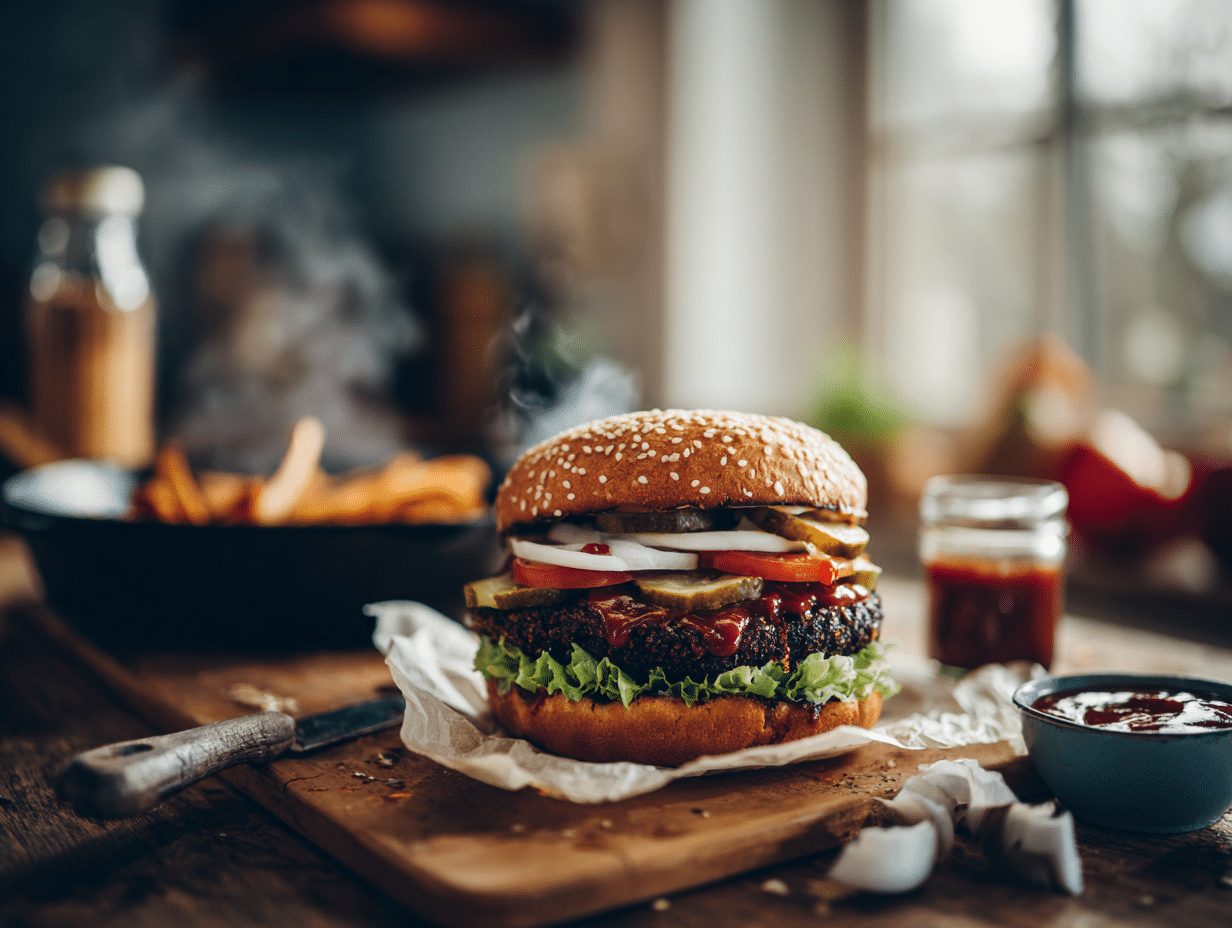
This is a homemade version of Burger King’s Veggie Whopper — a black bean and mushroom patty loaded onto a sesame seed bun with the full classic Whopper toppings: mayo, ketchup, lettuce, tomato, pickle, and onion. The honest reason to make it is that you can get it on the table in about 30 minutes on a weeknight, and it tastes noticeably fresher than the drive-through version. No special equipment needed.
Smart swaps
- Black beans: Canned work perfectly — just drain and rinse them well, then pat dry with paper towels. Excess moisture is the enemy of a patty that holds together on the grill.
- Mushrooms: Cremini or baby bella give more flavor than white button mushrooms. Chop them fine and cook them dry in a skillet first so they don’t waterlog the mix.
- Breadcrumbs: Panko gives a slightly firmer bind than regular breadcrumbs. Either works, but panko is the better call if your mix feels loose.
- Sesame seed bun: Any standard burger bun works, but a brioche bun will make the whole thing feel a bit richer if that’s what you have on hand.
- Mayo: Regular mayo is what BK uses. Vegan mayo is a straight swap if you need the whole build to be plant-based.
Before you start
The one thing that actually matters here is getting moisture out of your ingredients before the mix comes together. Wet beans or undercooked mushrooms will give you a patty that falls apart on the grill or in the pan — skip the egg in the mix, it makes the patty mushy and adds unnecessary moisture. Spread your drained beans on a clean kitchen towel and press them dry, and make sure your sautéed mushrooms have cooked long enough that no liquid remains in the pan. Once the patties are formed, chill them in the fridge for at least 15 minutes before cooking — even a short rest firms them up enough to handle the heat without crumbling.
What can go wrong
- Patty falls apart mid-cook: The mix was too wet or didn’t chill long enough. Next time dry the beans more thoroughly and refrigerate the formed patties for at least 15 minutes before they hit the heat.
- Patty sticks to the grill or pan: Plant-based patties have less fat than beef and stick easily. Make sure your cooking surface is fully preheated and well-oiled before the patty goes on — don’t try to flip early.
- Bland flavor all the way through: Season the mix more aggressively than you think you need to. Beans absorb seasoning, and what tastes right in the bowl will taste mild once cooked.
- Soggy bun: Toasting the bun cut-side down in a dry skillet for 60–90 seconds creates a barrier that slows down the mayo and tomato from soaking through — especially useful if you’re assembling a few minutes before eating.
- Patty too dense and gummy: Over-mashing the beans creates a paste rather than a mix with some texture. Leave some beans roughly intact for a better bite.
Keeping and reheating
Cooked patties keep in an airtight container in the fridge for up to 3 days. To reheat, use a skillet over medium heat with a small amount of oil — about 2 to 3 minutes per side — rather than the microwave, which makes them rubbery. Uncooked formed patties can be frozen flat on a baking sheet, then transferred to a zip bag and kept frozen for up to 2 months; cook straight from frozen over medium-low heat with a lid on, adding a couple of extra minutes per side. Store toppings separately and assemble fresh.
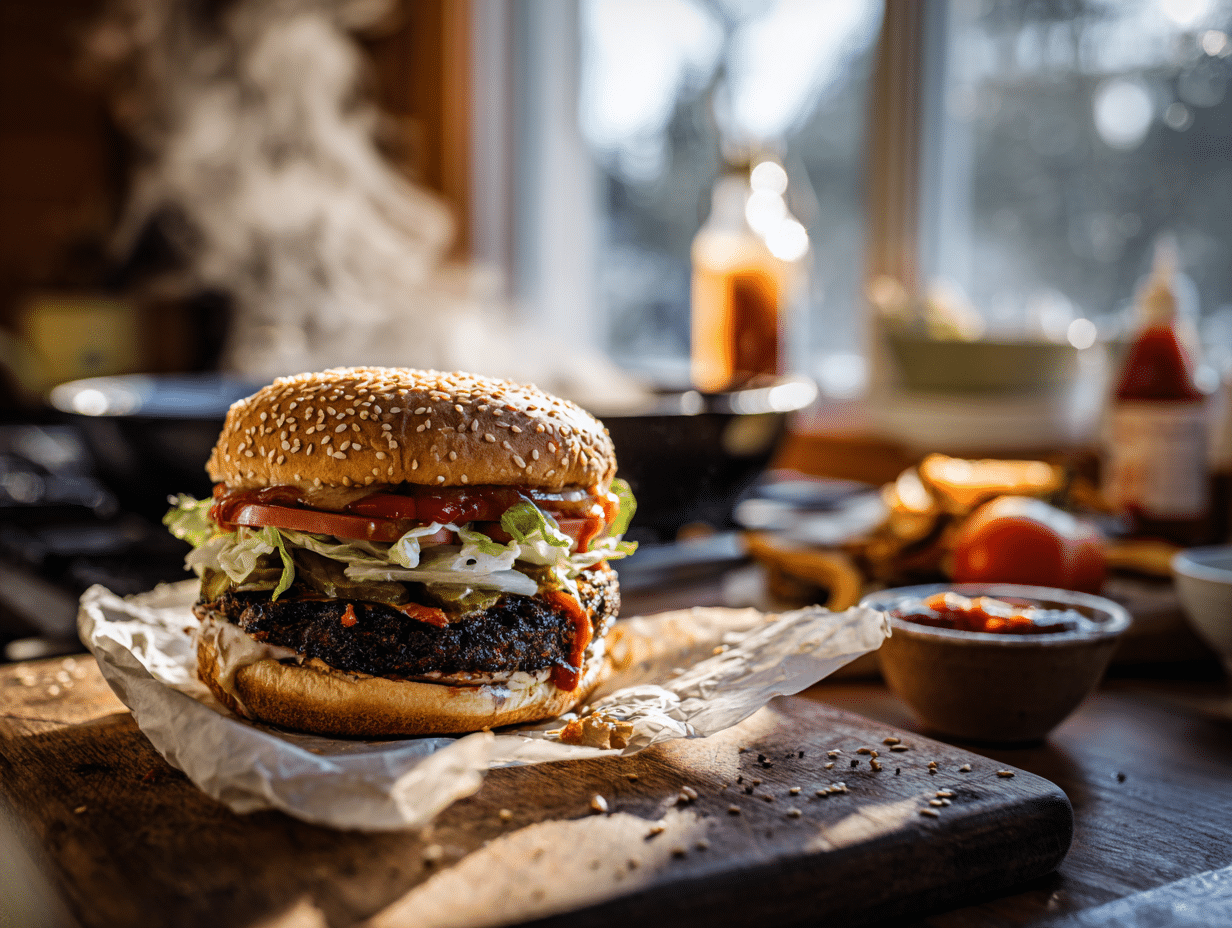
Burger King Veggie Whopper – Chef’s Copycat

Ingredients
For the Veggie Patties:
- 1 tablespoon ground flaxseed binder for vegan patties
- 3 tablespoons water to bloom flaxseed
- 1 cup cooked black beans drained and patted very dry for best sear; use quality canned or home-cooked
- ¾ cup cremini (baby bella) mushrooms, finely chopped finely minced for even texture; fresh and firm caps only
- ½ cup panko breadcrumbs adds crisp structure; use gluten-free if needed
- ¼ cup old-fashioned rolled oats pulse to a coarse meal for binding
- 1 tablespoon tomato paste concentrated umami; double-concentrated if available
- 1 tablespoon low-sodium soy sauce or tamari depth and savoriness; tamari for gluten-free
- 1 tablespoon mayonnaise or vegan mayo moisture and richness; optional but recommended
- 1 teaspoon smoked paprika mimics flame-grilled character
- ½ teaspoon ground cumin warm earthiness that flatters beans and mushrooms
- ½ teaspoon garlic powder even, gentle garlic flavor throughout the patty
- ½ teaspoon onion powder savory backbone; complements raw onion topping
- ¼ teaspoon liquid smoke just a whisper; adds grillhouse aroma
- ½ teaspoon kosher salt Diamond Crystal preferred; adjust if using Morton’s
- ¼ teaspoon freshly ground black pepper fine grind for even seasoning
- 2 tablespoons neutral high-heat oil (avocado or canola) for searing and bun toasting
For the Build & Condiments:
- 2 whole sesame seed burger buns bakery-style for best texture; split
- 2 tablespoons mayonnaise or vegan mayo creamy counterpoint to ketchup’s acidity
- 2 tablespoons ketchup classic tang; Heinz recommended for familiarity
- 2 large iceberg lettuce leaves dry thoroughly for maximum crunch and grip
- 4 slices vine-ripened tomato 1/4-inch thick; season lightly with salt just before assembly
- 6–8 slices dill pickle chips classic style for that signature snap and tang
- 4–6 rings white onion thinly sliced; soak in cold water for 10 minutes if sharp
- 2 slices American cheese or plant-based cheese optional; add during final minute of cooking to melt
For Finishing (Optional):
- 1 teaspoon unsalted butter or vegan butter for lightly brushing buns before toasting; optional
- 1 pinch kosher salt to season tomatoes just before stacking
Instructions
- Prep and Mise en Place (5 minutes): Finely chop the mushrooms, slice the onion into rings, slice the tomato, rinse and dry the iceberg leaves, and split the buns. Pat the black beans very dry with paper towels—dry beans brown better and hold together.
- Make the Flax Binder (5 minutes): In a small bowl, whisk together 1 tablespoon ground flaxseed and 3 tablespoons water. Let sit until thick and gelled, about 5 minutes. This provides structure similar to an egg.
- Build the Patty Base (5 minutes): In a mixing bowl, lightly mash the 1 cup black beans with a fork—aim for about 2/3 mashed, 1/3 left as small bits for texture. Fold in the 3/4 cup chopped mushrooms, 1/4 cup pulsed oats, 1/2 cup panko, 1 tablespoon tomato paste, 1 tablespoon soy sauce/tamari, 1 tablespoon mayo, 1 teaspoon smoked paprika, 1/2 teaspoon cumin, 1/2 teaspoon garlic powder, 1/2 teaspoon onion powder, 1/4 teaspoon liquid smoke, 1/2 teaspoon kosher salt, and 1/4 teaspoon pepper. Add the flax gel and mix until cohesive. Sensory cue: when squeezed, the mixture should hold a clean edge with minimal cracking.
- Rest, Shape, and Chill (20 minutes total; 5 minutes active + 15 minutes chill): Let the mixture rest 5 minutes so the oats hydrate. Divide into 2 equal portions and press into 4 1/2-inch patties about 3/4-inch thick, making a slight thumbprint dimple in the center to prevent doming. Place on parchment and refrigerate 15 minutes to firm. Tip: Lightly wet or oil your hands for smooth edges.
- Preheat the Cooking Surface (5 minutes): Heat a cast-iron skillet or grill pan over medium-high to about 400°F / 205°C. If using a charcoal or gas grill, preheat to medium-high and clean/oil the grates. Alternative: For baking, preheat the oven to 425°F / 220°C and place a sheet pan inside to preheat for better browning.
- Sear the Patties (8–10 minutes): Add 2 tablespoons oil to the hot pan. Lay in the patties and do not move them for 4–5 minutes until the bottoms are deeply browned and aromatic, with a slight smokiness. Flip and cook another 4–5 minutes until the exterior is crisp and the center is hot. If using cheese, top during the last minute and cover to melt. Oven method: Bake on the preheated pan 12–14 minutes total, flipping at 7 minutes.
- Toast the Buns (1–2 minutes): Brush cut sides with a thin film of butter (optional) and toast cut-side down in the pan or on the grill until golden at the edges and slightly crisp, about 1–2 minutes. Sensory cue: you want a gentle crunch that stands up to juicy toppings.
- Sauce and Stack (2 minutes): Spread mayo on the cut side of both buns. On the bottom bun, add ketchup and arrange the dill pickle chips. Set the hot patty on top. Lightly season tomato slices with a pinch of salt, then layer tomato, raw onion rings, and iceberg lettuce. Crown with the top bun. The contrast of cool-crisp veg and hot, smoky patty is the hallmark of a great Whopper-style bite.
- Serve: Let the burger sit 1 minute to settle juices, then serve immediately while the bun is warm, the patty is sizzling, and the lettuce remains icy-crisp.
Notes
Chef’s Tips:
- Grillhouse Aroma: A few drops of liquid smoke go a long way. For an even more authentic char, cook on a preheated grill grate over medium-high heat and cover briefly to trap smoke.
- Moisture Management: Very dry beans and a short chill prevent crumbly patties. If your mix feels loose, add 1 tablespoon more panko and rest 3 minutes.
- Texture Boosters: Fold in 2 tablespoons finely chopped toasted walnuts or sunflower seeds for a subtle, meaty bite.
- Faster Onion Mellowing: Soak sliced onions in ice water 10 minutes, then pat dry for a sweeter, crisper crunch.
- Dietary Swaps: Use gluten-free panko and tamari for GF; swap soy sauce with coconut aminos for soy-free; replace flax binder with 1 beaten egg if not vegan.
- No Food Processor? Pulse oats in a zip-top bag with a rolling pin until coarsely ground.
Nutrition
FAQ
Can I make the patties ahead of time?
Yes — formed, uncooked patties can be refrigerated up to 24 hours before cooking. Stack them with a small square of parchment between each one so they don’t stick together.
Do I need a grill, or can I use a skillet?
A cast iron or nonstick skillet works great and is actually easier for veggie patties than an outdoor grill. The solid surface gives better contact and makes it less likely the patty will break when you flip it.
How do I know when the veggie patty is done?
Look for a deep brown crust on both sides and a firm feel when you press the center gently — usually 4 to 5 minutes per side over medium heat. Unlike beef, there’s no internal temperature target for a bean-based patty; it’s fully cooked when it’s heated through and holds its shape.
Can I use a store-bought veggie patty instead of making the mix from scratch?
Absolutely — an Impossible or Beyond patty will get you closer to the BK original in terms of texture and that savory depth. The homemade version has a different, more rustic texture but uses simpler pantry ingredients.
Is this recipe actually vegan?
The patty itself is vegan, but the standard build uses regular mayo, which contains eggs. Swap in vegan mayo and you’re good — everything else in the classic Whopper toppings is already plant-based.