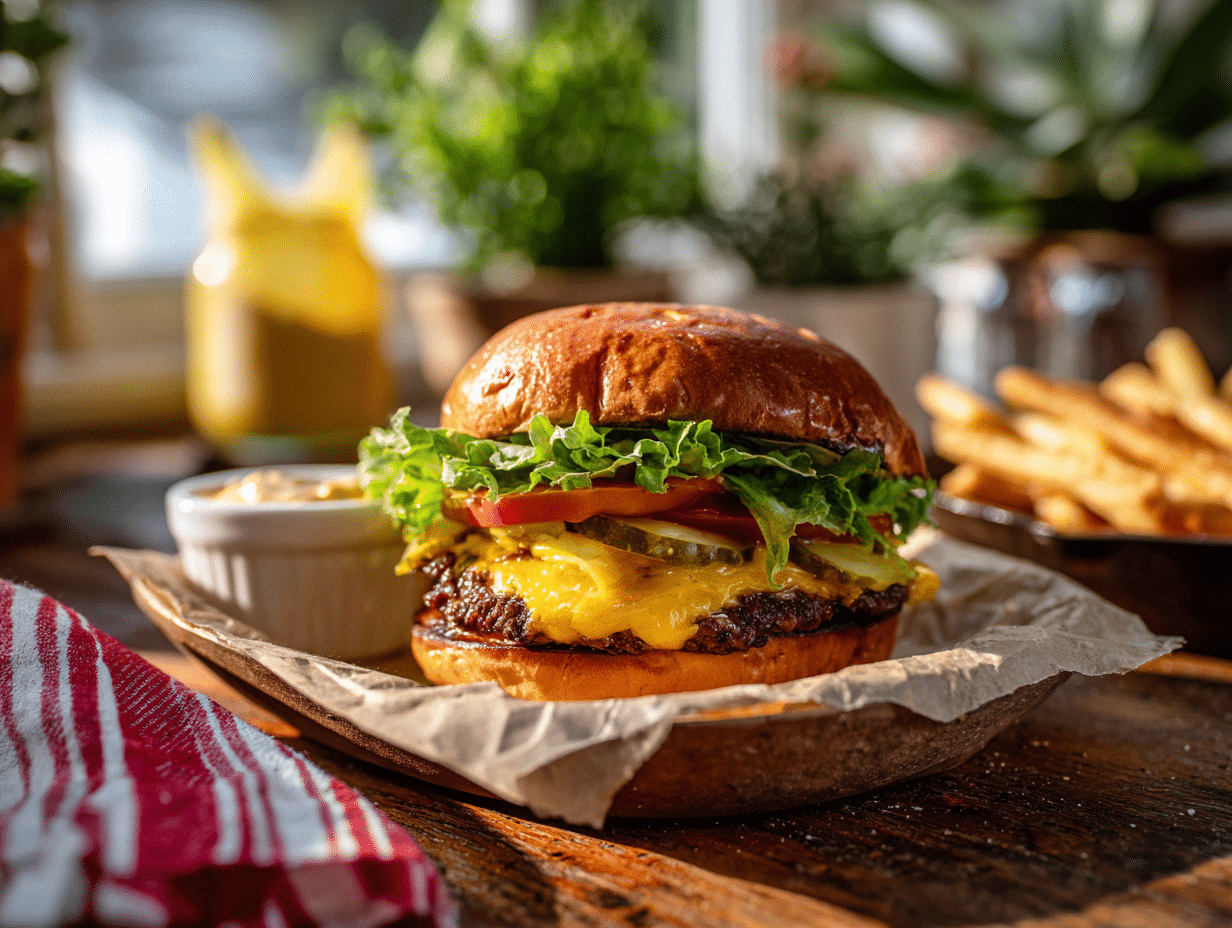
The In-N-Out 2×2 is two thin smashed beef patties, two slices of American cheese, crisp iceberg, tomato, pickles, raw onion, and a tangy mayo-based spread — all on a toasted bun. If you live outside the West Coast or just want to understand why this burger works, making it at home is genuinely worth the 37 minutes. The techniques here are simple enough for a first-time burger cook.
Ingredient notes
- Ground beef (80/20 chuck): The 20% fat is not optional — leaner beef will dry out during smashing. If your store only labels it “ground beef,” check the fat percentage on the package.
- American cheese from the deli counter: Ask for it sliced thin. Pre-wrapped singles contain more stabilizers and don’t melt as cleanly onto a thin patty.
- Sweet pickle relish: This goes into the spread, not on the burger as a whole pickle. Drain off any excess liquid before measuring so the spread doesn’t turn watery.
- Potato buns: Softer and slightly sweet — a good match for the tangy spread. Standard hamburger buns work fine if that’s what you have.
- Iceberg lettuce: Dry it thoroughly after washing. Wet lettuce makes the bottom bun soggy within minutes.
What makes this version work
Two things actually move the needle here. First, smashing the patty hard within the first 30 seconds of contact with a hot surface — before the proteins set — maximizes the flat surface area touching the pan, which is what creates the brown, slightly crispy edges that make a thin patty worth eating. Second, pressing yellow mustard directly onto the raw side of the patty just before you flip it lets it cook into the meat rather than sitting on top as a condiment. It adds a faint tang and helps the crust develop a little faster on the second side. Skip the egg in the mix — it makes the patty mushy and you don’t need a binder for smash-style patties.
What can go wrong
- Pan not hot enough before you add the beef: If the surface isn’t properly preheated, the patty steams instead of sears. Let a cast iron or heavy skillet heat on medium-high for at least 2 minutes before adding any beef.
- Smashing too late: Once the exterior proteins start to set (after about 45 seconds), smashing tears the patty instead of flattening it. Work fast — press down firmly right after the ball hits the pan.
- Cheese not melting fully: After you add the cheese, cover the pan with a lid or a metal bowl for 30–45 seconds. The trapped steam finishes the melt without overcooking the beef.
- Spread made too far ahead without chilling: The relish releases moisture over time. Make the spread, then refrigerate it for at least 15 minutes before using so it firms up and the flavors come together.
- Undercooked patties: These are thin, so they cook fast — but thin doesn’t mean done. Ground beef must reach 160°F (71°C) internal temperature. A cheap instant-read thermometer removes all guesswork.
Make-ahead notes
The spread keeps well in the fridge for up to 4 days in a sealed container — making a double batch is a good idea. Raw patties can be formed, separated by parchment, and refrigerated for up to 24 hours; keep them cold right until they hit the pan. Cooked patties don’t reheat well — they tighten up and lose moisture — so cook them fresh. If you want to get ahead on assembly, wash and dry your lettuce and slice your tomato and onion up to a few hours before cooking, then keep them covered in the fridge.
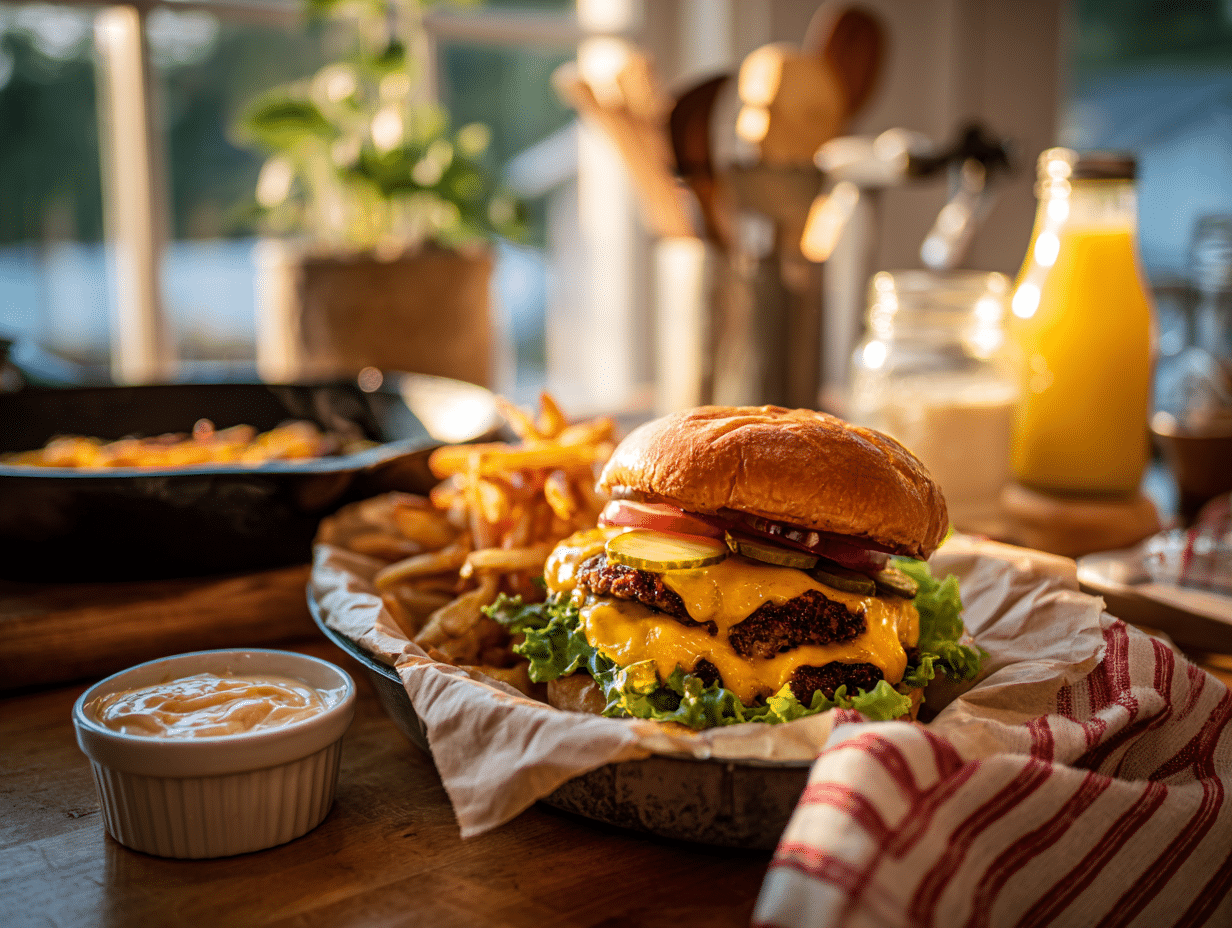
In-N-Out 2x2 Burger (Chef’s Copycat)

Ingredients
For the Spread:
- ¼ cup mayonnaise full-fat; a neutral, creamy brand for best texture
- 2 tbsp ketchup classic American-style ketchup
- 1 tbsp sweet pickle relish look for a crisp, high-quality relish for bright texture
- 1 tsp white vinegar distilled; adds clean acidity
- ½ tsp granulated sugar balances the acidity of the vinegar and ketchup
- ⅛ tsp kosher salt fine grain; for the spread
- 1 pinch paprika optional; adds gentle warmth and color
For the Produce & Buns:
- 4 leaves iceberg lettuce cold and very dry for maximum crunch
- 1 medium ripe tomato cut into 4 slices, 1/4-inch thick; choose firm, in-season tomatoes
- 2 slices white onion, raw 1/4-inch thick rings; classic 2x2 crunch
- ½ cup white onion, diced (optional for grilled onions) for an "animal-style" vibe
- 8 slices dill pickle chips briny, crisp; drain well
- 2 whole soft potato hamburger buns fresh, slightly sweet; split
- 1 tbsp unsalted butter softened; for toasting buns
For the Patties & Cheese:
- 12 oz 80/20 ground chuck cold; grind or buy freshly ground for best browning
- 1 tsp kosher salt for seasoning patties
- ½ tsp freshly ground black pepper medium-fine grind
- 2 tsp yellow mustard for mustard-frying the patties
- 4 slices American cheese deli American for best melt (not individually wrapped singles)
- 1 tbsp neutral oil grapeseed or canola; high smoke point
- 1 tsp water (optional, for onions) a splash helps deglaze and steam-finish onions
Instructions
- Make the Spread (5 minutes): In a small bowl, whisk together mayonnaise, ketchup, sweet pickle relish, white vinegar, sugar, kosher salt, and paprika until silky and pink. Taste for balance: it should be tangy-sweet with a gentle savor. Cover and chill to marry flavors while you prep.
- Prep the Produce (5–8 minutes): Pat the iceberg completely dry (crunch loves dryness). Slice the tomato into 1/4-inch rounds—look for glossy skin and a grassy aroma. Prepare onion two ways: reserve 2 raw rings for classic crunch and, if desired, dice 1/2 cup for grilled onions. Keep everything cold and crisp.
- Portion the Beef (2–3 minutes): Divide the ground chuck into four 3-oz balls. Handle lightly to avoid compressing; cold, gently packed meat sears and stays juicy. Keep chilled while you heat the pan.
- Preheat and Toast Buns (3 minutes): Preheat a cast-iron skillet or griddle over medium-high until a drop of water dances—about 400°F / 204°C surface temperature if using an IR thermometer. Butter the cut sides of the buns and toast, cut-side down, until deep golden and fragrant, 45–60 seconds. Alternatively, warm on a sheet tray in a 350°F / 175°C oven for 2–3 minutes.
- Griddled Onions (optional, 6–8 minutes): Add 1 tsp oil to the hot skillet. Cook the diced onions with a pinch of salt over medium heat, stirring occasionally, until golden-brown and jammy. If browned bits develop, splash in 1 tsp water to deglaze. Transfer to a warm spot. You can do this while buns toast to keep total cook time efficient.
- Mustard-fry the Patties (4–5 minutes): Lightly oil the skillet. Place two beef balls on the hot surface; cover each with a small square of parchment and smash firmly with a stiff spatula to 1/4–1/3-inch thickness. Season with kosher salt and black pepper. Sear until the edges are deeply browned and lacy, 60–90 seconds; you should smell nutty, roasted aromas. Paint or zigzag 1 tsp yellow mustard on each patty, then flip. Immediately top each with a slice of American cheese. Cook 45–60 seconds more, until cheese is glossy and melted and patties reach at least 160°F / 71°C for food safety. Repeat with the remaining two patties.
- Build the 2x2: Spread 1–1 1/2 tbsp of the spread on both toasted bun halves. On the bottom bun, layer 4 dill pickle chips, 2 iceberg leaves, 1 tomato slice, and 1–2 raw onion rings (or a spoonful of grilled onions). Stack two cheesy patties on top. Cap with the top bun smeared with more spread.
- Rest and Serve (1 minute): Let the burger sit 60 seconds so juices settle and cheese adheres. The bun should be warm to the touch, the cheese glossy, and the patties mahogany at the edges. Serve immediately.
Notes
- Better Browning: Cold meat + very hot pan = crisp, lacy crust. Avoid crowding—work in batches.
- Smash Technique: Use a firm metal spatula and press within the first 30 seconds for best crust. Parchment prevents sticking.
- Cheese Choice: Ask your deli for American cheese cut thicker than standard for a lush melt.
- Bun Upgrade: Potato buns toast beautifully; a light buttering adds flavor and moisture insurance.
- Dietary Tweaks: Gluten-free buns work well; for dairy-free, use a meltable vegan American-style slice and plant mayo in the spread.
- Extra Saucy: Stir a touch of finely minced onion into the spread for a subtle savory lift.
- For the truest fast-casual texture, keep patties thin and don’t overwork the meat. A little patience with browning pays you back in big flavor.
Serving Suggestions:
Present the burger in a parchment-lined basket or on a pre-warmed plate. Let the stack lean slightly to showcase the molten cheese and crispy edges. Garnish the plate with extra pickle chips and a ramekin of spread for dipping. Pair with shoestring fries and a vanilla milkshake—or a light, crisp lager. Visual cues: glossy cheese, toast-brown buns, vivid green lettuce, and a tomato slice that still glistens with juice.Culinary Context:
Born from Southern California’s car-hop culture, the 2×2 (“two patties, two cheeses”) epitomizes balance: charred edges, creamy tang, and high-contrast textures. My first kitchen job was near a late-night burger stand; the perfume of hot steel and onions taught me that simplicity, done precisely, is unforgettable. This recipe honors that heritage with mustard-fried patties and a bright, classic spread.Optional Advanced Instructions:
- Make-ahead: Spread can be made 3 days ahead; keep chilled. Portion meat balls up to 8 hours ahead.
- Parallel Cooking: Start onions first; while they soften, toast buns. When onions finish, raise heat and sear patties. This keeps total cook time around 12 minutes.
- No Cast Iron? Use a heavy stainless skillet or an outdoor griddle. In a pinch, a preheated sheet pan under the broiler works—press patties with another hot pan to mimic smashing.
Timing:
- Prep Time: 25 minutes (0 hours 25 minutes)
- Cook Time: 12 minutes (0 hours 12 minutes) with onions overlapped; allow up to 18 minutes if cooked sequentially
Course:
Main Course; ideal for Lunch or Dinner.Origin:
American (Californian)Nutrition
Frequently asked questions
Can I use a regular frying pan instead of cast iron?
Yes — a heavy stainless steel skillet works well too. The key is that the pan holds heat when the cold beef hits it; thinner non-stick pans lose temperature quickly and make it harder to get a good sear on a thin patty.
How do I know when the patties are actually cooked through?
Use an instant-read thermometer and check for 160°F (71°C) — that’s the safe internal temperature for ground beef. At the thinness of a smash patty, this usually happens in about 2 minutes per side on a properly hot surface, but thickness varies, so the thermometer is the reliable check.
Can I freeze the raw patties for later?
Yes — freeze them flat on a parchment-lined tray until solid, then transfer to a zip bag for up to 2 months. Thaw overnight in the fridge before cooking, and don’t try to smash them from frozen or they’ll crack rather than flatten.