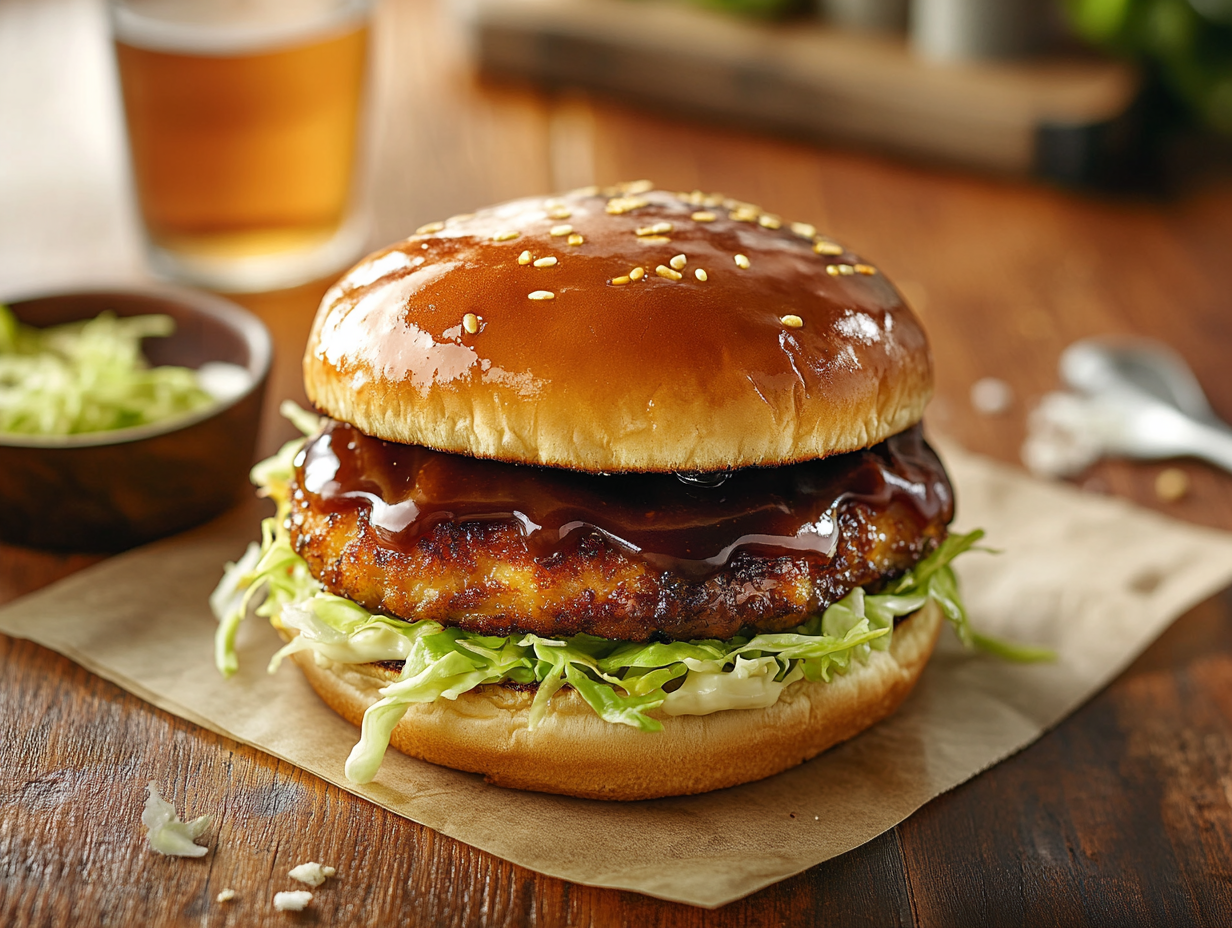
A pork katsu burger is a breaded, pan-fried pork loin cutlet served in a brioche bun with shredded cabbage and katsu sauce. It takes about 50 minutes start to finish and makes four solid burgers. The real reason to make it: the panko crust stays crunchier longer than a standard breaded patty, which makes it one of the better options when you want to cook ahead and reheat without losing everything.
Before you start
Two things actually matter here. First, pound the pork loin chops to an even thickness before breading — if one end is thicker than the other, you’ll either undercook the thick part or dry out the thin part by the time it hits 160°F (71°C) internal. A zip-lock bag and a rolling pin work fine. Second, press the panko firmly onto the pork after coating. Don’t just roll it around in the dish. Use your palm and press hard on both sides. Panko that isn’t anchored will slide off in the oil and leave bare patches that go soft instead of crispy.
Common problems and fixes
- Breading falls off during frying: The pork surface was probably wet or oily before dredging. Pat the chops completely dry with paper towels before the flour step. Moisture is the main reason coatings separate.
- Crust is golden but pork is still undercooked inside: Your oil is too hot. At too high a temperature the crust browns fast while the center stays raw. Keep the oil at 320°F (160°C) and don’t rush it — 4 minutes per side at that temp is the target, and always verify with a meat thermometer reading 160°F (71°C).
- Cutlet comes out greasy: You’re not draining it properly. Set fried cutlets on a wire rack over a sheet pan, not on paper towels. Paper towels trap steam underneath and soften the crust while the grease soaks back in.
- Cabbage makes the bun soggy: Don’t dress the cabbage ahead of time. Keep it dry and plain until assembly. If you’re building burgers for later, store the cabbage separately and add it right before eating.
- Katsu sauce is too thin and runs everywhere: Spoon it onto the cutlet itself, not the bun. It soaks into the crust slightly and stays put better than drizzling it on a flat bun surface.
Shopping notes
- Panko breadcrumbs: Regular breadcrumbs are not a straight swap — they’re finer and denser, and the crust will be heavier and less crispy. Panko is in most grocery stores now, usually in the Asian foods aisle or near regular breadcrumbs. Buy the plain, unseasoned kind.
- Katsu sauce: Tonkatsu sauce (Bulldog is the most common brand) is what you want. It’s thicker than Worcestershire and has a sweet-savory flavor that’s specific to this dish. In a pinch, mix 2 tablespoons Worcestershire, 1 tablespoon ketchup, and 1 teaspoon soy sauce — it’s close enough.
- Pork loin chops: Boneless, about ½-inch thick. If your store only has thicker cuts, buy them and pound them down yourself. Avoid pork shoulder for this — too much fat and connective tissue for a flat cutlet.
- Brioche buns: A standard burger bun works fine. Brioche is softer and a little richer, which balances the crunchy cutlet well, but it’s not worth a special trip if you have good buns already.
Storage and reheating
Cooked pork katsu cutlets keep in the fridge for up to 4 days in an airtight container. Store them without the buns or toppings — assembled burgers go soggy fast. To reheat, use an oven or air fryer at 375°F (190°C) for 8 to 10 minutes until the crust crisps back up and the internal temp returns to 160°F (71°C). Microwaving works in a pinch but the crust goes soft. For freezing, lay the fully cooled cutlets flat on a sheet pan, freeze until solid, then transfer to a freezer bag. They keep well for up to 2 months. Reheat from frozen at 375°F for 15 to 18 minutes, flipping once halfway through.
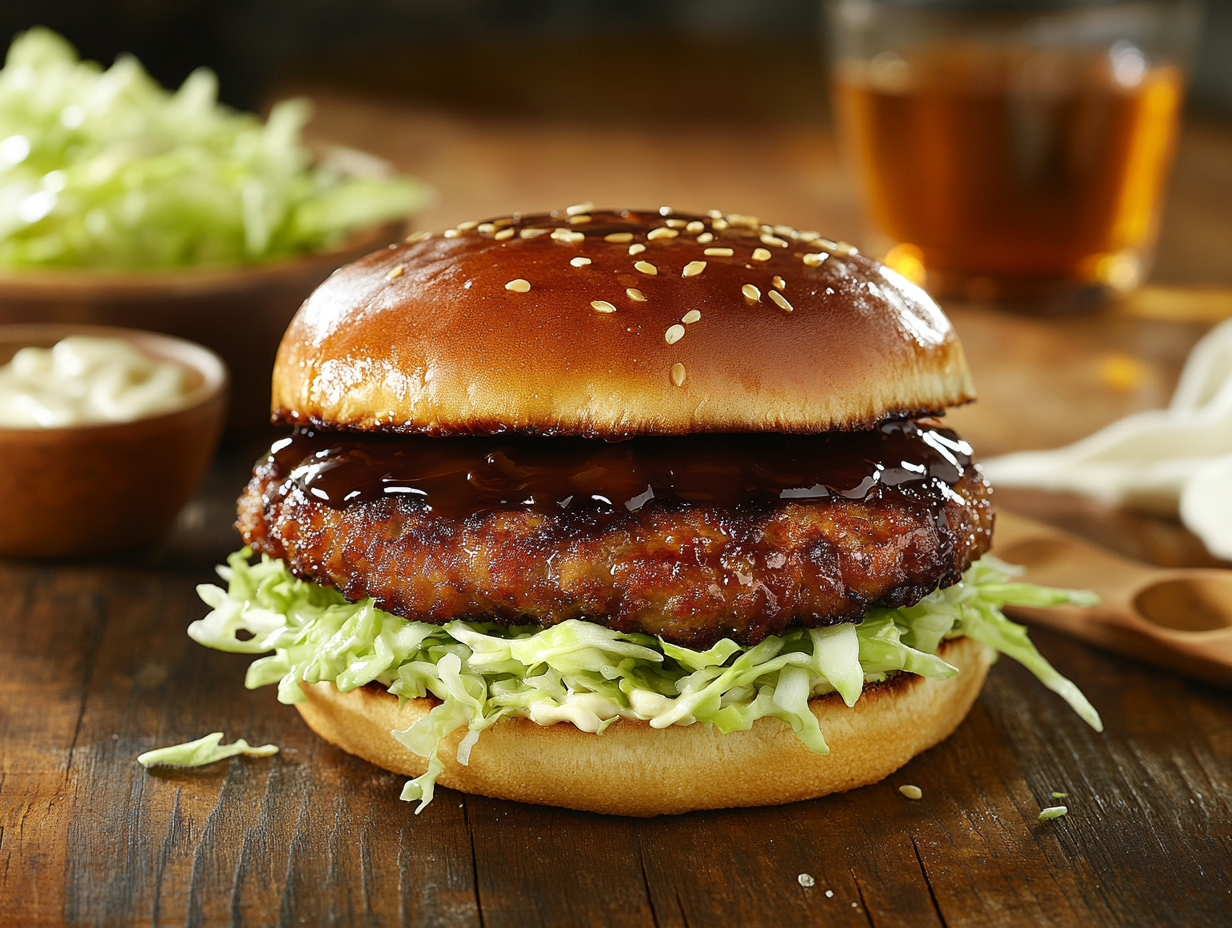
Japanese Katsu Burger

Ingredients
Pork Katsu Patties
- 4 pieces pork loin chops 1/2-inch thick, boneless
- 1 cup all-purpose flour
- 2 pieces eggs beaten
- 1 cup panko breadcrumbs
- ½ teaspoon salt
- ½ teaspoon ground black pepper freshly ground
Burgers and Toppings
- 4 pieces burger buns preferably brioche
- 2 cups cabbage shredded
- ½ cup katsu sauce store-bought or homemade
- ½ cup mayonnaise optional
- 2 tablespoons vegetable oil for frying
Instructions
- Start by preparing the pork katsu: Season each pork chop with salt and pepper on both sides.
- Set up a breading station with three shallow dishes: one with flour, one with beaten eggs, and another with panko breadcrumbs.
- Dredge each pork chop in flour, shaking off excess. Dip into beaten eggs, then coat with panko, pressing the breadcrumbs onto the pork to adhere.
- Heat vegetable oil in a large skillet over medium heat (about 160°C / 320°F). Fry the pork until golden brown and cooked through, approximately 4 minutes per side.
- While the pork rests, lightly toast the burger buns in the oven or on a griddle until golden.
- Assemble the burgers: Spread a layer of mayonnaise on the bottom bun (if using), add cabbage, place the pork katsu on top, drizzle generously with katsu sauce, then add the top bun.
- Serve immediately to enjoy the delightful contrast of crispy pork and soft, pillowy buns, complemented by the tangy katsu sauce and fresh cabbage crunch.
Notes
Nutrition
Common questions
Can I use chicken instead of pork?
Yes, boneless skinless chicken thighs or breasts work well with the same breading process. Just cook chicken to an internal temperature of 165°F (74°C) — don’t pull it early, and don’t serve it pink.
Can I bread the cutlets ahead of time and fry them later?
Yes, and it actually helps. Breaded cutlets can sit uncovered on a rack in the fridge for up to 24 hours before frying. The coating dries out slightly, which helps it adhere better and crisp up faster in the oil.
How do I know the oil is at the right temperature without a thermometer?
Drop a single panko breadcrumb into the oil — if it sizzles steadily and floats to the surface within a second or two, you’re close to 320°F (160°C). If it browns immediately, the oil is too hot; if it just sits there, it needs more time.
My pork cutlets are thicker than ½ inch. Do I need to adjust the cook time?
Pound them thinner rather than adjusting time — thicker cutlets are harder to cook evenly in a skillet without burning the crust. If you can’t pound them, finish them in a 350°F (175°C) oven after searing, and always check for 160°F (71°C) internal before serving.
Try these next
- Korean Fried Chicken Burger
- Korean Rice Bulgogi Burger
- Hawaiian Teriyaki Burger Recipe
- Sweet Chili Chicken Burger