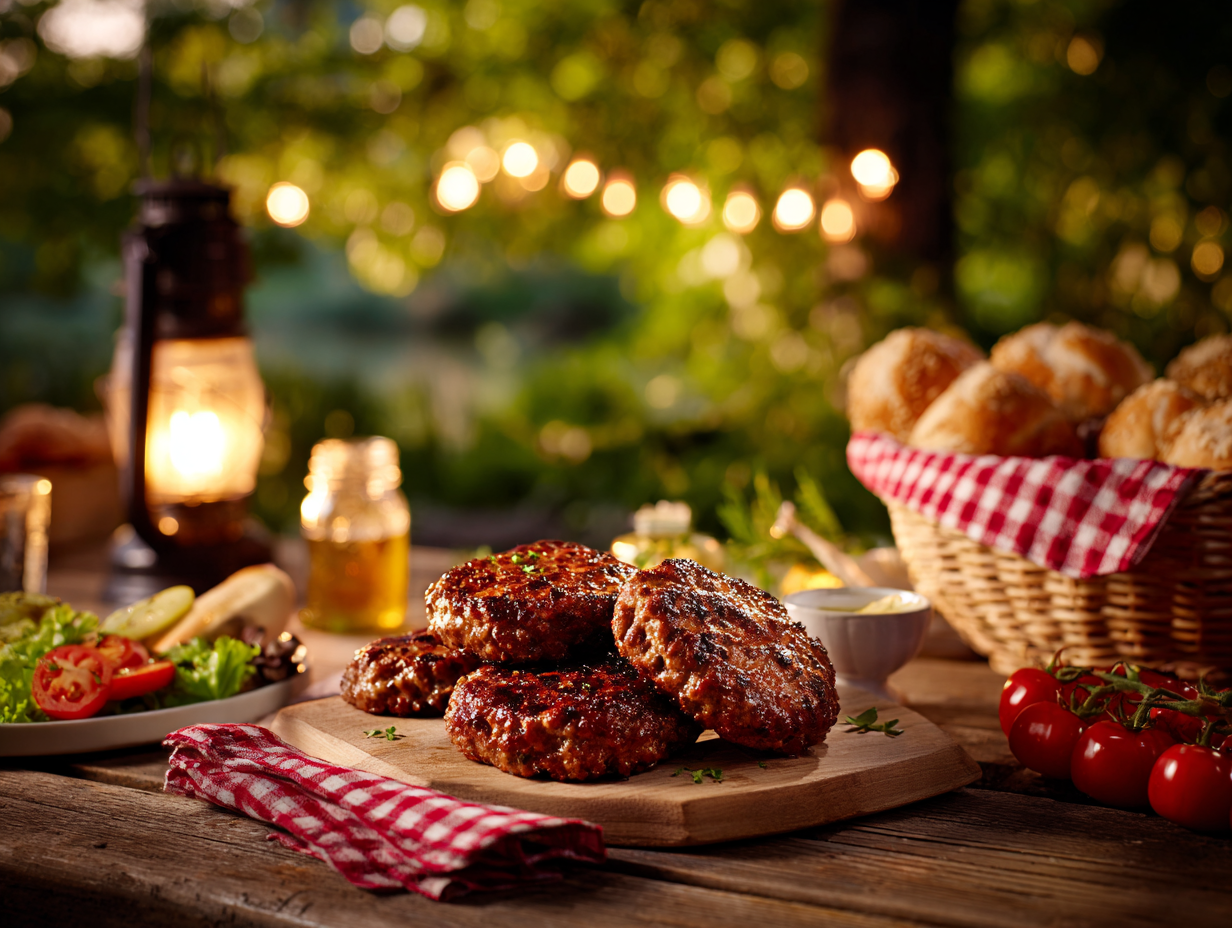
This is a straightforward beef burger patty built for the grill — 80/20 ground chuck, three pantry seasonings, and a couple of technique details that keep it juicy instead of dry. No fillers, no binders, no special equipment required. If you want a reliable patty you can cook on a weeknight or scale up for a cookout, this is it.
What makes this version work
Two things actually move the needle here. First, the fat ratio: 80/20 ground beef has enough fat to stay moist over high heat without falling apart on the grill. Leaner beef — 90/10 or higher — loses too much moisture before it gets a proper sear, and you end up with a dry, dense puck. Second, the thumb-print indent in the center of each raw patty. As beef cooks it contracts, and without that indent the middle puffs up and the patty cooks unevenly. Press a shallow well into the center before it hits the heat and it comes out flat, with consistent doneness edge to edge.
Ingredient notes
- Ground beef: Freshly ground chuck from a butcher is ideal, but standard 80/20 supermarket ground beef works fine. Avoid pre-formed frozen patties — the texture is noticeably different once cooked.
- Worcestershire sauce: If you don’t have it, a teaspoon of soy sauce or tamari is a solid swap and keeps the recipe gluten-free. Coconut aminos also works if you’re watching sodium.
- Kosher salt: Table salt can substitute at about half the volume — it’s finer and saltier by measure, so don’t swap 1:1 or the patty will be over-salted.
- Ice-cold water: Tap water chilled with a few ice cubes for a minute is all you need. The cold temperature matters more than anything else here — it keeps the fat from smearing as you mix.
- Unsalted butter (optional finish): A small pat of any neutral butter works. Skip it entirely if you’re watching fat; the patty holds up without it.
Mistakes to avoid
- Overworking the meat: Mix the seasoning in with as few passes as possible. The more you work ground beef, the tighter the protein strands bind — the result is a dense, tough patty instead of a tender one.
- Seasoning only the outside: Salt and pepper worked into the mix seasons the whole patty, not just the crust. If you only season the surface, the interior tastes flat.
- Skipping the rest after cooking: Cutting into the patty immediately after it comes off the heat sends the juices straight onto the plate. Two to three minutes of rest lets them redistribute through the meat.
- Using a cold pan or grill: A surface that isn’t fully preheated won’t sear — it steams. Give your cast iron or grill grates at least five minutes at full heat before the patties go on.
- Adding cheese too early: Put cheese on in the last 60 seconds of cooking with a lid or dome over it. Any earlier and it overcooks into a greasy puddle rather than a clean melt.
Leftovers and meal prep
Cooked patties keep in the fridge for up to three days in an airtight container. To reheat without drying them out, put them in a covered skillet over medium-low heat with a splash of water — about a tablespoon — and let the steam do the work for two to three minutes per side. Microwaving works in a pinch but tends to toughen the edges. For freezing, raw patties freeze better than cooked ones: shape them, separate with parchment, and freeze flat in a zip-lock bag for up to three months. Thaw overnight in the fridge before cooking — don’t cook from frozen or the outside will overcook before the center reaches a safe 160°F (71°C).
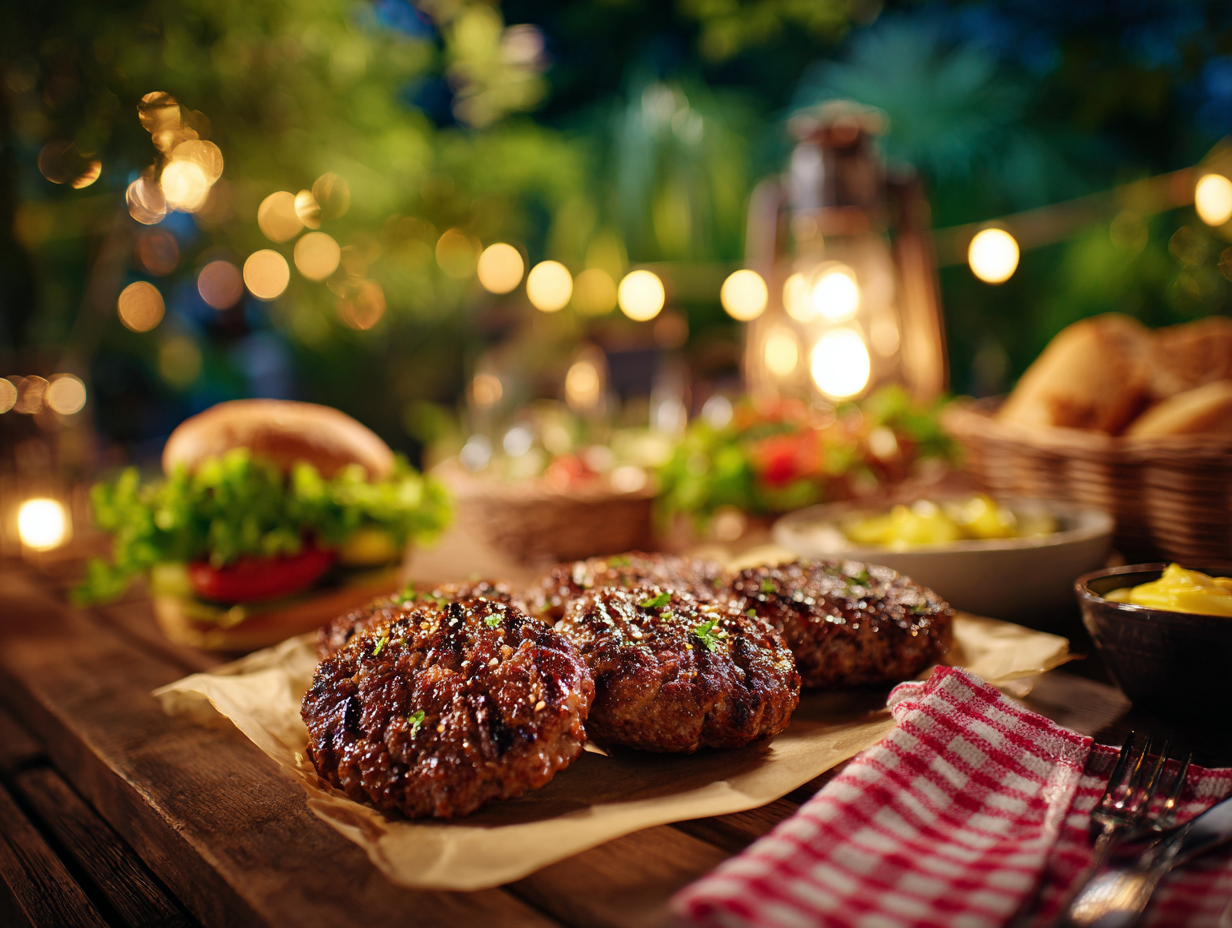
Ultimate Juicy Beef Burger Patty

Ingredients
- 1 ½ pounds ground beef (80/20 blend) use freshly ground chuck with 20% fat for optimal juiciness and flavor
- 1 teaspoon kosher salt Diamond Crystal preferred for accuracy and solubility
- ½ teaspoon freshly ground black pepper use coarse grind for visible specs and enhanced flavor
- 1 teaspoon Worcestershire sauce adds umami depth without overpowering the beef
- 1 tablespoon ice-cold water helps create steam for a juicier patty
- 1 tablespoon unsalted butter optional – for basting and extra richness
Instructions
- In a large mixing bowl, gently combine ground beef, kosher salt, black pepper, Worcestershire sauce, and ice-cold water. Fold the ingredients using your hands or a fork just until incorporated. Do not overwork, as this can toughen the meat.
- Divide the mixture into four equal portions (about 6 oz each). Form each into a patty about 1/2 to 3/4 inch thick with a slight depression in the center using your thumb – this helps prevent puffing during cooking.
- Heat a cast-iron skillet or grill over medium-high heat (about 400°F / 205°C). Once hot, add the patties, ensuring they aren't crowded. Sear without pressing down, for 4–5 minutes on the first side until a deep brown crust forms.
- Flip the burgers gently and cook for another 4–5 minutes, or until internal temperature reaches 130–135°F (54–57°C) for medium-rare or to desired doneness.Optional: Add a pat of butter on top during the last minute and cover loosely to melt and enrich.
- Remove from heat and let rest for 2 minutes before serving. This allows juices to redistribute, resulting in a moist, flavorful burger.
Notes
- Chilling the patties for 15 minutes before cooking firms them up, helping them hold shape and enhancing crust formation.
- Try mixing in 1 tablespoon of finely minced shallot or grated cheddar for added complexity.
- Substitute Worcestershire with soy sauce for a different umami profile, or omit entirely for a purist version.
- For a gluten-free version, ensure Worcestershire sauce is certified GF or replace with tamari.
Nutrition
Your questions, answered
Can I use 90/10 ground beef instead of 80/20?
You can, but the patty will be noticeably drier and more prone to crumbling on the grill. If 90/10 is all you have, add an extra teaspoon of cold water to the mix and pull the patty off heat as soon as it hits 160°F — every extra minute costs you moisture.
Do I have to use a cast iron skillet, or can I use a regular non-stick pan?
A non-stick pan works, but it won’t get as hot as cast iron, so your crust will be lighter and less crisp. If that’s what you have, crank the heat as high as the pan allows and make sure it’s fully preheated before the patties go in.
How do I know when the patty is done without a thermometer?
Get a thermometer — ground beef needs to reach 160°F (71°C) internally, and color alone is not a reliable indicator. An instant-read thermometer costs under $15 and removes all guesswork, especially important because ground beef can brown on the outside while still being undercooked inside.
Can I make the patties ahead of time and refrigerate them raw?
Yes — shaped raw patties keep in the fridge for up to 24 hours, covered. Any longer and the texture starts to degrade. Stack them with a small square of parchment between each one so they don’t stick together.
My patties always shrink a lot on the grill. What am I doing wrong?
Some shrinkage is normal as fat renders out, but excessive shrinkage usually means the heat is too high or the patties were packed too tightly when shaped. Form them loosely and make sure your indent is deep enough — about a half-inch — to counteract the contraction.
If you liked this one
- Perfect Bacon Double Cheeseburger
- BBQ Cheeseburger Recipe
- Ultimate Avocado Bacon Smash Burger
- Angus Bacon Guacamole Burger