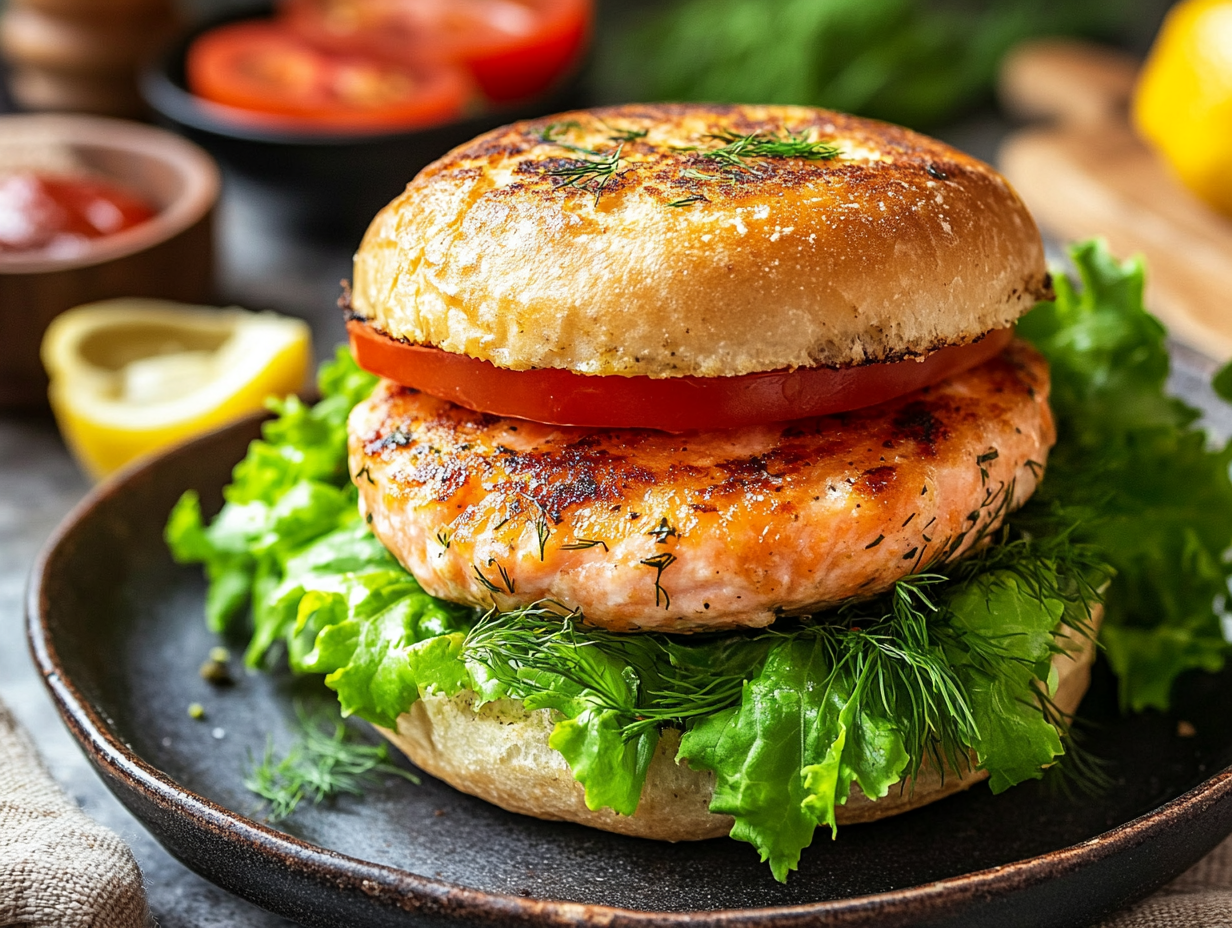
This is a salmon patty burger seasoned with fresh dill, Dijon mustard, and red onion — pan-seared until golden outside and just cooked through inside. It comes together in 45 minutes and costs a fraction of what a restaurant seafood burger runs, especially if you catch salmon on sale or use a frozen fillet.
Substitutions that actually work
- Salmon: Canned salmon (drained well, about 14–15 oz) works fine here. It’s already flaked, so skip the chopping step. Avoid canned salmon packed in oil — it makes the mix too wet.
- Fresh dill: Dried dill works at a 1:3 ratio — use 1 tablespoon dried in place of 3 tablespoons fresh. It’s less bright but still does the job.
- Panko breadcrumbs: Regular breadcrumbs, crushed crackers, or even rolled oats (blitzed briefly) all bind the patty. Panko just gives a slightly lighter texture.
- Dijon mustard: Whole-grain mustard is a direct swap. Yellow mustard works in a pinch but is sharper — use a little less.
- Red onion: White or yellow onion is fine. If raw onion is too strong for you, soak the diced onion in cold water for 5 minutes first.
What makes this version work
Two things matter most. First, chop the salmon by hand into small but uneven pieces — a food processor turns it into paste, and paste makes a dense, rubbery patty. You want some texture left. Second, the 20-minute refrigeration step before cooking is not optional. Salmon patties are softer than beef patties and they will fall apart in the pan if the mixture hasn’t had time to firm up. Skip the egg in the mix — it makes the patty mushy. The panko and the cold rest are enough to hold everything together.
Common problems and fixes
- Patties fall apart in the pan: The mix is probably too wet. Press out any excess moisture from the salmon before mixing, and make sure the patties went into the fridge cold and firm before they hit the oil.
- Patties stick to the skillet: The pan wasn’t hot enough when you added them. Let the oil heat fully over medium before adding the patties, and don’t try to flip them early — they release naturally once a crust forms.
- Bland flavor: Salmon needs more salt than you think. Taste the raw mix before forming patties (it’s safe to taste a small amount before the egg is added, or just season assertively and trust the ratio).
- Patties cooked through but still look gray inside: That’s normal for salmon — unlike beef, a fully cooked salmon patty is opaque and pale, not pink. Target an internal temperature of 145°F (63°C) for fish patties.
- Buns get soggy fast: Toast them right before serving, not ahead of time. If you’re building burgers for a group, keep the patties and buns separate until the last minute.
Make-ahead notes
You can form the raw patties up to 24 hours ahead — stack them with parchment between each one, cover tightly, and refrigerate. For longer storage, freeze the uncooked patties on a tray until solid (about 2 hours), then transfer to a zip bag; they keep for up to 2 months. Cook from frozen over medium-low heat with the lid on for the first few minutes to ensure they cook through, then uncover to crisp the outside. Cooked patties reheat well in a dry skillet over medium-low — about 3 minutes per side — but the microwave makes them rubbery, so avoid it if you can.
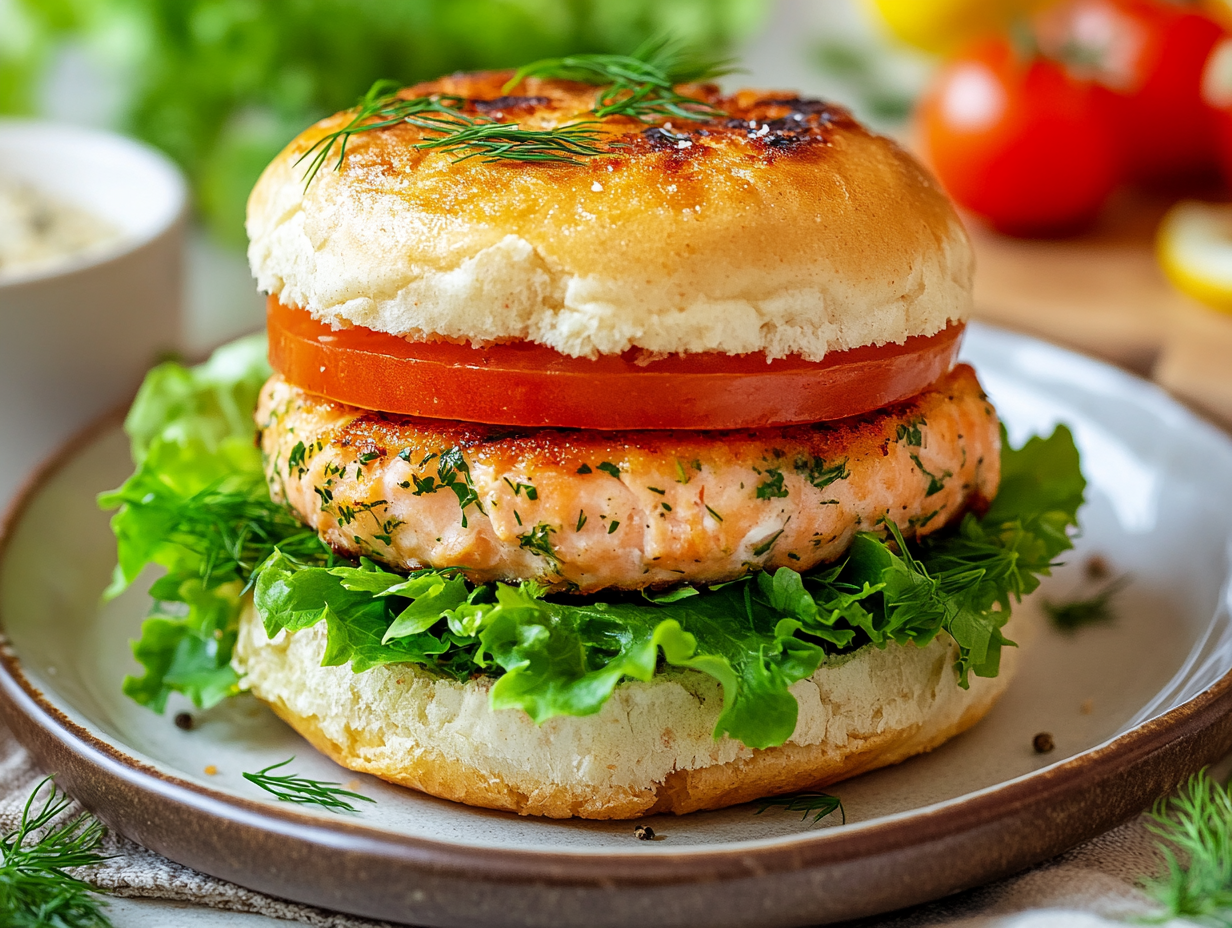
Swedish Dill Salmon Burger

Ingredients
- 500 grams salmon fillet fresh, skin removed, finely chopped
- ¼ cup dill fresh, finely chopped
- 2 tablespoons Dijon mustard
- ½ medium red onion finely diced
- 1 large egg lightly beaten
- ⅓ cup panko breadcrumbs
- 1 teaspoon sea salt
- ½ teaspoon black pepper freshly ground
- 2 tablespoons olive oil
- 4 medium burger buns lightly toasted
- 4 leaves lettuce crisp
- 4 slices tomato
Instructions
- In a large bowl, combine the chopped salmon, dill, Dijon mustard, red onion, egg, and panko breadcrumbs. Mix gently until all ingredients are incorporated.
- Season the mixture with sea salt and black pepper, ensuring even distribution.
- Form the mixture into 4 equal-sized patties, about 1 inch thick. Place on a parchment-lined tray and refrigerate for at least 20 minutes to firm up.
- Heat the olive oil in a non-stick skillet over medium heat (about 175°C / 350°F). Add salmon patties and cook for 6-7 minutes on each side, until they reach a golden brown hue and are firm to the touch.
- Toast burger buns until lightly golden. Layer each bun with lettuce, a cooked salmon patty, and a slice of tomato.
- Serve immediately, accompanied by a crisp green salad or your favorite vegetable sides.
Notes
Nutrition
FAQ
Can I use frozen salmon instead of fresh?
Yes — thaw it completely in the fridge overnight and pat it very dry before chopping. Frozen salmon releases more water as it thaws, so drying it thoroughly is the key step to keep the patties from falling apart.
How do I know when the salmon patties are fully cooked?
The safest check is an instant-read thermometer — fish patties should reach 145°F (63°C) at the center. If you don’t have a thermometer, press the center gently; it should feel firm and spring back, not soft and yielding.
Can I grill these instead of pan-frying?
You can, but salmon patties are fragile on a grill grate. Use a well-oiled cast iron skillet or a grill pan set over the grates rather than placing the patties directly on the grill. The cold rest before cooking is even more important if you’re going this route.
What can I use instead of burger buns?
Any sturdy bread works — ciabatta rolls, brioche buns, or even thick slices of toasted sourdough. Avoid anything too soft or thin, since the salmon patty is moist and will soak through a flimsy bun quickly.
More burger recipes to try
- Crispy Fish King Burger
- Hawaiian Teriyaki Burger Recipe
- Korean Rice Bulgogi Burger
- Halloumi King Burger Homage