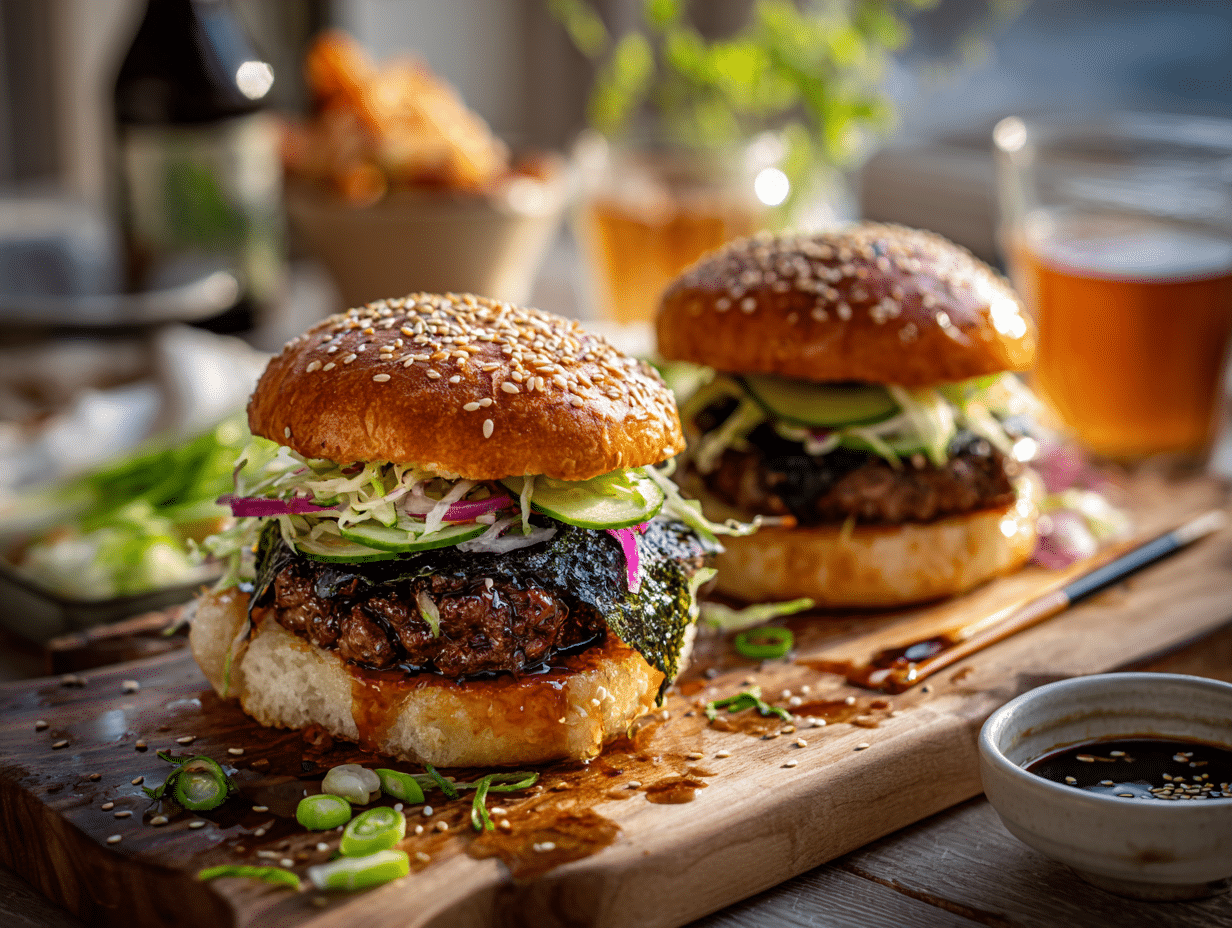
This is a homemade version of the Korean rice burger — crispy compressed short-grain rice patties standing in for buns, filled with sweet-savory bulgogi beef. The honest reason to make it: the rice buns are genuinely different from anything a regular burger delivers, and the whole build comes together in one pan if you plan the order right.
Smart swaps
- Asian pear: If you can’t find it, a firm Bosc pear or half a small Fuji apple works fine. The point is the natural enzymes that soften the beef — don’t skip the fruit entirely and replace it with extra sugar.
- Gochujang: Available at most large grocery stores in the international aisle. In a pinch, mix sriracha with a small amount of white miso paste — not identical, but it gets you the sweet-spicy-fermented note.
- Short-grain rice: This is non-negotiable. Long-grain rice won’t bind. Sushi rice or Korean short-grain both work; jasmine will fall apart.
- Potato starch: Cornstarch is a workable substitute in the same quantity.
- Nori sheets: Wrapping the rice buns in nori isn’t just decorative — it keeps your hands from sticking and stops the bun from splitting when you pick it up. Don’t skip it.
The short version of why this works
Two things determine whether this burger succeeds or falls apart — literally. First, the rice needs to be pressed into the molds while it’s still warm and slightly sticky, then cooled completely before you try to sear it. Pressing cold rice gives you a dense, gummy puck; pressing warm rice and then chilling it lets the starches firm up into a bun that holds its shape under heat. Second, the bulgogi needs high heat and a dry pan. If the beef is crowded or the pan isn’t hot enough, it steams instead of caramelizing, and you lose the slightly charred edges that make bulgogi taste like bulgogi rather than just seasoned beef. Skip the egg in the rice mix — it makes the patty mushy and adds nothing the starch isn’t already handling.
If something goes sideways
- Rice buns crumbling when you unmold them: They weren’t chilled long enough. Give them at least 30 minutes in the fridge — an hour is better. If they’re already crumbling, press them back together firmly and chill again before searing.
- Rice buns sticking to the pan: The pan wasn’t hot enough before you added oil, or you tried to flip too early. Let them sear undisturbed for 3–4 minutes until the bottom releases cleanly on its own.
- Bulgogi burning before it’s cooked through: The marinade has sugar, which scorches fast. Make sure the pan is hot but not screaming, and don’t walk away. Thin-sliced beef cooks in 2–3 minutes total — pull it the moment it’s no longer pink and the edges are caramelized.
- Burger falling apart when you eat it: The nori wrap needs to go all the way around the rice bun, not just sit on top. Wrap it snugly while the bun is still warm from the pan so it adheres.
- Gochujang mayo too thick to spread: Add a few drops of rice vinegar or water and stir — it loosens without thinning the flavor.
Storage and reheating
Store rice buns and bulgogi separately in airtight containers in the fridge for up to 3 days. Reheat rice buns in a dry nonstick pan over medium heat for 2–3 minutes per side — the microwave turns them soft and sticky. Bulgogi reheats fine in the same pan over medium-high for about 90 seconds. For freezing, the rice buns freeze well for up to 6 weeks; wrap each one individually in plastic wrap before bagging. Thaw overnight in the fridge, then re-sear before serving. Assembled burgers don’t store well — build them fresh once the components are hot.
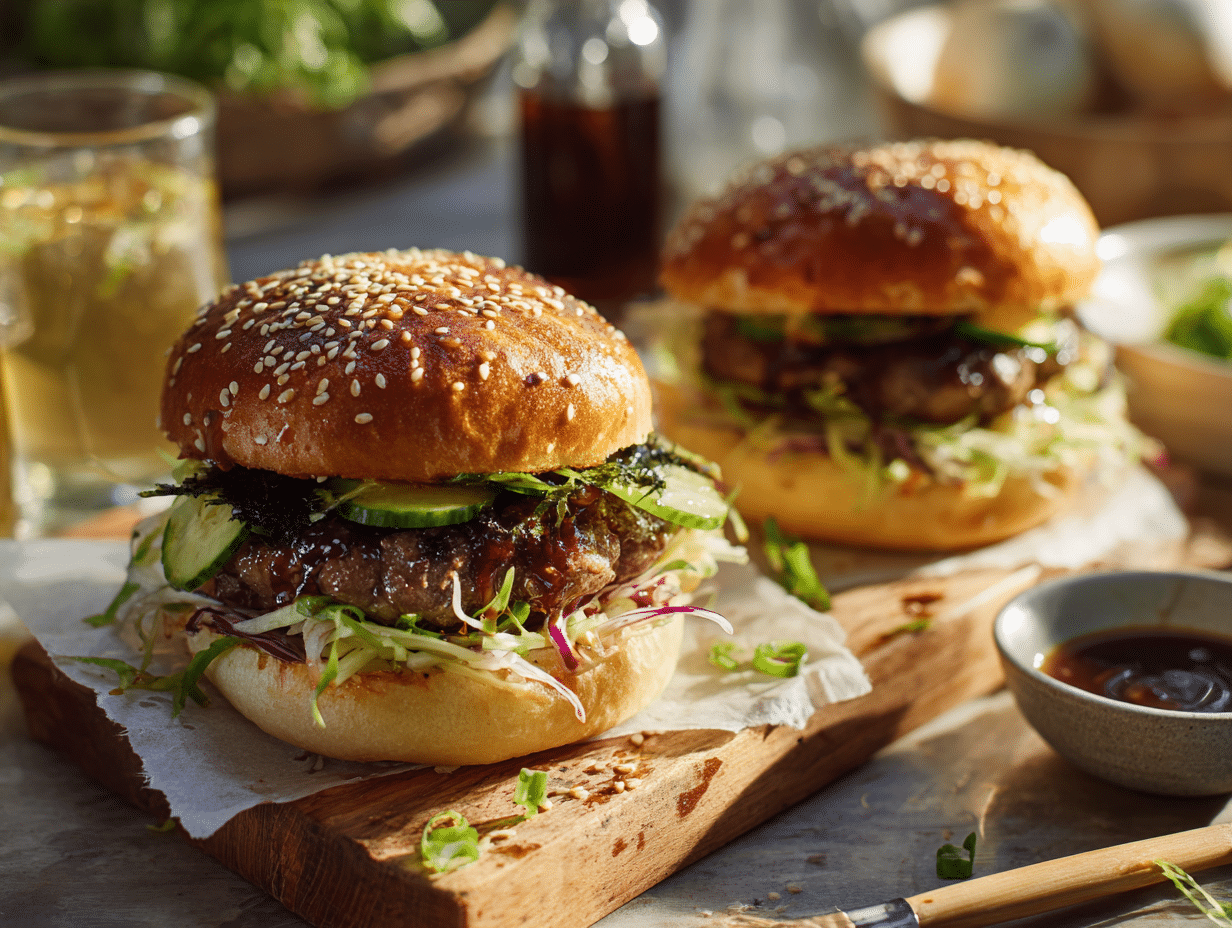
Lotteria Rice Bulgogi Burger

Ingredients
For the Rice Buns:
- 3 cups cooked short-grain sushi rice warm (not hot), freshly cooked Koshihikari or Calrose recommended; about 1 1/2 cups raw rice yields 3 cups cooked
- 2 tbsp potato starch or cornstarch; helps bind the rice buns
- 1 tsp toasted sesame oil Kadoya brand recommended
- ½ tsp fine sea salt or kosher salt to taste
- 1 tbsp neutral oil for searing rice buns; canola, avocado, or grapeseed
For the Quick Pickle Slaw:
- 1 cup napa cabbage thinly sliced; savoy cabbage works too
- ½ cup cucumber matchsticks; Persian or Kirby preferred for crunch
- ¼ small red onion very thinly sliced; soak in cold water if sharp
- 1 tbsp rice vinegar unseasoned; Marukan recommended
- 1 tsp granulated sugar balances acidity in quick pickles
- 1 pinch fine sea salt to taste, to lightly season the slaw
- ½ tsp toasted sesame seeds for nutty aroma and texture
For the Bulgogi Beef Patties:
- 1 lb ground beef (80/20) or finely chopped ribeye for extra tenderness
- 2 tbsp low-sodium soy sauce Kikkoman Less Sodium or similar; keeps balance with glaze later
- 1 tbsp dark brown sugar adds molasses depth to the bulgogi profile
- 1 tbsp mirin or rice wine; adds gloss and subtle sweetness
- 1 tbsp grated Asian pear or 1 tbsp unsweetened applesauce; tenderizes and sweetens
- 2 tsp minced garlic freshly minced for best aroma and bite
- 1 tsp grated fresh ginger microplane for a fine paste that blends evenly
- 2 tsp toasted sesame oil for round, nutty depth in the patty mix
- ¼ tsp freshly ground black pepper to taste
- 2 tbsp scallions finely sliced; green parts only for freshness
For the Bulgogi Glaze:
- 3 tbsp low-sodium soy sauce base for a glossy, brush-on glaze
- 1 ½ tbsp dark brown sugar adjust to taste for sweetness and shine
- 1 tbsp mirin adds roundness and lacquer when reduced
- 1 tbsp water to balance saltiness and aid reduction
- 1 tsp cornstarch slurry with 2 tsp water to thicken
- 2 tsp water for the cornstarch slurry
- 1 tsp toasted sesame oil stir in off heat for aroma
For the Toppings & Assembly:
- 4 pieces green leaf lettuce or perilla (kkaennip) for herbal lift
- 1 sheet roasted seaweed (nori) cut into 4 squares; optional but highly recommended for aroma and stability
- 1 tsp toasted sesame seeds for finishing garnish
- 2 tbsp mayonnaise optional; mix with gochujang for heat
- 1 tsp gochujang optional; for spicy mayo, adjust to taste
- ½ tsp lemon juice optional; brightens the mayo
Instructions
Form the Rice Buns (10 minutes):
- In a bowl, combine 3 cups warm cooked short-grain rice, 2 tbsp potato starch, 1 tsp toasted sesame oil, and 1/2 tsp fine sea salt. Use a rice paddle to fold—don’t mash—until the grains are lightly coated and tacky. The mixture should hold when squeezed.
- Line a 4-inch ring mold (or a clean tuna can with top/bottom removed) with plastic wrap. Pack in about 3/8 cup rice and press firmly to a 1/2-inch thick patty. Repeat to make 8 patties.
- Transfer patties to a plate, cover, and refrigerate for 20 minutes to set. The surface should feel slightly dry and cohesive.
Quick Pickle Slaw (5 minutes + 10 minutes rest):
- In a bowl, toss 1 cup napa cabbage, 1/2 cup cucumber, and 1/4 small red onion with 1 tbsp rice vinegar, 1 tsp sugar, a pinch of salt, and 1/2 tsp toasted sesame seeds.
- Let rest 10 minutes to lightly pickle while the rice buns chill. It should smell bright and lightly tangy, with a gentle crunch.
Mix and Shape Bulgogi Patties (10 minutes):
- In a large bowl, whisk together 2 tbsp soy sauce, 1 tbsp dark brown sugar, 1 tbsp mirin, 1 tbsp grated Asian pear, 2 tsp minced garlic, 1 tsp grated ginger, 2 tsp toasted sesame oil, and 1/4 tsp black pepper.
- Add 1 lb ground beef and 2 tbsp sliced scallions. Fold gently just until combined—do not overmix or the patties will be tough.
- Divide into 4 thin patties about 4 inches wide. Chill briefly while you heat the pan.
- Chef’s Cue: Patties should feel supple and slightly sticky from the pear—this means they’ll sear beautifully.
Crisp the Rice Buns (8–10 minutes):
- Heat a large nonstick or cast-iron skillet over medium-high until a drop of water dances and evaporates on contact—about 375°F/190°C surface temperature.
- Add 1 tbsp neutral oil. Sear rice patties in batches, 3–4 minutes per side, until deep golden with a crisp crust and toasty sesame aroma. Keep warm.
- Alternative Methods: Oven: Brush patties lightly with oil and bake on a parchment-lined sheet at 450°F/232°C for 12–15 minutes, flipping once. Air Fryer: Lightly oil and cook at 400°F/205°C for 8–10 minutes, flipping halfway, until evenly browned.
Cook the Bulgogi Patties (6–8 minutes):
- In the same skillet over medium-high, sear patties 2–3 minutes per side until caramelized edges form and juices begin to bead on top.
- Cook to desired doneness; for food safety, ground beef should reach 160°F/71°C internally. Remove and rest 2 minutes.
Make the Bulgogi Glaze (2–3 minutes):
- In a small saucepan, combine 3 tbsp soy sauce, 1 1/2 tbsp brown sugar, 1 tbsp mirin, and 1 tbsp water. Bring to a simmer over medium.
- Whisk 1 tsp cornstarch with 2 tsp water, then stream into the pan, simmering 30–60 seconds until glossy and thick enough to coat a spoon.
- Remove from heat and stir in 1 tsp toasted sesame oil. Brush generously over the warm patties.
Assemble (3–5 minutes):
- Optional: Mix 2 tbsp mayonnaise with 1 tsp gochujang and 1/2 tsp lemon juice for a spicy mayo.
- Lay a crisp rice bun on the board. If using, place a square of nori on top, then a lettuce leaf.
- Add a glazed bulgogi patty, spoon over a little extra glaze, and top with a small mound of the quick slaw.
- Spread spicy mayo on the second rice bun and cap the burger. Sprinkle with toasted sesame seeds. Press gently to set the layers; you should hear a faint crackle from the rice crust.
Notes
Chef’s Tips:
- Rice Texture is Everything: Use slightly warm, properly cooked short-grain rice—sticky but distinct. Cold, hard rice won’t bind; overly wet rice will fall apart.
- Press with Conviction: Compact rice tightly in the mold; a firm press creates that signature crisp shell with a tender center.
- Pear Power: Asian pear naturally tenderizes beef. In a pinch, applesauce or a touch of pineapple juice works—go easy to avoid over-tenderizing.
- Caramelization Cue: Don’t crowd the pan. If the patties steam, you’ll miss out on those mahogany edges that make bulgogi sing.
- Glaze Control: If it thickens too much, whisk in a teaspoon of water off heat to loosen.
- Dietary Swaps: Use ground chicken or firm tofu crumbles (pressed well) with the same marinade. For gluten-free, choose gluten-free tamari.
- If your rice is very fresh and steamy, spread it on a tray for 5 minutes to release excess moisture before mixing with starch—this prevents soggy buns.
- Keep a small bowl of water nearby to wet your fingers when shaping; it stops sticking and helps you create neat edges.
Nutrition
FAQ
Can I make the rice buns ahead of time?
Yes — they’re actually better made the day before. Overnight chilling gives the starches more time to set, which means the buns hold together more reliably during searing. Keep them covered in the fridge and sear them straight from cold.
Do I have to use a burger mold, or is there another way to shape the rice buns?
A round cookie cutter or even a wide-mouth mason jar lid lined with plastic wrap both work. The key is pressing the rice down firmly and evenly so there are no air pockets — loose packing is what causes crumbling.
Is this recipe gluten-free?
It can be, but you need to check your soy sauce — standard soy sauce contains wheat. Swap in tamari or a certified gluten-free soy sauce in the bulgogi marinade and you’re covered. Everything else in the base recipe is naturally gluten-free.
Try these next
- Korean Fried Chicken Burger
- Hawaiian Teriyaki Burger Recipe
- Teriyaki Whopper Jr Recipe
- Sweet Chili Chicken Burger