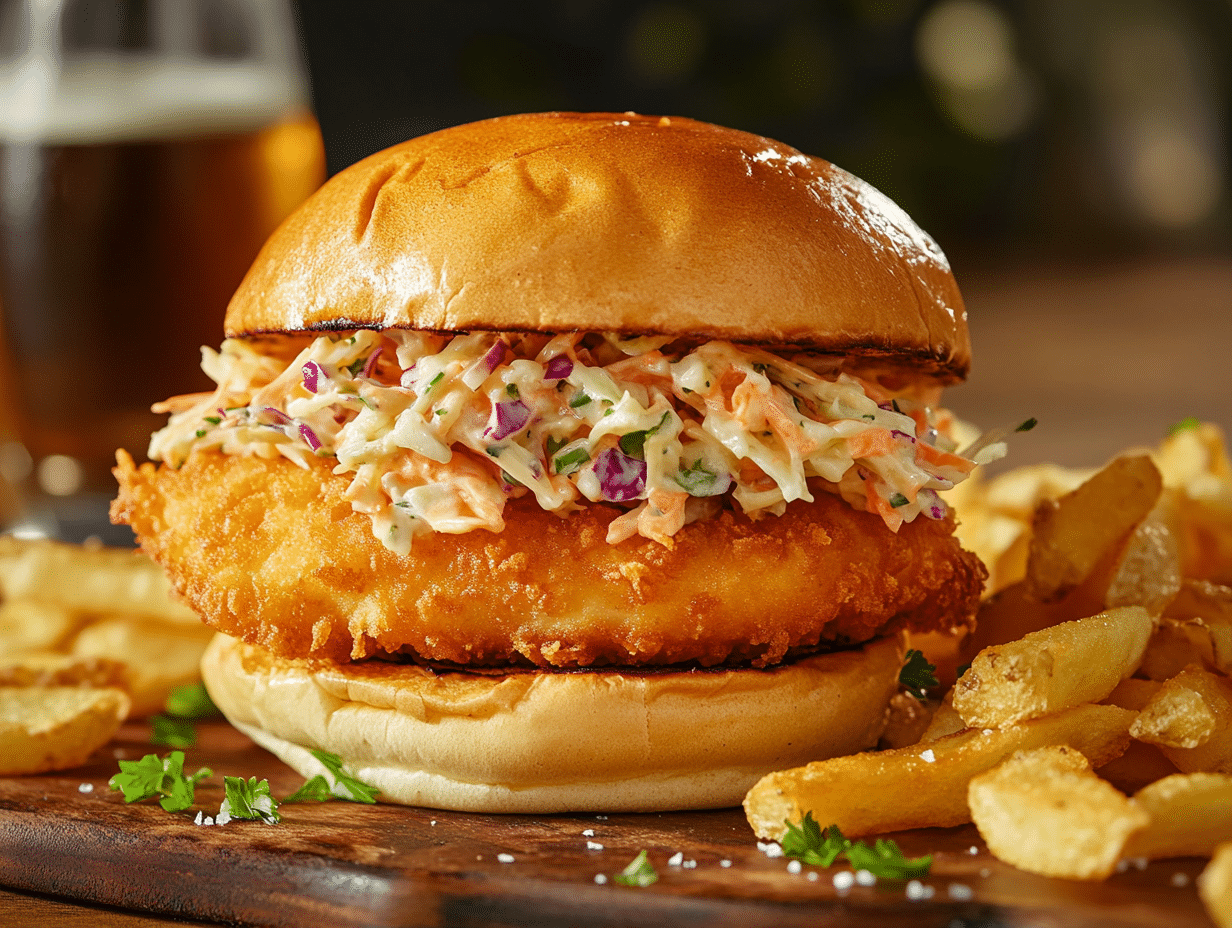
This is a beer-battered cod fillet served in a toasted brioche bun with tartar-dressed coleslaw and thick-cut chips on the side. It takes more steps than a standard burger, but every one of them is straightforward. If you can deep-fry chicken, you can make this.
The short version of why this works
Two things drive the whole recipe. First, the beer batter: the carbonation in a pale ale or lager creates tiny bubbles in the batter as it hits hot oil, and those bubbles puff and set into a thin, crackly shell instead of a dense, greasy crust. Use cold beer straight from the fridge — warm beer goes flat fast and the batter suffers for it. Second, the two-stage fry on the chips: the first fry at lower heat cooks the potato through without browning it, and the second fry at higher heat drives off surface moisture and locks in the crunch. Skip either stage and you get chips that are either raw in the middle or limp on the outside. Both techniques sound fussy but they’re really just about oil temperature and timing, which a cheap clip-on thermometer handles completely.
Troubleshooting
- Batter slides off the fish in the oil: The fillet wasn’t dry enough before flouring. Pat the cod firmly with paper towels until the surface feels tacky, not wet. Moisture between the fish and the flour coat breaks the bond the moment it hits hot oil.
- Batter is thick and doughy, not crispy: The batter was overmixed or the beer wasn’t cold. Stir just until the flour disappears — lumps are fine. Overmixing develops gluten and turns the coating chewy.
- Chips are soggy after the second fry: The oil temperature dropped too far when you added the chips. Fry in small batches. Crowding the pot lowers the oil temp and the chips steam instead of fry.
- The coleslaw makes the bun soggy: Dress the slaw right before assembling, not ahead of time. The tartar sauce draws moisture out of the cabbage quickly. If you’re building burgers for a group, keep the slaw and sauce separate until the last minute.
- The fish fillet is cooked through but the batter is pale: Your oil wasn’t hot enough when the fish went in. Check the temperature — it should be back up to the target heat between each piece. A pale batter also means the crust hasn’t crisped properly and will go soft fast.
Make-ahead notes
The tartar-dressed coleslaw keeps well for up to 24 hours in the fridge in a sealed container — the flavors actually improve, though it will release some liquid, so drain it briefly before using. The chips can be par-fried (first fry only), cooled completely, and refrigerated uncovered on a wire rack for up to 8 hours; finish the second fry straight from the fridge when you’re ready to eat. Beer batter does not store — mix it fresh each time, since the carbonation that makes it work is gone within 30 minutes. Leftover fried cod reheats best in an oven or air fryer at 375°F for 8–10 minutes; a microwave turns the batter soft and the fish rubbery. Don’t freeze the battered fish after frying — the crust separates and the texture is poor on reheating.
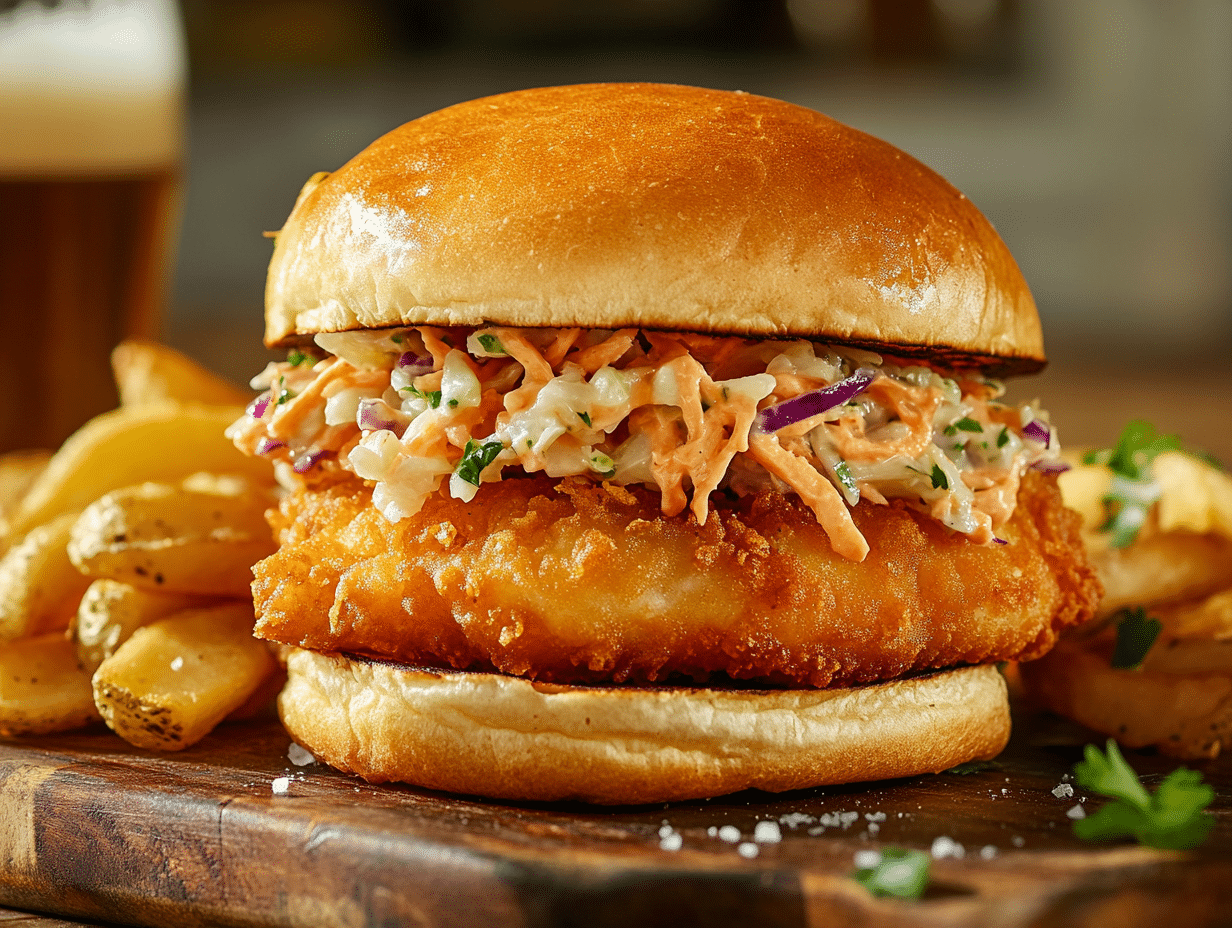
British Fish and Chips Burger

Ingredients
For the Fish:
- 4 fillets cod skinless and boneless, roughly 5 oz each, fresh preferred
- 1 cup all-purpose flour plus extra for dusting
- 1 teaspoon baking powder
- 1 cup cold beer preferably a lager or pale ale
- 1 teaspoon salt
- 1 quart vegetable oil for deep frying
For the Chips:
- 4 large russet potatoes peeled and cut into thick fries
- 1 tablespoon white vinegar for soaking potatoes
For Assembly:
- 4 pieces brioche burger buns toasted lightly
- 1 cup coleslaw mix
- ½ cup tartar sauce store-bought or homemade
- 1 handful fresh parsley chopped, for garnish
Instructions
- Prepare the Chips: Rinse the cut potatoes and soak them in cold water with 1 tablespoon of vinegar for 30 minutes. Drain and pat dry thoroughly. Heat oil in a deep fryer or heavy-bottomed pot to 325°F (165°C). Fry potatoes in batches for 4-5 minutes until pale and tender. Remove and drain. Raise oil to 375°F (190°C) and fry again until golden and crisp, about 2-3 minutes per batch. Salt immediately.
- Make the Beer Batter: In a mixing bowl, whisk flour, baking powder, and salt. Add cold beer slowly while whisking until the batter is smooth and the consistency of thick pancake batter.
- Fry the Fish: Dust cod fillets lightly with flour. Dip each into the beer batter, letting excess drip off. Fry in 375°F (190°C) oil for 5-6 minutes until golden brown and crispy. Do this in batches to avoid crowding. Drain on a wire rack.
- Assemble the Burger: Toast brioche buns until lightly golden. Toss coleslaw with tartar sauce. Place a fried cod fillet on the bottom bun, top with slaw, and finish with the top bun. Garnish with a sprinkle of chopped parsley. Plate alongside a serving of crispy chips.
Notes
- If cod is unavailable, haddock makes an excellent substitute.
- To save time, par-fry the chips earlier in the day. Re-fry for crispiness right before serving.
- Make your own tartar sauce with mayo, pickle relish, lemon juice, and capers for extra flavor.
Nutrition
FAQ
Can I use a fish other than cod?
Yes — haddock is the most direct swap and behaves almost identically in batter. Pollock and tilapia also work, but they’re thinner and cook faster, so watch the oil temperature and pull them as soon as the batter is deep golden.
What oil is best for frying the fish and chips?
Use a neutral oil with a high smoke point — vegetable, canola, or sunflower oil all work well. Avoid olive oil; its smoke point is too low for deep-frying and the flavor competes with the fish.
How do I know when the fish is cooked through without cutting into it?
The internal temperature should reach 145°F (63°C) for fish — an instant-read thermometer inserted into the thickest part is the most reliable check. If you don’t have one, the fish is done when it flakes easily and the flesh has turned from translucent to opaque all the way through.
My brioche buns are very soft — will they hold up to the fried fish and slaw?
Toast them cut-side down in a dry pan over medium heat for about 90 seconds until the surface is lightly golden and firm. That toasted layer acts as a barrier and keeps the bun from going soggy under the wet toppings.
Can I make this without a deep fryer?
A deep, heavy-bottomed pot — a Dutch oven works well — does the job fine. Fill it no more than halfway with oil, use a thermometer to monitor the temperature, and keep a lid nearby in case of a flare-up. The key is maintaining consistent heat, which a heavy pot holds better than a thin saucepan.