The McArabia is McDonald’s grilled chicken flatbread sandwich, sold across the Middle East since 2003 — khubz bread, cumin-and-coriander-spiced chicken, crisp vegetables, and a punchy garlic sauce. The honest reason to make it at home is that the garlic sauce alone is worth the effort, and grilling a stack of these for a group is genuinely easier than managing a pile of buns and patties.
What makes this version work
Two things matter most here. First, the marinade needs real contact time — at least two hours in the fridge, ideally overnight. Cumin, coriander, and paprika don’t just sit on the surface of chicken breast; they need time to actually flavor the meat through. Second, get the grill or grill pan genuinely hot before the chicken goes on. A hot surface gives you the char marks and slight crust that keep the flatbread from going soggy once everything is assembled. Chicken breast dries out fast, so pull it at exactly 165°F internal temperature and rest it for three minutes before slicing — that rest makes a real difference in juiciness.
Shopping notes
- Khubz (Arabic flatbread): Look for it at Middle Eastern grocery stores or any store with a decent international section. It’s thicker and softer than standard pita. If you can’t find it, a large, soft flour tortilla is the most practical substitute — not identical, but it folds and holds the filling the same way. Avoid thin lavash; it tears.
- Toum or garlic sauce: Some larger grocery stores stock jarred toum near the hummus. If yours doesn’t, Lebanese and Middle Eastern markets almost always carry it. Making it from scratch is an option but adds real time — store-bought works fine for a crowd.
- Ground coriander: Buy it fresh if yours has been in the spice drawer more than a year. Old coriander tastes like sawdust and will flatten the whole marinade.
Make-ahead notes
The chicken can marinate in the fridge for up to 24 hours — beyond that the acid starts to break down the texture. Once grilled and sliced, the chicken keeps well in an airtight container in the fridge for up to three days. Reheat it in a dry skillet over medium heat for two to three minutes rather than the microwave, which makes it rubbery. The garlic sauce keeps refrigerated for up to a week in a sealed jar. For a cookout, pre-slice the chicken and store it separately from the bread and vegetables; assemble on-site so the flatbread stays dry. Uncooked marinated chicken can be frozen flat in zip bags for up to two months — thaw overnight in the fridge before grilling.
Common problems and fixes
- Flatbread tears when folding: Cold flatbread cracks. Warm each piece for 20–30 seconds in a dry skillet or wrapped in a damp paper towel in the microwave before assembling.
- Garlic sauce is too sharp and raw-tasting: Stir in a small squeeze of lemon juice and let it sit for 10 minutes — it mellows the bite without killing the garlic flavor. Skip the egg in the mix if you’re making sauce from scratch — it makes the texture gluey rather than creamy.
- Chicken sticks to the grill: The marinade has oil in it, but grill grates still need to be clean and hot. Brush the grates right before the chicken goes on, not before preheating.
- Sandwich falls apart when eating: Too much sauce or too many vegetables. Keep the sauce to about a tablespoon per sandwich and layer the chicken in the center of the bread so it acts as an anchor when you fold.
- Spice flavor is weak after cooking: Toast whole cumin and coriander seeds in a dry pan for 60 seconds before grinding them. Pre-ground spices lose potency fast; freshly ground makes a noticeable difference at scale.
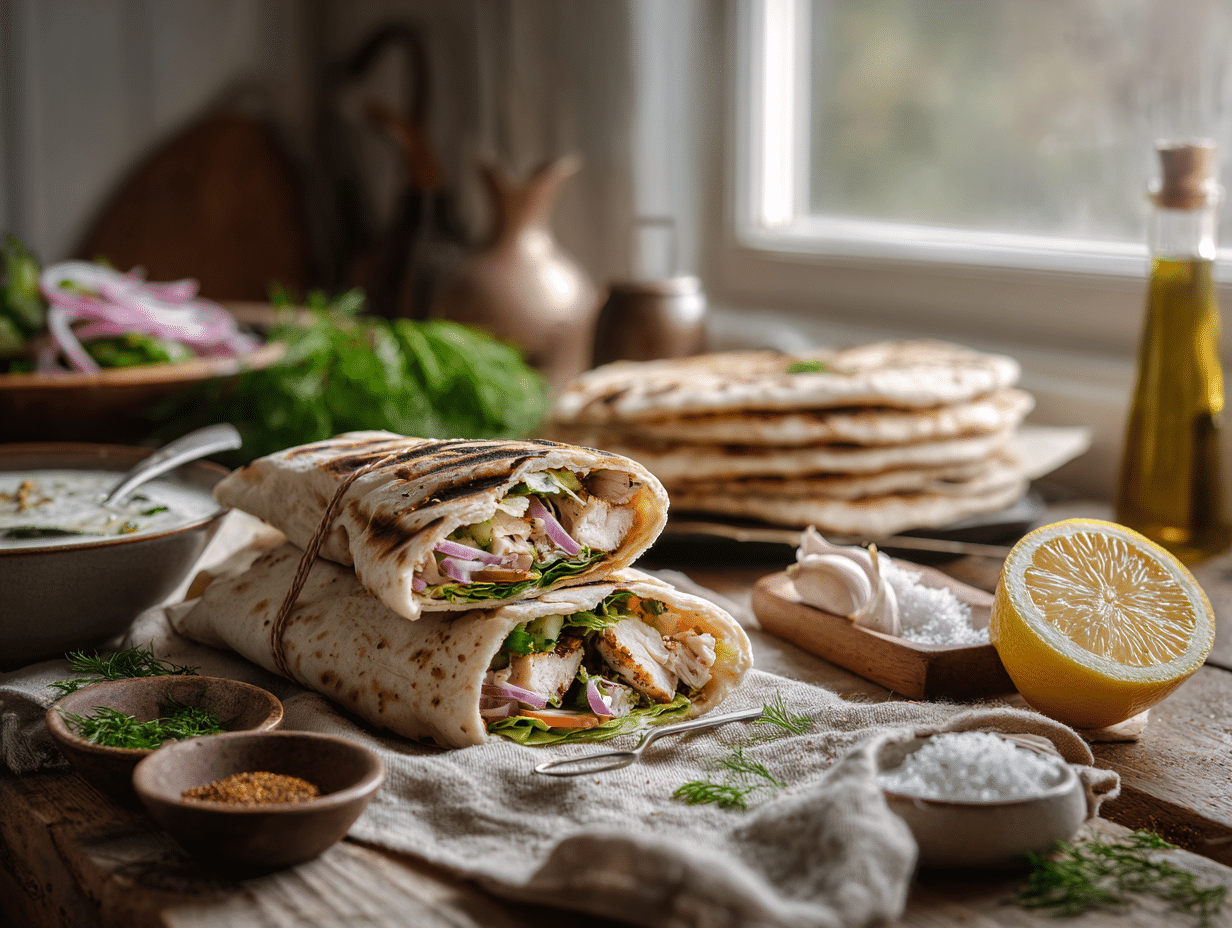
Copycat McArabia Grilled Chicken Flatbread

Ingredients
For the Garlic–Tahini Yogurt Sauce:
- ½ cup full-fat Greek yogurt creamiest texture for a lush sauce
- 2 tbsp tahini stir well if separated; Soom or Beirut brands are reliable
- 1 tbsp mayonnaise optional for a classic McArabia-style creaminess
- 1 tbsp fresh lemon juice freshly squeezed for brightness
- 2 cloves garlic finely grated or crushed to a paste
- 1 tbsp extra-virgin olive oil fruity, medium-intensity
- ¼ tsp kosher salt Diamond Crystal; reduce to 1/8 tsp if using Morton
- ⅛ tsp ground cumin adds warmth without overpowering
- 1 tbsp water as needed to loosen to spoonable consistency
For the Herb-Grilled Chicken:
- 1.25 lb boneless skinless chicken thighs trimmed; or use 1 lb (454 g) chicken breasts pounded to 1/2-inch
- 2 tbsp extra-virgin olive oil
- 1 tbsp fresh lemon juice
- 2 cloves garlic minced
- 1 tsp ground cumin
- 1 tsp ground coriander
- ¾ tsp sweet paprika not smoked
- ¼ tsp ground turmeric for color and warmth
- ¼ tsp ground allspice optional, traditional Levantine note
- ¾ tsp kosher salt Diamond Crystal; use 1/2 tsp if Morton
- ½ tsp freshly ground black pepper
For the Assembly:
- 4 pieces Arabic flatbreads (khubz) or large pitas/soft naan 8–9-inch; soft and pliable
- 2 cup shredded romaine lettuce washed and well-dried for crunch
- 1 medium beefsteak tomato thinly sliced (6–8 slices)
- ½ small red onion thinly sliced
- ½ cup cucumber pickle slices or 8–12 hamburger-style pickle chips
- 2 tbsp fresh parsley finely chopped
- 1 tbsp olive oil optional, for brushing flatbreads
For Optional: Quick Skillet Flatbreads:
- 1 ½ cup all-purpose flour scoop and level
- 1 tsp baking powder
- ½ tsp kosher salt
- ⅔ cup whole milk or warm water for dairy-free
- 2 tbsp plain yogurt
- 1 tbsp olive oil
Instructions
- Make the Sauce (10 minutes): In a small bowl, whisk the Greek yogurt, tahini, mayonnaise (if using), lemon juice, grated garlic, and olive oil until silky. Season with kosher salt and a pinch of cumin. Whisk in water, a teaspoon at a time, until the sauce is spoonable but not runny. Taste for balance—you want creamy, garlicky, and bright. Cover and refrigerate.
- Season the Chicken (10 minutes active + brief rest): Pat the chicken dry. In a bowl, combine olive oil, lemon juice, minced garlic, cumin, coriander, paprika, turmeric, allspice (optional), salt, and pepper. Add the chicken and toss to coat thoroughly. If using breasts, lightly pound to an even 1/2-inch thickness for even cooking. Let marinate 15 minutes at room temperature (or up to 4 hours refrigerated). Meanwhile, prep your vegetables.
- Preheat Grill or Pan: Heat a grill to medium-high, about 425–450°F (220–230°C). Alternatively, preheat a cast-iron grill pan or skillet over medium-high until the oil just shimmers. Lightly oil the grates or pan to prevent sticking.
- Grill the Chicken (about 10 minutes): Cook the chicken 4–5 minutes per side until nicely charred and cooked through. Internal temperature should reach 165°F (74°C). Transfer to a board, tent loosely with foil, and rest 5 minutes to keep juices in.
- Warm the Flatbreads (about 2 minutes total): Brush lightly with olive oil (optional) and warm directly on the grill or in a dry skillet for 30–60 seconds per side until pliable and lightly spotted. Oven option: wrap in foil and warm at 300°F (150°C) for 5 minutes.
- Assemble: Slice the chicken into thick strips. Spread 1 to 1 1/2 tablespoons of sauce over each warm flatbread. Layer with romaine, tomato, red onion, and pickle slices. Add the chicken, drizzle a little more sauce, and finish with chopped parsley. Fold and wrap in parchment or foil to hold the shape and keep warmth.
- Optional Advanced: Quick Skillet Flatbreads: In a bowl, mix flour, baking powder, and salt. Stir in milk, yogurt, and olive oil until a soft dough forms. Knead briefly (1 minute) just until smooth; rest 10 minutes.Divide into 4 balls. On a lightly floured surface, roll each to 7–8 inches.Cook in a hot, dry skillet over medium-high (about 400°F/205°C surface temp) for 1–2 minutes per side until puffed with browned spots. Keep warm wrapped in a towel.If you don’t have a rolling pin, use a wine bottle; a tortilla press also works.
Notes
Chef’s Tips:
- Juicier Chicken: Thighs are naturally forgiving. If using breasts, pound to an even thickness and don’t exceed 165°F (74°C).
- Garlic Profile: For a punchier, toum-like vibe, add another clove of garlic and a squeeze more lemon. For milder sauce, roast the garlic before blending.
- Spice Swap: Add a pinch of sumac for citrusy brightness, or a little Aleppo pepper for gentle heat.
- Dairy-Free: Replace yogurt with mayo + aquafaba or a thick unsweetened plant yogurt; use water, not milk, for the optional flatbreads.
- No Grill? A cast-iron skillet sears beautifully. For a smoky note, add a tiny drop of liquid smoke to the marinade.
- Meal Prep: Sauce keeps 3 days refrigerated. Marinate chicken up to 24 hours ahead for deeper flavor.
Serving Suggestions:
Plate each wrap halved on a warm plate, cut side up to showcase juicy chicken, emerald romaine, ruby tomato, and lilac onion. Drizzle a ribbon of sauce across the cut face and sprinkle parsley. Serve with lemon wedges and a simple chopped salad (tomato, cucumber, parsley) or fries. Pair with chilled mint lemonade or unsweetened iced tea.Culinary Context:
The McArabia emerged in the early 2000s across the Middle East, marrying global fast-food familiarity with regional staples: khubz, garlic sauce, and warmly spiced chicken. This version keeps the recognizable structure while leaning into classic Levantine seasoning and a chef’s balance of texture and freshness.Optional Advanced Instructions:
- Make-Ahead: Sauce can be prepared 1–2 days ahead. Vegetables can be sliced, wrapped, and chilled up to 6 hours.
- Parallel Workflow: Marinate the chicken while you whisk the sauce and prep vegetables; preheat the grill during the last minutes of marination.
- Beginner Alternative: Use rotisserie chicken tossed in warm spices with a splash of lemon; sear briefly to heat before assembling.
Timing:
- Prep Time: 30 minutes (sauce 10, chicken seasoning 10, veg prep 10; marination 15 minutes overlaps)
- Cook Time: 12 minutes (grill chicken ~10 minutes + warm flatbreads ~2 minutes)
- Total Time: 42 minutes
- Servings: 4 sandwiches
- Course: Lunch or Dinner
- Cuisine/Origin: Middle Eastern, fast-food copycat inspired by the McDonald’s McArabia
Nutrition
Common questions
Can I use chicken thighs instead of chicken breast?
Yes, and thighs are actually more forgiving on the grill. They have more fat, so they stay juicy even if you go a minute over — still cook to 165°F internal. Boneless, skinless thighs work best; just pound them to an even thickness so they cook at the same rate.
How do I scale this up for 10 or more people without losing track?
Batch the marinade the night before and keep the chicken in labeled zip bags in the fridge. Grill in waves and hold finished, sliced chicken in a covered baking dish in a 200°F oven — it stays warm and moist for up to 45 minutes without drying out.
What’s the difference between toum and regular garlic mayo?
Toum is an emulsion of garlic, oil, lemon juice, and salt — no egg, no mayo base — so it’s sharper, lighter, and more intensely garlicky. Regular garlic mayo will work as a substitute but the flavor is noticeably milder and richer.
Can I cook the chicken on a stovetop grill pan instead of an outdoor grill?
Absolutely. Get the grill pan screaming hot over high heat and don’t move the chicken for the first three minutes — that’s how you get actual grill marks and a crust. Open a window; the marinade will smoke.
Is there a way to prep the flatbreads ahead so they don’t dry out?
Stack them, wrap the whole stack tightly in foil, and store at room temperature for up to a day. If you’re at a cookout, keep the foil packet near the edge of the grill to warm through — about five minutes is enough.
Can I make this with a kofta-style patty instead of grilled chicken slices?
Yes — ground lamb or beef seasoned with the same spice blend works well in the same flatbread format. Cook ground beef or lamb patties to 160°F internal. Shape them into oval patties roughly the length of the bread so they don’t slide around when you fold it.
What to cook next
- Gourmet Chicken Big Mac
- McAloo Tikki Burger Recipe
- Korean Fried Chicken Burger
- Wendy’s Grilled Chicken Remake