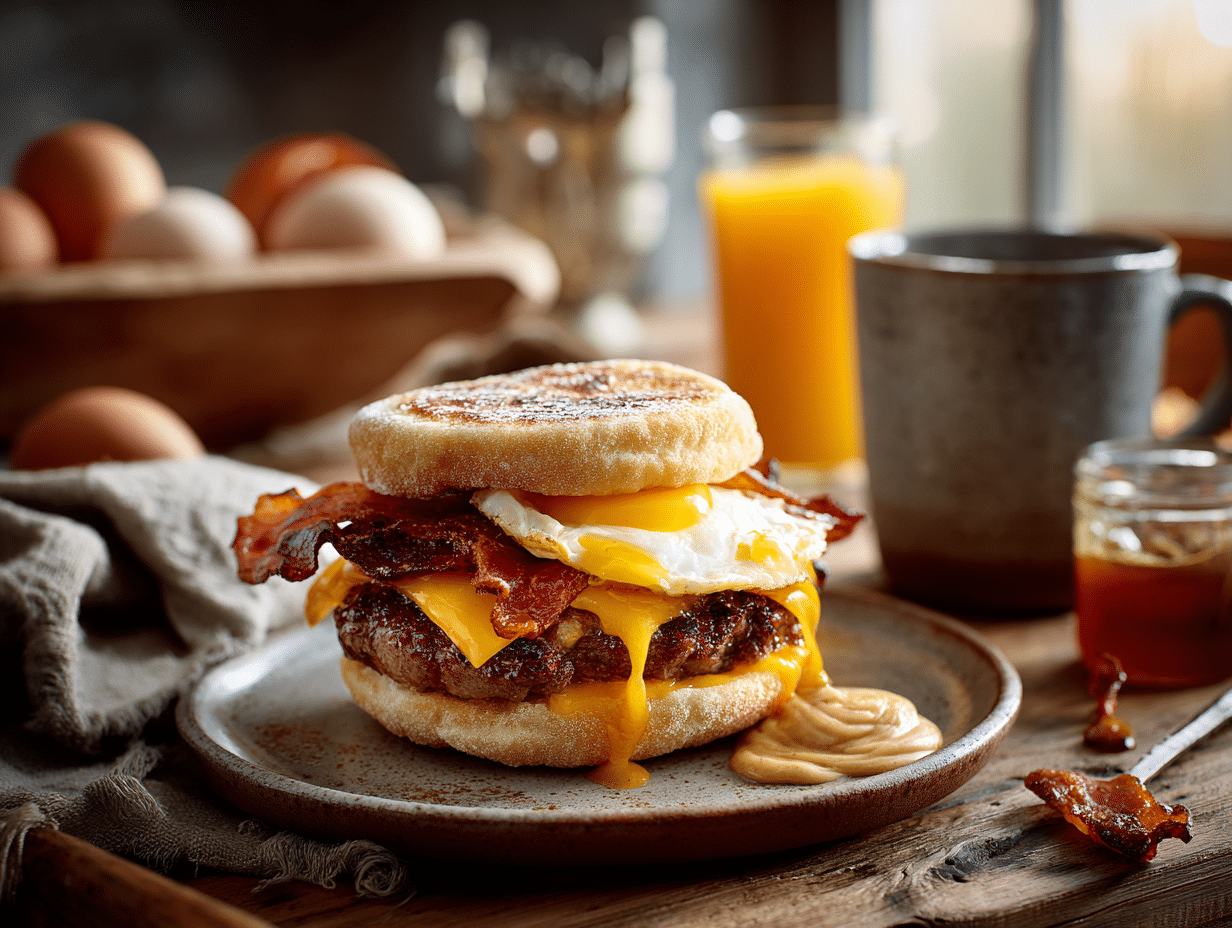
The McDonalds-Style Bacon and Egg McMuffin Burger: A Breakfast Revolution
The Birth of a Breakfast Icon
In 1972, Herb Peterson, a McDonald’s franchise owner in Santa Barbara, California, forever changed the breakfast landscape with his invention of the Egg McMuffin. Peterson’s creation was inspired by eggs Benedict, but reimagined for the fast-food format—an English muffin replacing the traditional base, Canadian bacon standing in for ham, and a slice of American cheese creating a more approachable alternative to hollandaise sauce.
The Egg McMuffin’s introduction marked McDonald’s entry into the breakfast market, ultimately transforming how Americans think about their morning meals. By the mid-1970s, McDonald’s had rolled out a full breakfast menu nationwide, with the McMuffin family—including the Bacon, Egg & Cheese variation—becoming cornerstone items that would generate billions in revenue over the decades.
From Fast Food to Fine Dining: The Evolution
This chef-crafted interpretation represents a natural evolution in culinary thinking—taking beloved fast-food flavors and elevating them through technique and ingredient selection. The addition of a beef patty transforms the traditional breakfast sandwich into a hybrid creation that bridges the gap between morning and afternoon dining, reflecting modern eating patterns where breakfast foods are enjoyed throughout the day.
The smash-burger technique employed here originated in the 1940s at establishments like Dairy Cheer in Kentucky and has experienced a renaissance in recent years. By pressing the beef against a hot surface, we create maximum surface area for the Maillard reaction, developing deep, caramelized flavors that complement the smoky bacon and rich egg.
The Science of Sandwich Architecture
The English muffin serves as more than just a vehicle—its nooks and crannies create textural contrast while absorbing the various juices and fats from the other components. This absorption is crucial to the eating experience, preventing the sandwich from becoming dry while maintaining structural integrity.
The layering order matters significantly. Placing the cheese directly on the hot patty ensures proper melting, while the bacon creates a barrier between the egg and beef, preventing the egg from overcooking from residual heat. The maple-mustard mayo serves dual purposes: adding moisture and creating a flavor bridge between the sweet-savory bacon and the rich beef.
Cultural Impact and Culinary Significance
The McMuffin’s influence extends far beyond McDonald’s. It spawned countless imitators and inspired a generation of breakfast sandwiches across all levels of dining. From bodega bacon, egg, and cheese sandwiches in New York to gourmet brunch offerings at upscale restaurants, the DNA of the McMuffin is evident throughout American breakfast culture.
This particular interpretation speaks to the current culinary moment, where nostalgia meets innovation. The maple-mustard mayo represents a sophisticated take on classic condiments, while maintaining the approachable flavor profile that made the original so beloved. It’s comfort food that doesn’t talk down to the diner—familiar yet refined.
Technique Deep Dive
The ring mold technique for eggs ensures the perfect circular shape synonymous with fast-food precision, but executed with care for optimal texture. This method, combined with steam, creates eggs with set whites and customizable yolk consistency—a marked improvement over the sometimes rubbery texture of mass-produced versions.
The decision to use 80/20 ground beef reflects an understanding of fat’s role in flavor and moisture. The higher fat content ensures the thin patty remains juicy despite the high-heat cooking method, while the smashing technique maximizes crispy edges—textural elements that elevate the eating experience.
Modern Breakfast Trends
This creation aligns with several contemporary food trends: the all-day breakfast movement, the gourmet burger renaissance, and the elevation of comfort foods. It represents a growing desire among diners for familiar flavors executed with superior technique and ingredients.
The sandwich also reflects changing American eating habits, where traditional meal boundaries have blurred. The substantial protein content—beef, bacon, and egg—satisfies modern appetites while maintaining the portability that made the original McMuffin revolutionary.
Final Thoughts
This McDonalds-Style Bacon and Egg McMuffin Burger stands as both homage and evolution—respecting the genius of the original while pushing boundaries. It demonstrates how iconic fast-food items can inspire culinary creativity, proving that with thoughtful technique and quality ingredients, even the most familiar flavors can surprise and delight. In many ways, it represents the democratization of fine dining techniques, bringing restaurant-quality execution to a format everyone knows and loves.
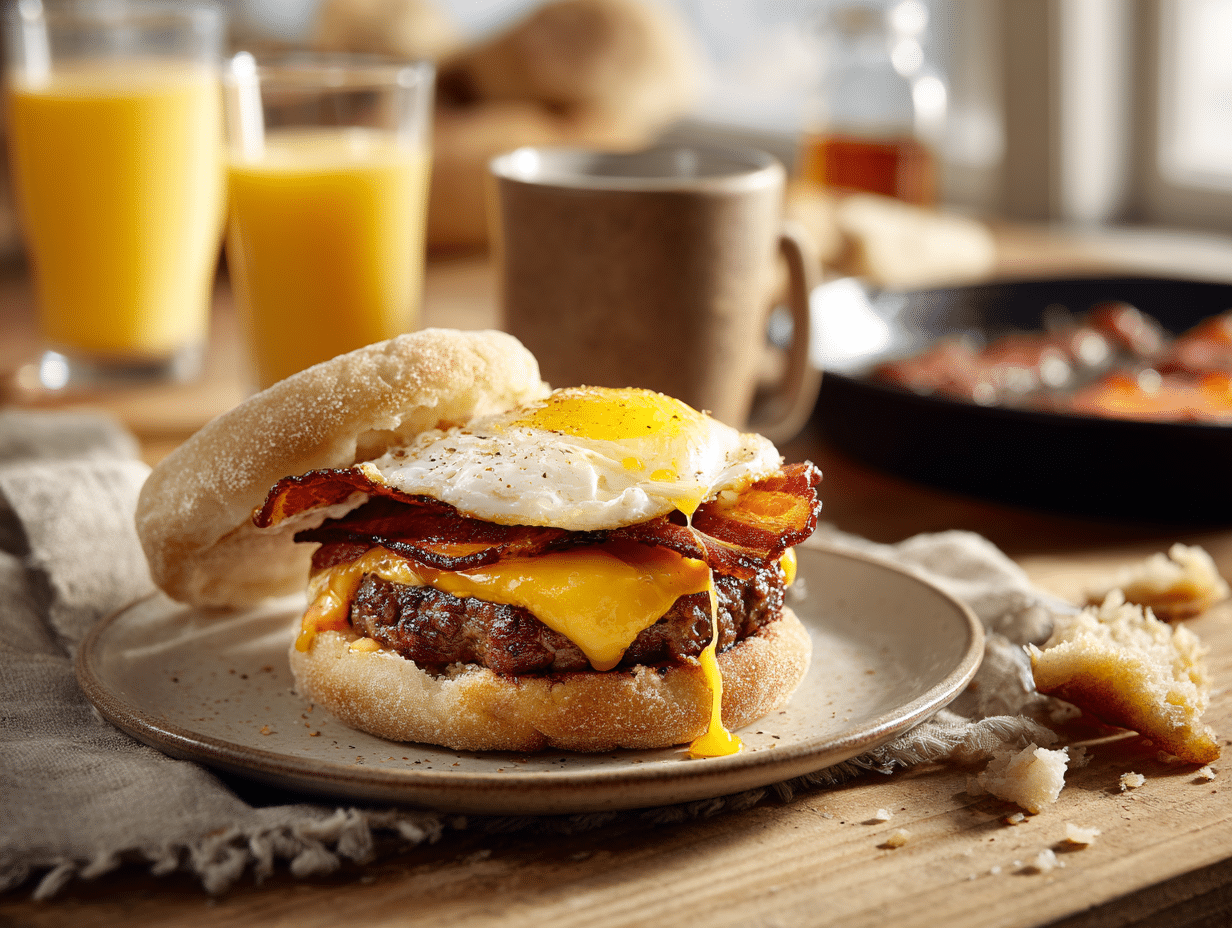
McDonalds-Style Bacon and Egg McMuffin Burger

Ingredients
For the Maple-Mustard Mayo:
- 3 tbsp mayonnaise full-fat for best texture and flavor
- 1 tsp Dijon mustard smooth style; I like Maille or Edmond Fallot
- 1 tsp yellow mustard classic diner tang; optional but recommended
- 1 tsp pure maple syrup grade A amber for balanced sweetness
- ½ tsp apple cider vinegar adds lift and brightness
- ⅛ tsp smoked paprika optional, for a whisper of smokiness
- ⅛ tsp freshly ground black pepper fine grind for a silky sauce
For the Burger & Assembly:
- 4 slices thick-cut bacon choose meaty slices for crisp edges and chew
- 2 whole English muffins split; look for ones with a craggy interior (nooks and crannies)
- 1 tbsp unsalted butter softened, for toasting the muffins
- 7 oz 80/20 ground beef divide into two 3.5 oz portions; fresh ground if possible
- ½ tsp kosher salt divided; to season the patties and eggs
- ¼ tsp freshly ground black pepper divided; to season the patties and eggs
- 2 slices American cheese classic melt; choose deli-style for clean melt
- 2 large eggs fresh, free-range if possible for richer flavor
- 2 tbsp water for steaming the eggs in ring molds
- 1 tsp neutral oil or nonstick spray as needed for skillet and ring molds
Instructions
- Preheat and Set Up (3–5 minutes): Place a griddle or large nonstick skillet over medium heat, about 350°F (175°C). Set a second skillet (cast iron if you have it) over medium-high heat, about 400°F (205°C), for the burger patties. Warm 2–3 inch ring molds on the griddle to help eggs release cleanly.
- Whisk the Maple-mustard Mayo (3 minutes): In a small bowl, whisk together mayonnaise, Dijon, yellow mustard, maple syrup, apple cider vinegar, smoked paprika, and black pepper until smooth and glossy. Taste—the balance should be creamy, tangy, lightly sweet, and gently smoky.
- Crisp the Bacon (8–10 minutes): Lay the bacon on the medium griddle. Cook, turning occasionally, until edges are deeply browned and the aroma turns nutty and smoky, 8–10 minutes. Transfer to a paper towel–lined plate to drain. Tip: For ultra-even results, you can bake the bacon on a rack at 400°F (205°C) for 12–15 minutes.
- Toast the Muffins (2–3 minutes): Split the English muffins and lightly butter the cut sides. Toast cut-side down on the griddle until the crumb is golden with crisp edges, 2–3 minutes. Set the tops and bottoms aside, keeping them warm.
- Smash and Sear the Patties (4–5 minutes): Divide the ground beef into two 3.5 oz portions and gently form loose balls. Lightly oil the hotter skillet. Place the balls in the pan and press firmly with a spatula (or a flat press) to about 3–3.25 inches in diameter. Season with a pinch of kosher salt and black pepper. Cook until the edges are browned and you hear a steady sizzle, about 2–3 minutes. Flip, top each with a slice of American cheese, and cook 1–2 minutes more until the cheese is fully melted. For food safety, cook ground beef to an internal temperature of 160°F (71°C) if desired.
- Cook Round Eggs (2–3 minutes): Lightly oil the warmed ring molds on the griddle. Crack one egg into a small cup, then pour into a ring. Repeat with the second egg. Season lightly with salt and pepper. Add 1 tbsp water to the pan and cover to steam. Cook 2–3 minutes until whites are set and the yolk is slightly jammy; go 30–60 seconds longer for a firmer yolk. Alternative: Soft-scramble the eggs gently over medium-low heat (300°F/150°C) for a plush texture, if you prefer.
- Assemble (1–2 minutes): Spread a thin layer of maple-mustard mayo on the cut sides of the muffin tops (and bottoms if you like it saucy). On each muffin bottom, stack: cheese-topped beef patty, two slices of crisp bacon, then the round egg. Crown with the muffin top. Press lightly to set the layers.
- Rest and Serve (1 minute): Let the sandwiches rest 1 minute so the cheese settles and the muffin absorbs flavorful juices. The muffin should feel warm and crisp at the edges, the bacon crackly, and the aroma buttery, meaty, and gently sweet.
Notes
Chef’s Tips:
- Ring Molds: Lightly preheating and oiling the molds helps eggs release cleanly. No ring? Use a clean, well-oiled mason jar ring, or gently corral the egg white with a spatula as it sets.
- Faster Bacon: Start bacon in a cold pan so fat renders gradually; press with another pan for even contact to speed crisping.
- Beef: 80/20 is ideal for juiciness. If using leaner beef, add a touch of neutral oil to the pan and avoid overcooking.
- Cheese Swaps: American is classic. For a gourmet edge, try mild cheddar or white American; slice thin for optimal melt.
- Sauce Tweaks: Add a pinch of garlic powder for savory depth or a drop of hot sauce for heat.
- Egg Doneness: For a true McMuffin-style set yolk, gently pierce the yolk once before steaming to prevent a runny center.