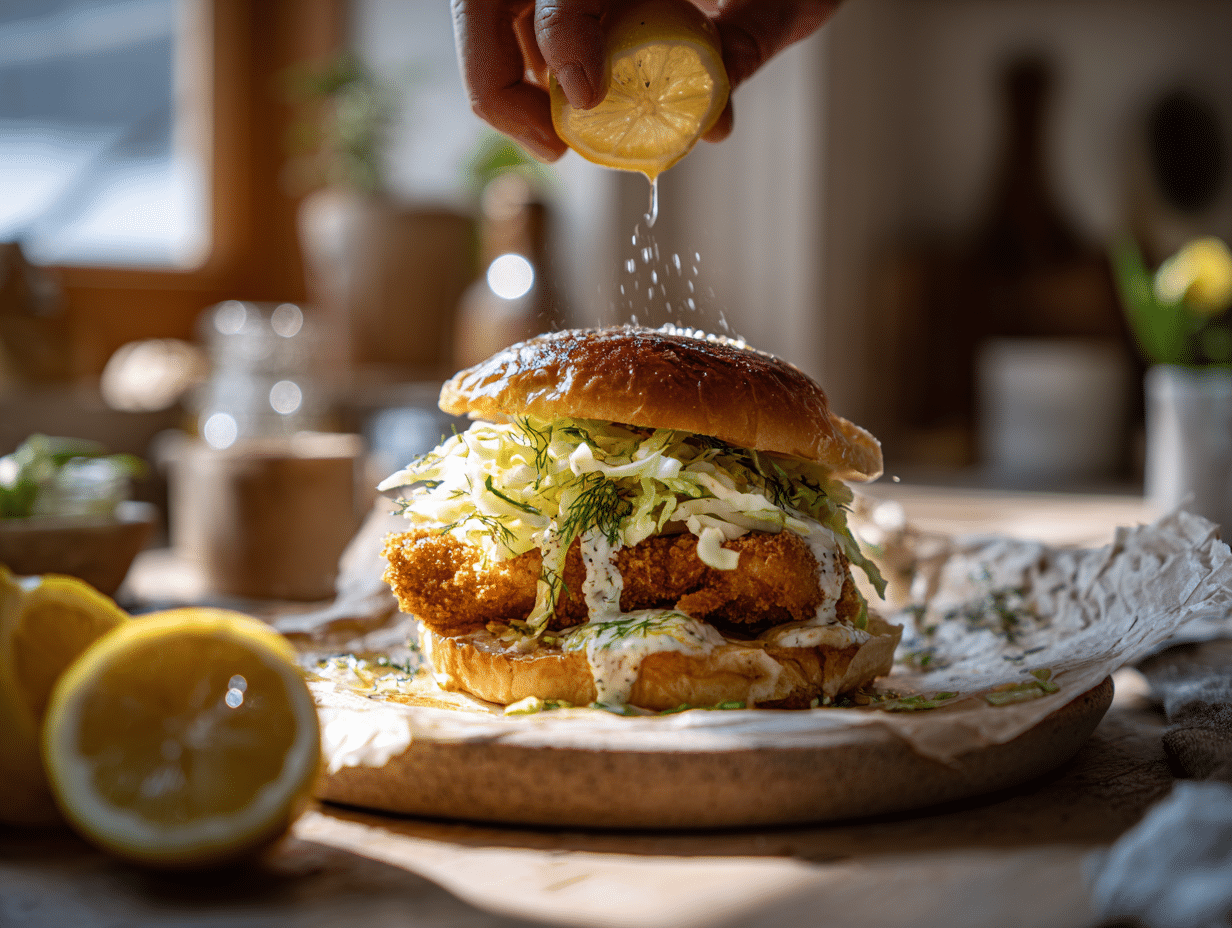
This is a panko-crusted white fish burger built around a Japanese-style tartar sauce made with Kewpie mayo and chopped hard-boiled eggs. It takes about 50 minutes start to finish and makes four burgers — but the components scale cleanly, so it’s just as practical when you’re feeding eight or twelve. The real reason to make it: the crunch holds up long enough to plate a whole batch before anyone has to wait.
Smart swaps
- Kewpie mayonnaise: This is worth tracking down at an Asian grocery or online — it’s richer and tangier than standard mayo and genuinely changes the sauce. In a pinch, use regular mayo plus a small splash of rice vinegar and a tiny pinch of MSG.
- Panko breadcrumbs: Standard fine breadcrumbs will not give you the same open, shattering crust. Panko is the one ingredient not worth substituting here.
- White fish: Cod and pollock are the go-to choices. Haddock works well. Avoid oily fish like salmon or mackerel — the flavor fights the tartar sauce.
- Rice vinegar: Fresh lemon juice is a fine swap in the tartar sauce; just add it gradually since lemon is sharper.
- Buns: A soft brioche or potato roll is the closest widely available match to the slightly sweet Japanese-style bun the recipe calls for. Avoid anything crusty — it tears the fish when you bite.
Why this recipe works
Two things actually drive the result. First, the double-coating method — flour, then egg wash, then panko — gives the crust a mechanical grip on the fish so it doesn’t slide off when you bite in. A single panko dip skips badly here; the flour layer is the anchor. Second, the tartar sauce is served cold against the hot fish. That temperature gap is what makes each bite feel distinct rather than one uniform mush. Make the sauce first and keep it refrigerated right up until assembly — that’s the whole trick.
What can go wrong
- Oil temperature drops when you add multiple fillets: Cold fish lowers the oil temp fast. Fry in batches of two maximum, and let the oil recover to 350°F between batches. A thermometer is not optional when you’re cooking for a crowd.
- Panko coating falls off during frying: This usually means the fish was wet. Pat each fillet completely dry before dredging — any surface moisture turns the flour layer into paste and the coating separates.
- Fish is cooked through but crust is pale: The oil wasn’t hot enough when the fish went in. A pale crust also means the coating has absorbed more oil and will feel greasy. Start at the right temp, not lower.
- Tartar sauce tastes flat: The hard-boiled eggs need to be fully cooled before chopping and mixing in — warm eggs make the sauce greasy and dull. Taste and adjust the vinegar or lemon juice just before serving, not when you first make it.
- Buns go soggy before everyone is served: Toast the buns cut-side down in a dry pan. A toasted surface resists the sauce long enough to get food on the table without rushing.
Storage and reheating
Store cooked fish fillets and tartar sauce separately — never assembled. Fillets keep in an airtight container in the fridge for up to 2 days. The tartar sauce keeps refrigerated for 3 days. To reheat fillets, use an oven or air fryer at 375°F for 8–10 minutes; microwaving kills the crust completely. For freezing, freeze cooked fillets on a flat tray until solid, then transfer to a freezer bag — they keep for up to 1 month. Reheat from frozen at 375°F for 14–16 minutes. Do not freeze the tartar sauce; the egg and mayo break on thawing.
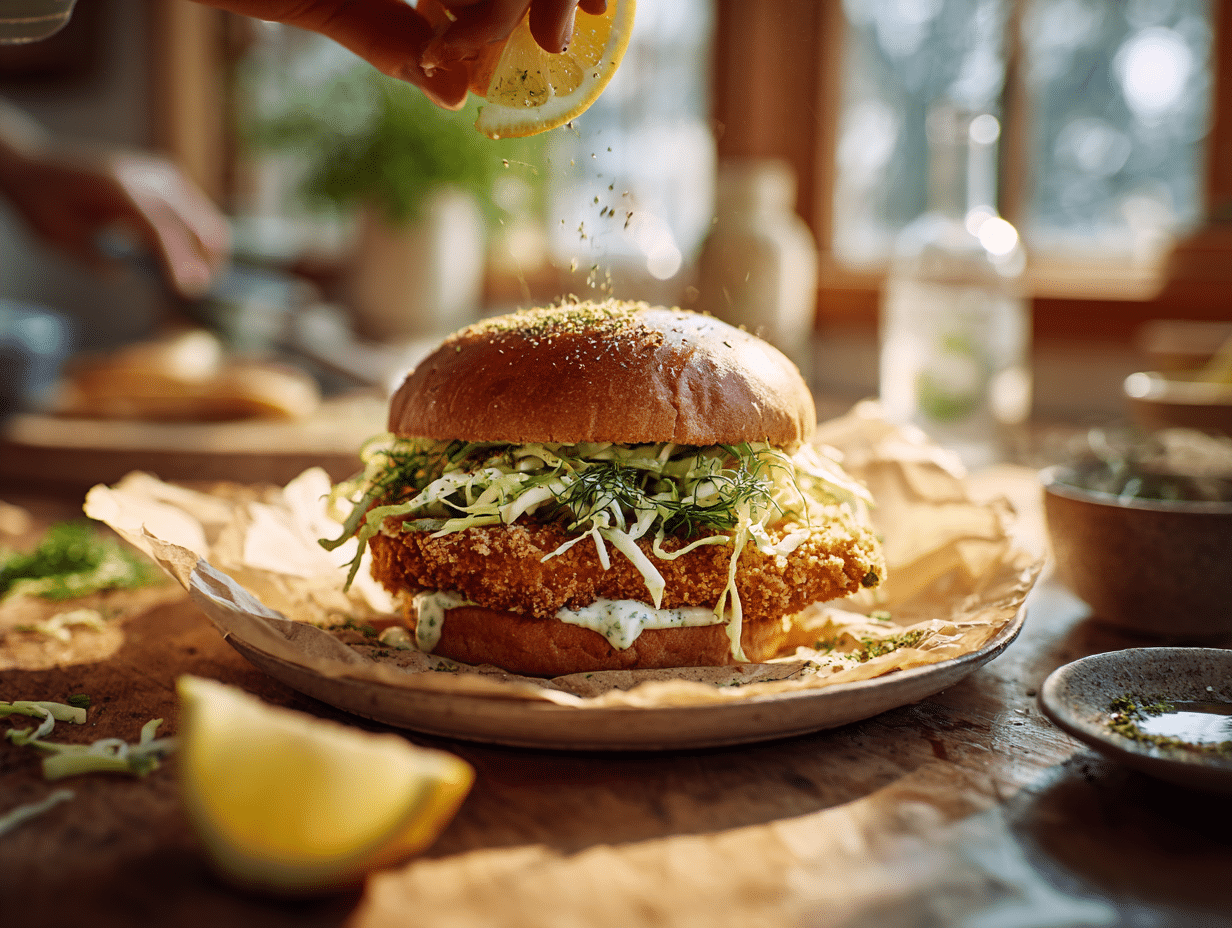
MOS Burger–Style Fish Burger with Japanese Tartar

Ingredients
For the Japanese-Style Tartar Sauce:
- ¾ cup Kewpie mayonnaise Japanese brand recommended for authentic tang and umami
- ⅓ cup dill pickles, finely chopped well-drained; cornichons work too
- 2 tsp rice vinegar or fresh lemon juice taste and adjust to brightness
- 1 tsp Dijon mustard optional, for gentle heat and depth
- 2 tbsp yellow onion, minced rinse briefly if pungent; pat dry
- 1 large hard-boiled egg, finely chopped classic in Japanese tartar, optional
- ½ tsp granulated sugar balances acidity
- ¼ tsp kosher salt to taste
- ⅛ tsp white pepper or black pepper, to taste
- ½ tsp lemon zest, finely grated adds aromatic lift
- 1 tbsp fresh dill or parsley, chopped optional herbaceous finish
For the Build:
- 4 whole soft milk bread or potato buns, split shokupan-style or Martin’s potato rolls for MOS-like softness
- 2 tbsp unsalted butter, softened for toasting buns
- 2 cups green cabbage, finely shredded ice-water soak for extra crunch
- 4 wedges lemon for serving
- 1 pinch shichimi togarashi or nori furikake optional garnish for a Japanese accent
For the Fish & Breading:
- 1 lb skinless cod or pollock fillets cut into 4 even pieces, about 4 oz each
- ½ cup all-purpose flour for dredging
- 2 large eggs, beaten room temperature
- 1 ½ cups panko breadcrumbs Japanese-style; crush lightly for even coating
- 1 ¼ tsp kosher salt for fish and dredge
- ½ tsp black pepper, freshly ground to taste
- ½ tsp garlic powder optional aromatic
For Frying:
- 3 cups neutral oil (canola, peanut, or rice bran) enough for 1 1/2–2 inches of oil in a medium pot
Instructions
- Before You Begin: Read through once. Set a wire rack over a sheet pan for draining. Have a thermometer ready for accurate frying (350°F / 175°C).
- Make the Japanese Tartar (10 minutes): In a bowl, combine Kewpie mayo, chopped pickles, rice vinegar or lemon juice, Dijon, minced onion, chopped egg (optional), sugar, salt, white pepper, lemon zest, and herbs. Stir until creamy and speckled. Taste: you want bright, savory, and a hint of sweetness. Cover and refrigerate 15 minutes to meld while you prep other elements.
- Crisp the Cabbage (5 minutes): Finely shred cabbage. Soak in ice water for 3–5 minutes until edges curl slightly and feel snappy. Spin or pat very dry; moisture will wilt the crust.
- Set Up a 3-Part Breading Station (5 minutes): Shallow dish 1: flour + a pinch of salt and pepper. Dish 2: beaten eggs. Dish 3: panko (lightly crushed between hands for tighter coverage). Keep the panko bowl dry.
- Heat the Oil (about 8 minutes): In a medium, heavy pot, heat 1 1/2–2 inches of neutral oil to 350°F / 175°C. Maintain between 340–360°F / 171–182°C. Preheat a wire rack-lined tray nearby.
- Season and Coat the Fish (5 minutes): Pat fish dry. Season both sides with 1 tsp kosher salt, black pepper, and a whisper of garlic powder. Dredge each piece in flour (tap off excess), dip in egg (let excess drip), then press into panko until fully encrusted, including edges. Rest 2 minutes so the coating adheres.
- Fry in Batches (12–16 minutes total): Slip fillets into the oil away from you; do not crowd (2 pieces per batch). Fry until deeply golden and crisp, about 3–4 minutes per side (6–8 minutes per batch). Target internal temp 145°F / 63°C. Transfer to the rack; season lightly with salt while hot. Return oil to 350°F / 175°C before the next batch.
- Toast or Steam the Buns (1–2 minutes): For classic softness, lightly butter cut sides and toast in a skillet over medium heat until just golden, 1–2 minutes. For MOS-like pillowy buns, briefly steam the split buns for 20–30 seconds instead of toasting (avoid sogginess).
- Build: Spread tartar generously on the bottom bun. Add a fillet, a fluffy mound of cabbage, then a spoon of tartar on the top bun. Sprinkle shichimi or furikake if desired. Close gently—the crust should crackle when pressed.
- Serve: Plate immediately with lemon wedges. Look for contrast: lacquered-golden crust, cool creamy sauce, and fresh cabbage aroma with citrus lift.
Notes
Chef’s Tips:
- Extra-Crisp Hack: Stir 1 tbsp cornstarch into the flour dredge; it tightens the crust. Double-coat by returning from egg to panko once more for an armor-like shell.
- Oil Management: Keep the thermometer in the pot; add fish only when oil rebounds to 350°F / 175°C. If the crust browns too fast, reduce heat slightly.
- Fish Choices: Cod, pollock, or haddock keep flakes large and sweet. For a thinner, wider cutlet, use halibut pieces pounded gently between plastic wrap.
- Tartar Twist: Add a touch of yuzu juice or zest for a citrusy Japanese accent; a teaspoon of minced capers deepens brininess.
- Dairy-Free / Egg-Free: Swap Kewpie for vegan mayo; use aquafaba (3 tbsp) in place of egg for breading. Skip boiled egg in tartar.
- No Deep Pot? Shallow-fry in 1/2–3/4 inch of oil and flip carefully. Oven alternative: brush panko-coated fillets with oil and bake at 425°F / 220°C for 12–16 minutes, flipping once; less shattering crunch but still light.
Nutrition
Frequently asked questions
Can I use frozen fish fillets instead of fresh?
Yes, but thaw them completely in the fridge overnight and pat them very dry before coating. Frozen fish releases a lot of water as it thaws, and any moisture left on the surface will prevent the panko from sticking properly.
What oil is best for frying the fish?
Use a neutral oil with a high smoke point — vegetable, canola, or rice bran oil all work well. Avoid olive oil; its smoke point is too low for the 350°F you need, and the flavor is wrong for this style of burger.
How do I keep the fish warm while I fry multiple batches?
Place finished fillets on a wire rack set over a baking sheet in a 250°F oven — this holds them hot for up to 15 minutes without steaming the crust soft. Skip paper towels for resting; they trap steam and soften the coating from underneath.
Where do I find Kewpie mayonnaise?
Most Asian grocery stores carry it, and it’s widely available on Amazon. It comes in a soft squeeze bottle with a red cap — look for the baby logo. It’s worth buying a full bottle because it’s also excellent for coleslaw, dipping sauces, and any other mayo-based recipe.
Can I make the tartar sauce the day before?
Yes, and it actually improves overnight as the flavors settle. Keep it covered in the fridge and give it a stir before serving — just hold off on any final seasoning adjustments until right before you use it.
What to cook next
- Crispy Fish King Burger
- Korean Fried Chicken Burger
- Hawaiian Teriyaki Burger Recipe
- Korean Rice Bulgogi Burger