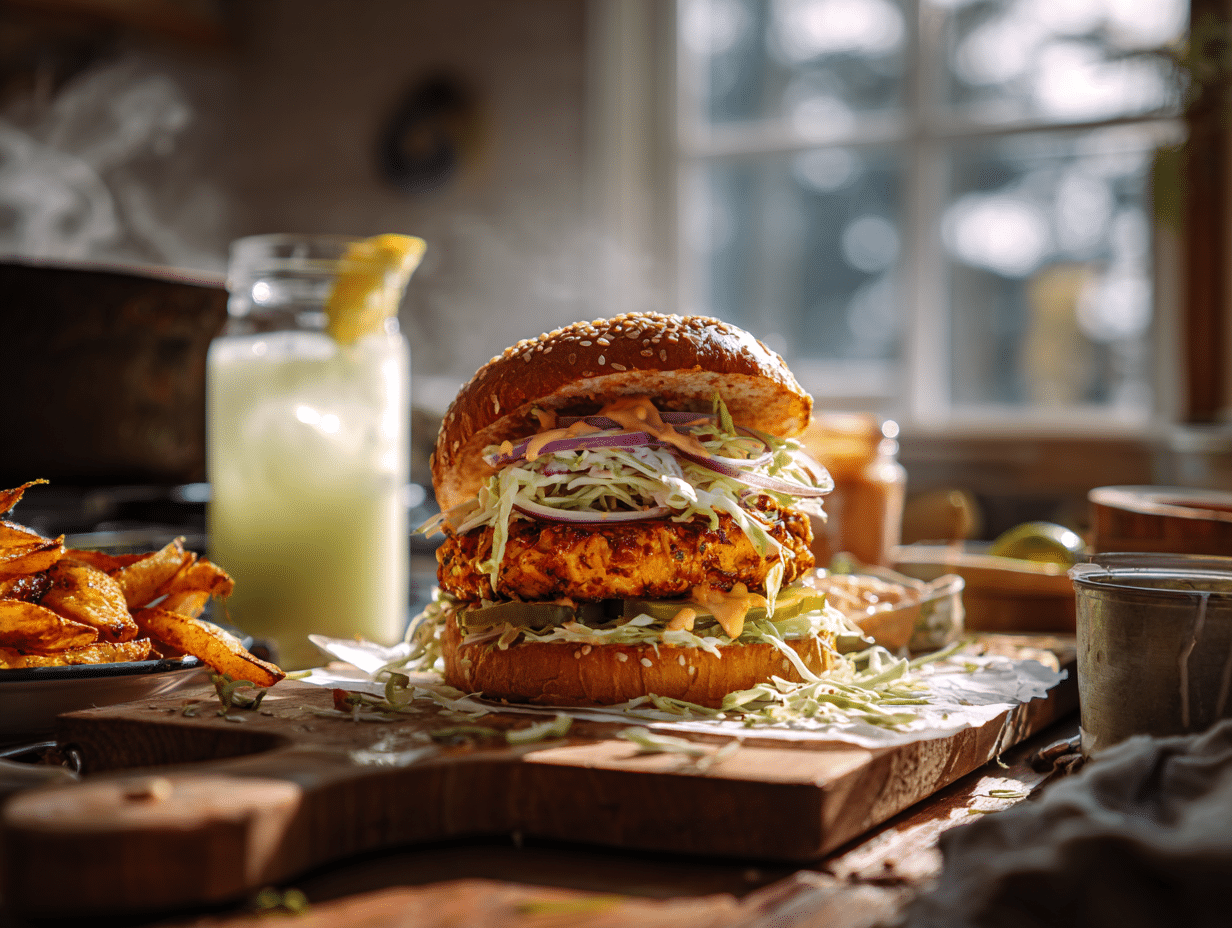
This is a crispy fried paneer burger built around a spiced buttermilk marinade, a double-coat breading, and a chili mayo — a homemade take on the McSpicy Paneer that McDonald’s developed for the Indian market. Paneer holds up to deep frying without melting, which means you get a genuinely crunchy patty with a firm, satisfying bite. If you want a vegetarian burger that actually has some backbone to it, this is a solid option.
Why this recipe works
Two things make or break this burger. First, scoring the paneer before marinating — those shallow cuts give the buttermilk somewhere to go, so the spice actually penetrates the cheese instead of just sitting on the surface. Second, the three-stage coating (seasoned flour, wet batter, breadcrumbs) builds a shell thick enough to stay crunchy after the paneer releases steam during frying. Skip either step and you get a pale, soft crust that slides off at the first bite. The Kashmiri chili powder earns its place here too: it delivers a deep red color and moderate heat without scorching the coating before the center heats through.
Mistakes to avoid
- Frying straight from the fridge. Cold paneer drops oil temperature fast, which leads to greasy, soggy breading. Let the marinated pieces sit at room temperature for 15 minutes before they go in the oil.
- Crowding the pan. More than two pieces at a time and the oil temperature tanks. Fry in batches and give each piece room. A thermometer is worth using here — you want the oil back at 350°F (175°C) before the next batch goes in.
- Skipping the wire rack after frying. Draining on paper towels traps steam underneath and softens the crust within minutes. A rack over a sheet pan keeps air circulating on all sides.
- Over-saucing the bun. The chili mayo is rich. A thin, even layer on both halves is enough. A heavy hand makes the bottom bun soggy before you finish building the burger.
- Using pre-crumbled or extra-firm tofu-style paneer. Block paneer cut to your own thickness works best. Pre-crumbled varieties won’t hold together through the breading process.
Leftovers and meal prep
Fried paneer patties keep well in the fridge for up to four days in an airtight container — store them separately from the buns and sauce. To reheat, skip the microwave entirely; it turns the coating rubbery. An air fryer at 375°F (190°C) for four to five minutes brings the crust back close to fresh. A regular oven at 400°F (205°C) on a wire rack for eight minutes works almost as well. The patties also freeze well: lay them in a single layer on a sheet pan, freeze until solid (about two hours), then transfer to a zip bag. They’ll keep for up to two months. Reheat from frozen in the oven at 400°F for 14 to 16 minutes, flipping once. The chili mayo can be made up to a week ahead and refrigerated — it actually tastes better after a day or two once the flavors settle.
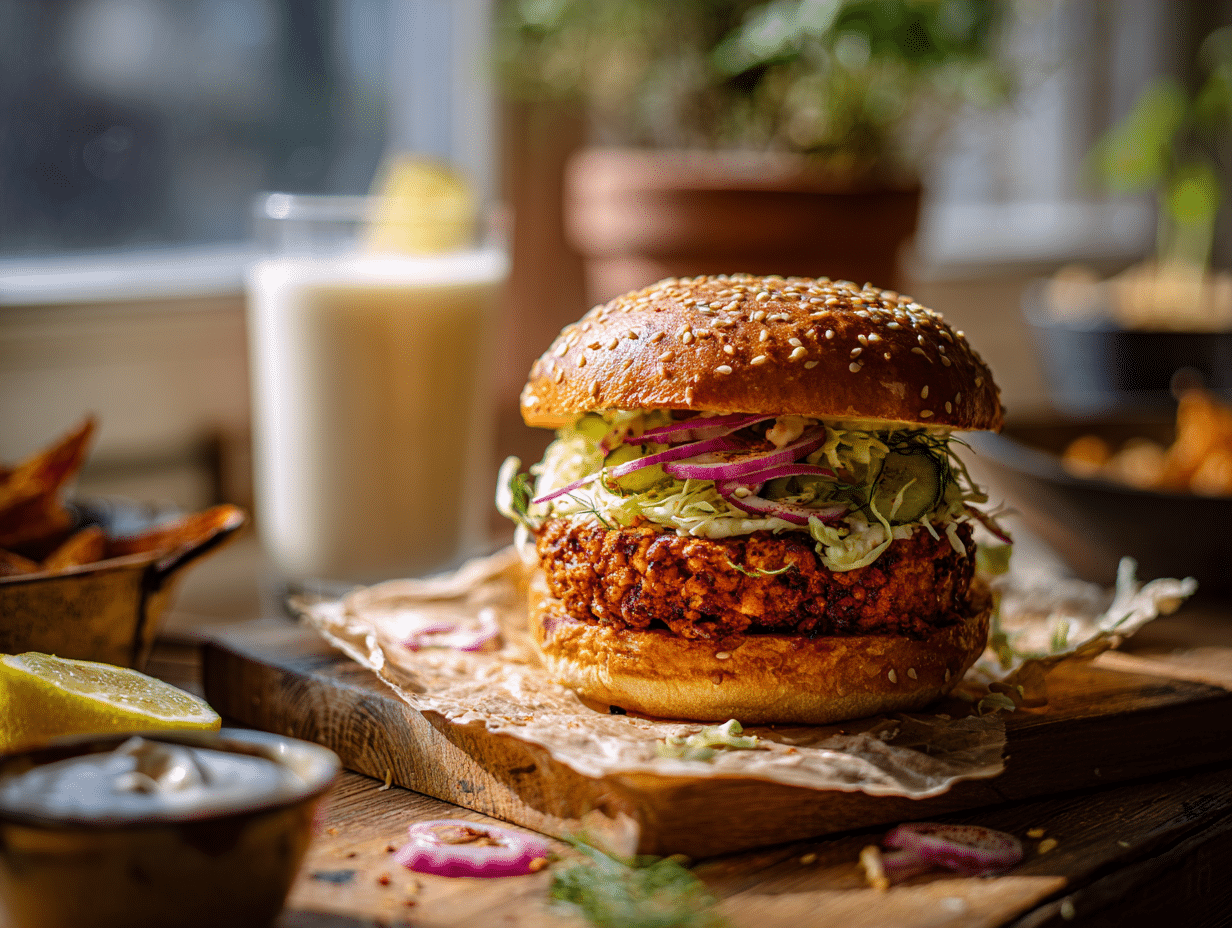
McSpicy Paneer Burger (Copycat)

Ingredients
For the Paneer Patties and Marinade:
- 1 lb paneer cut into 4 squares, about 3/4-inch thick
- ¾ cup buttermilk full-fat preferred for better cling
- 1 tsp Kashmiri chili powder or mild paprika for less heat
- 1 tsp ginger-garlic paste freshly made if possible
- ½ tsp kosher salt
For the Spicy Coating:
- 1 cup all-purpose flour unbleached preferred
- ⅓ cup cornstarch for extra crispness
- 2 tsp Kashmiri chili powder adjust to taste
- 1 tsp ground white pepper black pepper works too
- 1 tsp garam masala freshly ground, if possible
- ½ tsp ground turmeric optional, for color
- 1 tsp kosher salt
- 1 cup cold water for slurry; keep cold for a craggy crust
- 1 ½ cup panko breadcrumbs or finely crushed cornflakes
For Frying:
- 2 quart neutral oil peanut, canola, or rice bran; enough for 2 inches depth
For the Spicy Mayo:
- ½ cup mayonnaise full-fat
- 1 tbsp Sriracha or Indian chili sauce adjust to heat preference
- 1 tsp Dijon mustard
- 1 tsp fresh lemon juice just squeezed
- ½ tsp honey balances the heat
- 1 pinch kosher salt to taste
For the Lettuce Slaw:
- 3 cup shredded iceberg lettuce very cold and crisp
- 1 tbsp mayonnaise
- 1 tsp fresh lemon juice
- 1 pinch kosher salt to taste
For Assembling:
- 4 whole sesame burger buns soft, bakery-style
- 1 tbsp unsalted butter softened, for toasting buns
- 8 pieces dill pickle chips optional but excellent
- 1 small red onion thinly sliced into rings
Instructions
- Prep the Paneer: Pat the paneer dry, then cut into 4 equal squares about 3/4-inch thick for a satisfying bite. Lightly score the surface in a shallow crosshatch so the marinade and coating cling better.
- Marinate (20 minutes): In a shallow dish, whisk the buttermilk, 1 tsp Kashmiri chili, 1 tsp ginger-garlic paste, and 1/2 tsp salt. Submerge the paneer and marinate for 20 minutes in the refrigerator. The edges will blush red and smell garlicky-spicy.
- Make the Spicy Mayo: Stir together mayonnaise, chili sauce, Dijon, lemon juice, honey, and a pinch of salt until silky and faintly rosy. Cover and chill.
- Toss the Lettuce Slaw: In a bowl, combine shredded iceberg, 1 tbsp mayo, lemon juice, and a pinch of salt. Toss just to coat; it should stay crisp, not soggy. Keep chilled.
- Prepare the Coating Stations: In a wide bowl, whisk flour, cornstarch, 2 tsp Kashmiri chili, white pepper, garam masala, turmeric, and 1 tsp salt. Split this mixture in half. Add the cold water to one half to make a thick, pourable slurry (like pancake batter). Place the remaining dry mix in a shallow dish for dredging, and pour panko into a third dish.
- Heat the Oil: Fill a deep, heavy pot with about 2 inches of neutral oil and heat to 350°F (175°C). If you don’t have a thermometer, a cube of bread should turn golden in ~45 seconds. Begin heating while you set up the coating to save time.
- Coat the Paneer: Remove paneer from marinade and let excess drip. Dredge in dry mix (press to adhere), dip in slurry, then press firmly into panko for complete coverage. For extra craggy crunch, dip back in slurry and re-crumb a second time.
- Fry Batch 1 (8 minutes): Fry 2 patties at a time at 350°F (175°C), turning once, about 4 minutes per side until deep golden and audibly crisp. Maintain oil between 340–350°F (171–175°C). The coating will feel set and light when lifted.
- Fry Batch 2 (8 minutes): Repeat with the remaining 2 patties. Return oil to 350°F (175°C) between batches for consistent color and crunch.
- Drain and Season: Set patties on a rack or paper towels and sprinkle a tiny pinch of salt while hot to amplify flavor.
- Toast the Buns (2 minutes): Lightly butter the cut sides and toast on a hot skillet over medium heat (about 375°F/190°C surface temp) until golden at the edges and soft within, 1–2 minutes.
- Assemble: Spread spicy mayo on both bun halves. Pile a nest of lettuce slaw on the bottom bun, add a crispy paneer patty, top with a little more sauce, then finish with pickle chips and a few onion rings. Cap with the bun and serve immediately while the crust sings.
Notes
Chef’s Tips:
- For a thicker, craggier crust, double-dip: slurry → panko → slurry → panko. Keep the slurry cold; cold batter hitting hot oil creates extra crispness.
- Cornstarch in the flour mix is key for shatter. If unavailable, substitute potato starch in equal measure.
- Manage Oil Temperature: Fry in small batches and let the oil recover to 350°F (175°C) before the next batch for even color.
- No Buttermilk? Use 3/4 cup whole milk + 1 tsp lemon juice; rest 5 minutes before mixing with spices.
- Heat Control: Use Kashmiri chili for color and medium heat; switch to cayenne for a spicier kick (reduce to taste).
- Air-fryer Alternative: Spray coated patties lightly with oil and air-fry at 400°F (205°C) for 10–12 minutes, turning once, until crisp and golden.
- Oven Alternative: Place on a wire rack over a sheet tray, mist with oil, and bake at 425°F (220°C) for 16–18 minutes, turning once.
Nutrition
Frequently asked questions
Can I use store-bought paneer, or do I need to make it fresh?
Store-bought block paneer works fine for this recipe. Just pat it very dry before marinating — packaged paneer often has excess moisture that prevents the coating from sticking properly.
Can I bake or air-fry the patties instead of deep-frying them?
Yes, an air fryer at 390°F (200°C) for 12 to 14 minutes, flipping halfway, gets you a reasonably crispy result. The crust won’t be quite as even or as crunchy as deep-fried, but it’s a practical weeknight trade-off.
How do I keep the breading from falling off during frying?
Let the breaded patties rest on a rack for at least 10 minutes before they go in the oil — this gives the coating time to set and adhere. Pressing the breadcrumbs firmly onto the wet batter layer also helps; don’t just toss them in and hope for the best.