This is a crispy spiced vegetable patty burger — potatoes, peas, carrots, and corn bound together, coated in breadcrumbs, and fried until genuinely crunchy. It’s worth making at home because the patty holds together better than most veggie burgers and the mint-mayo sauce takes about two minutes to mix. No meat substitutes, no complicated equipment.
About the ingredients
- Garam masala: Buy a small jar rather than blending your own — a decent store-bought version works fine here and saves you pulling out a spice grinder.
- Breadcrumbs for coating: Panko gives a noticeably crunchier crust than regular fine breadcrumbs. It’s the one ingredient worth seeking out if you don’t already have it.
- Frozen peas and corn: Use them straight from frozen — thaw and pat dry before mixing or they’ll add too much moisture to the patty.
- Mint-mayo sauce: Fresh mint makes a real difference over dried here. A small bunch is cheap and you’ll use most of it.
The technique that matters
The patty mix needs to be cold when it hits the oil. After you shape the patties, refrigerate them for at least 30 minutes — skip this and they’ll soften and break apart during frying. Cold patties firm up the starch in the potato, which is what holds everything together under heat. Skip the egg in the mix — it makes the patty mushy rather than giving you that clean, firm bite. The double-coat method (slurry first, then panko) is what creates the barrier that keeps the crust from going soggy once the patty is done, so don’t rush that step.
Mistakes to avoid
- Overcrowding the pan: Frying more than two patties at once drops the oil temperature fast, and you get greasy rather than crispy results. Work in batches.
- Skipping the drain step: Rest finished patties on a wire rack, not paper towels. Paper traps steam underneath and softens the crust within minutes.
- Building the burger too early: The sauce and vegetables release moisture quickly. Assemble just before eating — a patty sitting in a dressed bun for five minutes loses most of its crunch.
- Under-seasoning the patty mix: Taste the mixture before you shape it. The spices need to be assertive at this stage because frying mellows them out slightly.
Keeping and reheating
Uncooked shaped patties keep well in the fridge for up to 24 hours, stacked with parchment between them. Cooked patties are best eaten the same day but will keep refrigerated for up to 2 days. To reheat, use an oven or air fryer at 375°F (190°C) for 8–10 minutes — this brings back most of the crust. A microwave will make them soft and a little gummy, so avoid it. For longer storage, freeze uncooked patties on a tray until solid, then transfer to a freezer bag; cook from frozen adding about 3–4 extra minutes of frying time.
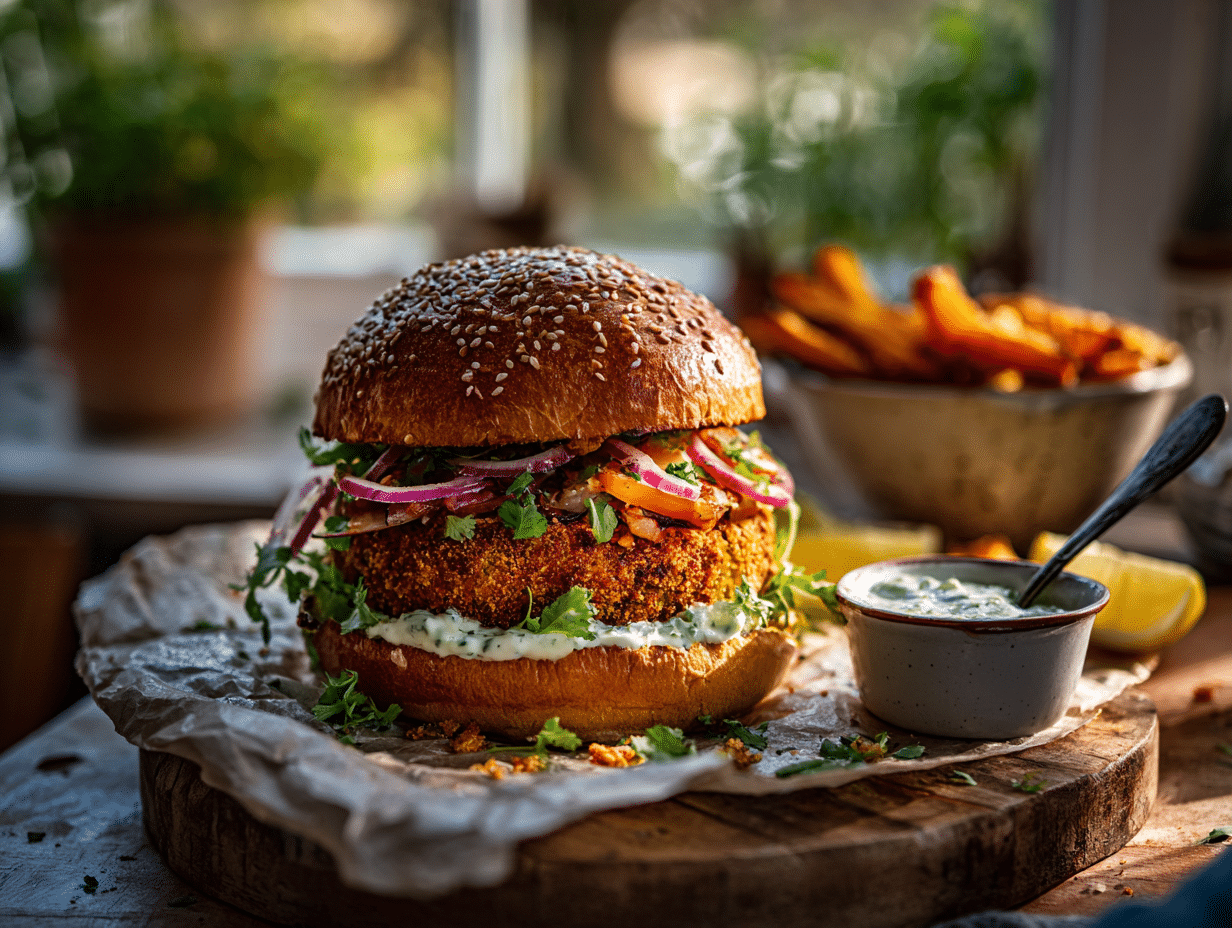
McDonalds McVeggie–Inspired Crispy Veg Burger

Ingredients
For the Vegetable Patties:
- 1 lb russet potatoes, peeled and cut into 1-inch chunks starchy potatoes mash fluffy and bind well
- 1 tbsp kosher salt for boiling water
- 1 cup frozen green peas no need to thaw
- 0.75 cup carrots, finely diced small dice for even texture
- 0.5 cup sweet corn kernels frozen or canned, drained
- 2 tbsp neutral oil such as canola or sunflower, for tempering spices
- 1 tsp cumin seeds blooming whole seeds enhances aroma
- 1 tsp green chile, finely minced Serrano or Thai; adjust to heat preference
- 1 tbsp ginger-garlic paste freshly made if possible for best aroma
- 0.5 tsp ground turmeric
- 1 tsp Kashmiri chili powder mild heat, vivid color; substitute paprika
- 1 tsp ground coriander
- 1 tsp garam masala choose a balanced North Indian blend
- 0.75 tsp fine sea salt for the mixture; adjust to taste
- 0.25 cup fresh cilantro, finely chopped leaves and tender stems
- 1 tbsp fresh lemon juice brightens the spices
- 0.5 cup plain breadcrumbs binder for the patty mix
For Coating & Frying:
- ⅓ cup cornstarch for slurry; rice flour works too
- 0.5 cup cold water whisk with cornstarch for a thin slurry
- 1.25 cup panko or fine breadcrumbs for extra-crisp coating
- 1.5 cup neutral oil for shallow-frying; use 3 tbsp (45 ml) for pan-frying
For the Buns & Assembly:
- 4 pieces sesame burger buns soft, fresh, evenly sized
- 2 tbsp unsalted butter, softened for toasting buns
- 0.5 cup eggless mayonnaise look for Indian-style eggless mayo
- 2 tbsp mint-cilantro chutney for a quick mint-mayo
- 4 leaves iceberg lettuce crisp, dry, and cold
- 8 slices ripe tomato, thinly sliced pat slices dry
- 8 rings red onion, thinly sliced soak 5 minutes if too pungent, then pat dry
- 0.5 tsp freshly ground black pepper optional, to finish
Instructions
Boil and Prep the Vegetables (15 minutes cook):
- Bring a large pot of water to a rolling boil; season with 1 tbsp kosher salt. Add the potato chunks and boil until just tender, about 12 minutes.
- Add peas and diced carrots directly to the pot and continue boiling 3 minutes more (total 15 minutes). Stir in the corn for the final 30 seconds.
- Drain well and spread the vegetables on a tray to steam-dry 3–4 minutes; excess moisture can cause patties to crack.
Bloom the Spices (1 minute cook):
- In a wide skillet over medium heat, warm 2 tbsp neutral oil. Add cumin seeds; they should sizzle on contact. After 15–20 seconds, add green chile and ginger-garlic paste; sauté until fragrant, 30–40 seconds. Sprinkle in turmeric, Kashmiri chili, and ground coriander; toast 10–15 seconds until vivid and aromatic. Remove from heat.
Mix and Season the Patty Base (5 minutes prep):
- In a large bowl, roughly mash the warm potatoes—aim for mostly smooth with a few small chunks for texture.
- Fold in peas, carrots, and corn. Scrape in the spiced oil mixture.
- Add garam masala, 3/4 tsp fine sea salt, cilantro, lemon juice, and 1/2 cup plain breadcrumbs. Mix until cohesive. The mixture should hold when pressed; if sticky, add 1–2 tbsp more breadcrumbs.
Shape and Chill (20 minutes prep):
- Divide the mixture into 4 equal portions (about 4 oz each). Compress firmly and shape into 3 1/2-inch patties, about 5/8-inch thick. Set on a parchment-lined tray and chill 20 minutes to set—this prevents crumbling during frying.
Coat for Maximum Crunch (5 minutes prep):
- Whisk cornstarch with 1/2 cup cold water to a smooth, thin slurry (like light cream). Season with a pinch of salt.
- Place panko in a shallow dish. Dip each chilled patty in slurry, let excess drip, then press into panko to coat evenly. Rest 5 minutes so the crust adheres.
Shallow-Fry the Patties (6–8 minutes cook):
- Heat 1/4 inch of neutral oil in a large skillet over medium to medium-high until it reaches about 350°F / 175°C (a breadcrumb should fizz instantly). Fry all 4 patties at once if your pan allows, 3–4 minutes per side, until deep golden and crisp. Transfer to a rack to drain. Tip: maintain 325–350°F / 165–175°C for consistent crunch.
Toast the Buns (2–3 minutes cook):
- Spread cut sides of buns with butter. Toast cut-side down in a dry skillet over medium heat until golden, 2–3 minutes, or warm on a tray in a 350°F / 175°C oven for 3–4 minutes.
Make the Mint-Mayo (1 minute prep):
- Stir together eggless mayonnaise and mint-cilantro chutney. Taste and adjust salt or lemon if needed.
Assemble:
- Bottom bun: spoon a generous layer of mint-mayo, then add lettuce.
- Set the crispy veg patty on top; add tomato slices and onion rings. Finish with a light dusting of black pepper.
- Spread a thin layer of mint-mayo on the top bun, cap the burger, and serve immediately while the patty is still audibly crisp.
Notes
Chef’s Tips:
- Consistency Check: If the mix feels wet, add breadcrumbs 1 tbsp at a time; if dry, work in 1–2 tbsp water or a splash of hot potato water.
- Gluten-Free: Use certified GF panko and swap cornstarch with fine rice flour for an even crisper shell.
- Air Fryer Option: Spray coated patties with oil and cook at 390°F / 200°C for 14–16 minutes, flipping halfway.
- Oven-Baked Option: Place on a lightly oiled rack over a tray; bake at 425°F / 220°C for 18–20 minutes, flipping at 10 minutes.
- Extra Flavor: Add 1 tsp amchur (dry mango powder) for tang or 1 tbsp grated paneer for richness.
- Make-Ahead: Shape and coat patties, then refrigerate up to 24 hours or freeze (sheet-frozen, then bagged) up to 1 month; fry from frozen at 325–350°F / 165–175°C, a minute longer per side.
- For a closer fast-food texture, avoid over-mashing the potatoes and let the patties chill thoroughly; the starch sets and fries cleaner.
- Always drain fried patties on a wire rack—not paper towels—to keep the underside crisp.
Serving Suggestions:
Plate on a warmed platter lined with parchment. Stack the burger slightly offset to reveal the crisp edges. Garnish the plate with fresh cilantro tips and a lemon wedge. Serve with salted fries, masala potato wedges, or a light kachumber salad. Pair with chilled cola or a sweet lassi. Visual cues: buns should be evenly golden, patty deep amber and crisp, lettuce perky, and the aroma lightly toasty with warm spice.Culinary Context:
The McVeggie was created for markets where plant-forward eating is a way of life, especially India. This version leans into classic North Indian spice profiles while keeping the fast-food charm—crunch, creaminess, and freshness in perfect balance.Optional Advanced Instructions:
- Parallel Processing: While potatoes boil, temper spices and prep the mint-mayo to compress timeline.
- Double-Coat Technique: For extra shatter, dip coated patties back into slurry and crumbs, then rest 5 minutes before frying.
- Precision Oil Control: Use a thermometer; fry between 325–350°F / 165–175°C to avoid greasy crusts.
Timing:
- Prep Time: 35 minutes (includes 20 minutes chilling)
- Cook Time: 27 minutes (15 minutes boiling + 1 minute spice bloom + 8 minutes frying + 3 minutes toasting)
Nutrition
Frequently asked questions
Can I bake these instead of frying?
Yes, but the crust won’t be as crunchy. Bake at 400°F (200°C) on a lightly oiled rack for 20–22 minutes, flipping once halfway through — the rack is important so air circulates underneath.
My patties keep falling apart when I fry them — what’s going wrong?
The most common cause is too much moisture in the vegetable mix. Make sure your mashed potato is fully cooled and your thawed peas and corn are thoroughly patted dry before mixing, and don’t skip the 30-minute refrigeration step after shaping.
Can I make the patties ahead of time for a party?
Shape and coat them up to 24 hours ahead and keep them covered in the fridge. Fry to order in batches — they only take a few minutes per side and the results are much better than reheating pre-cooked patties.
What oil works best for frying these?
Any neutral oil with a high smoke point works — vegetable, canola, or sunflower oil are all fine. You need enough depth to come about halfway up the patty so it fries evenly without you having to press it down.