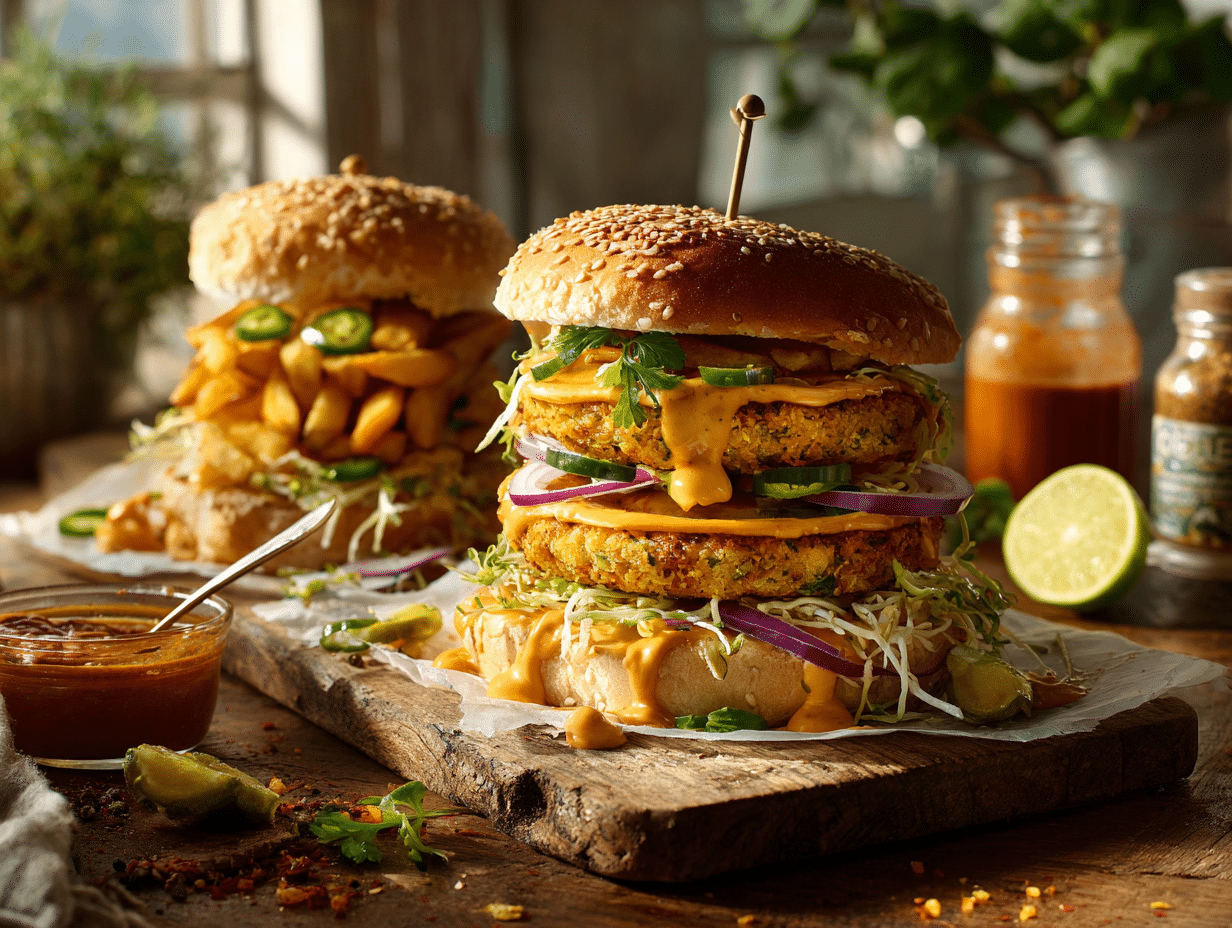
The Veg Maharaja Mac: A Cultural Icon of Indian Fast Food
Origins and History
When McDonald’s entered the Indian market in 1996, they faced a unique challenge: adapting their beef-centric menu to a country where a significant portion of the population is vegetarian and where beef consumption is culturally sensitive. This led to one of the most successful examples of culinary localization in fast-food history—the birth of the Maharaja Mac.
The original Maharaja Mac was introduced as India’s answer to the Big Mac, but with a distinctly Indian twist. The name itself—”Maharaja,” meaning “great king” in Sanskrit—was a clever nod to Indian heritage while maintaining the alliterative appeal of the Big Mac. Initially launched with a chicken option, the vegetarian version quickly became the star, reflecting India’s substantial vegetarian population.
Cultural Significance
The Veg Maharaja Mac represents more than just a menu adaptation; it symbolizes how global brands can respectfully integrate into local food cultures. In a country where McDonald’s outlets serve no beef or pork, the Veg Maharaja Mac became a flagship product that proved international fast food could honor local dietary preferences without compromising on the familiar experience customers expected.
The burger’s success lies in its ability to bridge two worlds: maintaining the iconic double-decker structure and special sauce concept of the Big Mac while incorporating distinctly Indian flavors through spices, vegetables, and preparation methods that resonate with local palates.
The Indian Spice Revolution
What makes the Veg Maharaja Mac uniquely Indian is its embrace of the subcontinent’s rich spice heritage. The incorporation of garam masala, chaat masala, and other traditional spice blends transforms what could have been a simple vegetable patty into something that speaks directly to Indian taste preferences. These spices don’t just add heat—they provide the complex, layered flavors that Indian cuisine is renowned for.
The use of ingredients like ginger-garlic paste, green chilies, and fresh coriander reflects the standard flavor base found in countless Indian dishes, making the burger feel familiar despite its Western format. The tangy kick from chaat masala, in particular, gives the burger a street-food quality that connects it to India’s vibrant food culture.
Evolution of the Recipe
Over the years, the Veg Maharaja Mac has evolved from its initial incarnation. Early versions featured a simpler vegetable patty, but consumer feedback and competition from local burger chains pushed McDonald’s to continuously refine the recipe. The addition of paneer (Indian cottage cheese) in some variations acknowledged the protein’s importance in Indian vegetarian cuisine.
The sauce, too, has undergone refinements. While maintaining the creamy, tangy profile expected from a special burger sauce, Indian versions often incorporate subtle spice notes and occasionally use hung curd (strained yogurt) alongside mayonnaise, adding a distinctly subcontinental touch.
Impact on Indian Fast Food Culture
The success of the Veg Maharaja Mac inspired a wave of innovation in India’s fast-food sector. Local chains began creating their own premium vegetarian burgers, often featuring even bolder spice profiles and indigenous ingredients. This competition elevated the entire category, transforming the perception of vegetarian fast food from a compromise to a destination choice.
The burger also played a role in making international fast food more accessible to Indian families who might have otherwise avoided such establishments due to dietary restrictions. It became a symbol of inclusive dining, where vegetarians could enjoy the same “special occasion” fast-food experience as their non-vegetarian counterparts.
Technical Innovation
Creating a vegetable patty that could match the satisfaction of a meat burger required significant innovation. The challenge was achieving the right texture—firm enough to hold together during cooking and eating, yet tender enough to be enjoyable. The use of potatoes as a base, combined with various vegetables and binding agents, created a patty that was both familiar to Indian palates (reminiscent of popular snacks like aloo tikki) and substantial enough to anchor a double-decker burger.
The cooking method also adapted to local preferences, with many outlets using a combination of grilling and light frying to achieve the crispy exterior that Indians associate with their favorite street snacks.
Global Influence
The Veg Maharaja Mac’s success story has influenced how international fast-food chains approach market entry worldwide. It demonstrated that localization doesn’t mean simply removing problematic ingredients—it means thoughtfully creating new products that respect and celebrate local food culture while maintaining brand identity.
This approach has been studied in business schools and has inspired similar adaptations in other markets, from the McRice burgers in Asian countries to the McKebab in Middle Eastern markets. The Veg Maharaja Mac proved that successful globalization requires genuine localization.
The Modern Maharaja
Today, the Veg Maharaja Mac continues to evolve with changing consumer preferences. Health-conscious modifications, such as whole wheat buns and baked patty options, reflect contemporary dietary concerns. Some locations have experimented with regional variations, incorporating local vegetables or spice blends specific to different Indian states.
The rise of food delivery apps has also influenced the burger’s preparation, with restaurants adapting cooking methods to ensure the burger travels well and maintains its quality during delivery—a crucial consideration in India’s booming food delivery market.
Recreating the Magic at Home
The homemade version of the Veg Maharaja Mac represents an opportunity to celebrate this cultural fusion while adding personal touches. Home cooks can adjust spice levels to preference, experiment with seasonal vegetables, and even incorporate regional variations that reflect their own culinary heritage.
The beauty of recreating this burger lies in understanding its essence: it’s not just about replicating a fast-food item, but about celebrating the successful marriage of global and local food cultures. Each homemade version becomes part of the burger’s ongoing evolution, as cooks add their own interpretations to this modern Indian classic.
Looking Forward
As India’s food landscape continues to evolve, with increasing interest in plant-based proteins and sustainable eating, the Veg Maharaja Mac stands as a testament to successful culinary adaptation. It paved the way for international chains to think creatively about vegetarian options, moving beyond simple substitution to genuine innovation.
The burger’s legacy extends beyond its ingredients or preparation method—it represents a shift in how global food brands approach cultural diversity, showing that success comes not from imposing foreign concepts but from creating genuine fusion that honors all traditions involved.
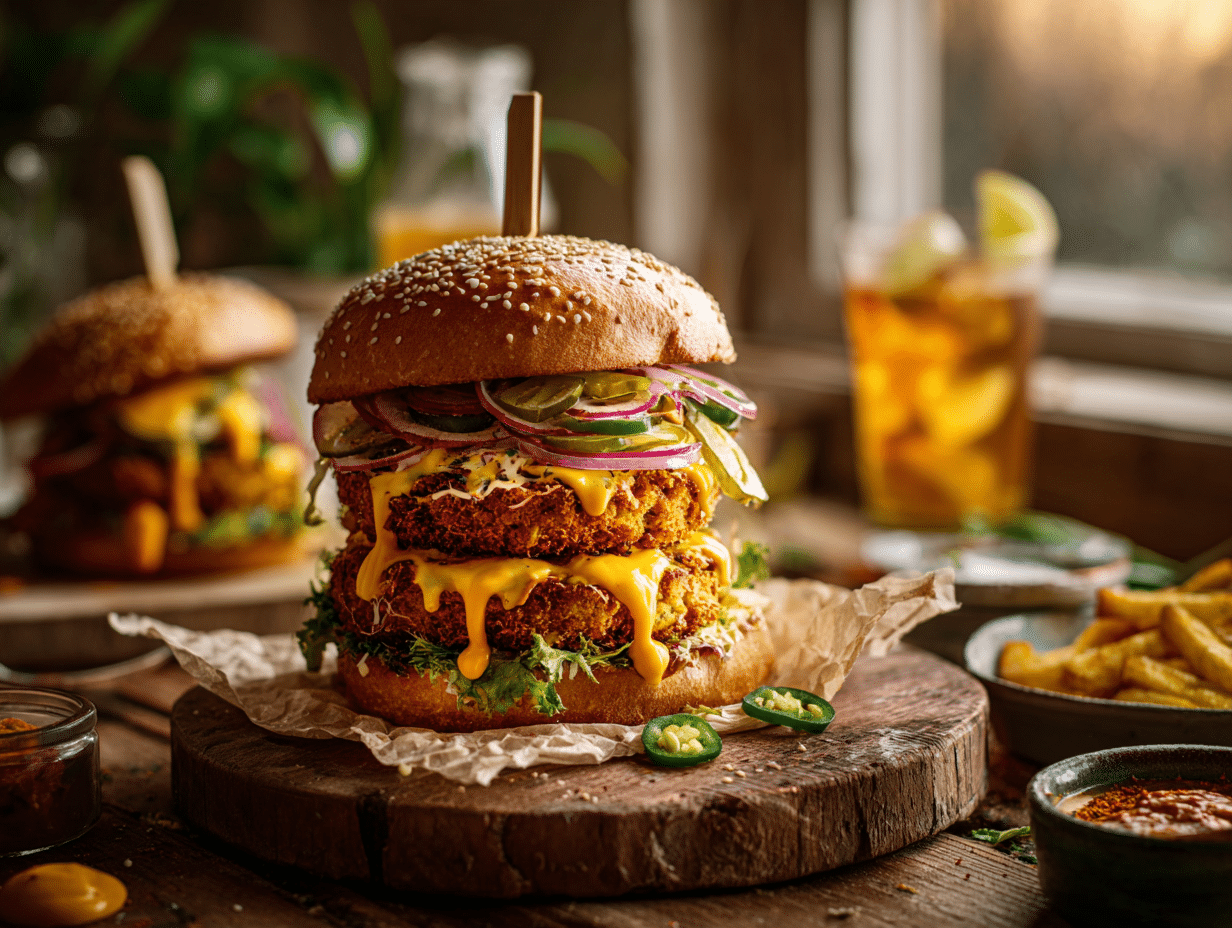
Veg Maharaja Mac–Inspired Double-Decker Burger

Ingredients
For the Vegetable Patties:
- 2 large russet potatoes peeled and 1-inch diced (about 1.5 lb total)
- 1 cup carrots, diced small about 2 medium carrots
- 1 cup green beans, finely chopped optional but adds crunch
- 1 cup frozen green peas, thawed sweet peas work best
- 2 tbsp neutral oil for sautéing aromatics; canola or sunflower
- ½ cup red onion, finely minced for sweetness and bite
- 2 tbsp ginger-garlic paste or 1 tbsp each freshly grated ginger and minced garlic
- 2 pieces green chiles, finely minced optional, to taste
- 1 tsp ground cumin
- 1 tsp ground coriander
- 1 tsp garam masala homemade or quality store-bought
- ¾ tsp Kashmiri chili powder or mild paprika for color and gentle heat
- 1 ½ tsp chaat masala adds tangy-savory punch
- 1 ½ tsp kosher salt plus a pinch more to taste
- ½ tsp freshly ground black pepper
- ½ cup fresh cilantro, finely chopped tender stems included
- 2 tbsp fresh lemon juice brightens the mix
- 6 oz paneer, 1/4-inch dice optional; adds tender richness
- 1 cup panko breadcrumbs plus 1/2 cup extra for dredging
- 2 tbsp cornstarch for binding and crisping
- 3 tbsp neutral oil for frying patties, plus more as needed
For the Maharaja Sauce:
- ½ cup mayonnaise full-fat for best texture
- ¼ cup plain Greek yogurt or hung curd for tang
- 2 tbsp ketchup thick, no-corn-syrup preferred
- 2 tsp Dijon mustard
- 1 tsp honey or sugar
- 1 ½ tsp fresh lemon juice
- 1 tsp white vinegar
- 1 tsp smoked paprika gives gentle smokiness
- 1 tsp roasted cumin powder toast cumin, then grind for best flavor
- ½ tsp garlic powder
- 2 tbsp dill pickles, finely chopped
- ¼ tsp kosher salt to taste
- ⅛ tsp black pepper
For the Assembly:
- 6 whole sesame burger buns use 4 bottoms and 2 tops for 2 double-deckers
- 2 tbsp unsalted butter for toasting buns
- 4 slices processed cheddar or American cheese vegetarian rennet if needed
- 2 cups iceberg lettuce, finely shredded keep very cold for extra crunch
- 1 large tomato, thinly sliced choose firm, ripe
- 1 small red onion, thinly sliced into rings soak in cold water 5 minutes to mellow, optional
- 12 pieces bread-and-butter pickle chips adds sweet-tangy crunch
- 1 piece jalapeño, thinly sliced optional heat
Instructions
- Boil the Vegetables (12–15 minutes): Add the diced potatoes, carrots, and green beans to a large pot, cover with cold water by 1 inch, and season lightly with salt. Bring to a boil over high heat, then reduce to a lively simmer and cook until tender, 10–12 minutes. Add the peas for the last 2 minutes. Drain thoroughly, then return to the hot pot and let steam-dry 5 minutes (excess moisture will prevent crisp patties).
- Bloom Aromatics and Spices (3–4 minutes): In a skillet over medium heat (about 350°F/175°C), warm 2 tbsp neutral oil. Sauté the minced red onion with a pinch of salt until translucent and sweet, 2–3 minutes. Stir in ginger-garlic paste and minced green chiles; cook until fragrant, 30–45 seconds. Sprinkle in ground cumin, ground coriander, garam masala, and Kashmiri chili; toast 20–30 seconds until nutty and aromatic. Remove from heat.
- Mix and Bind the Patty (10 minutes): In a large bowl, mash the steam-dried vegetables until mostly smooth with a few rustic bits. Fold in the onion–spice mixture, chaat masala, kosher salt, black pepper, cilantro, and lemon juice. Gently mix in diced paneer (if using). Sprinkle over panko and cornstarch; fold just until the mix holds together when pressed—add a little more panko if it feels tacky.
- Shape and Chill (10 minutes inactive): Divide the mixture into 4 equal portions (about 4 inches wide, 3/4 inch thick). Press each patty into extra panko to lightly coat both sides for extra crunch. Refrigerate 10 minutes to firm; this prevents cracking during frying.
- Make the Maharaja Sauce (5 minutes): Whisk together mayonnaise, Greek yogurt, ketchup, Dijon, honey, lemon juice, white vinegar, smoked paprika, roasted cumin powder, garlic powder, chopped pickles, salt, and pepper. Taste: you’re looking for creamy, tangy, lightly smoky, and faintly sweet. Adjust lemon or honey to balance.
- Fry the Patties (6–8 minutes): Film a skillet with 3 tbsp neutral oil and heat over medium-high (about 375°F/190°C). Fry patties 3–4 minutes per side until deep golden-brown with crisp edges and a toasty aroma. Transfer to a rack to stay crisp.
- Toast the Buns (1–2 minutes): Split 6 sesame buns. For classic double-deckers, use 4 bottoms and 2 tops (the extra bottoms become the middle layers). Butter the cut sides and toast on a skillet over medium heat (about 350°F/175°C) until golden and lightly crackly, 45–60 seconds.
- Assemble—First Layer: On a bottom bun, spread a generous swoop of Maharaja sauce. Pile on shredded iceberg, a few onion rings, and a crispy patty. Top with a slice of cheese, pickle chips, and a tomato slice.
- Assemble—Double Decker Finish: Add a middle bun (another bottom), sauce side down. Repeat: sauce, lettuce, second patty, cheese, optional jalapeño, a final spoon of sauce, then crown with the top bun. Skewer to secure, and let rest 1 minute so the cheese softens and the layers settle.
- Serve: Slice each burger in half to serve 4. Expect a fragrant burst of warm spices, cool crunch of lettuce, and a saucy, tangy finish with every bite.
Notes
Chef’s Tips:
- Ultra-crispy Patties: After shaping, freeze 15 minutes; the surface will fry crisper. A light dusting of cornstarch before the panko coat adds extra crunch.
- Air-fryer Method: Spray patties lightly with oil and air-fry at 400°F/200°C for 12–14 minutes, flipping halfway.
- Oven Method: Bake on a lightly oiled rack at 425°F/220°C for 18–20 minutes; broil 1 minute if needed for color.
- Binders and Swaps: No paneer? Add 2 tbsp extra panko. For gluten-free, use gluten-free crumbs and buns. For vegan, use vegan mayo/cheese and replace paneer with firm tofu or skip it; add 1 tbsp chickpea flour for binding.
- Spice Balance: Chaat masala drives the signature tang—don’t skip it. Add a pinch more just before serving for a street-style pop.
- Moisture Control: Steam-drying the vegetables in the hot pot is key; wet veg makes soggy patties.