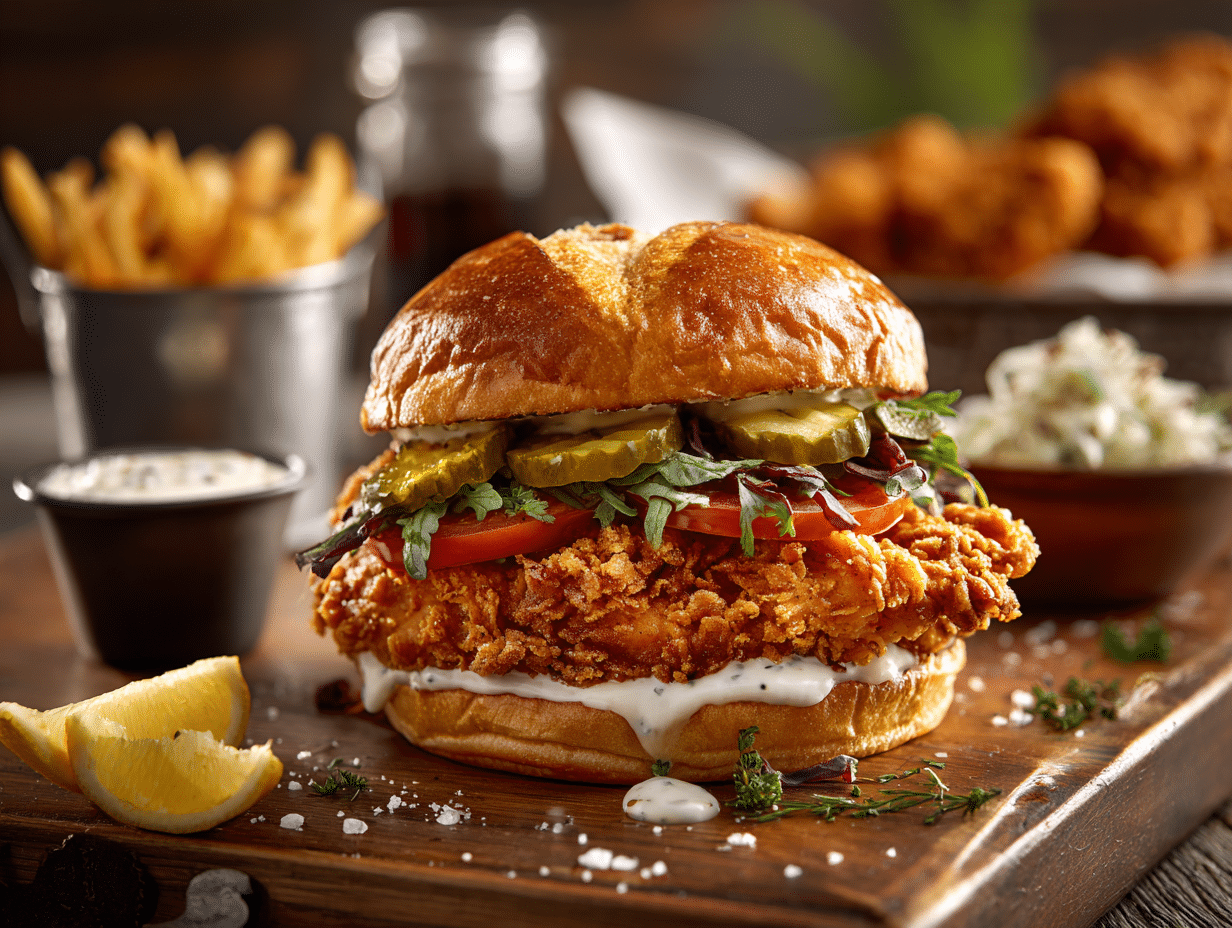
This is a homemade copycat of McDonald’s Homestyle Crispy Chicken Burger — a whole chicken breast, buttermilk-pickle brine, double-dredged coating, and a simple mayo spread on a brioche bun. The honest reason to make it at home is cost: you get a noticeably bigger piece of chicken, you control the seasoning, and the ingredients are mostly pantry staples you already have.
Shopping notes
- Pickle brine: Use the liquid from any jar of dill pickles in your fridge. Bread-and-butter pickle brine works too — it adds a little sweetness, which is fine.
- Buttermilk: No buttermilk? Mix 1 cup of regular milk with 1 tablespoon of white vinegar or lemon juice. Let it sit 5 minutes. It does the same job.
- Cornstarch: This is worth buying if you don’t have it — it’s cheap and makes a real difference to the crunch. Potato starch is a solid swap if you have it.
- Brioche bun: Any soft, slightly enriched bun works. A standard potato roll or even a plain hamburger bun is fine. Just avoid anything too crusty — it fights the chicken.
Why this recipe works
Two things actually drive the result here. First, the double-dredge: dipping the brined chicken back into the buttermilk after the first flour coat, then dredging again, builds up those thick, shaggy patches of coating that fry up crunchy and stay that way. A single dredge gives you a thin, flat crust that goes soft fast. Second, the cornstarch in the flour mix — it lowers the protein content of the coating, which means it sets into a crispier, more brittle shell instead of a chewy one. Skip the egg in the dredge mix — it makes the coating dense and leathery rather than light and shatterable.
Mistakes to avoid
- Frying cold chicken straight from the fridge: Cold chicken drops the oil temperature fast, which means the coating absorbs oil before it crisps. Let the brined chicken sit at room temperature for 15–20 minutes before frying.
- Crowding the pan: Two pieces at once is usually the limit in a standard home skillet. More than that and you’re steaming, not frying — the crust goes soggy.
- Not resting the dredged chicken before it hits the oil: Give it 5 minutes on a wire rack after the second dredge. The flour hydrates and grips the chicken properly, so the coating doesn’t slide off in the oil.
- Checking the temperature too early: The coating browns faster than the chicken cooks through. Always verify with an instant-read thermometer — poultry must reach 165°F (74°C) at the thickest point before you pull it.
- Assembling too far ahead: The steam from a hot chicken breast will soften the bottom bun within a couple of minutes. Build the sandwich right before serving, not while the chicken is still resting.
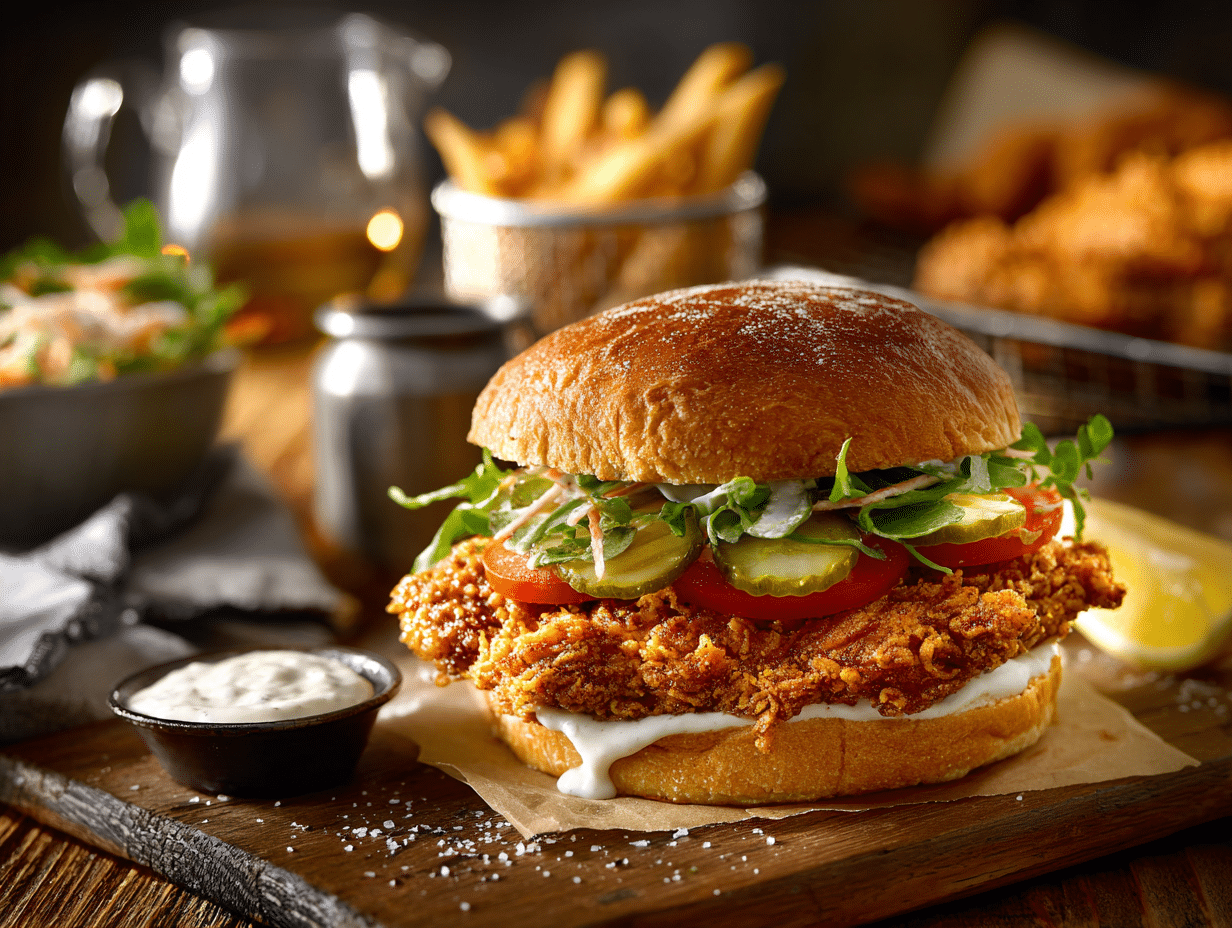
Homestyle Crispy Chicken Burger (McDonald’s-Inspired)

Ingredients
Chicken & Quick Brine
- 2 pieces boneless, skinless chicken breasts (about 5 oz each) Trimmed; choose evenly sized pieces for consistent cooking
- 1 cup buttermilk Full-fat preferred for best tenderness
- 2 tbsp dill pickle brine From a jar of dill pickles; adds classic fast-food tang
- 1 tsp kosher salt Diamond Crystal; reduce to 3/4 tsp if using Morton
- 1 tsp granulated sugar Balances the brine’s acidity
- ½ tsp garlic powder
- ½ tsp onion powder
- ½ tsp sweet paprika Hungarian sweet, not smoked
Seasoned Flour Dredge
- 1 cup all-purpose flour Spoon-and-level for accuracy
- ⅓ cup cornstarch For extra shatter-crisp texture
- 1 tbsp powdered sugar Encourages bronzing and subtle balance
- 1 tsp kosher salt
- 1 tsp sweet paprika
- ½ tsp ground black pepper Freshly ground
- ½ tsp garlic powder
- ½ tsp onion powder
- ½ tsp baking powder Lightens the crust
- ¼ tsp white pepper Adds fast-food nostalgia
Buttermilk Egg Wash
- 1 large egg Room temperature
- ½ cup buttermilk
- 1 tbsp hot sauce Optional; for gentle heat
Assembly & Frying
- 4 cups neutral oil (canola or peanut), for frying Enough for 2–2.5 inches of oil in a heavy pot
- 2 pieces brioche burger buns Soft, lightly sweet; potato buns also work
- 1 tbsp unsalted butter For toasting buns
- 2 tbsp mayonnaise Quality, full-fat
- 1 tsp Dijon mustard
- 1 tsp honey Balances the sauce
- 1 tsp fresh lemon juice Or extra pickle brine for more tang
- 4 pieces dill pickle chips Cold for crunch
- 2 leaves green leaf lettuce Crisp and dry
- 2 slices ripe tomato (optional) Seeded to avoid soggy buns
- ¼ tsp fine sea salt For seasoning the crust after frying
Instructions
- Butterfly, flatten, and brine (10 minutes active + 20 minutes rest): Place each chicken breast between sheets of plastic wrap and gently pound to an even 1/2-inch thickness. Whisk buttermilk, pickle brine, kosher salt, sugar, garlic powder, onion powder, and paprika. Submerge chicken, cover, and refrigerate for 20 minutes. Sensory cue: the chicken should feel supple and evenly seasoned after the quick brine.
- Make the house sauce (5 minutes): In a small bowl, mix mayonnaise, Dijon, honey, and lemon juice until glossy and smooth. Refrigerate. Taste for balance—creamy, lightly sweet, and bright.
- Seasoned flour & egg wash (5 minutes): In one shallow dish, combine flour, cornstarch, powdered sugar, salt, paprika, black pepper, garlic and onion powders, baking powder, and white pepper. In a second dish, whisk egg, buttermilk, and hot sauce (if using) until fluid and homogeneous.
- Double dredge for craggy crunch (5 minutes + 5 minutes rest): Lift a breast from the brine, letting excess drip. Press firmly into the seasoned flour, shaking off loose flour. Dip into the egg wash, then back into the flour, clumping flour onto the surface with your fingers to create rough, shaggy bits—these fry up extra crisp. Transfer to a rack and rest 5 minutes so the flour hydrates and adheres.
- Heat the oil to 350°F (175°C) (8 minutes): In a heavy pot or Dutch oven, pour in 2–2.5 inches of neutral oil and heat to 350°F (175°C). If you don’t have a thermometer, drop in a pinch of flour; it should sizzle immediately but not darken too fast. Safety: keep a lid nearby and avoid overfilling the pot.
- Fry (6–8 minutes total): Fry 1–2 pieces at a time, lowering away from you. Adjust heat to maintain 315–330°F (157–166°C) after the drop. Cook 3–4 minutes per side until deep golden and the thickest part reads 165°F (74°C). Sensory cues: vigorous but steady bubbling, a crisp shell that feels firm to the tap, and a nutty, toasty aroma.
- Drain and season (2 minutes): Transfer to a wire rack set over a sheet tray. Immediately sprinkle a whisper of fine sea salt to fix flavor into the crust. Rest 2 minutes so the juices settle and the shell sets.
- Toast buns (1–2 minutes): Split buns, smear cut sides with butter, and toast cut-side down in a skillet over medium heat until deep golden, about 1–2 minutes. Alternatively, toast on a sheet tray at 350°F (175°C) for ~3 minutes.
- Assemble: Spread sauce on both bun halves. Layer lettuce on the bottom bun, then the crispy chicken, pickles, and tomato (if using). Cap with the top bun. Listen for that gentle crackle as you press—music to a chef’s ears.
Notes
Chef’s Tips
- Juiciness insurance: Even a 20-minute buttermilk brine tenderizes; for extra flavor, brine up to 4 hours.
- Craggier crust: After the first flour coat, drizzle a tablespoon of brine into the flour and rub to create little clumps; press those onto the chicken before frying.
- Oil management: If the oil smokes, it’s too hot—pull off heat briefly. Cloudy oil? Skim with a spider for a cleaner fry and brighter flavor.
- No buttermilk? Substitute 1 cup milk + 1 tbsp lemon juice or vinegar; rest 5 minutes to thicken.
- Gluten-free: Use a 1:1 gluten-free flour blend plus cornstarch and a pinch of xanthan gum (1/8 tsp) for structure.
- Spice it: Add 1/2 tsp cayenne to the dredge and a few dashes of hot sauce to the mayo for a spicy profile.
Serving Suggestions
Plate each burger slightly off-center on a warmed plate. Add a modest pile of shoe-string fries or a crisp vinegar-dressed slaw to contrast the richness. Garnish the plate with a lemon wedge and a few extra chilled pickle chips. Ideal drink pairings include an ice-cold lager, a gently hopped pale ale, or a classic cola. Visual cues of perfection: buns lacquered and golden, a deeply bronzed crust with rugged texture, and steam escaping on the first bite.Culinary Context
This sandwich pays homage to American fast-food culture—simple, craveable flavors executed with precision. The buttermilk brine traces back to Southern fried chicken traditions, while the pickle tang and mayo-lettuce pairing echo the timeless burger joint experience. My twist is all technique: consistent thickness for even cooking, a double dredge for signature shatter, and a balanced sauce that flatters rather than masks.Optional Advanced Instructions
- Make-ahead: Brine up to 4 hours ahead; mix the sauce 3 days ahead.
- Air fryer method: Lightly mist breaded chicken with oil. Air fry at 375°F (190°C) for 12–14 minutes, flipping halfway, until 165°F (74°C).
- Oven method: Place on a greased rack over a sheet tray; mist with oil. Bake at 425°F (220°C) for 18–22 minutes to 165°F (74°C).
- Parallel prep: While the oil heats (about 8 minutes), toast buns and set your assembly station to save time.
Timing
- Prep Time: 40 minutes total (10 min pounding/seasoning + 20 min brine rest + 5 min sauce + 5 min dredge/rest)
- Cook Time: 18 minutes total (8 min oil preheat + 6–8 min fry + 1–2 min bun toasting)
Nutrition
FAQ
Can I use chicken thighs instead of a breast?
Yes, boneless skinless thighs work well and are usually cheaper. They’re a bit smaller and thicker in places, so pound them to an even thickness and still cook to 165°F (74°C) internal — thighs are forgiving but they’re still poultry.
Can I air-fry this instead of deep-frying?
You can, but the crust will be noticeably less crunchy and the coating won’t puff up the same way. If you go that route, spray the dredged chicken generously with oil on both sides and cook at 400°F — a light spray won’t cut it here.
How long can I leave the chicken in the brine?
Two to four hours is the sweet spot. Beyond 8 hours the acid in the buttermilk starts to break down the texture of the meat and you end up with something a little mushy at the edges.
My coating keeps falling off in the oil — what’s going wrong?
The most common cause is skipping the rest after dredging — the flour needs a few minutes to hydrate and bond to the chicken before it hits hot oil. Also make sure your oil is fully up to temperature before the chicken goes in; dropping it into oil that’s too cool causes the coating to loosen.
What oil works if I don’t have enough vegetable oil?
Any neutral high-smoke-point oil is fine — canola, sunflower, peanut, or refined coconut oil all work. Avoid olive oil or butter for deep frying; they smoke and burn before the chicken is done.
What to cook next
- Crispy Chicken Sandwich Perfected
- KFC Famous Chicken Sandwich
- Nashville Hot Chicken Sandwich
- Spicy McCrispy Copycat Recipe