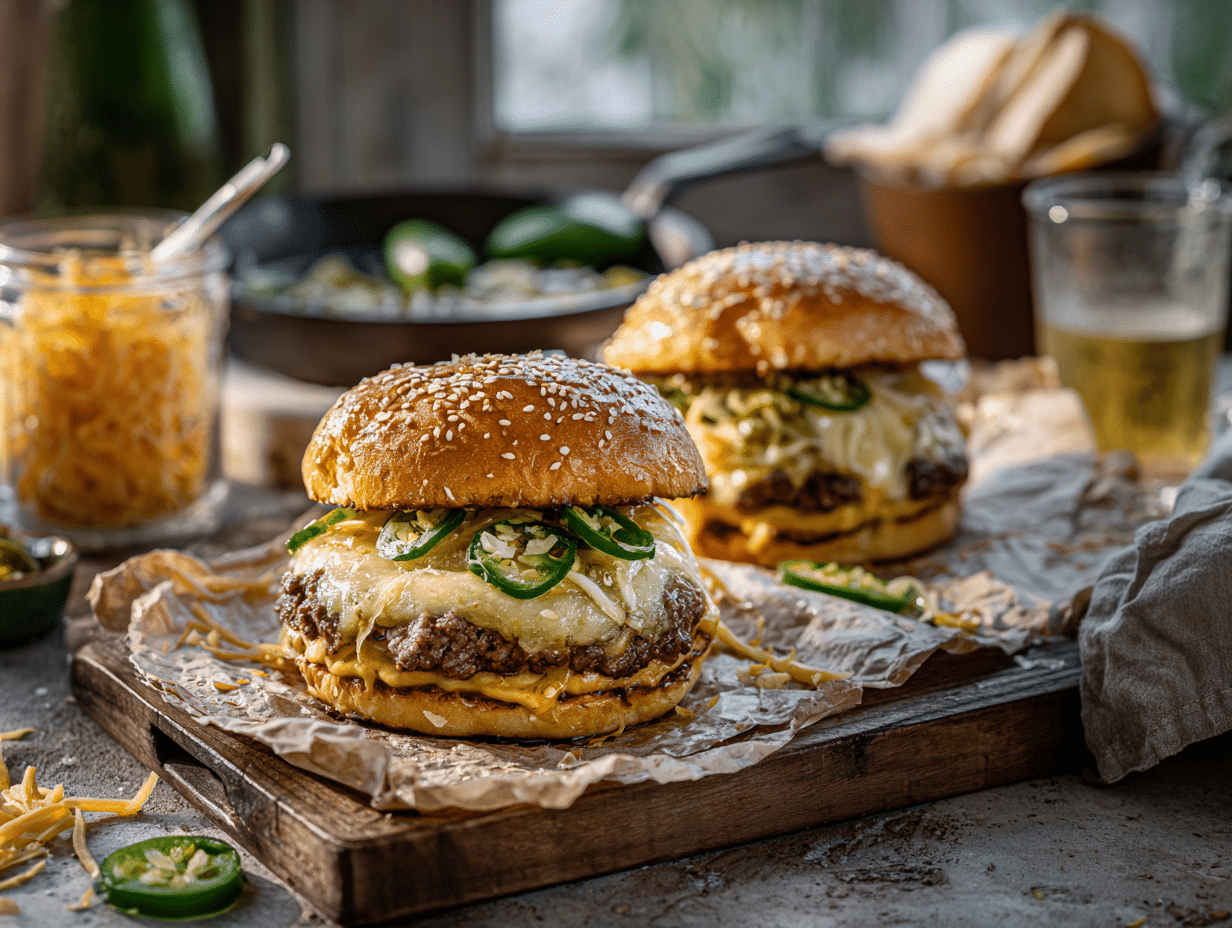
This is a copycat of McDonald’s Jalapeño Double — two beef patties, white cheddar, crispy fried jalapeños, and a jalapeño-ranch cheese sauce. The honest reason to make it at home is that you get real heat and a better crust than the original, and you can control how spicy it actually is.
The short version of why this works
Two things matter here. First, the smash technique: pressing the ball of beef hard against a screaming-hot surface creates a wide, lacy-edged patty with serious browning that a thicker hand-formed patty just won’t give you. That crust is where most of the flavor lives. Second, the roux-based cheese sauce stays creamy and clings to the meat instead of breaking into a greasy puddle — skip the shortcut of just laying a slice of white cheddar on top and calling it done, because it slides off and doesn’t coat evenly. Get both of those right and the rest of the build is straightforward.
Troubleshooting
- Crispy jalapeños go soggy before you finish building: Fry them last, right before assembly. Even five minutes of sitting in a warm kitchen pulls moisture in and kills the crunch. If you’re cooking for more than two people, fry in small batches and keep them on a wire rack, not paper towels.
- Cheese sauce seizes up or goes grainy: Your heat was too high after adding the cheese. Pull the pan off the burner entirely, add the cheese gradually, and stir constantly. If it’s already broken, whisk in a tablespoon of warm milk and put it back on the lowest heat possible.
- Patties shrink and cup instead of staying flat: The beef is too cold or the pan isn’t hot enough before you smash. Let the beef balls sit at room temperature for 10 minutes, and wait until the pan is fully preheated — a drop of water should evaporate on contact.
- Sauce is too thick to spread: Thin it with a small splash of the jalapeño brine from the jar. It loosens the texture and adds a little brightness without making the sauce watery. This also works if the sauce thickens as it cools between batches.
- Burger tastes flat even with all the jalapeño: The bun is probably under-toasted. A pale, soft bun absorbs the sauce and makes everything muddy. Toast it until it’s genuinely golden — that slight resistance when you bite through it keeps the layers distinct.
Storage and reheating
Store components separately if you can. Cooked patties keep in the fridge for up to 3 days in an airtight container; the cheese sauce keeps for 3 days in a jar. Fried jalapeños are a lost cause after a few hours — they go soft no matter what, so only make what you’ll use. To reheat patties, a dry skillet over medium heat for 2 minutes per side beats the microwave every time; the microwave steams them and you lose whatever crust you built. Reheat the cheese sauce low and slow with a splash of milk, stirring as it warms. If you want to freeze patties, wrap them individually and freeze for up to 2 months — thaw overnight in the fridge before reheating. Ground beef patties must reach an internal temperature of 160°F (71°C) whether you’re cooking fresh or reheating from frozen.
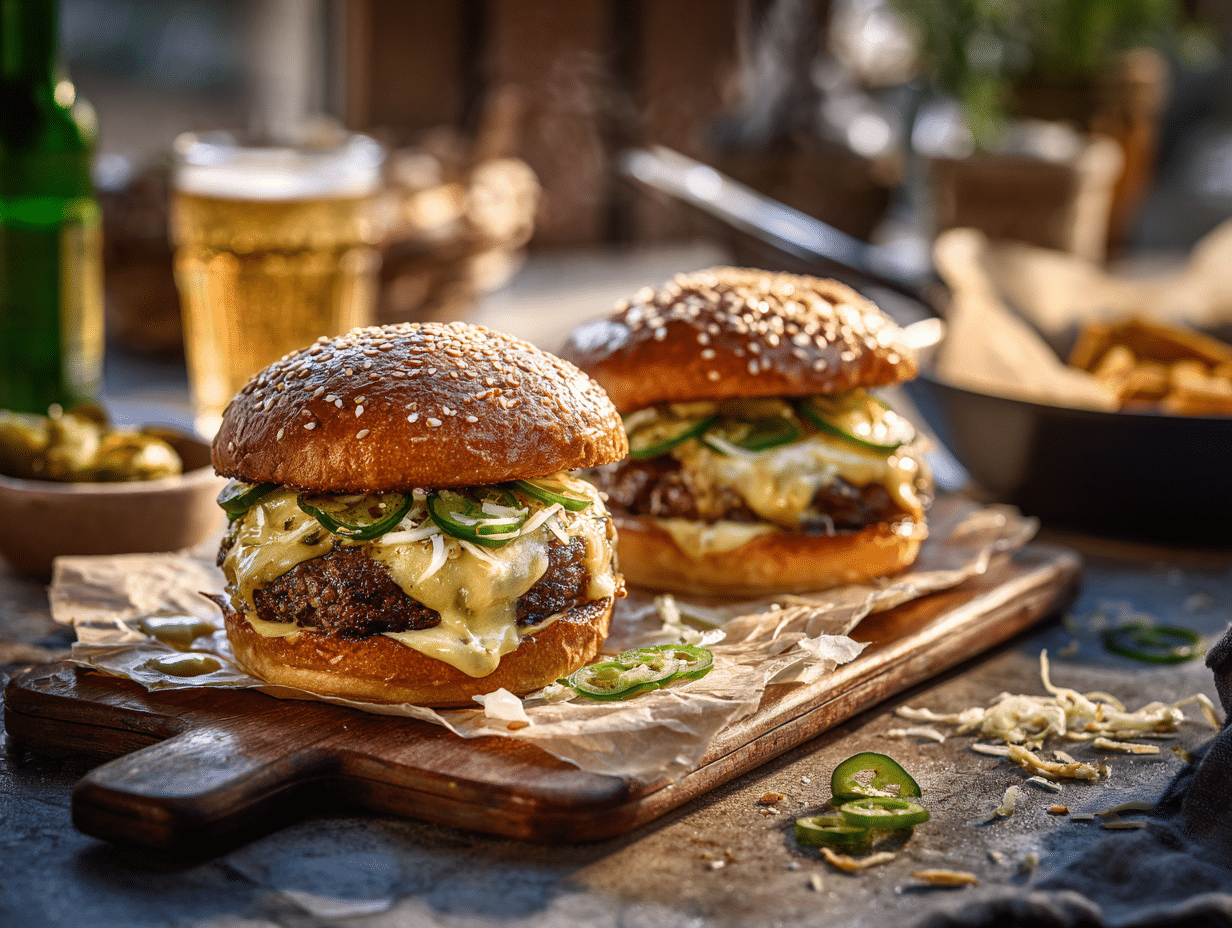
McDonald’s Jalapeño Double Burger (Chef’s Copycat)

Ingredients
For the Jalapeño Cheddar Sauce:
- 1 tsp unsalted butter for roux
- 1 tsp all-purpose flour to thicken
- ½ cup whole milk warmed
- 3 oz sharp cheddar cheese, finely shredded shred fine for easy melting
- 1 slice American cheese torn; boosts silkiness
- 2 tbsp pickled jalapeño brine from the jar; adds tangy heat
- ⅛ tsp garlic powder
- ⅛ tsp kosher salt season to taste
For the Burgers & Assembly:
- 2 whole soft sesame seed burger buns potato or brioche style preferred
- 1 tbsp unsalted butter for toasting buns
- 12 oz ground chuck (80/20) cold; divide into four 3-oz balls
- 1 tsp kosher salt for seasoning patties
- ½ tsp freshly ground black pepper
- 2 tsp neutral oil (canola or grapeseed) for the griddle
- ¼ cup white onion, minced very fine classic fast-food texture
- ½ cup pickled jalapeño slices, drained tamed or hot, your choice
- 4 slices American cheese 2 slices per burger
- 2 tsp yellow mustard for mustard-smash flavor
- 6 pieces dill pickle chips (optional) for extra tang
- 2 tsp mayonnaise (optional) thin smear on bun
Instructions
- Set Up: Place a cast-iron skillet or flat-top over medium-high heat until the surface is very hot, about 4–5 minutes (400–425°F / 205–220°C). Prepare four parchment squares (6-inch/15-cm) for smashing, and have a small lid or metal bowl ready to dome the cheese.
- Make the Jalapeño Cheddar Sauce (6–8 minutes): In a small saucepan over medium heat, melt 1 tsp butter. Whisk in 1 tsp flour; cook 30–45 seconds until it smells toasty, not browned. Gradually whisk in 1/2 cup warm milk and bring just to a gentle simmer—do not boil. Reduce heat to low (approx. 180°F / 82°C), then whisk in shredded cheddar and the torn American cheese until silky. Stir in 2 tbsp jalapeño brine, 1/8 tsp garlic powder, and a pinch of salt to taste. The sauce should coat the back of a spoon. Keep warm on low.
- Toast the Buns (1–2 minutes): Split the buns and smear cut sides with 1 tbsp softened butter. Place cut-side down on the hot skillet and toast until golden and crisp at the edges. Set aside. Optional: add a whisper of mayonnaise to the top bun for moisture barrier.
- Form the Patties (1 minute): Divide the 12 oz ground chuck into four even balls (about 3 oz each). Handle minimally for tenderness—just shape into loose spheres.
- Sear and Smash (1–2 minutes first side): Lightly oil the skillet with 2 tsp neutral oil. Place two beef balls down (work in two batches), immediately cover each with a parchment square, and press firmly with a flat spatula or burger press to about 1/4-inch thick. Peel off parchment, then season each patty with kosher salt and black pepper. Paint or drizzle a little yellow mustard over the top. Cook until the edges are deep golden and lacy and you see a faint mahogany crust creeping toward the center, 60–90 seconds.
- Flip, Cheese, and Melt (30–60 seconds second side): Flip patties. Top one patty in the pan with a slice of American cheese and a pinch of minced onion. Add a spoonful of jalapeño slices to the pan to warm for 20–30 seconds. Splash a teaspoon of water on the bare metal, then dome with a lid to steam-melt the cheese (a classic diner trick). When cheese is glossy and patties read about 145°F / 63°C for medium (or your preferred doneness), stack the cheesy patty onto the un-cheesed patty. Transfer to a warm plate. Repeat with the remaining two patties.
- Sauce the Buns and Assemble (1–2 minutes): Spread a tablespoon or so of the warm Jalapeño Cheddar Sauce on each bottom bun. Add a few dill pickle chips if using. Pile on the warmed jalapeño slices and a pinch of minced onion. Set the patty stack on top, add the second slice of American cheese if you like it extra gooey, then crown with the top bun. Spoon a small extra ribbon of sauce over the top for a dramatic drip.
- Serve Immediately: The hallmark of a great smash burger is contrast—crisp edges, juicy center, and molten cheese. Present as soon as assembled to preserve texture.
Notes
Chef’s Tips:
- Heat Matters: A ripping-hot surface (400–425°F / 205–220°C) creates lacy edges without overcooking the interior.
- Mustard-smash Twist: Brushing mustard on the first side infuses tang and helps build a deeper crust.
- Cheese Options: Swap in pepper jack for extra heat, or go half American/half cheddar for balance.
- Jalapeños: Use tamed jalapeños for moderate heat or fresh thinly sliced jalapeños for a sharper bite. Briefly blister fresh slices 30–45 seconds per side for aroma.
- Dietary Swaps: Use plant-based patties and dairy-free American-style slices; make the sauce with oat milk and vegan cheddar.
- No Cast-iron? A heavy stainless or quality nonstick skillet works; preheat longer for good sear.
- Fast Melt: A quick dome with a teaspoon of water creates steam that melts cheese fast without overcooking.
Nutrition
Common questions
Can I use pickled jalapeños from a jar instead of making crispy fried ones?
Yes, and it’s a perfectly reasonable swap — you’ll lose the crunch but the flavor is still there. Drain them well and pat them dry so they don’t make the bun soggy.
What can I use instead of white cheddar if I can’t find it?
Regular sharp cheddar works fine in the sauce and tastes nearly identical once the jalapeño brine and seasoning are in. Pepper jack is another solid option and actually adds a little extra heat, which isn’t a bad thing here.
Do I need a special press or tool to smash the patties?
No — a heavy flat-bottomed skillet or a sturdy metal spatula wrapped in parchment does the job. The parchment keeps the beef from sticking to whatever you’re pressing with, which matters more than the tool itself.
Try these next
- Wendy’s Bacon Jalapeño Burger
- Spicy Jalapeño King Burger
- Ultimate Avocado Bacon Smash Burger
- Copycat Quarter Pounder Recipe