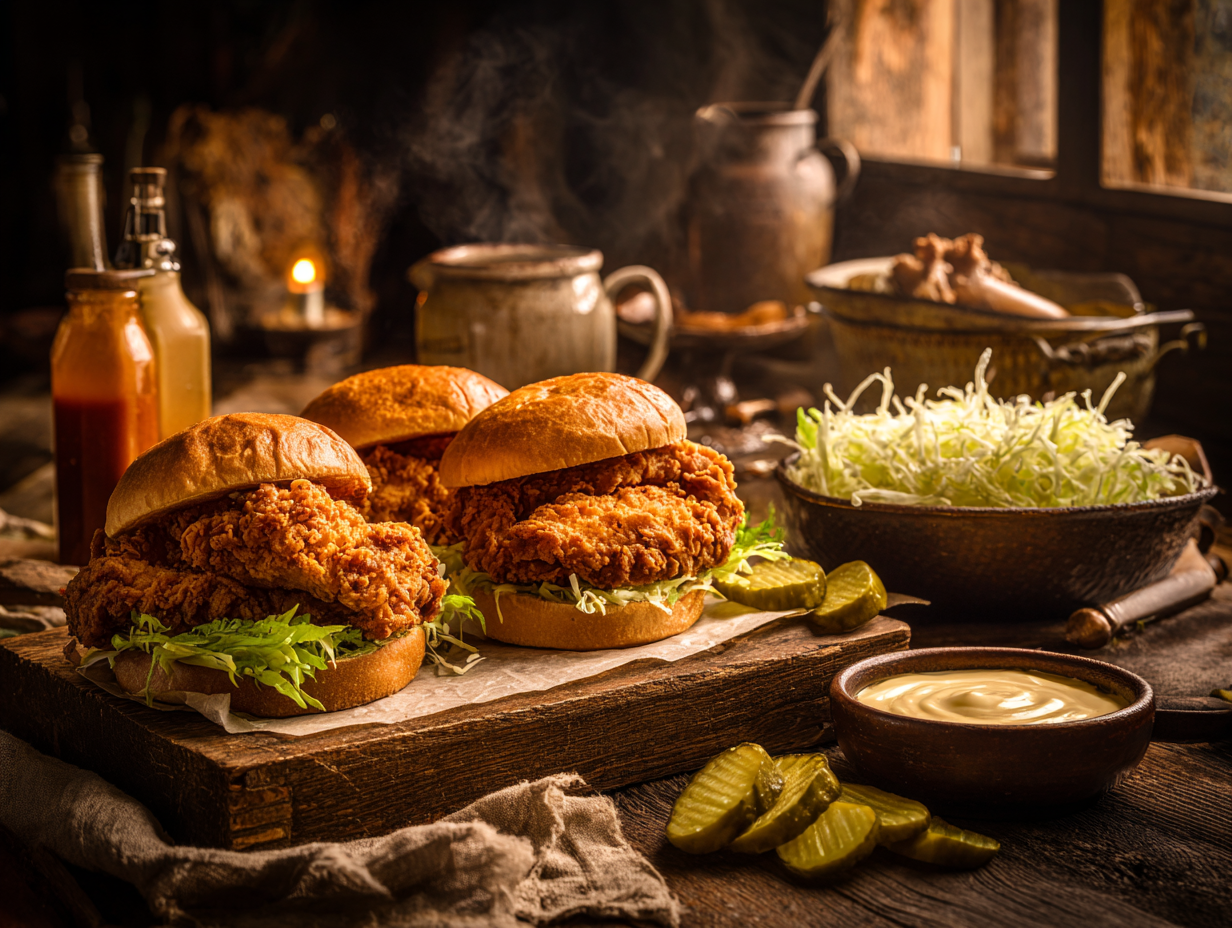
This is a spiced, buttermilk-fried chicken burger built to taste like a KFC Zinger — crispy coating, juicy thigh meat, brioche bun, pickles, and a mayo-mustard sauce. The honest reason to make it at home is that the whole thing comes together faster than a drive-thru run once you’ve got the chicken marinating, and you control the heat level and the quality of every component.
The short version of why this works
Two things carry this recipe. First, the buttermilk marinade: the lactic acid gently breaks down the muscle fibers in the chicken thigh, so the meat stays tender even after a full fry. Without it, thighs can tighten up and turn chewy. Second, the spiced flour dredge needs to be pressed firmly onto the chicken — not dusted on loosely. A tight coating bonds to the surface moisture left by the buttermilk and forms the crust that actually holds together in the oil. Let the dredged pieces sit for five minutes before they hit the pan; that short rest lets the coating hydrate and grip, which is what gives you the shatter on the first bite rather than a coating that slides off.
Ingredient notes
- Chicken thighs vs. breasts: Thighs are the right call here. They have more fat, which means they stay moist through the fry time and forgive a minute or two of overcooking. Breasts dry out fast and are harder to pound to an even thickness.
- Buttermilk substitute: If you don’t have buttermilk, mix 1 cup of whole milk with 1 tablespoon of white vinegar or lemon juice and let it sit for five minutes. It works just as well for tenderizing.
- Hot sauce in the marinade: Any Louisiana-style hot sauce (Frank’s, Crystal, Texas Pete) works. Avoid thicker sauces like sriracha — they don’t distribute evenly through the buttermilk and can cause uneven heat spots in the coating.
- Crushed cornflakes or panko: Either adds real crunch. Cornflakes give a slightly more jagged, shattery crust; panko is more uniform. Skip the egg wash in the dredge mix — it makes the coating gummy rather than crisp.
- Brioche buns: These are worth seeking out. A standard hamburger bun gets soggy fast from the fried chicken’s steam. Brioche holds up better and the slight sweetness balances the spice.
Common problems and fixes
- Coating falls off during frying: The oil wasn’t hot enough when the chicken went in. If the temperature drops below 325°F, the coating absorbs oil and loosens instead of setting. Use a thermometer and fry in small batches to keep the temp stable.
- Chicken is cooked outside but raw inside: The pieces are too thick. Pound thighs to an even ¾-inch thickness before marinating so the outside and inside finish at the same time. Always verify with a thermometer — poultry must reach 165°F (74°C) at the thickest point.
- Coating is pale and greasy, not golden: Oil temperature was too low the whole time. Start at 350°F and expect it to settle around 325–330°F once the chicken is in. Don’t crowd the pan — two pieces at a time max in a standard skillet.
- Burger is soggy by the time you eat it: You assembled it too early. Build the burger right before serving. If you’re making a batch, keep fried pieces on a wire rack in a 200°F oven uncovered — a plate traps steam and kills the crust within minutes.
- Too spicy or not spicy enough: The heat lives in two places — the hot sauce in the marinade and the cayenne in the dredge. Adjust them independently. More hot sauce = deeper heat through the meat. More cayenne = sharper heat on the crust.
Keeping and reheating
Fried chicken pieces keep in the fridge for up to 3 days in an airtight container. Store the buns, sauce, and toppings separately — assembled burgers don’t reheat well. To reheat, put the chicken on a wire rack over a baking sheet in a 375°F oven for 10–12 minutes; this crisps the coating back up without drying out the meat. A microwave will make the coating soft and leathery, so avoid it. For freezing, let the fried pieces cool completely, then freeze them in a single layer before transferring to a bag. They’ll keep for up to 2 months. Reheat from frozen at 400°F for 18–20 minutes on a rack, flipping once halfway through. The marinade can be made up to 24 hours ahead and the chicken can soak overnight, which actually improves the tenderness and makes weeknight assembly much faster.
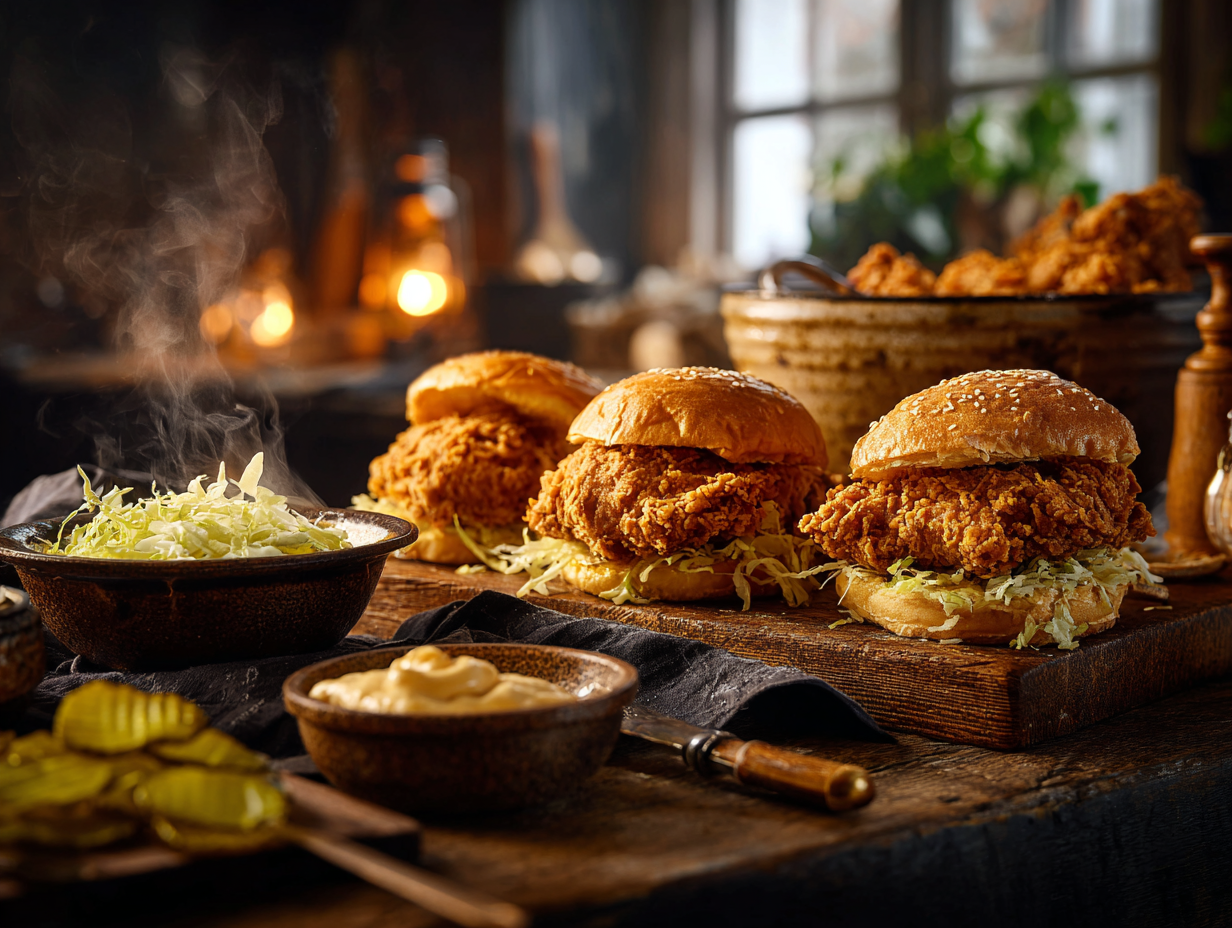
Crispy Homemade KFC-Style Chicken Burger

Ingredients
For Marinated Chicken:
- 4 pieces boneless skinless chicken thighs preferably organic
- 1 cup buttermilk for tenderizing
- 1 tablespoon hot sauce such as Frank’s Red Hot
For Crispy Coating:
- 1 ½ cups all-purpose flour
- 1 teaspoon paprika smoked for extra depth
- ½ teaspoon ground white pepper
- ½ teaspoon garlic powder
- 1 teaspoon kosher salt or to taste
- 2 cups vegetable oil for deep frying
For the Burger Assembly:
- 4 whole brioche burger buns lightly toasted
- ½ cup mayonnaise preferably full-fat
- 1 tablespoon yellow mustard
- 1 cup shredded iceberg lettuce fresh and crisp
- 4 slices dill pickles or more to taste
Instructions
- In a large bowl, mix buttermilk and hot sauce. Submerge the chicken thighs completely, cover, and refrigerate for at least 30 minutes (up to overnight).
- In a shallow bowl, mix flour, paprika, white pepper, garlic powder, and salt.
- Heat the vegetable oil in a deep frying pan to 350°F (175°C). Use a thermometer for accuracy.
- Remove chicken from marinade and dredge in seasoned flour. Press firmly so the coating adheres well. Let rest for 5 minutes before frying.
- Fry the chicken in batches for 5–6 minutes on each side until golden brown and internal temp reaches 165°F (74°C). Drain on a rack or paper towels.
- Mix mayonnaise and mustard to create the burger sauce.
- Toast brioche buns lightly and begin assembly: bottom bun, sauce, lettuce, fried chicken, pickles, more sauce, then top bun.
Notes
- Add crushed cornflakes or panko to the flour mixture for an extra-crispy crust.
- To make it spicier, add cayenne powder to the dredging flour or double the hot sauce in the marinade.
- Chicken breasts can be substituted, but thighs retain juiciness better during frying.
Nutrition
FAQ
Can I use an air fryer instead of deep frying?
Yes, but the crust won’t be as thick or as crunchy. Spray the dredged chicken generously with oil, air fry at 400°F for 18–20 minutes flipping once, and confirm the internal temperature hits 165°F (74°C). The result is lighter and still good — just different from the deep-fried version.
How long does the chicken need to marinate?
At minimum 30 minutes, but 4–8 hours in the fridge gives noticeably more tender results. Overnight is fine and actually ideal if you’re prepping ahead for a quick weeknight cook.
What oil should I use for frying?
Use a neutral oil with a high smoke point — vegetable, canola, or peanut oil all work well. Avoid olive oil; its smoke point is too low for the temperatures needed and it will burn before the chicken is done.
Can I make this with chicken breast instead of thighs?
You can, but you need to be careful. Pound breasts to an even ¾-inch thickness so they cook through before the outside over-browns, and pull them the moment they hit 165°F (74°C) — there’s no fat buffer to protect them from drying out the way thighs have.
My spice mix doesn’t taste as bold as the KFC version — what am I missing?
Salt is usually the culprit. The coating needs to be seasoned more aggressively than feels comfortable when you taste the raw flour mix, because a lot of it doesn’t make it onto the chicken. Also make sure your paprika and garlic powder aren’t stale — old spices lose potency fast and are a common reason homemade fried chicken tastes flat.
Can I prep and bread the chicken ahead of time?
Yes — dredge the chicken and place it uncovered on a rack in the fridge for up to 2 hours before frying. The coating dries out slightly, which actually helps it adhere better and fry up crispier. Don’t go much longer than that or the coating can get pasty.