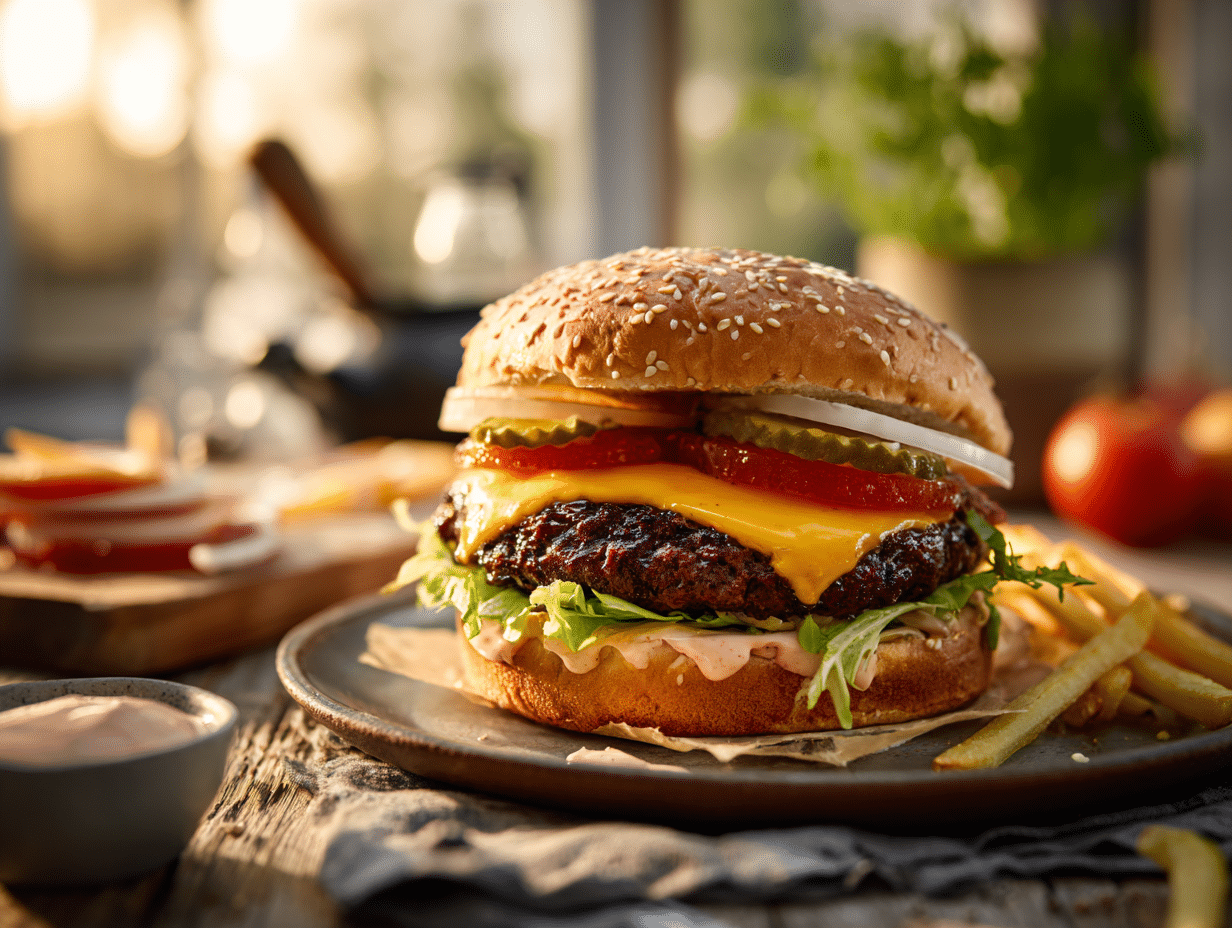
This is a from-scratch recreation of the Burger King Whopper — a wide, thin beef patty cooked over high heat, stacked with fresh vegetables and a simple mayo-ketchup sauce on a toasted sesame seed bun. The honest reason to make it at home is control: you pick the beef quality, you season it properly, and you eat it hot instead of sitting in a paper bag for ten minutes.
The short version of why this works
Two things matter here more than anything else. First, the patty shape: wide and thin means maximum contact with the grill grates, which is what gives you actual char and a genuinely juicy interior — a thick patty cooked the same way would be grey in the middle before the outside gets any color. Second, grill temperature. You need the grates screaming hot before the patty goes on. A lukewarm grill steams the meat instead of searing it, and you lose the whole point of the recipe. Get those two things right and the rest is just assembly.
What can go wrong
- The patty shrinks into a puck. Ground beef contracts when the fat renders. Press a shallow dimple in the center of each patty before it hits the grill — this counteracts the pull and keeps the patty flat and wide rather than domed.
- The bun goes soggy before you finish eating. Toast the cut sides of the bun directly on the grill or in a dry skillet until they’re golden and slightly firm. A properly toasted bun holds up against the sauce and tomato juice for the whole meal.
- The vegetables make the burger fall apart. Cold, wet lettuce and tomato slices that haven’t been patted dry slide around and push everything out the back. Dry your tomato slices on a paper towel for a minute before building the burger — skip this and every bite is a structural problem.
- The patty sticks to the grates. Don’t move the patty for the first 2 minutes. If it’s sticking, it isn’t ready to release. Forcing it tears the crust you’re trying to build and leaves half the patty behind on the grill.
- The finished burger is lukewarm by the time you eat it. Warm your plate and have every topping ready before the patty comes off the heat. Assembly takes less than a minute if you’re set up, and a hot patty on a cold plate loses temperature fast.
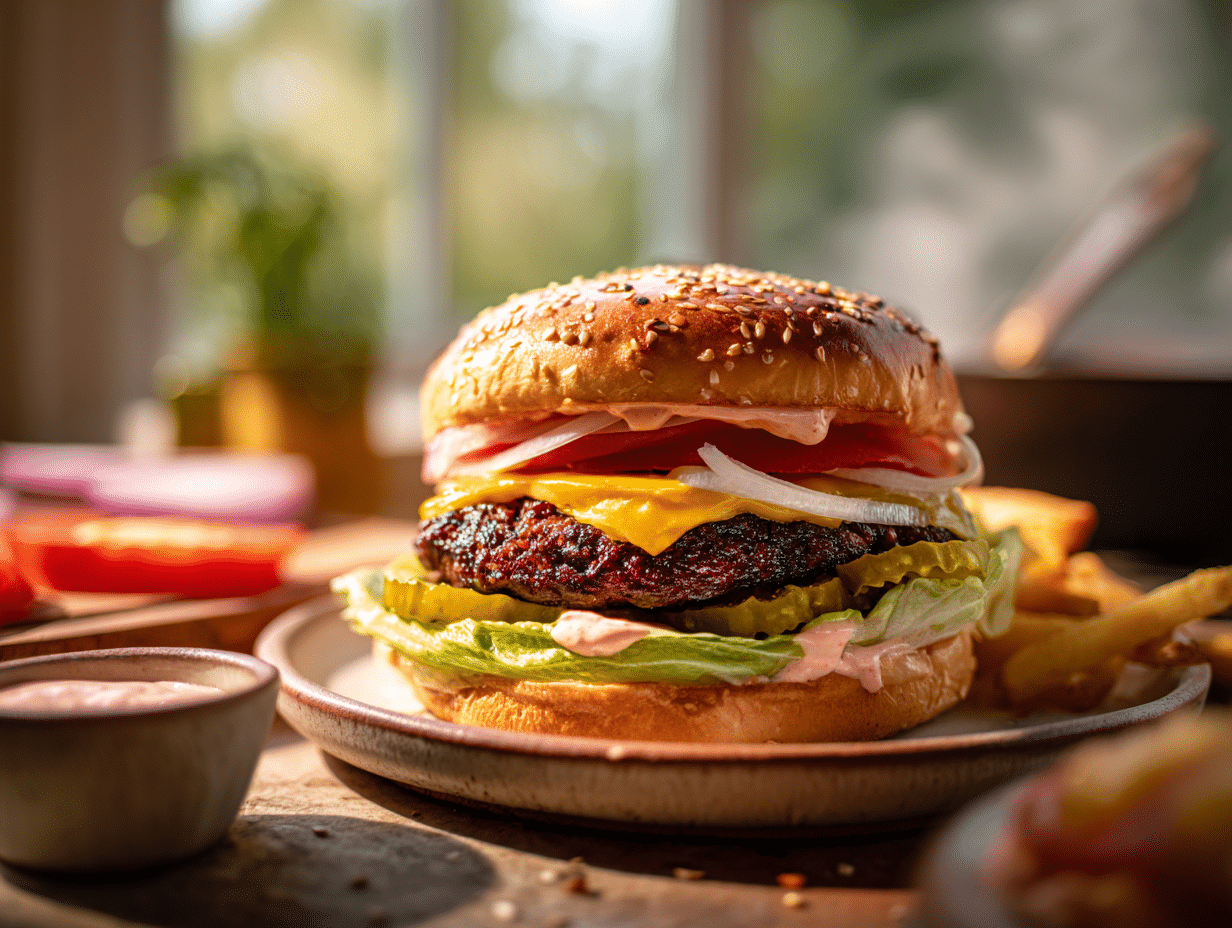
Burger King–Style Whopper with Cheese (Chef’s Elevated Copycat)

Ingredients
- ½ cup mayonnaise full-fat; cold for best texture
- ¼ cup ketchup classic American-style, not gourmet or spicy
- 1 tsp distilled white vinegar optional; adds a gentle tang to the spread
- 1 small white onion sliced into thin rings; soak in ice water for 10 minutes to mellow, then drain
- 1 large beefsteak tomato sliced into 8 even rounds; peak-season preferred
- 16 chips dill pickles classic crinkle-cut; about 4 chips per burger
- 4 leaves iceberg lettuce large, crisp leaves; keep chilled for crunch
- 1 lb 80/20 ground chuck cold; divide into four 4-oz portions for thin, wide patties
- 1 ½ tsp kosher salt Diamond Crystal preferred; season just before grilling
- 1 tsp freshly ground black pepper medium grind for gentle bite
- ½ tsp onion powder optional; light fast-food-style savoriness
- 1 tbsp neutral oil for grilling or skillet (canola or vegetable oil)
- 4 large sesame seed hamburger buns 4.5–5-inch buns, lightly sweet
- 2 tbsp unsalted butter, melted for toasting buns; substitute oil if preferred
- 4 slices American cheese deli-style for better melt; 1 slice per burger
- ¼ cup ice water in a spray bottle (optional) or as needed; for taming grill flare-ups while maintaining smoke
Instructions
- You’ll Build Flavor in Layers: A tangy spread, chilled crisp produce, thin wide patties kissed by flame, and a warm, sesame-toasted bun. Temperatures are listed in both Fahrenheit and Celsius for precision.
- Make the Ketchup–Mayo Spread (3 minutes): In a small bowl, whisk together 1/2 cup mayonnaise, 1/4 cup ketchup, and 1 tsp distilled white vinegar until smooth and pink. Taste: it should be creamy with gentle tang. Cover and keep chilled.
- Prep the Vegetables (5 minutes): Slice the white onion into thin rings and the tomato into 8 even slices. Keep iceberg leaves whole but trim to bun size. Chill the veg; cold lettuce and tomato provide essential contrast to the warm patty.
- Form the Patties (5 minutes): Divide 1 lb ground chuck into four 4-oz portions. Gently press into thin, wide rounds about 5 inches across and 1/3 inch thick—this ensures a Whopper-like footprint. Make a shallow 1-inch dimple in the center of each patty to prevent doming. Keep patties cold until cooking.
- Preheat the Grill or Pan (5 minutes): Heat a gas or charcoal grill to high, about 450–500°F (232–260°C). Alternatively, heat a cast-iron skillet over medium-high until a flick of water skitters, then brush with 1 tbsp neutral oil. For oven-broiler method, set rack 6 inches from the element and preheat the broiler to high (about 500°F/260°C).
- Season and Grill (6–7 minutes total): Season patties on both sides with kosher salt, black pepper, and a whisper of onion powder just before they hit the heat. Grill for 2.5–3 minutes on the first side until edges look browned and the fat renders, producing aromatic smoke. Flip and cook 2–3 minutes more. In the final 30–45 seconds, top each patty with a slice of American cheese and cover (use a lid or inverted metal bowl) to melt. Target internal temperature: 160°F (71°C) for classic fast-food doneness; 145°F (63°C) for medium if preferred.
- Toast the Buns (30–60 seconds): Split buns. Brush cut sides lightly with melted butter. Grill cut-side down until golden at the edges, 30–60 seconds at about 400–450°F (204–232°C). On the stovetop, use the same timing in the hot skillet.
- Build the Burger (2 minutes): On the bottom bun, spread about 1 tbsp ketchup–mayo, then layer 4 pickle chips, a modest tangle of onion rings, 2 slices of tomato, and a folded leaf of iceberg lettuce. Crown with the hot cheesy patty. Spread 1 tbsp ketchup–mayo on the top bun and cap the burger. The aroma should be lightly smoky, the bun warm, and the vegetables crisp and cool.
- Optional Fast-Food Steam (2–3 minutes): For that classic just-unwrapped texture, wrap each burger loosely in foil and rest 2–3 minutes. This gently steams the bun and harmonizes flavors without losing crunch.
Notes
Chef’s Tips:
- Flame-Kissed at Home: On a gas grill, briefly lift the lid after flipping to encourage a controlled flare for 5–10 seconds—char aroma without soot. Keep a spray bottle of ice water nearby to tame flare-ups.
- No Grill? Use a cast-iron skillet preheated to shimmering. Add a drop (not more) of liquid smoke to the meat or pan, or dust the patties lightly with smoked paprika for nuance.
- Authenticity vs. Flair: Classic Whopper seasoning is minimal. For a chef’s twist, blend 1/4 tsp each paprika and garlic powder into the salt before seasoning.
- Vegetarian Swap: Use your favorite plant-based patty; cook per package, still aiming for browned edges and a gentle char.
- Onion Finesse: Soak raw rings in ice water 10 minutes to sweeten and crisp, then pat dry.
- Gluten-Free: Use sturdy gluten-free sesame buns and toast well for structure.
- For classic fast-food structure, don’t overpack toppings—keep layers even so each bite includes char, creaminess, acidity, and crunch.
- If scaling, maintain patty thinness and bun size ratio to preserve the Whopper profile.
Nutrition
FAQ
What ground beef fat percentage should I use for this?
80/20 (chuck) is the right call for this style of patty. The higher fat content keeps a thin, wide patty juicy over high heat — leaner blends like 90/10 will dry out fast because there’s not enough fat to compensate for the quick cook time.
Can I cook this on a gas grill instead of charcoal?
Yes, and it works well. Preheat all burners on high for at least 10 minutes so the grates are fully hot before the patty goes on. You won’t get quite the same smoky depth as charcoal, but the char and crust will be solid.
How do I know when the patty is done without cutting into it?
Use an instant-read thermometer and pull the patty at 160°F (71°C) internal — that’s the safe temperature for ground beef. At that temp the patty will still have some juice; going higher dries it out quickly.
Can I make the patties ahead of time and refrigerate them?
Yes — form them, stack with parchment between each one, and refrigerate for up to 24 hours. Cold patties actually hold their shape better on the grill than room-temperature ones, so this is a practical move for a cookout.
What if I can’t find a 5-inch sesame seed bun?
A standard brioche or potato bun works fine — toast it well so it doesn’t collapse under the toppings. The size difference is minor; what matters more is that the bun is sturdy enough to handle a sauced, loaded patty without turning to mush.
Do I need to add anything to the ground beef before forming the patties?
Just salt and pepper, applied right before the patty hits the grill — not mixed in beforehand. Skip the egg in the mix; it makes the patty mushy and you lose the clean beef texture that makes this burger worth eating.
More burger recipes to try
- BBQ Bacon Whopper Copycat
- Texas Double Whopper Copycat
- Teriyaki Whopper Jr Recipe
- Veggie Whopper Copycat Recipe