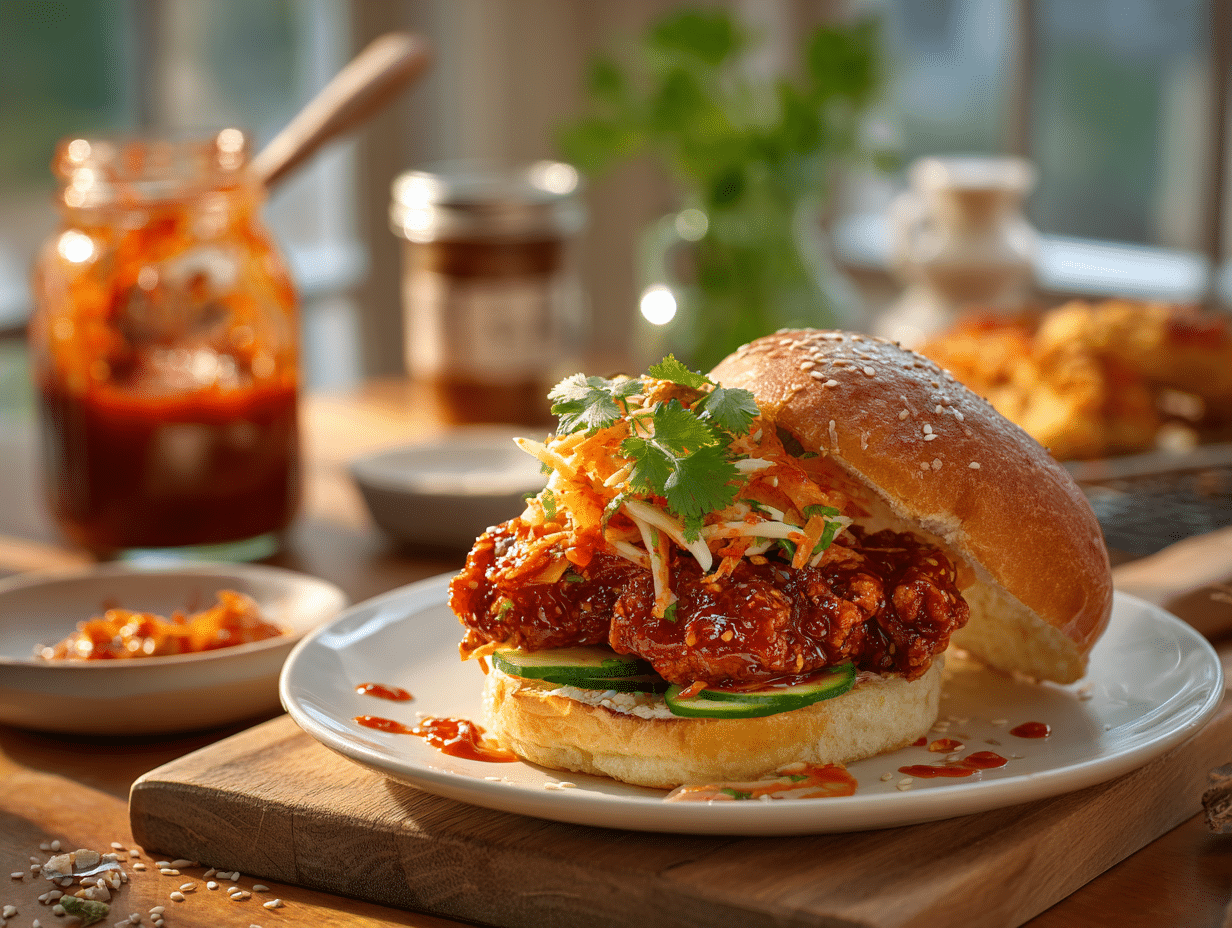
This is a double-dredged fried chicken thigh burger glazed with gochujang and topped with kimchi slaw on a potato bun. It takes real effort — marinating, double-coating, frying in batches — but the result is a crust that stays crunchy even after the glaze goes on, which is the whole point. If you’re feeding a group, this one scales up cleanly as long as you keep your oil hot.
Substitutions that actually work
- Gochujang: If you can’t find it, a mix of sriracha and a small amount of white miso gets you in the right ballpark — fermented, spicy, slightly sweet. It won’t be identical, but it works.
- Potato starch: Cornstarch is a reasonable substitute, though the crust will be slightly less light. All-purpose flour alone won’t give you the same crunch.
- Buttermilk: Mix 1 cup whole milk with 1 tablespoon white vinegar, let it sit 5 minutes. Works the same way for the marinade and the dredge dip.
- Kimchi: Store-bought kimchi is completely fine here. If yours is very sour or very funky, rinse it lightly and pat dry before mixing into the slaw — it keeps the flavor present without overwhelming everything else.
- Potato bun: A brioche bun holds up well too. Avoid anything too crusty — it fights the chicken instead of supporting it.
Why this recipe works
Two things actually drive the result here. First, the double dredge — marinated chicken into the flour mix, back into buttermilk, then into the flour again — builds up uneven ridges and nubs on the surface. Those irregular bits fry up crispier than a smooth coating and give the glaze something to grip. Second, potato starch in the flour mix keeps the crust light and brittle rather than thick and bready, so it stays crunchy after glazing instead of going soft. Skip the egg in the dredge mix if you’re tempted to add one — it seals the coating too tightly and you lose that shatter. Everything else in the recipe is supporting those two things.
If something goes sideways
- Coating falls off during frying: The chicken was probably too wet going into the first dredge. Pat thighs firmly dry after the marinade before dredging, and press the flour coating on — don’t just toss and shake.
- Oil temperature drops and chicken turns greasy: This usually means too many pieces in the pan at once. When cooking for a crowd, fry in smaller batches and give the oil 2–3 minutes to recover between them. A thermometer is worth using here, not optional.
- Glaze makes the crust go soggy: The glaze is going on chicken that’s too cool. Glaze immediately after frying while the crust is still hot and steam is still escaping — that’s what keeps it from turning soft.
- Kimchi slaw is watery and slides out: Napa cabbage releases liquid fast once it’s dressed. Mix the slaw no more than 20 minutes before serving, and if you’re assembling burgers for a group, keep the slaw in a bowl and let people add it themselves.
- Chicken is golden outside but undercooked inside: Thighs are thick and uneven. If the crust is browning too fast, your oil is too hot. Pull back to the lower end of the temperature range and check internal temp — poultry must reach 165°F (74°C) all the way through, no exceptions.
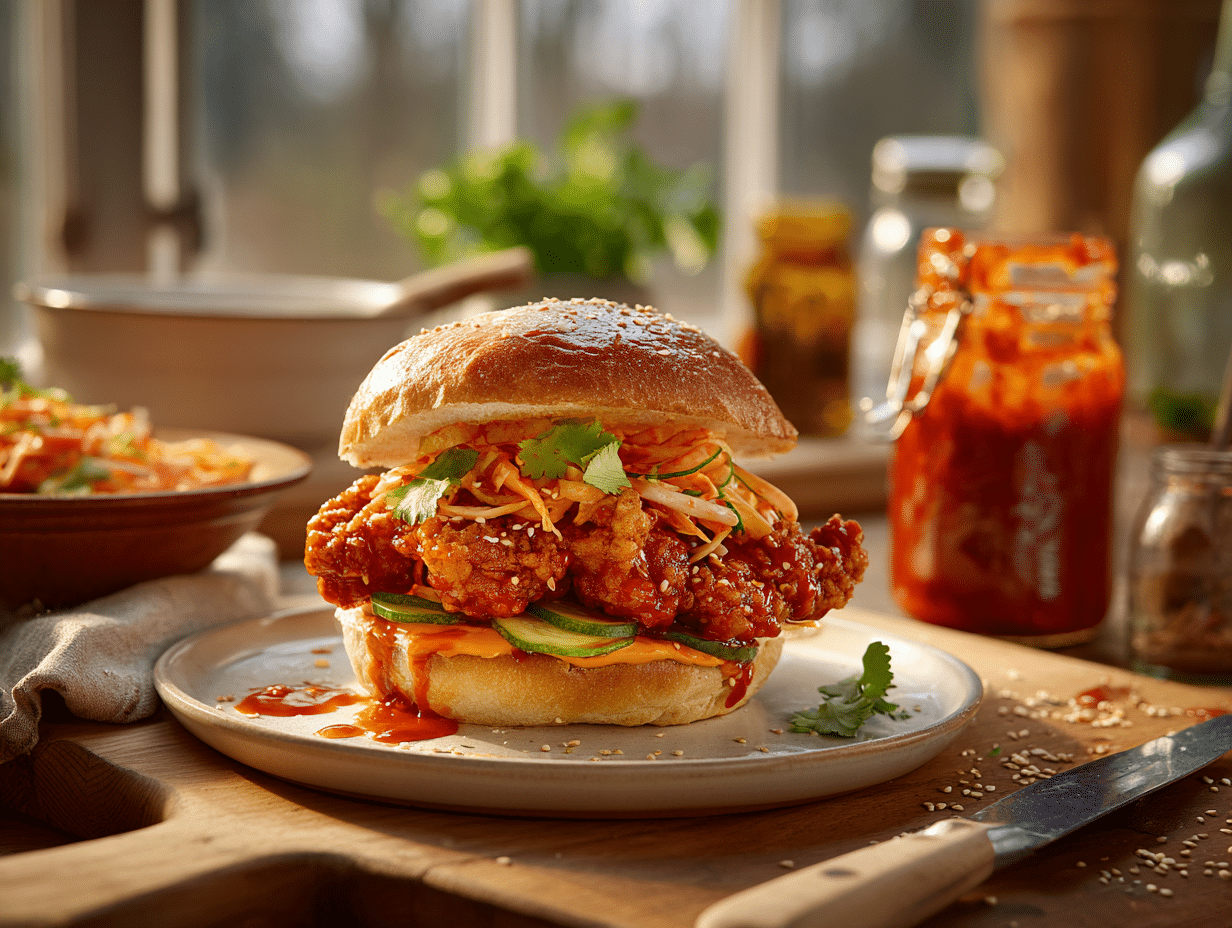
Shake Shack Korean-Style Fried Chicken Burger

Ingredients
For the Chicken & Marinade:
- 1.5 lb boneless, skinless chicken thighs (about 4 pieces) choose evenly sized thighs for uniform cooking; trim excess fat
- 1.5 tsp kosher salt Diamond Crystal preferred; reduce slightly if using Morton
- 0.5 tsp freshly ground black pepper
- 1 cup buttermilk full-fat for best tenderness
- 2 tbsp gochujang (Korean fermented chili paste) look for medium heat, brands like Sempio or Chung Jung One
- 1 tbsp soy sauce low-sodium preferred
- 2 cloves garlic, minced freshly minced for best aroma
- 1 tsp fresh ginger, finely grated
For the Gochujang Honey Glaze:
- 3 tbsp gochujang adjust to taste for heat
- 2 tbsp honey runny blossom honey for smooth blending
- 1 tbsp soy sauce low-sodium
- 1 tbsp unseasoned rice vinegar
- 1 tbsp light brown sugar, packed
- 2 tbsp water to loosen glaze to tossing consistency
- 1 clove garlic, finely grated
- 0.5 tsp gochugaru (Korean chili flakes) optional, for extra heat and color
For the Kimchi Slaw:
- 2 cups Napa cabbage, very thinly sliced from the tender inner leaves for sweetness
- 1 cup well-fermented kimchi, chopped and squeezed squeeze excess brine for a crisp slaw
- 2 whole scallions, thinly sliced green and white parts
- 1 tbsp unseasoned rice vinegar
- 1 tsp toasted sesame oil
- 1 tsp granulated sugar balances the kimchi’s acidity
- 1 tbsp mayonnaise optional, for a creamier slaw; Kewpie recommended
- 1 tsp toasted sesame seeds for nutty crunch
For the Gochujang Mayo Spread:
- 0.5 cup mayonnaise Kewpie or full-fat mayo
- 1 tbsp gochujang
- 2 tsp unseasoned rice vinegar or fresh lime juice
- 0.5 tsp granulated sugar rounds the heat
For the Seasoned Dredge:
- 1.5 cups all-purpose flour sifted for lightness
- 0.5 cup potato starch or cornstarch potato starch yields the crispiest crust
- 1 tsp baking powder creates tiny bubbles for an airy crust
- 1 tsp sweet paprika for color and mild warmth
- 0.5 tsp ground white pepper classic KFC-style seasoning note
- 0.5 cup buttermilk for second dip (double dredge)
For Frying & Assembly:
- 2 quarts neutral frying oil (peanut, canola, or rice bran) high smoke point
- 4 whole soft potato buns Martin’s potato rolls recommended
- 2 tbsp unsalted butter, softened for toasting buns
- 12 slices dill pickle chips crunchy, not sweet
- 1 tsp toasted sesame seeds optional garnish
- 0.25 cup fresh cilantro leaves or perilla, torn optional, for herbal lift
Instructions
- Prep the Chicken: Lightly pound the chicken thighs to an even 1/2-inch thickness for uniform cooking. In a bowl, whisk buttermilk, gochujang, soy sauce, garlic, ginger, salt, and pepper. Add thighs and turn to coat. Cover and marinate for at least 30 minutes (up to 12 hours) in the refrigerator. This step builds juiciness and flavor.
- Make the Kimchi Slaw (10 minutes): In a mixing bowl, combine Napa cabbage, chopped and squeezed kimchi, scallions, rice vinegar, sesame oil, sugar, and (optional) mayonnaise. Toss until glossy and crisp. Fold in sesame seeds. Chill until assembly so it stays snappy.
- Cook the Glaze (5 minutes): In a small saucepan, whisk gochujang, honey, soy sauce, rice vinegar, brown sugar, water, garlic, and optional gochugaru. Bring to a gentle simmer over medium heat and cook 2–3 minutes until glossy and slightly thickened. It should lightly coat the back of a spoon. Keep warm on low.
- Stir the Gochujang Mayo (2 minutes): In a small bowl, mix mayonnaise, gochujang, rice vinegar, and sugar until smooth and rosy. Refrigerate.
- Set Up to Fry: Fit a heavy pot with 2 inches of oil and clip on a thermometer. Preheat oil to 350°F / 175°C. Place a wire rack over a sheet pan. Preheat oven to 200°F / 95°C (to keep chicken hot and crisp). While oil heats, make the dredge.
- Seasoned Dredge & Double-Dip (10 minutes): In a shallow dish, whisk flour, potato starch, baking powder, paprika, and white pepper. Remove chicken from marinade, letting excess drip. Dredge in flour mixture, pressing to create craggily bits. Dip briefly into the extra 1/2 cup buttermilk, then back into the flour mixture for a thick, nubbly crust. Rest breaded pieces 5 minutes so the coating adheres.
- Fry (about 8–10 minutes per batch): Fry 2 pieces at a time to avoid crowding. Lower gently into oil. Maintain 325–350°F / 163–177°C (adjust heat as needed). Cook 3–4 minutes per side until deeply golden—listen for a sharp, lively sizzle and watch for a coppery hue. Internal temperature should reach 165°F / 74°C. Transfer to the rack and hold in the 200°F / 95°C oven. Repeat with remaining pieces.
- Glaze: Toss the hot fried chicken in a large bowl with just enough warm gochujang honey glaze to lacquer the crust without sogging it—look for a shiny, clingy coat. Alternatively, brush the glaze on both sides.
- Toast the Buns (2–3 minutes): Split the potato buns and smear cut sides with butter. Toast cut-side down in a hot skillet or on a griddle until the edges are mahogany and the center is caramel-gold.
- Assemble: Spread gochujang mayo on both bun halves. Bottom bun → pickle chips → glazed chicken → a generous mound of kimchi slaw → sprinkle of sesame seeds and a few cilantro/perilla leaves → top bun. Press gently to set.
- Serve Immediately: The perfect burger will be audibly crisp when bitten, with a glossy red glaze, bright green flecks from scallions and herbs, and steam rising from the juicy center.
- Safety & Sensory Cues: Keep oil clear and bubbling vigorously but not violently; if bubbles slow and the crust looks pale, your oil is too cool. If it smokes, it’s too hot—cut the heat and allow to drop back to 350°F / 175°C.
Notes
Chef’s Tips:
- Unbeatable Crunch: The potato starch + baking powder combo creates micro-blisters. Don’t skip the 5-minute rest after dredging—this hydrates the flour for better cragginess.
- Double-Fry Option: For extra shatter, fry first at 320°F / 160°C for 3 minutes per side, rest 5 minutes, then refry at 360°F / 182°C for 1–2 minutes to set the crust.
- Heat Control: Aim to keep oil above 325°F / 163°C. Use a thermometer; cold chicken will drop the temperature—fry in small batches.
- Adjust the Spice: Reduce gochujang and omit gochugaru for mild. Add a pinch of cayenne to the dredge for extra kick.
- Substitutions: Dairy-free: use unsweetened oat milk with 1 tsp lemon juice in place of buttermilk. Gluten-free: use a 1:1 GF flour blend and potato starch. Soy-free: swap coconut aminos for soy sauce and reduce sugar slightly.
- Air-Fryer Method: Brush breaded chicken lightly with oil. Air-fry at 390°F / 200°C for 14–16 minutes, turning halfway, to 165°F / 74°C. Toss in warm glaze.
- Oven Method: Arrange on a rack set over a sheet pan; convection-bake at 425°F / 220°C for 18–22 minutes, flipping once. Spray lightly with oil for best browning. Glaze immediately.
- Bun Choice: Soft potato rolls echo the Shake Shack vibe; a milk bun also works if potato rolls aren’t available.
Nutrition
FAQ
Can I fry the chicken ahead of time and reheat it?
Yes, but reheat it in a 375°F oven on a wire rack for 8–10 minutes rather than microwaving — the rack lets air circulate so the crust firms back up instead of steaming. Don’t glaze until after reheating, or the glaze just makes everything wet.
How do I keep the first batches warm while I finish frying the rest?
Hold finished pieces on a wire rack set over a baking sheet in a 200°F oven — this is the move when you’re cooking for several people at once. Don’t stack the pieces or cover them with foil, or you’ll trap steam and soften the crust.
Can I use chicken breast instead of thighs?
You can, but thighs are genuinely better here — they stay juicy through the full fry time and have enough fat to handle the high heat without drying out. If you use breast, pound it to an even thickness first so it cooks through before the crust over-browns.
Is there a way to make this less spicy without losing the flavor?
Use half the gochujang called for in the glaze and add a teaspoon of honey to compensate for the lost sweetness. Gochujang has a lot of savory depth beyond the heat, so reducing it rather than omitting it keeps the flavor intact.