These are flatbread wraps built around kofta-spiced beef patties, a garlic-tahini sauce, sumac-dressed onions, and fresh tomato and lettuce — a home version of the McArabia sold at McDonald’s locations across the Middle East. The real reason to make them: the whole thing comes together in about 30 minutes, and the flavors are genuinely interesting without requiring anything exotic beyond tahini and sumac.
Before you start
The two things that actually matter here are the sauce and the heat on your pan. The garlic-tahini sauce needs a few minutes to sit after mixing — tahini seizes up when it first hits an acid or liquid, then loosens into a creamy consistency as it rests. Give it at least 5 minutes before you taste and adjust. For the patties, get your skillet genuinely hot before the beef goes in. A properly hot pan gives you a seared crust that holds the patty together when you wrap it; a lukewarm pan steams the meat and the patty falls apart inside the flatbread. Skip the egg in the mix — it makes the patty mushy and you don’t need a binder when the beef is cold and the pan is hot.
What can go wrong
- Flatbread tears when you roll it: Cold flatbread cracks. Warm each piece in a dry skillet for 20–30 seconds per side, or wrap the stack in a damp paper towel and microwave for 15 seconds. Wrap immediately while it’s still pliable.
- Patties shrink and puff in the middle: Press a shallow thumbprint into the center of each raw patty before cooking. This counteracts the natural tendency of ground beef to dome up, keeping the patty flat and even inside the wrap.
- Sauce tastes bitter or too sharp: Tahini brands vary a lot. If the sauce tastes harsh, add a small pinch of sugar and a splash more water, then let it rest again. Bitter tahini usually just needs diluting.
- Sumac onions are too pungent: If raw red onion is too sharp for your taste, soak the sliced onions in cold water for 10 minutes before tossing with sumac. This pulls out most of the bite without cooking them.
- Beef not reaching safe temperature: These patties are thinner than a standard burger patty, so they cook fast — but fast doesn’t mean done. Use an instant-read thermometer and confirm 160°F (71°C) at the center before pulling them off the heat.
About the ingredients
- Sumac: Sold at Middle Eastern grocery stores, most international supermarkets, and online. It looks like coarse dark-red powder and tastes tart and faintly fruity. If you genuinely can’t find it, a small squeeze of lemon juice over the onions gets you partway there, but the color and flavor won’t be the same.
- Tahini: Stir the jar well before measuring — the oil separates and a dry scoop from the bottom will throw off the sauce. Lighter-colored tahini (made from hulled sesame seeds) tends to be milder and works better here than darker varieties.
- Flatbread: Arabic khubz or any thin, pliable flatbread works. Flour tortillas are a practical substitute — they wrap cleanly and hold up well. Avoid thick pita pockets; they’re too bready and the wrap won’t close properly.
- Ground beef: 80/20 is the right fat ratio for these patties. Leaner beef dries out quickly at the high heat you need for a good sear.
Keeping and reheating
Cooked patties keep in the fridge for up to 3 days in an airtight container. Reheat them in the same skillet you cooked them in — 2 minutes per side over medium heat brings them back without drying them out. The microwave works in a pinch but softens the crust. Keep the sauce, onions, and flatbread stored separately; assembled wraps go soggy fast and aren’t worth saving. The garlic-tahini sauce keeps refrigerated for up to 5 days — it will thicken in the fridge, so stir in a teaspoon of water before using. Cooked patties can be frozen for up to 2 months; thaw overnight in the fridge before reheating.
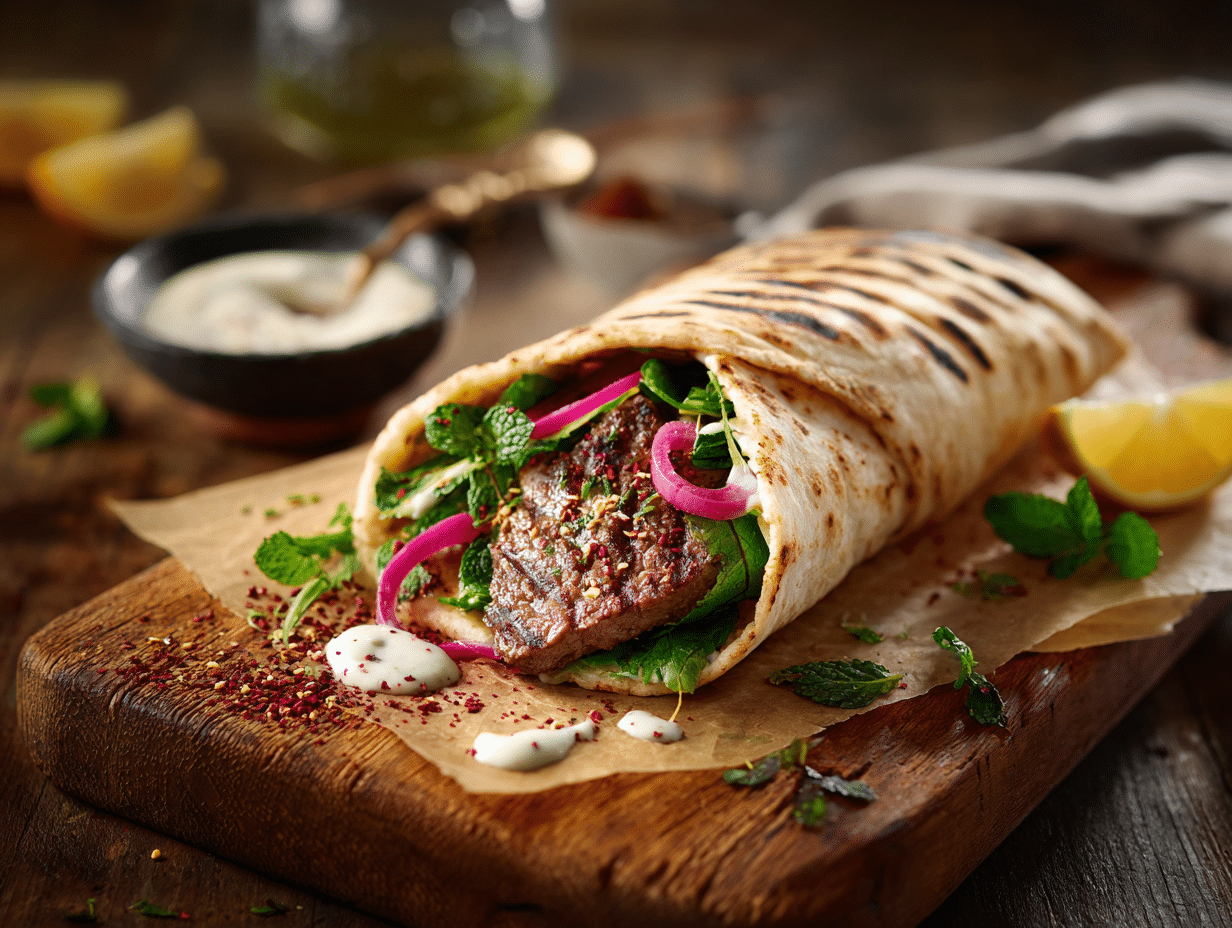
McDonalds McArabia Beef (Copycat)

Ingredients
For the Sumac Onions:
- 1 medium red onion, very thinly sliced choose a firm, brightly colored onion
- 1 tbsp fresh lemon juice freshly squeezed for best brightness
- 1 tsp ground sumac look for a vibrant burgundy color and lemony aroma
- ¼ tsp kosher salt
- 1 tbsp flat-leaf parsley, chopped (optional) adds freshness and color
For the Garlic–Tahini Sauce:
- ⅓ cup mayonnaise good-quality, full-fat for best body; dairy-free mayo works too
- 2 tbsp tahini (sesame paste), well stirred choose a smooth, pourable tahini for silkier sauce
- 1 clove garlic, finely grated use a microplane for a smooth, mellow heat
- 1 tbsp fresh lemon juice brightens and balances the tahini and mayo
- 1 tbsp cold water, as needed loosens to drizzling consistency without thinning flavor
- ¼ tsp kosher salt adjust to taste
For the Beef Patties:
- 1 lb ground beef (80/20) freshly ground if possible for best texture and flavor
- 2 tbsp flat-leaf parsley, finely chopped stems okay if finely minced; adds herbal lift
- 2 tsp ground cumin freshly ground for fullest aroma if possible
- 1 tsp ground coriander citrusy spice that brightens the beef
- ½ tsp sweet paprika adds color and gentle warmth
- ⅛ tsp ground cinnamon (optional) traditional kofta nuance; use lightly
- 1 tsp kosher salt Diamond Crystal; use 1/2 tsp if using Morton’s (saltier)
- ½ tsp freshly ground black pepper grind to a medium-fine texture for even seasoning
- 1 tbsp olive oil, for brushing or skillet prevents sticking and promotes even browning
For the Assembly:
- 4 pieces Arabic flatbreads (khubz) or large pocketless pitas, 7–8 inch soft, fresh flatbread is essential; look for pliability
- 1 cup romaine lettuce, shredded crisp inner leaves for best crunch
- 1 medium tomato, thinly sliced ripe but firm for clean slices and minimal juice
- 1 small cucumber, thinly sliced (or 8–12 dill pickle slices) cucumber is classic; pickles add punchier acidity
- 4 sprigs fresh mint or parsley (optional) herbal freshness and aroma
- 1 medium lemon (wedges), for serving (optional) a final squeeze heightens brightness
Instructions
- Make the Sumac Onions: In a bowl, toss sliced red onion with lemon juice, sumac, and salt. Massage lightly for 10–15 seconds to soften, then set aside at room temperature for 10 minutes. Fold in parsley (if using). Onions should turn glossy and blush-pink with a citrusy aroma.
- Whisk the Garlic–Tahini Sauce: In a small bowl, whisk mayonnaise, tahini, grated garlic, and lemon juice until smooth. Whisk in cold water, 1 tsp at a time, until spoonable but not runny. Season with salt. The sauce should be creamy, pale, and gently garlicky.
- Prepare the Beef Patties: In a mixing bowl, combine ground beef, parsley, cumin, coriander, paprika, cinnamon (optional), salt, and black pepper. Mix with fingertips just until slightly tacky—do not overwork. Divide into 4 portions and shape into oval patties about 4 × 3 inches and 1/2 inch thick. Press a shallow thumb dent in the center of each to prevent doming. Rest 5 minutes.
- Preheat the Cooking Surface: Heat a grill or grill pan to medium-high (about 400–425°F / 205–220°C). Alternatively, heat a cast-iron skillet over medium-high until a drop of water skitters, about 3–4 minutes. Lightly oil grates or skillet with the olive oil.
- Cook the Patties: Sear patties 3–4 minutes on the first side until deeply browned with visible grill marks or a mahogany crust. Flip and cook another 3–4 minutes, covering for the last minute if using a skillet to encourage even cooking. Cook to an internal temperature of 160°F (71°C). Juices should run clear, and the patties will feel springy yet firm.
- Warm the Flatbreads: While the patties finish, warm flatbreads directly on the grill 30–45 seconds per side, or in a 300°F (150°C) oven for 2–3 minutes, until pliable and steamy. Alternatively, microwave under a damp paper towel for 15–20 seconds.
- Assemble the Wraps: Spread 1–1 1/2 tbsp garlic–tahini sauce over each warm flatbread. Layer with romaine, tomato, and cucumber or pickle slices. Add a hot patty, spoon over a tangle of sumac onions, and drizzle a little more sauce. Fold the sides over and roll to create a snug wrap. If desired, wrap in parchment for a neat, handheld finish.
- Rest and Serve: Let the wrapped sandwiches rest 1 minute to set. Cut on a bias if sharing. Finish with a pinch of sumac and torn mint. Serve immediately with lemon wedges.
Notes
Chef’s Tips:
- Juicier Patties: Mix in 2 tbsp finely grated onion or 1 tbsp plain yogurt for extra moisture; reduce salt slightly to compensate.
- Heat Control: Use a two-zone grill; sear over direct heat, then finish over indirect for gentler cooking.
- No Tahini? Substitute 1 tbsp extra mayo plus 1 tsp toasted sesame oil for subtle sesame notes, or use a yogurt–garlic sauce.
- Spice Variation: Add 1/2 tsp Aleppo pepper for a mild, fruity heat.
- Dietary Swaps: Use gluten-free flatbread for GF; ensure mayo is egg-free if needed; choose halal-certified beef to match regional practice.
- Pan Alternative: If you don’t have a grill, a preheated cast-iron skillet or broiler works well. For broiler: position 6 inches from heat and cook 3–4 minutes per side.
Serving Suggestions:
- Plate on a warm stoneware platter or wooden board, wraps tucked in parchment with one end open for a street-food look.
- Garnish with a sprinkle of sumac, torn mint, and a drizzle of lemon. Colors should pop—ruby onions, emerald herbs, and a creamy ivory sauce.
- Pair with za’atar-dusted fries, fattoush salad, or grilled corn with lemon. Sip mint lemonade or ayran for balance.
Culinary Context:
The McArabia debuted in the Middle East in the early 2000s, a localized fast-food nod to regional khubz sandwiches. This rendition leans into kofta-inspired spices and a classic garlic–tahini profile while preserving the sandwich’s familiar, comforting character.Optional Advanced Instructions:
- Make-Ahead: Sauce keeps 3 days chilled; sumac onions hold 24 hours. Shape patties up to 12 hours ahead; cover and refrigerate. Freeze raw patties up to 1 month; thaw overnight in the fridge.
- Batch Service: Hold cooked patties in a 200°F (95°C) oven on a rack for up to 20 minutes to keep crisp exteriors.
- Beginner Alternative: Form thinner patties (3/8 inch) for quicker, more forgiving cooking—reduce cook time by ~1 minute per side.
Timing:
- Prep Time: 30 minutes (includes onion marinating and shaping patties).
- Cook Time: 15 minutes (preheat, sear 8–10 minutes total, warm breads, and assemble).
- Servings: 4 wraps.
- Course & Origin: Main Course (Sandwich/Wrap); Middle Eastern/Arabian influence.
Nutrition
Your questions, answered
Can I cook these on an outdoor grill instead of a skillet?
Yes, a grill works well — cook over direct medium-high heat and use a thermometer to confirm 160°F (71°C) at the center. The main risk on a grill is the patties breaking apart on the grates, so make sure they’re well-chilled before they go on and resist the urge to move them until a crust has formed, usually about 3 minutes.
What if I don’t have tahini — can I just use more mayonnaise?
You can, but the sauce will taste like garlic mayo rather than anything close to the original. A better substitute is a tablespoon of smooth peanut butter thinned with a little sesame oil — it’s not identical, but it gives you some of the nutty depth tahini provides.
Can I make the patties ahead of time?
Yes — shape them up to 24 hours ahead, layer them between parchment or wax paper, and refrigerate uncovered for the first 30 minutes to help them firm up before stacking. Keeping them cold right up until cooking also helps them hold their shape in the pan.
Is there a way to make this work for a crowd without standing at the stove the whole time?
Cook the patties in batches and hold them on a wire rack set over a baking sheet in a 200°F (93°C) oven — they’ll stay hot for up to 20 minutes without overcooking. Set out the sauce, onions, tomato, and lettuce separately so people can assemble their own wraps.
Try these next
- McAloo Tikki Burger Recipe
- Double-Decker Maharaja Mac Recipe
- Korean Rice Bulgogi Burger
- Hawaiian Teriyaki Burger Recipe