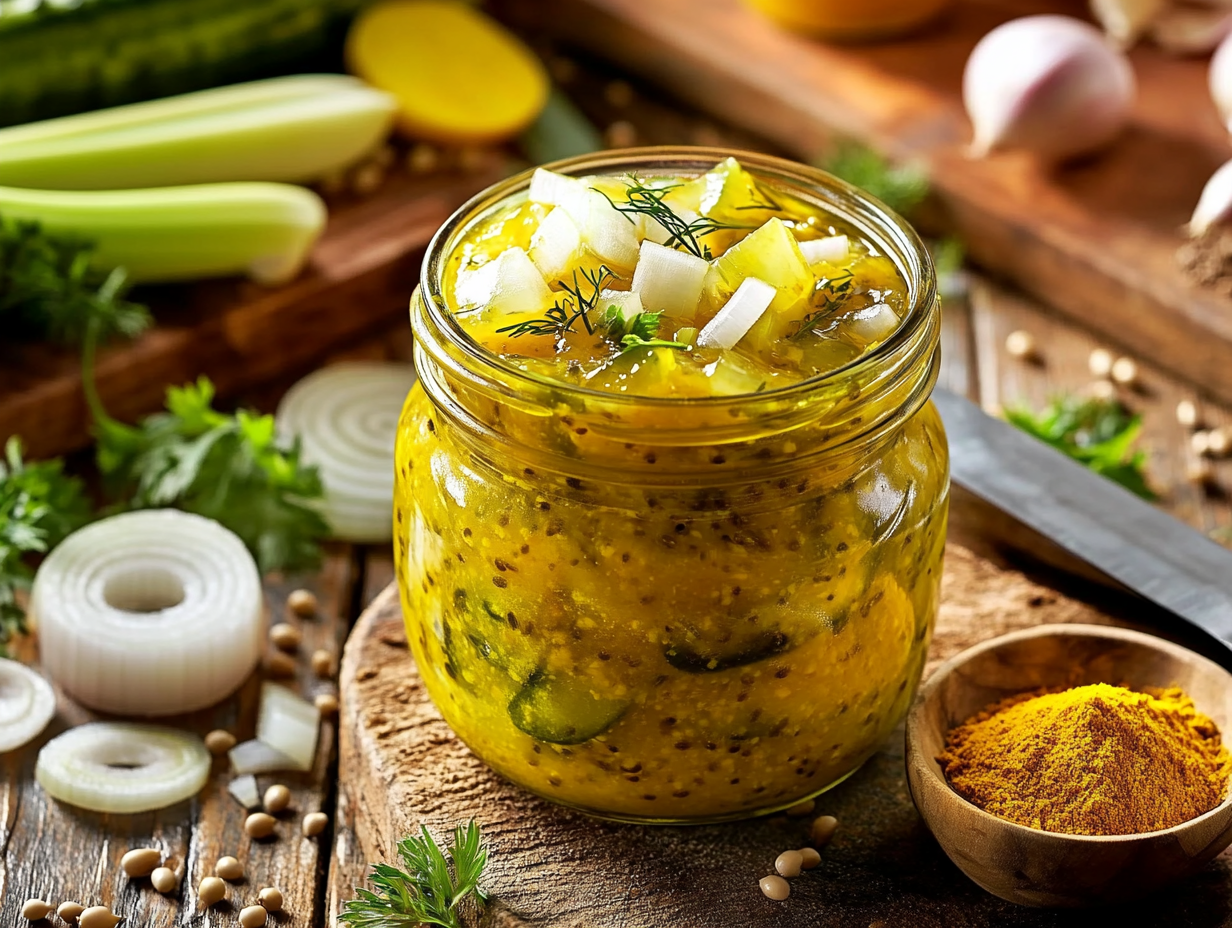
The Story Behind Dill Pickle and Mustard Relish
Condiments are an essential part of almost every cuisine around the world. They have the power to elevate simple dishes, adding layers of complexity, tanginess, and heat. Among the many beloved condiments, relish occupies a special place, enhancing everything from hot dogs and burgers to charcuterie boards and grilled meats. One particularly flavorful variation is Dill Pickle and Mustard Relish, a sharp, tangy, and slightly sweet condiment that marries the boldness of mustard with the briny crunch of pickles.
Historical Inspiration
Dill Pickle and Mustard Relish takes inspiration from two classic culinary traditions: the American love for mustard-based sauces and the long-standing European tradition of pickling vegetables. Mustard has been a staple for centuries, dating back to ancient Rome, where mustard seeds were ground into a paste and mixed with vinegar. The sharp flavor of mustard made it an excellent compliment to meats and other hearty dishes.
Similarly, pickling as a preservation method dates back thousands of years, with historical references in Mesopotamian and Egyptian cultures. European countries, particularly Germany and Eastern Europe, have an extensive history of pickling everything from cucumbers to cabbage. The Germans have long used mustard in combination with pickled cucumbers as part of their beloved bratwurst and sausage dishes. It’s no surprise that American cuisine, heavily influenced by German immigrants, embraced this combination, leading to the evolution of the mustard-based relishes found in delis and ballparks today.
The Birth of Pickle Relish in America
Pickle relishes became especially popular in the United States during the early 20th century. Sweet pickle relish, often made with cucumbers and onions, became a common hot dog topper in the early days of baseball stadium fare. Meanwhile, mustard had already established itself as a go-to condiment for grilled meats, particularly in states like Wisconsin, Illinois, and Michigan, which had large German and Polish immigrant populations.
The concept of adding mustard to relish may have originated as a way to intensify the flavor balance—enhancing the vinegary tartness of pickles with the punch of mustard’s natural heat. With the rise in popularity of both mustard-based sauces and pickle relishes, it was only a matter of time before the two joined forces to create something uniquely delicious.
The Unique Flavor of Dill Pickle and Mustard Relish
This relish strikes a perfect balance between acidity, sweetness, and spice. The dill pickles introduce their signature crunch and vinegary bite, while the yellow mustard brings a robust tang. Apple cider vinegar enhances the tartness, while a touch of sugar rounds out the acidity with a mild sweetness.
Adding turmeric powder to the mix provides not only a warm, earthy undertone but also a beautiful golden hue that complements the mustard’s natural color. Celery seeds contribute a subtle peppery crunch, harmonizing with the zesty flavors of the vinegar and pickles. Finally, finely diced onion adds texture and a hint of savory sweetness, complementing the overall tangy profile.
One key step in making this relish is the use of cornstarch to create a slightly thickened consistency. Unlike traditional liquid-based mustards, the small amount of cornstarch ensures that the relish maintains a spreadable texture, perfect for spooning onto breads, burgers, and grilled sausages.
The Many Ways to Enjoy Dill Pickle and Mustard Relish
Because of its bold flavor and versatile nature, this relish is an excellent addition to many dishes. Here are just a few ways to use it:
- On Hot Dogs and Sausages: A nod to classic ballpark flavors, the relish pairs wonderfully with hot dogs, bratwurst, or even grilled kielbasa.
- In Burgers and Sandwiches: Spread it on a burger bun for an extra zing, or slather it onto a ham and cheese sandwich to elevate the taste.
- As a Dip or Spread: Mix it into mayonnaise for a creamy sandwich spread or serve as a dip alongside pretzels.
- With Charcuterie and Cheese Boards: The tangy-sweet combination works beautifully with aged cheeses, crackers, and cured meats.
- In Potato Salad or Coleslaw: Stir in a spoonful to add a unique twist to creamy picnic salads.
Developing the Perfect Homemade Relish
One of the greatest advantages of making Dill Pickle and Mustard Relish at home is the ability to fine-tune the ingredients to personal preference. For a mild version, Dijon mustard can be used in place of yellow mustard for a smoother, less tangy taste. For those who enjoy a bit of heat, a pinch of cayenne pepper or crushed red pepper flakes can add a spicy kick.
Another great variation is the addition of whole grain mustard, which provides an extra layer of texture and a more nuanced, slightly fermented mustard flavor. Those who prefer a sweeter relish may choose to add a dab of honey or increase the sugar content slightly.
Dill Pickle and Mustard Relish is more than just a condiment; it is a fusion of old-world tradition and American ballpark nostalgia. With its combination of tangy mustard, briny pickles, and subtle sweetness, this relish is a must-have for anyone who enjoys bold flavors. Whether served on a hot dog at a summer cookout or spooned onto a deli-style sandwich, this condiment is sure to add a delightful punch of taste in every bite.
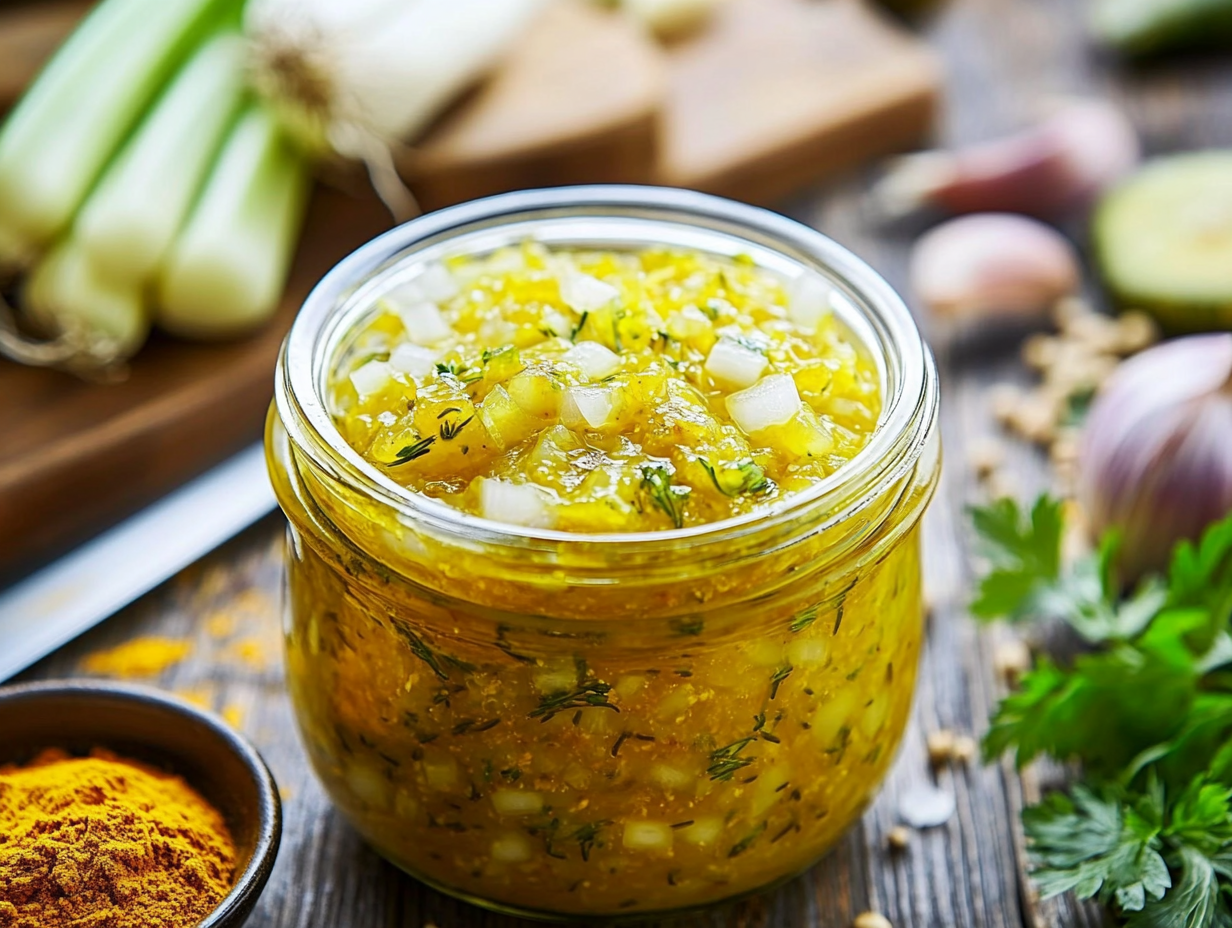
Dill Pickle and Mustard Relish

Ingredients
- 2 cups dill pickles Finely chopped
- 1 cup yellow mustard Preferably Dijon for depth of flavor
- ½ cup apple cider vinegar For tanginess
- ⅓ cup white sugar Adjust to taste
- ½ teaspoon turmeric powder Adds color and warmth
- 1 teaspoon celery seeds For a mild, peppery crunch
- ½ teaspoon salt Adjust to preference
- 1 cup onion Finely diced
- 1 tablespoon cornstarch For thickening
Instructions
- In a saucepan over medium heat, combine the finely chopped dill pickles, diced onion, yellow mustard, and apple cider vinegar. Stir well.
- Add the sugar, turmeric powder, celery seeds, and salt. Stir to incorporate, and bring the mixture to a gentle simmer.
- In a small bowl, mix the cornstarch with 2 tablespoons of water to create a slurry. Slowly whisk it into the simmering relish mixture to thicken.
- Continue cooking for about 8-10 minutes, stirring occasionally, until the relish thickens to a consistency that coats the back of a spoon.
- Remove from heat and let cool slightly. Transfer to sterilized glass jars while warm, sealing them tightly.
- Allow the relish to cool fully before refrigerating. It can be used immediately but develops deeper flavors after 24 hours.
Notes
- For added complexity, experiment with whole grain mustard instead of yellow mustard.
- You can also add a touch of honey for extra sweetness.