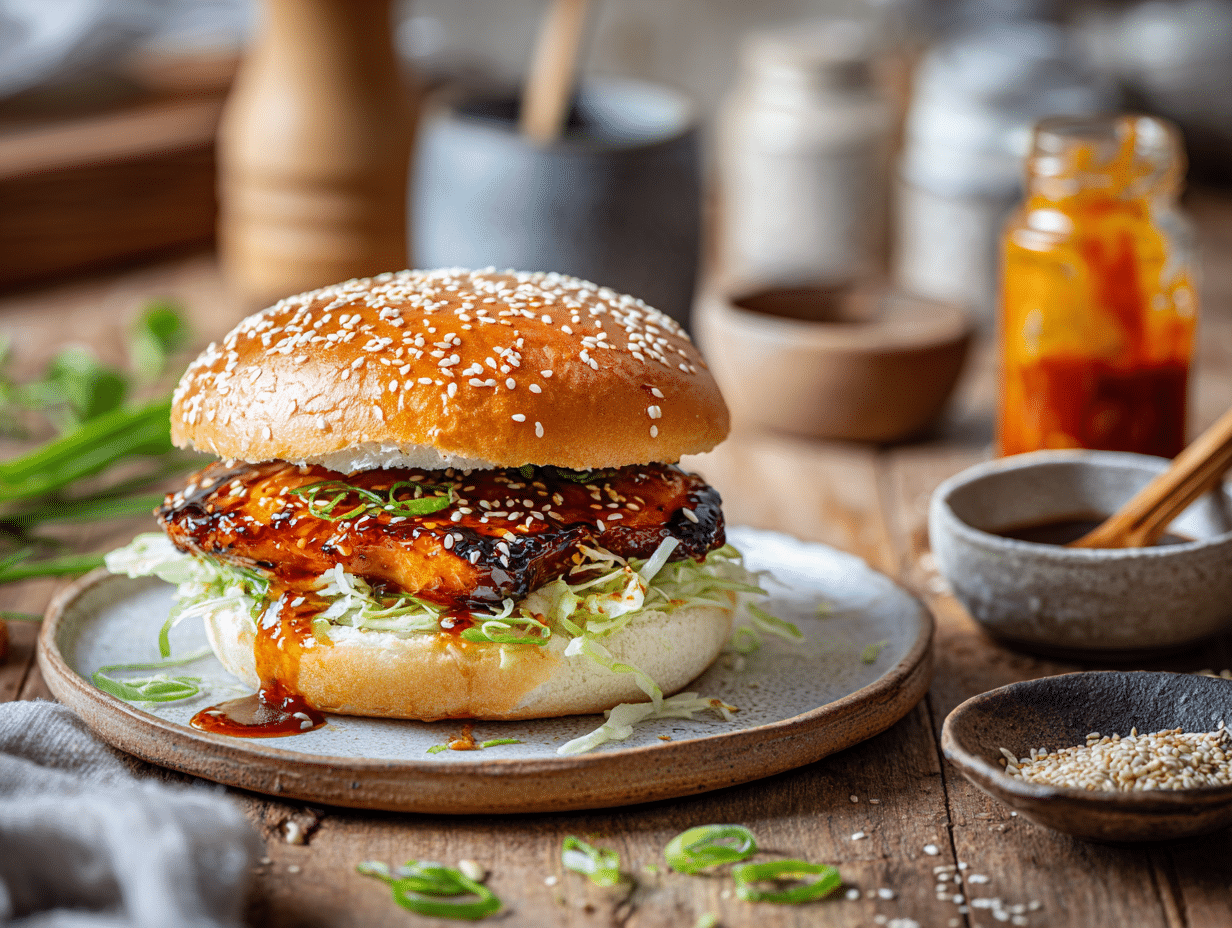
This is a pan-seared chicken thigh burger glazed with a soy-mirin teriyaki sauce and finished with spicy Kewpie mayo — the kind of burger that’s genuinely different from anything you’d pull off a standard backyard grill setup. Chicken thighs stay juicy under high heat, the glaze caramelizes fast, and the whole thing comes together in about 30 minutes per batch. If you want something that feeds a crowd without babysitting a dozen patties, this one scales cleanly.
Why this recipe works
Two things carry this recipe. First, using boneless chicken thighs instead of breasts means the fat in the meat protects against the high heat you need for proper glaze caramelization — you get color and stickiness without drying out the center. Second, the cornstarch slurry added at the end of the teriyaki glaze is what makes this work at scale: it thickens the sauce enough to coat and cling rather than pool at the bottom of the bun, so burger number eight looks as good as burger number one. Get the pan genuinely hot before the chicken goes in — a lukewarm pan steams the meat instead of searing it, and you’ll lose the caramelized crust that makes the glaze stick.
If something goes sideways
- Glaze burns before chicken is cooked through: Your pan is too hot or the glaze went in too early. Add the glaze only in the last 2-3 minutes of cooking, and drop the heat to medium before you pour it in. Chicken thighs must reach 165°F (74°C) internal — pull out a thermometer if you’re unsure.
- Glaze is watery and slides off the bun: The cornstarch slurry wasn’t fully dissolved before adding, or you didn’t let it reduce long enough. Give it 60-90 seconds of active bubbling in the pan after adding the slurry — it should coat the back of a spoon before it goes on the chicken.
- Spicy mayo is too thin to stay put: Kewpie is thicker than standard mayo, but if yours is loose, chill it for 15 minutes before mixing in the chili oil. A thin mayo will soak into the bun and make the bottom soggy fast — a real problem when you’re plating 10 burgers at once.
- Chicken sticking to the pan mid-cook: Don’t move it. If it’s sticking, it’s not ready to release. Give it another 60 seconds and it will lift cleanly. Forcing it tears the surface and the glaze won’t adhere properly to a ragged patty.
- Shichimi togarashi heat is uneven across batches: Skip the egg in the mix — it makes the patty mushy and dilutes the spice distribution. Season each patty individually right before it hits the pan for consistent heat in every bite.
Keeping and reheating
Cooked glazed chicken patties keep in the fridge for up to 3 days in an airtight container — store them flat so the glaze doesn’t smear off. To reheat, use a skillet over medium-low with a splash of water and a lid; about 3-4 minutes brings them back without drying out. The microwave works in a pinch but softens the exterior. Uncooked patties can be frozen for up to 2 months between sheets of parchment; thaw overnight in the fridge before cooking. The spicy mayo doesn’t freeze well — make it fresh each time, which takes about 2 minutes anyway. Assembled burgers don’t hold, so if you’re cooking for a crowd, keep the components separate and build to order.
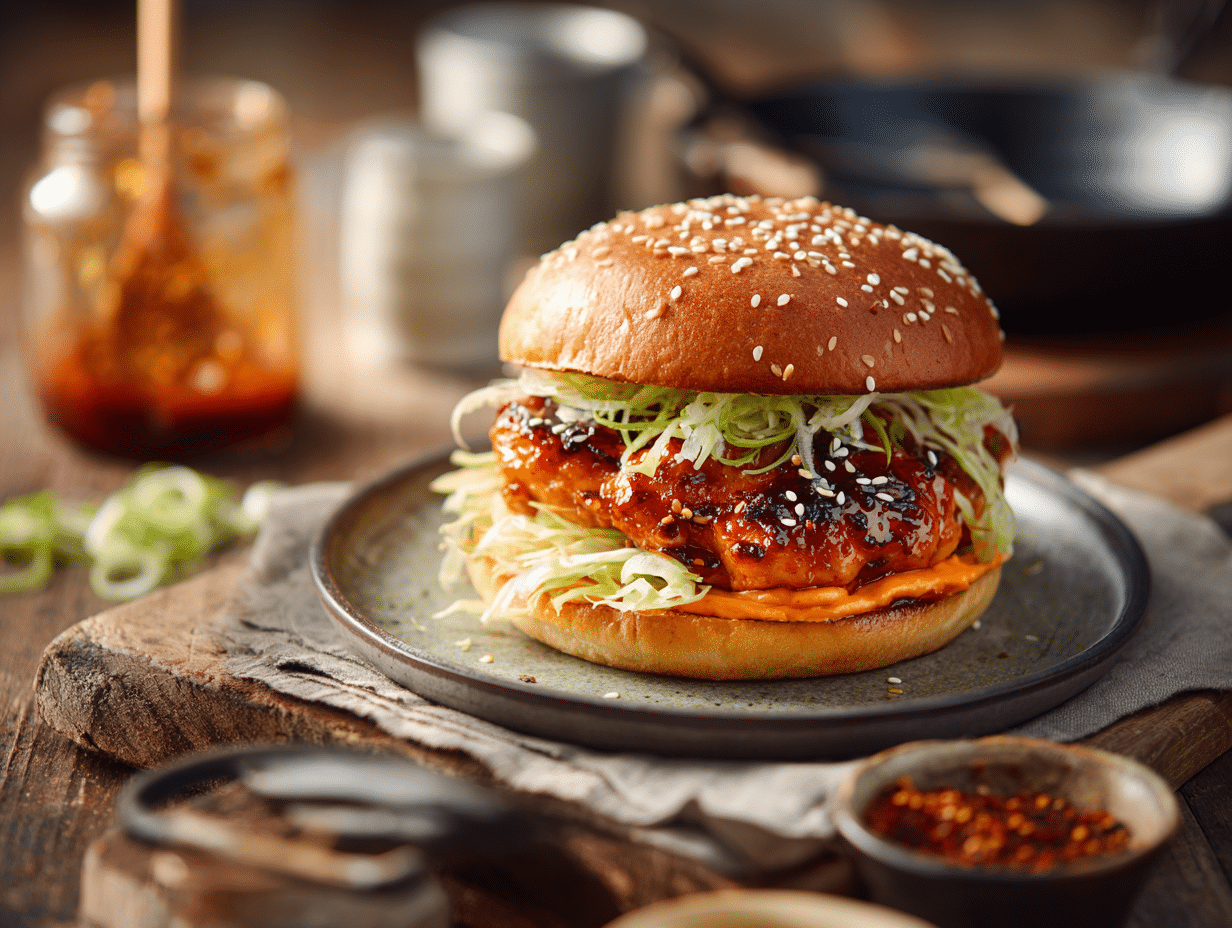
MOS Burger Spicy Teriyaki Chicken Burger

Ingredients
For the Spicy Teriyaki Marinade & Glaze:
- 0.5 cup low-sodium soy sauce Kikkoman recommended for balanced salinity
- 0.33 cup mirin Mizkan brand preferred for authentic sweetness
- 2 tablespoons sake dry sherry works in a pinch; see tips for non-alcohol option
- 3 tablespoons light brown sugar, packed balances soy and adds gloss when reduced
- 2 tablespoons honey adds cling and floral sweetness to the glaze
- 1 tablespoon fresh ginger, finely grated use a microplane for a smooth paste and better infusion
- 2 teaspoons garlic, finely grated about 2 medium cloves; microplane for a smooth texture
- 1.5 teaspoons shichimi togarashi adjust to heat preference; use 1 tsp for milder heat
- 2 teaspoons toasted sesame oil just a few drops go a long way for aroma and depth
- 1 teaspoon cornstarch for a light slurry to set the glaze
- 1 tablespoon cold water mix with cornstarch to form slurry
For the Chicken:
- 1.5 lb boneless, skin-on chicken thighs 4 small to medium thighs; trim excess fat; skin-on yields best caramelization
- 1 tablespoon neutral oil canola or avocado oil for high-heat searing
For the Spicy Mayo:
- 0.5 cup Kewpie mayonnaise Japanese-style mayo for rich umami and silky texture
- 2 teaspoons Japanese chili oil (rayu) adds heat and toasted sesame aroma; adjust to taste
- 1 teaspoon shichimi togarashi peppery citrus heat in the mayo; optional but recommended
- 1 teaspoon fresh lemon juice Yuzu juice if available for a fragrant citrus lift
- 0.5 teaspoon soy sauce a splash deepens umami in the mayo
For the Assembly:
- 4 whole soft burger buns milk or potato buns; split for toasting
- 2 cups iceberg lettuce, finely shredded crisp texture to contrast the saucy chicken
- 0.5 cup scallions, thinly sliced green onions for freshness; optional garnish
- 2 teaspoons toasted white sesame seeds for nutty aroma and visual finish
Instructions
- Build the Teriyaki Base (5 minutes): In a medium bowl, whisk together the soy sauce, mirin, sake, brown sugar, honey, ginger, garlic, shichimi togarashi, and sesame oil until the sugar dissolves. The mixture should smell bright with citrusy pepper and warm ginger, and look glossy.
- Marinate the Chicken (30 minutes, chilled): Pat the chicken thighs dry. Transfer half of the teriyaki mixture to a zip-top bag or shallow dish with the chicken, turning to coat. Reserve the other half for the glaze. Marinate in the refrigerator for 30 minutes (or up to 12 hours for deeper flavor). After marinating, blot excess marinade from the chicken for better searing.
- Make the Spicy Mayo (5 minutes): In a small bowl, whisk Kewpie mayonnaise, chili oil, shichimi togarashi, lemon (or yuzu) juice, and soy sauce until smooth and lightly speckled. Taste and adjust salt or heat. Chill until ready.
- Reduce and Set the Glaze (4–6 minutes): Pour the reserved teriyaki mixture into a small saucepan and bring to a simmer over medium heat. Simmer for 3–4 minutes until slightly syrupy and the bubbles look small and active. Stir together the cornstarch and cold water, then whisk the slurry into the pan. Simmer for 30–60 seconds until the glaze becomes glossy and coats the back of a spoon. Keep warm on low.
- Cook the Chicken (12–14 minutes): Heat a large skillet over medium-high heat. Add the neutral oil. Place the thighs skin-side down and sear for 6–7 minutes until deep golden-brown and the fat renders. Flip and cook for 4–6 minutes more, or until the thickest part reaches 165°F (74°C). Spoon in a few tablespoons of glaze and toss to coat; let it bubble for 30–60 seconds to lacquer. Tip: If grilling, cook over medium-high heat (about 400°F/205°C) for 5–6 minutes per side; brush with glaze during the last 2 minutes. Oven option: Roast at 425°F (220°C) for 16–18 minutes, glazing in the final 2 minutes. Air fryer: 400°F (205°C) for 14–16 minutes, glaze at the end.
- Toast the Buns (1–2 minutes): Split the buns. Toast cut-sides down in a dry skillet over medium heat for 1–2 minutes until lightly golden and fragrant, or broil briefly until just kissed with color.
- Assemble (3 minutes): Spread spicy mayo on both cut sides of each bun. Add a fluffy mound of shredded iceberg to the bottom bun, then a glazed chicken thigh. Drizzle with extra glaze, sprinkle scallions and sesame seeds, and crown with the top bun. Rest for 1–2 minutes so the juices settle, then serve.
Notes
Chef’s Tips:
- Non-Alcohol Option: Replace sake with 1 tablespoon rice vinegar plus 1 tablespoon water.
- Extra Lacquer: After searing, remove the chicken briefly, wipe the pan, then return chicken with glaze to reduce directly on the meat for a stickier finish.
- Heat Control: For milder burgers, reduce shichimi togarashi in both the marinade and mayo by half. For hotter, add a pinch of cayenne or an extra teaspoon of chili oil to the mayo.
- Gluten-Free: Use certified gluten-free tamari in place of soy sauce and confirm your chili oil and shichimi are gluten-free.
- Chicken Swap: Boneless breasts work; pound to an even ½ inch and cook 4–5 minutes per side to 165°F (74°C).
- Faster Caramelization: Pat chicken very dry and don’t overcrowd the pan. A sprinkle of sugar (½ teaspoon) on the skin side helps deepen color faster.
- Rice-Bun Twist (MOS-inspired): Press warm sushi rice (about 2 ½ cups cooked) into 8 greased 3 ½-inch ring molds, chill to set, then pan-sear the rice “buns” in a little oil until crisp-golden on both sides.
Nutrition
Frequently asked questions
Can I use chicken breast instead of chicken thighs?
You can, but the result will be drier. Breast meat has less fat, so it’s less forgiving under the high heat needed to caramelize the teriyaki glaze — pull it at exactly 165°F (74°C) and don’t let it sit in the pan a second longer than necessary.
Where do I find shichimi togarashi if my grocery store doesn’t carry it?
Most Asian grocery stores stock it, and it’s easy to order online. In a pinch, a mix of red pepper flakes, a pinch of ground ginger, and a few sesame seeds gets you in the right direction — it won’t be identical, but it works.
Can I make the teriyaki glaze ahead of time?
Yes, and it actually helps when cooking for a group. Make it up to 5 days ahead and store it in a jar in the fridge. Reheat it gently in the pan before adding the cornstarch slurry — cold glaze seizes up if you add the slurry straight from the fridge.
How do I keep the burgers warm while I cook the rest of the batch?
Set your oven to 200°F (93°C) and place cooked glazed patties on a wire rack over a baking sheet — the rack keeps air circulating so the glaze doesn’t go sticky-wet on the bottom. They’ll hold well for up to 20 minutes without losing much quality.
Is Kewpie mayo necessary, or can I use regular mayo?
Regular mayo works but the flavor is noticeably flatter. Kewpie is made with egg yolks only and a rice vinegar base, which gives it a richer, slightly tangier profile that balances the sweet glaze better than standard mayo does.
More burger recipes to try
- Hawaiian Teriyaki Burger
- Korean Fried Chicken Burger
- Sweet Chili Chicken Burger
- Korean Rice Bulgogi Burger