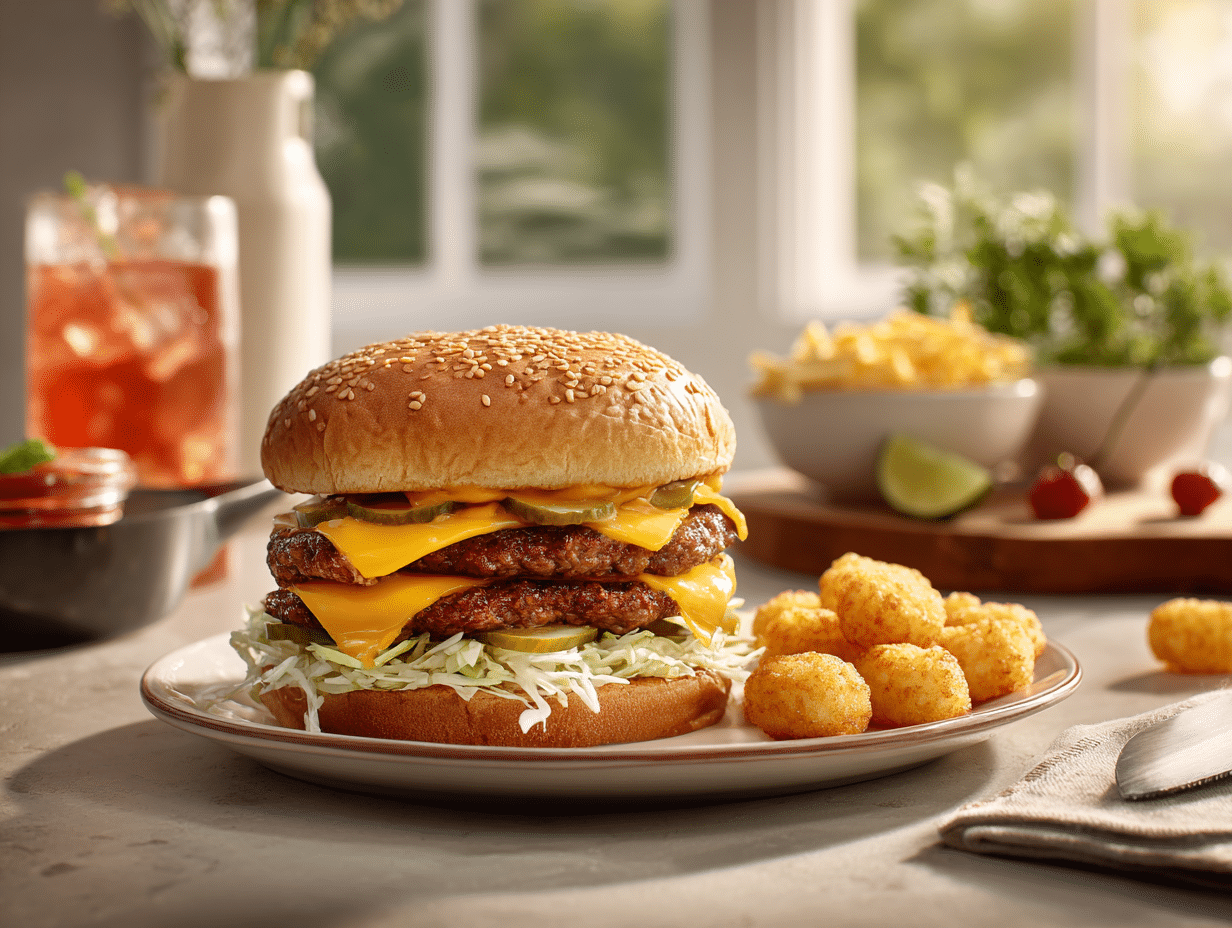
This is a copycat of Sonic’s SuperSONIC Double Cheeseburger — two thin smash patties, American cheese, and a full lineup of cool toppings on a toasted sesame bun. The smash technique gives you crispy, lacy edges and a proper crust without any special equipment. It comes together fast, which makes it a solid weeknight option when you want something better than takeout.
What makes this version work
Two things actually move the needle here. First, the smash has to happen immediately — the moment the beef ball hits the hot griddle or cast iron, press it hard and flat within the first 10 seconds. After that, a crust has formed and pressing only squeezes out moisture. Second, using two thin patties instead of one thick one means more surface area hitting the pan, which means more of that browned, slightly crispy crust in every bite. The cheese goes on while the patties are still on the heat so it melts properly before you stack. Everything else — the cool shredded lettuce, the pickles, the diced onion — is there to cut through the richness of the beef and cheese, and it only works if those toppings are cold and crisp when they hit the bun. Skip pre-warming your toppings; the temperature contrast is the point.
Ingredient notes
- Ground beef: 80/20 chuck is the right call here. Leaner beef won’t give you the fat needed for crispy edges, and the smash method relies on that fat rendering fast against a hot surface.
- American cheese: Don’t substitute with cheddar or Swiss for this one — American melts in seconds on a hot patty and creates that glossy, unified layer the original is known for. Cheddar will stay rubbery.
- Sesame seed buns: Standard grocery store sesame buns work fine. Toast them cut-side down in the same pan after the patties come off — 30 to 45 seconds is enough.
- Iceberg lettuce: Shred it yourself rather than buying pre-shredded bags. Bagged shredded iceberg wilts faster and tends to be wet, which makes the bottom bun soggy.
Storage and reheating
Cooked patties keep in the fridge for up to 3 days in an airtight container. Reheat them in a dry skillet over medium heat for about 2 minutes per side — the microwave works in a pinch but kills the crust entirely. Assembled burgers don’t store well; the bun gets soggy within an hour. If you’re planning ahead, store patties and toppings separately and assemble fresh. Cooked patties can be frozen for up to 2 months; thaw overnight in the fridge before reheating. Ground beef patties that haven’t been cooked yet can be shaped, separated with parchment, and frozen raw for up to 3 months.
What can go wrong
- Pan not hot enough: If the beef doesn’t sizzle loudly the moment it hits the surface, the pan isn’t ready. A lukewarm pan steams the patty instead of searing it — you’ll get gray, soft meat with no crust. Let cast iron or a heavy skillet preheat for at least 2 minutes on medium-high before you start.
- Beef balls too large: Oversized portions mean the patty stays too thick after smashing. Thin patties are the whole point — aim for around 2 to 2.5 oz per ball so they smash down to a wide, thin round.
- Bun gets soggy before serving: Applying ketchup and mustard too far ahead lets moisture soak into the bottom bun. Sauce the buns right before assembly, not while the patties are still cooking.
- Cheese not melted: If you pull the patties off heat before the cheese has fully melted, you end up with a cold, stiff slice sitting on top. Add the cheese in the last 30 seconds of cook time and cover the pan briefly with a lid or foil tent to trap heat and melt it through.
- Patties sticking together when stacking: If both patties are fully cooked and you stack them dry, they can fuse into a dense block. Stack them while the cheese is still molten — it acts as a natural binder and keeps the layers distinct.
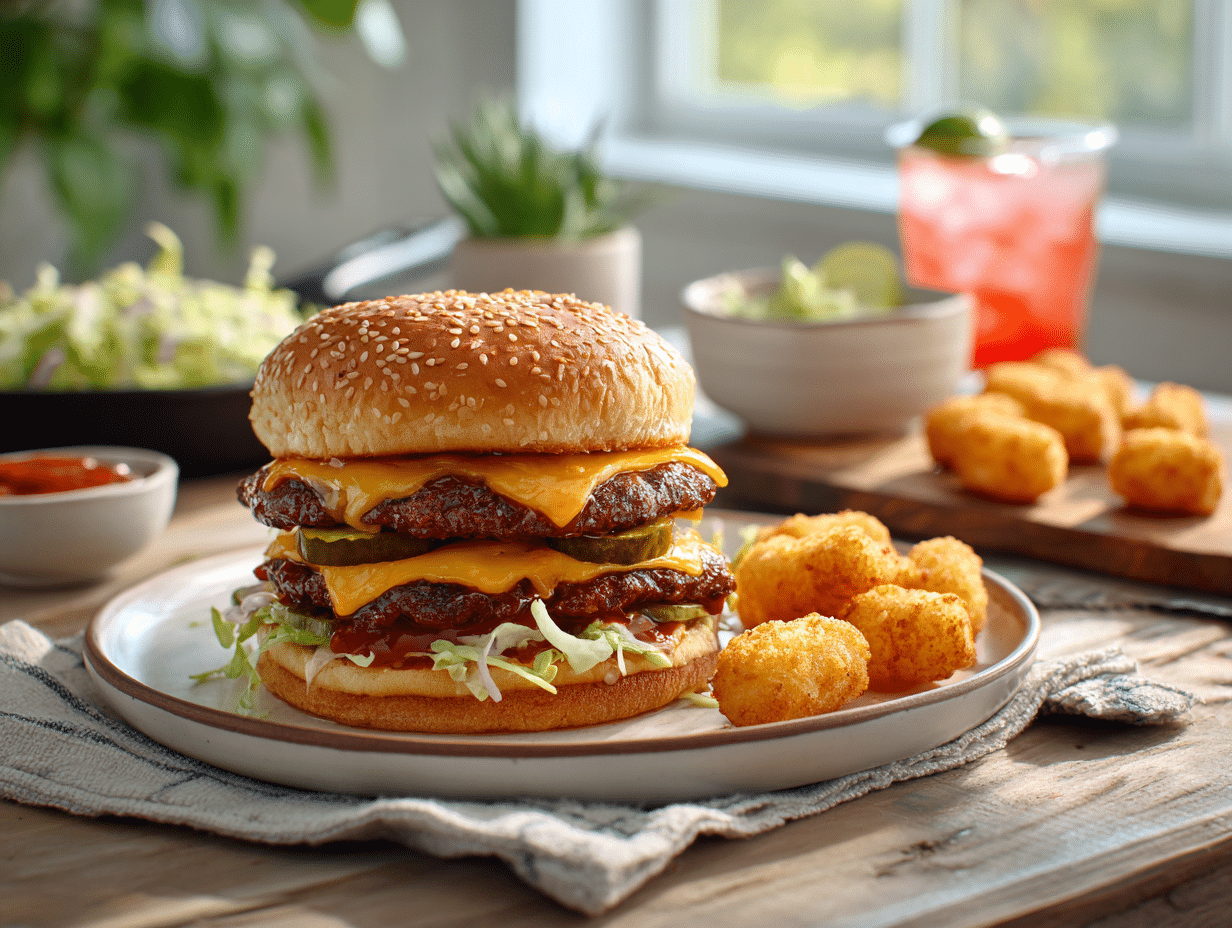
Sonic SuperSONIC Double Cheeseburger (Chef-Crafted at Home)

Ingredients
For the Patties & Seasoning:
- 12 oz ground chuck (80/20), very cold portion into four 3 oz balls for thin smash patties
- 1 tsp kosher salt divide between both sides of all patties
- ½ tsp freshly ground black pepper fine grind for even coverage
- ¼ tsp garlic powder optional, for subtle savoriness
- 1 tbsp neutral oil (canola or avocado) for the griddle/skillet
- 2 tsp yellow mustard optional, for mustard-searing patties
For the Buns & Toppings:
- 2 whole sesame burger buns (prefer potato buns), split soft, sturdy buns toast best
- 1 tbsp unsalted butter, softened for bun toasting
- 4 slices American cheese 2 slices per burger for ideal melt
- 1 cup iceberg lettuce, finely shredded keep very cold and dry for crispness
- 4 slices ripe tomato about 1/4-inch thick; pat dry to avoid soggy buns
- ¼ cup white onion, finely diced for that classic drive-in bite
- 8 chips dill pickles 8–10 chips, to taste
- 2 tbsp mayonnaise for bun spread
- 2 tsp ketchup for bun spread
- 2 tsp yellow mustard for bun spread (separate from mustard-sear)
Instructions
- Prep the Cool Toppings (5–8 min): Finely shred the iceberg, slice tomatoes (1/4-inch), dice onion, and pat everything dry. Keep chilled for crunch. Lay out pickles. Split buns.
- Portion the Beef (3–4 min): Divide the cold ground chuck into four 3 oz portions. Roll gently into loose balls—do not compact. Looser grind means a lacier, crisper edge when smashed.
- Heat the Cooking Surface (5 min): Preheat a cast-iron griddle or heavy skillet over medium-high to about 425°F (220°C). Lightly oil the surface. Optionally, set a low oven to 200°F (95°C) to keep buns or cooked patties warm between batches.
- Toast the Buns (1–2 min): Spread cut sides with softened butter and toast on the griddle cut-side down until golden and fragrant, 60–90 seconds. Transfer to a rack; keep warm.
- Smash and Sear the First Batch (about 3–4 min): Add two beef balls to the hot griddle. Cover each with a small square of parchment and press firmly with a flat metal spatula to about 1/4-inch thick within the first 10 seconds. Remove parchment. Season with kosher salt, pepper, and a dusting of garlic powder (if using). Cook without moving until edges are frilly and deep brown, 1.5–2 minutes. Optional mustard-sear: Spread a thin layer of yellow mustard on the raw side just before flipping. Flip, then immediately top each patty with a slice of American cheese. Cook 30–45 seconds more, until cheese is glossy and the patty is cooked through (aim for 160°F/71°C internal if following USDA guidance). Stack the two patties into a double and hold warm.
- Repeat for the Second Batch (about 3–4 min): Scrape the griddle clean if needed, add a touch more oil, and cook the remaining two patties the same way. Build a second double stack.
- Dress the Buns & Assemble (2–3 min): Bottom bun: swipe with ketchup and a very thin swipe of yellow mustard. Add a tuft of shredded lettuce, a few pickle chips, and a tomato slice. Sprinkle with diced onion. Set the hot double stack on top so the cheese melds into the toppings. Crown with the mayo-spread top bun. Repeat for burger #2.
- Rest and Serve (1 min): Let each burger sit 60 seconds to set. Serve immediately while the edges are crisp, the cheese is molten, and the lettuce is still frosty-crisp.
Notes
Chef’s Tips:
- Cold Beef Sears Better: Keep ground beef very cold until the moment you cook so the fat crisps instead of greasing out.
- Smash Smart: Press once, firmly, within the first 10 seconds for maximum Maillard browning; don’t press again after the crust forms.
- Mustard-Sear Option: For an extra tangy, drive-in aroma, smear a thin layer of yellow mustard on the raw side before flipping.
- Cheese Choice: Process American melts perfectly; for a luxe twist, blend 1 slice American with 1 slice mild cheddar.
- USDA Food Safety: Ground beef should reach 160°F (71°C) for well-done. If you prefer less done, source top-quality beef and understand the risk.
- Bun Insurance: Lightly buttered, well-toasted buns resist sogginess and add a nutty aroma.
- Pan vs. Griddle: A wide griddle allows space to smash and flip easily. If using a skillet, cook in two batches for best crust.
- Onion Options: Prefer sweeter bite? Soak diced onions in ice water 5 minutes, then drain thoroughly.
- Sauce Swap: Mix 2 tbsp mayo + 2 tsp ketchup + 1 tsp pickle brine + pinch of paprika for a quick house sauce.
- Gluten-Free: Use gluten-free buns and confirm condiments are GF.
- Dairy-Free: Use a good melting dairy-free slice; toast buns with oil instead of butter.
Nutrition
Your questions, answered
What internal temperature should the smash patties reach?
Ground beef needs to hit 160°F (71°C) — use an instant-read thermometer if you’re unsure. Thin smash patties cook through quickly, usually in 2 to 3 minutes total, but thickness varies so a quick temp check is the reliable way to confirm doneness.
Can I use a regular nonstick pan instead of cast iron?
You can, but results won’t be as good. Nonstick pans don’t hold or distribute heat as evenly, so the crust will be paler and less crispy. A stainless steel skillet is a better substitute than nonstick if you don’t have cast iron.
Do I need to season the beef before smashing?
Season the patty on the griddle right after smashing, not before — salt draws out moisture from raw ground beef if it sits too long, which works against the crust. A pinch of salt and pepper immediately post-smash is all you need.
What to cook next
- Ultimate Avocado Bacon Smash Burger
- Five Guys BLT Smash Burger
- Perfect Bacon Double Cheeseburger
- Perfect In-N-Out 2×2 Copycat