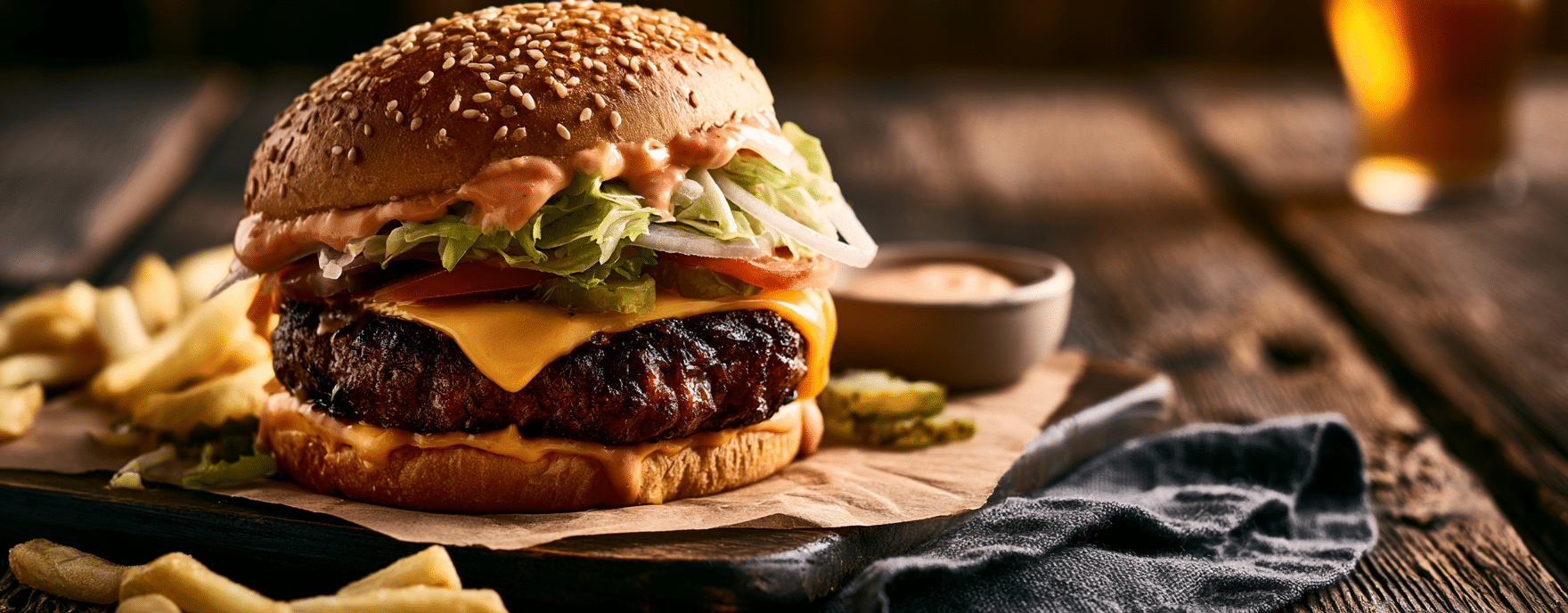
The McFeast is a quarter-pound beef burger loaded with cheese, lettuce, tomato, pickles, onions, and a tangy-creamy special sauce — a regional McDonald’s favourite that never made it to the US. The honest reason to make it at home is the sauce: once you nail that balance of mayo, ketchup, mustard, and pickle, you’ll want it on everything, and the burger itself is a genuinely satisfying weeknight meal that comes together fast.
The technique that matters
Two things decide whether this burger is great or just okay. First, the sear on the patty. Press the beef into a firm, even disc and get your pan or griddle properly hot before it goes down — you want a real crust forming in the first 60 to 90 seconds, not a grey steam. That crust holds in juice and gives you the slightly crisp exterior the original was known for. Second, the sauce needs time. Mix it at least 15 minutes before you build the burgers so the raw onion softens into the mayo base and the flavours settle into each other. Skip the egg in the patty mix — it makes the patty mushy and you don’t need a binder here, just well-handled beef.
Storage and reheating
The cooked patty keeps in an airtight container in the fridge for up to 3 days. Store the sauce separately — it holds well for 5 days refrigerated and actually improves on day two. For longer storage, freeze raw shaped patties between sheets of parchment for up to 3 months; thaw overnight in the fridge before cooking. To reheat a cooked patty, use a dry skillet over medium heat for 2 to 3 minutes per side rather than a microwave, which turns the beef rubbery. Assemble fresh each time — dressed buns go soggy fast and are not worth saving.
Mistakes to avoid
- Cooking from cold: Pulling the patty straight from the fridge and dropping it in a hot pan causes uneven cooking — the outside overcooks before the centre reaches 160°F (71°C). Rest the shaped patty at room temperature for 10 to 15 minutes first.
- Overloading the sauce on the bottom bun: The sauce belongs on the top bun, spread across the cut face. Putting it on the bottom traps moisture under the patty and the bun disintegrates before you finish eating.
- Watery tomato slices: Thick tomato slices release a lot of liquid. Salt them lightly and let them sit on a paper towel for 5 minutes before building the burger — it makes a real difference to the texture of the finished stack.
- Not toasting the bun: An untoasted bun collapses under the weight of the patty and toppings within a minute. A quick 30-second toast in the same pan you cooked the beef in, cut-side down, fixes this and picks up the leftover fond.
- Pressing the patty while it cooks: Pressing down with a spatula forces the juices out. Leave it alone after it goes in the pan and you’ll have a noticeably juicier result.
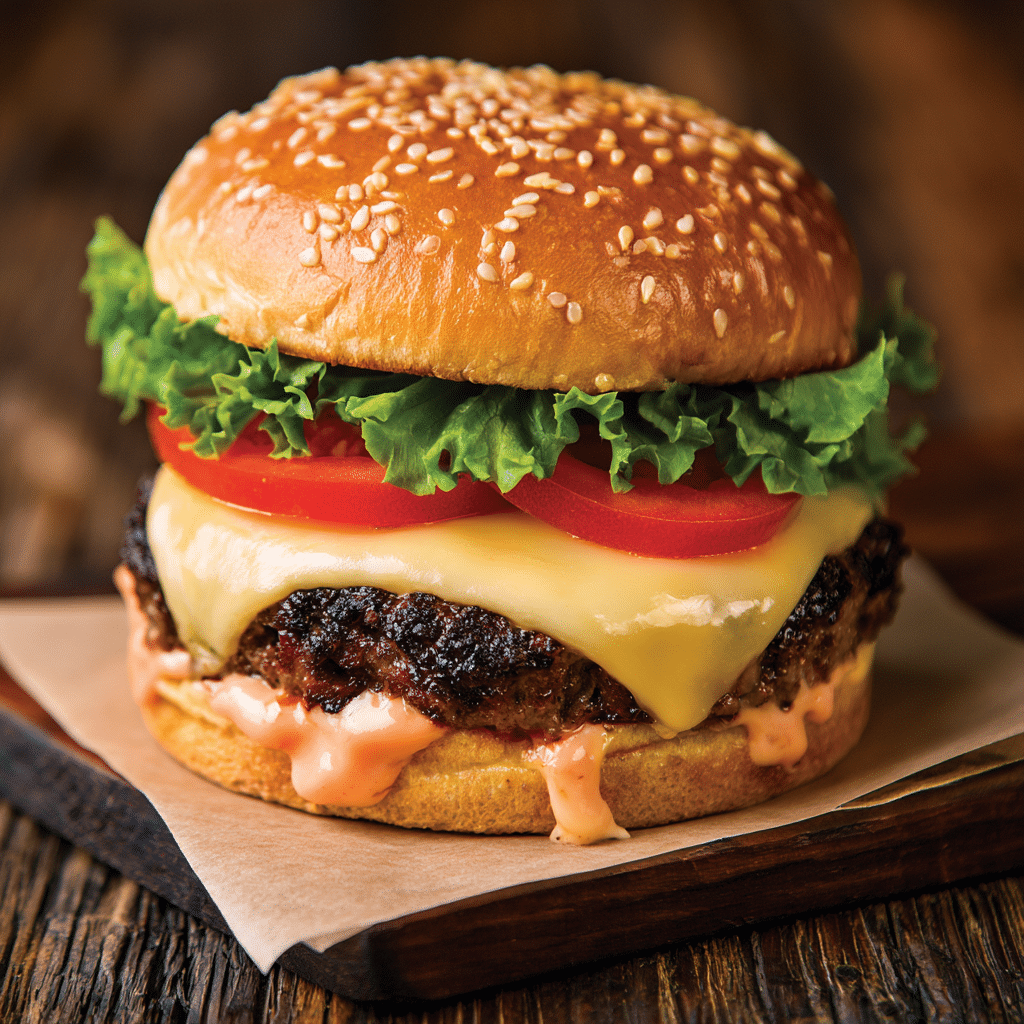
McFeast Burger Recipe: Gourmet Copycat at Home

Equipment
- 12-inch cast-iron skillet or flat griddle
- Instant-read thermometer
- Large mixing bowl
- Whisk
- Sharp chef’s knife
- Cutting board
- Metal spatula (thin-edged for flipping patties)
Ingredients
For the McFeast-Style Sauce
- ⅓ cup mayonnaise 75g, full-fat for best texture
- 2 tbsp ketchup good-quality, not too sweet
- 2 tsp yellow mustard classic American style
- 2 tbsp white onion finely minced, for a smooth bite
- 1 tbsp dill pickle finely chopped, or use 2 tsp dill relish
- ½ tsp Worcestershire sauce
- ¼ tsp garlic powder
- ¼ tsp smoked paprika adds gentle warmth and color
- ⅛ tsp freshly ground black pepper
- 1 tsp white vinegar or pickle brine for brightness
- ¼ tsp granulated sugar balances acidity
For the Patties
- 1 ¼ lb ground beef 565g, 80/20, cold — 80% lean for juiciness
- 1 tsp kosher salt Diamond Crystal preferred
- ½ tsp freshly ground black pepper
- 1 tsp onion powder
- 1 tbsp neutral oil canola or grapeseed, for searing
- 1 tsp beef tallow optional; adds classic beefy aroma
For the Assembly & Toppings
- 4 whole sesame seed burger buns split, bakery-quality, sturdy yet soft
- 1 tbsp unsalted butter 14g, softened, for toasting buns
- 4 slices American cheese melts beautifully
- 1 large ripe tomato sliced into 8 rounds, 1/4-inch thick, patted dry
- 1 cup shredded iceberg lettuce 55g, crisp and very cold for the best crunch
- 8 slices dill pickle chips about 2 per burger
- ¼ cup white onion 35g, thinly sliced into rings, or 4 nice rings
- 2 tsp yellow mustard optional stripe on the bun
- 2 tbsp ketchup optional stripe on the bun
- 1 pinch kosher salt for seasoning tomato slices
Instructions
- Make the McFeast-Style Sauce (5 minutes active, 15 minutes resting): In a bowl, whisk together mayonnaise, ketchup, mustard, minced onion, chopped dill pickle, Worcestershire, garlic powder, smoked paprika, black pepper, and vinegar/brine. Taste, then balance with a pinch of sugar if needed. Cover and refrigerate for at least 15 minutes to marry flavors. Tip: This rest can happen while you prep and cook.1/3 cup mayonnaise, 2 tbsp ketchup, 2 tsp yellow mustard, 2 tbsp white onion, 1 tbsp dill pickle, 1/2 tsp Worcestershire sauce, 1/4 tsp garlic powder, 1/4 tsp smoked paprika, 1/8 tsp freshly ground black pepper, 1 tsp white vinegar or pickle brine, 1/4 tsp granulated sugar
- Prep the Produce (5 minutes): Chill the lettuce, then shred finely. Slice the tomato into 8 slices (about 1/4-inch / 6mm thick), pat dry, and season with a small pinch of salt. Thinly slice the onion into delicate rings. Keep everything cold and crisp.1 large ripe tomato, 1 cup shredded iceberg lettuce, 1/4 cup white onion, 1 pinch kosher salt
- Portion and Shape the Patties (5 minutes): Divide the ground beef into 4 equal portions (about 5 oz each). Gently form each portion into a 4 to 4½-inch (10–11cm) disc without overworking the meat; press a slight dimple in the centre of each to prevent doming. Keep chilled until searing.1 1/4 lb ground beef
- Preheat and Toast Buns (2 minutes to toast): Preheat a cast-iron skillet or griddle over medium-high heat to about 400°F (205°C). Lightly butter the cut sides of the buns and toast, cut-side down, until golden and fragrant, 1 to 2 minutes. Transfer to a tray and keep warm.4 whole sesame seed burger buns, 1 tbsp unsalted butter
- Sear the Patties (6–8 minutes): Add oil (and optional beef tallow) to the hot pan. Season patties on both sides with the salt, pepper, and onion powder just before they hit the heat. Sear until the bottom is deeply browned and the edges look slightly crisp, 2–3 minutes. Flip, top each with a slice of American cheese, and cook another 2–3 minutes, or until the cheese is melted and the internal temperature reads 160°F (71°C) for well-done. (For a juicier medium, 145°F/63°C, if safe and preferred.)1 tbsp neutral oil, 1 tsp beef tallow, 1 tsp kosher salt, 1/2 tsp freshly ground black pepper, 1 tsp onion powder, 4 slices American cheese
- Build the Burgers (2 minutes): Spread a generous layer of the sauce on both the top and bottom buns. Add an optional stripe of ketchup and mustard. On the bottom bun, place pickles, then the cheesy patty. Layer on onion rings, 2 tomato slices, and a fluffy mound of shredded lettuce. Cap with the top bun and give a gentle press to set.8 slices dill pickle chips, 2 tsp yellow mustard, 2 tbsp ketchup, 1 large ripe tomato, 1 cup shredded iceberg lettuce, 1/4 cup white onion
- Rest and Serve (1 minute): Let the burgers sit for 1 minute to allow juices to settle. Serve immediately while the bun is warm and the cheese is irresistibly molten.
Notes
Nutrition
Common questions
What’s the best beef blend for this patty?
80/20 ground chuck is the right call — the fat content keeps the patty juicy through a high-heat sear without falling apart. Leaner blends like 90/10 tend to dry out quickly and don’t develop the same crust.
Can I make the McFeast sauce ahead of time?
Yes, and you should — it’s better after a rest. Make it up to 24 hours ahead and keep it covered in the fridge. The flavours meld properly and the sharpness of the raw onion rounds out significantly.
How do I know the patty is cooked through without cutting into it?
Use an instant-read thermometer and pull it when the centre hits 160°F (71°C) — that’s the safe temperature for ground beef. If you don’t have a thermometer, a firm press with your finger and clear (not pink) juices running from the centre is a reasonable indicator, but a thermometer is more reliable.
What bun works best if I can’t find a sesame seed bun?
A plain brioche bun is the closest substitute in terms of size and softness. Avoid anything too dense or crusty — the burger is already substantial and a tough bun throws off the whole balance of the bite.
What to cook next
- Copycat Quarter Pounder Recipe
- Gourmet Big Tasty Burger
- Ultimate Double Big Mac Recipe
- Animal Style Burger Recipe