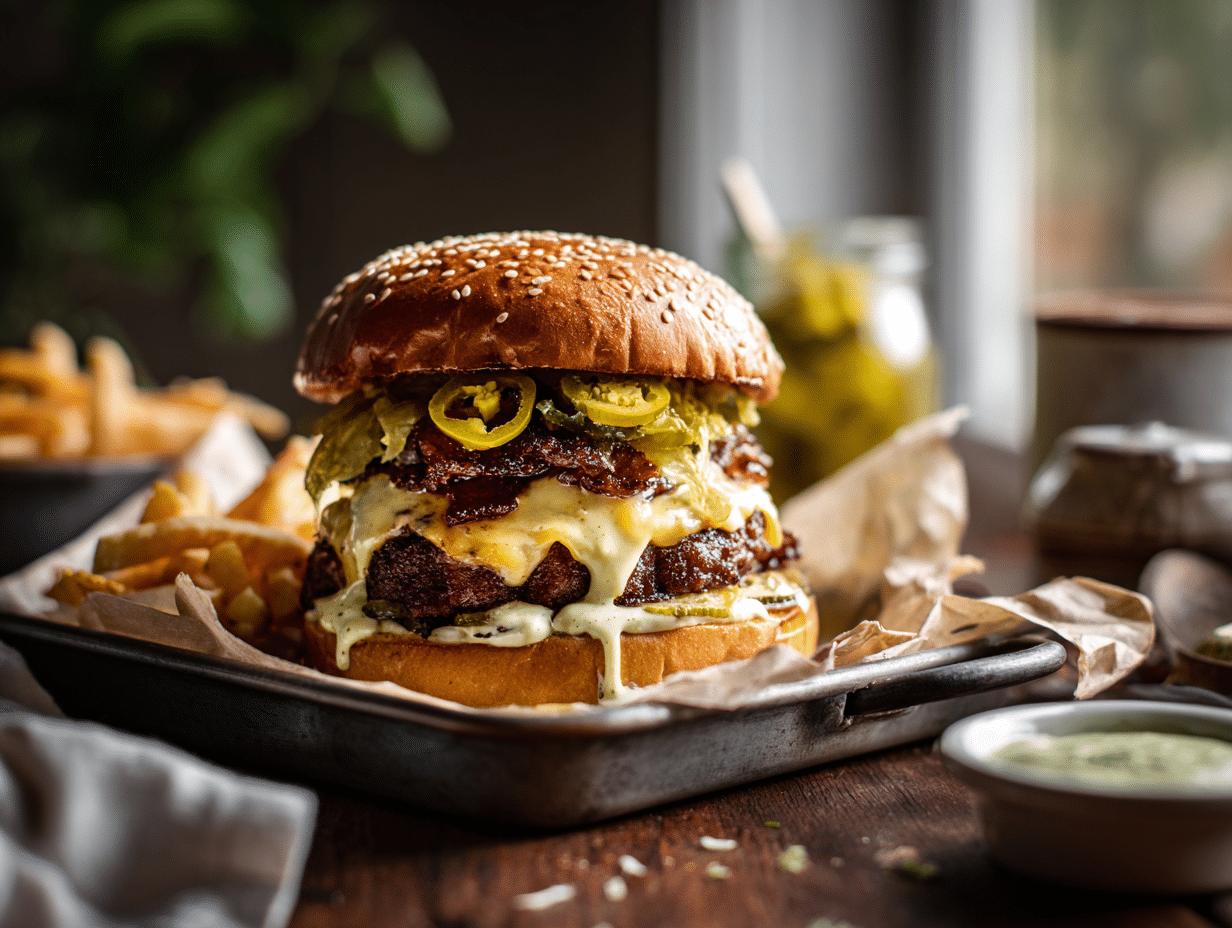
This is a copycat of Burger King’s Jalapeño King — a double beef patty burger loaded with pickled jalapeños, fresh jalapeño slices, creamy jalapeño sauce, pepper jack cheese, and bacon on a sesame seed bun. The honest reason to make it at home: you get full control over the heat level, and it comes together faster than a drive-through run on a busy night.
Before you start
The one thing that actually matters here is getting your skillet or griddle properly hot before the patties go down. A hot surface gives you a good sear that locks in fat — without it, the double patties steam instead of brown, and you lose the beefy backbone that holds up against all that jalapeño heat. The second thing worth doing ahead of time is mixing your jalapeño sauce before anything else hits the pan. It takes two minutes, and having it ready means you’re not scrambling while the patties rest. Pull your bacon out early too — room-temperature strips cook more evenly and don’t curl as badly in the pan.
Ingredient notes
- Pickled jalapeños: Jarred nacho-style slices work fine. Drain them well and pat dry — excess brine makes the bun soggy fast.
- Fresh jalapeños: Slice them thin, about ⅛ inch. Thick slices don’t compress when you bite and can slide out. Remove seeds if you want to keep the heat manageable for the table.
- Pepper jack cheese: This is not the place to substitute mild cheddar — the pepper jack is doing real work on the heat layering. If you genuinely can’t find it, Monterey jack with a pinch of cayenne in the sauce is a workable backup.
- 80/20 ground beef: Don’t go leaner. A double-patty burger with this many bold toppings needs the fat to stay juicy all the way through. Leaner blends dry out quickly at the 160°F internal temp required for ground beef.
- Sesame seed bun: A brioche bun is a fine swap, but pick one that’s sturdy — a soft, airy bun will collapse under the sauce and two patties.
Storage and reheating
Store assembled leftovers wrapped tightly in the fridge for up to 2 days, though the bun will soften considerably. For better results, store patties and toppings separately. Cooked patties keep well for 3 days refrigerated or up to 2 months in the freezer — wrap individually in foil, then bag them. To reheat, skip the microwave; it toughens the beef. A covered skillet over medium-low heat with a splash of water for about 3–4 minutes brings patties back without drying them out. Toast a fresh bun, reassemble with cold sauce and toppings, and it’s close enough to the original that nobody will complain.
Common problems and fixes
- Sauce is too thin and runs off the burger: Your mayo ratio is probably off. Add another tablespoon of mayo and stir — it should be thick enough to cling to a spoon. A watery sauce soaks the bun before you even sit down.
- Cheese won’t melt properly: Lay the cheese on the patty right after you flip it, then cover the pan with a lid for 60 seconds. The trapped steam does the job. Don’t wait until the patty is off the heat — pepper jack needs direct warmth to get fully melty.
- Bacon goes limp under the other toppings: Cook bacon until it’s a shade crispier than you think you want it. It softens once it’s sandwiched between a sauced bun and hot patties, so starting it crispier means it still has some snap when you bite in. Skip the egg in the mix — it makes the patty mushy.
- Fresh jalapeños taste raw and sharp instead of bright: A 10-minute soak in cold salted water mellows the raw edge without killing the heat. Rinse and dry before using.
- Bun falls apart mid-bite: Toast the cut sides in the same pan you cooked the bacon in — the residual fat helps and adds flavor. A properly toasted bun holds up to the sauce and juices for the whole burger, not just the first bite.
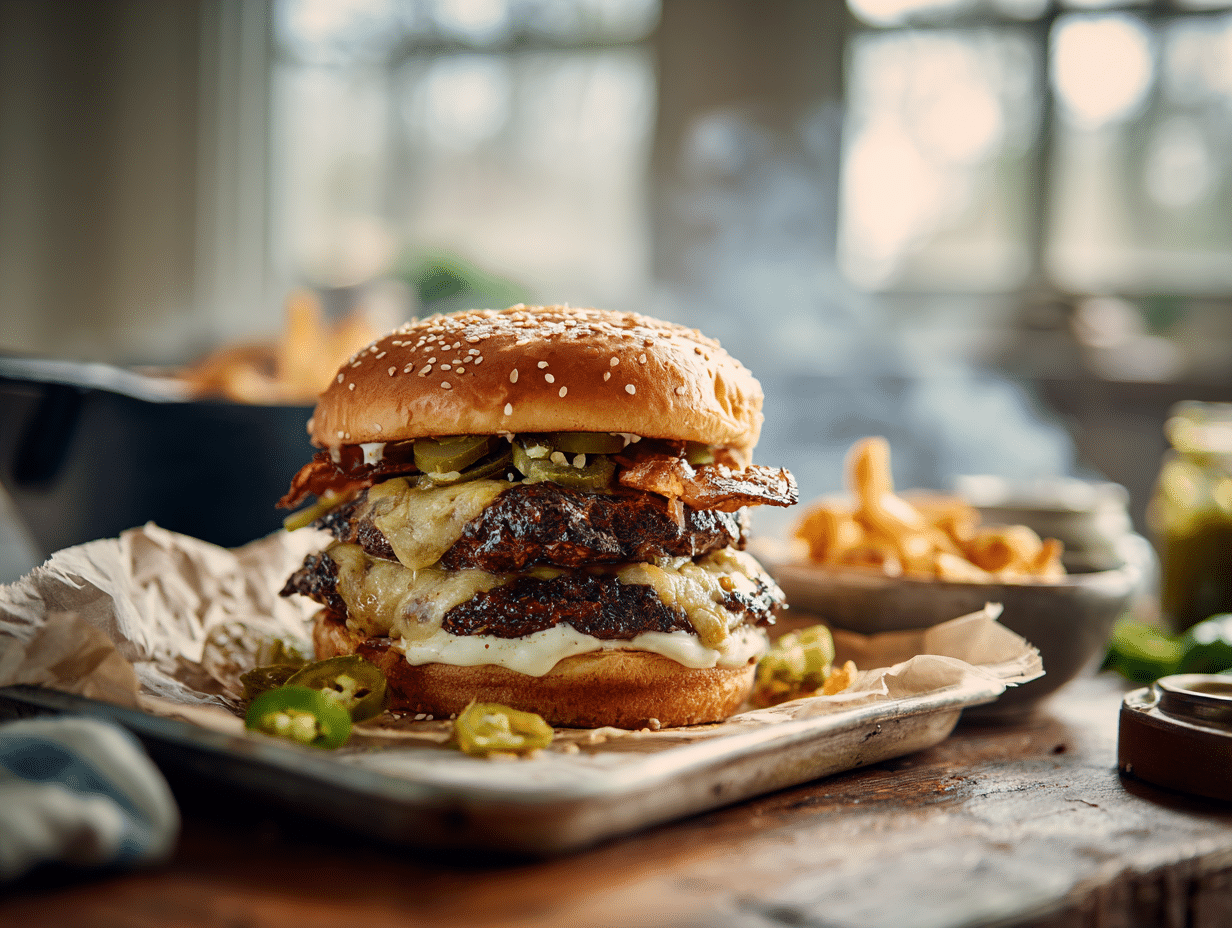
Burger King Jalapeño King–Style Copycat Burger

Ingredients
For the Bacon:
- 4 slices thick-cut smoked bacon applewood-smoked if available
For the Creamy Jalapeño Sauce:
- ½ cup mayonnaise full-fat for best texture
- 2 tbsp pickled jalapeño brine from the jar; adds tang and salinity
- 2 tbsp pickled jalapeños, finely chopped drain well to avoid thinning the sauce
- 1 small fresh jalapeño, charred, peeled, seeded, and minced for roasty depth
- 1 tsp fresh lime juice brightens the sauce
- ¼ tsp garlic powder
- ¼ tsp onion powder
- ⅛ tsp smoked paprika adds gentle smokiness
- 1 pinch kosher salt to taste
For the Patties:
- 1 lb ground beef (80/20) chilled; 80/20 yields juicy patties
- 1 tsp kosher salt divide between both sides of patties
- ¾ tsp freshly ground black pepper
- ½ tsp garlic powder
- 2 tsp neutral oil canola or avocado oil for searing
For Bun Toasting and Assembly:
- 2 whole sesame seed burger buns bakery-style, sturdy yet soft
- 2 tbsp unsalted butter, softened for toasting the buns
- 4 slices pepper jack cheese 1 slice per patty for perfect melt
- ½ cup pickled jalapeño slices drained; adjust to your heat preference
Instructions
- Heat the Oven (for bacon and buns): Preheat to 400°F (204°C). Line a sheet pan with foil and place a rack on top if you have one for extra-crisp bacon.
- Bake the Bacon: Arrange 4 slices thick-cut bacon in a single layer. Bake until deep mahogany and crisp, 12–15 minutes. Transfer to paper towels to drain. Keep the oven at 400°F (204°C) for bun toasting later.
- Char the Fresh Jalapeño: Over a gas flame or in a dry cast-iron skillet on medium-high, char 1 small jalapeño until blistered and blackened in spots, 5–6 minutes, turning occasionally. Place in a bowl, cover for 2 minutes to steam, then peel, seed, and mince. (If you don’t have a gas flame, the skillet method works beautifully.)
- Make the Creamy Jalapeño Sauce: In a small bowl, whisk together 1/2 cup mayonnaise, 2 tbsp jalapeño brine, 2 tbsp finely chopped pickled jalapeños, the minced charred jalapeño, 1 tsp lime juice, 1/4 tsp garlic powder, 1/4 tsp onion powder, 1/8 tsp smoked paprika, and a pinch of salt. The sauce should be smooth, speckled, and gently tangy. Refrigerate while you cook the patties.
- Portion and Shape Patties: Divide 1 lb ground beef into 4 equal 4-oz portions. Gently form 4 1/2-inch rounds about 1/2-inch thick; press a shallow dimple in the center to prevent doming. Season both sides with 1 tsp kosher salt, 3/4 tsp black pepper, and 1/2 tsp garlic powder. Chill 5 minutes to set.
- Preheat Your Cooking Surface: Heat a cast-iron skillet over medium-high until lightly smoking, 2–3 minutes. Add 2 tsp neutral oil. (Grill option: Preheat to about 450°F/232°C for a flame-kissed finish.)
- Sear the Patties and Melt Cheese: Sear patties 3–4 minutes on the first side until well-browned and the edges look caramelized. Flip, top each patty with 1 slice pepper jack, and cook 2–3 minutes more, until the cheese is glossy and the patties reach your desired doneness. For food safety, cook to an internal temperature of 160°F (71°C). Tip: Add 1 tbsp water to the pan and cover for 20–30 seconds to accelerate melting.
- Toast the Buns: Split 2 sesame buns and butter the cut sides (about 2 tbsp total). Place on a sheet pan, buttered side up, and toast in the 400°F (204°C) oven until golden at the edges, 2–3 minutes. Alternatively, toast cut-side-down in the hot skillet for 60–90 seconds.
- Assemble the Burgers: Spread 1–2 tbsp creamy jalapeño sauce on each bottom bun. Layer 1 cheesy patty, a scatter of pickled jalapeño slices, 2 bacon slices, then the second cheesy patty. Add a spoon of sauce and a few more jalapeño slices if you like extra heat. Cap with the top bun and press gently to set the stack.
- Serve: Present immediately while the cheese is molten and the bun is still warm. Pair with hot fries and a cold drink.
Notes
Chef’s Tips:
- Meat Matters: 80/20 beef is the sweet spot for juicy patties. If using leaner beef, brush patties lightly with oil right before searing.
- Grill Alternative: For a signature flame note, grill over medium-high (about 450°F/232°C). Close the lid after adding cheese to trap heat and smoke.
- Air-Fryer Bacon: 375°F (190°C) for 8–10 minutes, turning once, for ultra-crisp slices.
- Heat Control: For a fierier sauce, add 1/8 tsp cayenne or swap pepper jack for habanero jack. For milder heat, skip the fresh charred jalapeño and use only pickled.
- Vegan/Vegetarian: Use plant-based patties, vegan mayo, dairy-free pepper jack, and plant-based bacon. Keep the technique identical.
- Bun Upgrade: Lightly brush buns with melted butter and a pinch of garlic powder before toasting for steakhouse vibes.
- Smash Option: Prefer a lacy crust? Use 2-oz balls and smash hard on a ripping-hot skillet for 30–45 seconds; top with cheese on the flip. Build as a double-double.
Nutrition
FAQ
Can I make the jalapeño sauce ahead of time?
Yes — it actually tastes better after 30 minutes in the fridge. The flavors come together as it sits, and it keeps well for up to 5 days covered in the refrigerator.
How do I know when the beef patties are done without cutting into them?
Use an instant-read thermometer and pull them at 160°F internal — that’s the safe temperature for ground beef. Color alone isn’t reliable; an 80/20 patty can look done on the outside while still being underdone in the center.
Can I use a single patty instead of a double to save time?
Absolutely — a single patty works fine and cuts cook time by a couple of minutes. Just make sure it’s still at least ½ inch thick so it doesn’t dry out before it reaches 160°F.
Is there a way to dial down the heat without changing the whole recipe?
Remove the seeds and white membrane from the fresh jalapeños before slicing — that’s where most of the capsaicin lives. You can also reduce the pickled jalapeños by half and increase the mayo in the sauce slightly to get a milder result while keeping the jalapeño flavor.
If you liked this one
- Wendy’s Bacon Jalapeño Burger
- Cheddar Bacon King Copycat
- Perfect Bacon Double Cheeseburger
- White Castle Jalapeño Cheese Slider