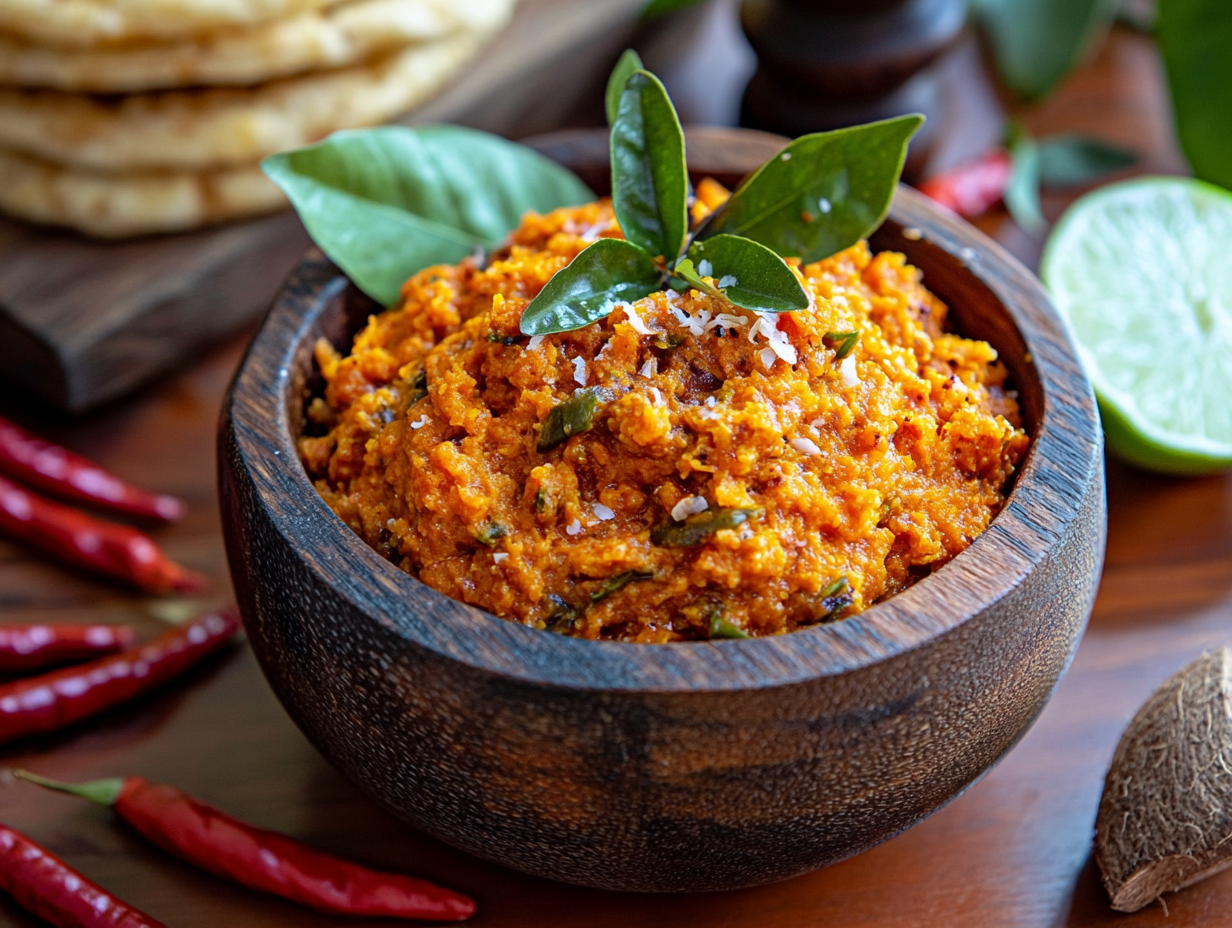
Pol Sambola is a Sri Lankan fresh condiment made from grated coconut, dried red chilies, red onion, lime juice, and curry leaves — no cooking required, just 20 minutes of prep. It’s worth making because it adds real heat and brightness to burgers, grilled chicken, or fish sandwiches in a way that no bottled sauce comes close to matching. Four servings come together fast, and the leftovers keep working hard all week.
Smart swaps
- Fresh coconut: A mature coconut gives the best texture and flavor. If you can’t find one, unsweetened desiccated coconut works — soak it in warm water for 10–15 minutes and squeeze out the excess before using.
- Dried red chilies: Kashmiri chilies give mild heat and deep color; Thai dried chilies bring serious fire. Use whichever matches your heat tolerance. Crushed red pepper flakes are a passable backup at roughly half the volume.
- Curry leaves: Fresh or frozen are both fine. Dried curry leaves have very little flavor — skip them and leave the leaves out entirely rather than use dried.
- Lime juice: Freshly squeezed only. Bottled lime juice tastes flat here and throws off the balance of the whole dish.
- Jaggery: A small pinch rounds out the heat nicely if your chilies are particularly sharp. Light brown sugar is a direct substitute.
The technique that matters
The grinding step determines the final texture, and texture matters more than most people expect. A mortar and pestle lets you control exactly how coarse the chili-onion paste stays — stop when it’s rough and chunky, not smooth. A food processor works, but pulse in short bursts and stop early; over-processing turns the onion watery and the coconut pasty. Either way, add the grated coconut by hand after grinding the chili and onion, folding it in rather than blending further. That keeps the coconut shreds intact, which is what gives the sambol its characteristic bite. Skip the temptation to blend everything together at once — you’ll lose the contrast between the creamy coconut and the spiced paste.
Troubleshooting
- Sambol tastes flat or dull: The lime juice is almost always the culprit. Add it in small increments at the end and taste after each addition — the acid wakes everything up. Also check your salt; under-seasoning mutes the chili and coconut equally.
- Mixture is too wet and soupy: This usually happens when the onion is over-processed or the desiccated coconut wasn’t squeezed dry enough. Spread the sambol on a clean kitchen towel for a few minutes to absorb excess moisture, or stir in a small handful of extra grated coconut.
- Heat level is too high after mixing: You can’t remove chili once it’s in, but stirring in more grated coconut dilutes the heat effectively without wrecking the flavor. A pinch of jaggery also helps balance sharp heat.
- Curry leaves taste bitter: They were likely added raw and left to sit too long in the mix. Toast them briefly in a dry pan until fragrant — about 30 seconds — before stirring in. This drives off the volatile compounds that cause bitterness.
- Coconut tastes rancid or off: A mature coconut that’s past its prime will ruin the whole batch. Smell the coconut flesh before grating; it should smell clean and faintly sweet. If it smells sour or fermented, start with a new coconut.
Keeping and reheating
Store leftover sambol in an airtight container in the refrigerator for up to 3 days. The lime juice and salt act as mild preservatives, but the coconut will start to absorb the chili and onion flavors more aggressively after day two — which some people actually prefer. Give it a quick stir and a fresh squeeze of lime before serving from the fridge. Freezing is possible: portion into ice cube trays, freeze solid, then transfer to a zip-lock bag for up to 1 month. Thaw overnight in the fridge and stir well before using. There’s no reheating needed or recommended — this is a raw, fresh condiment and is always served at room temperature or cold.
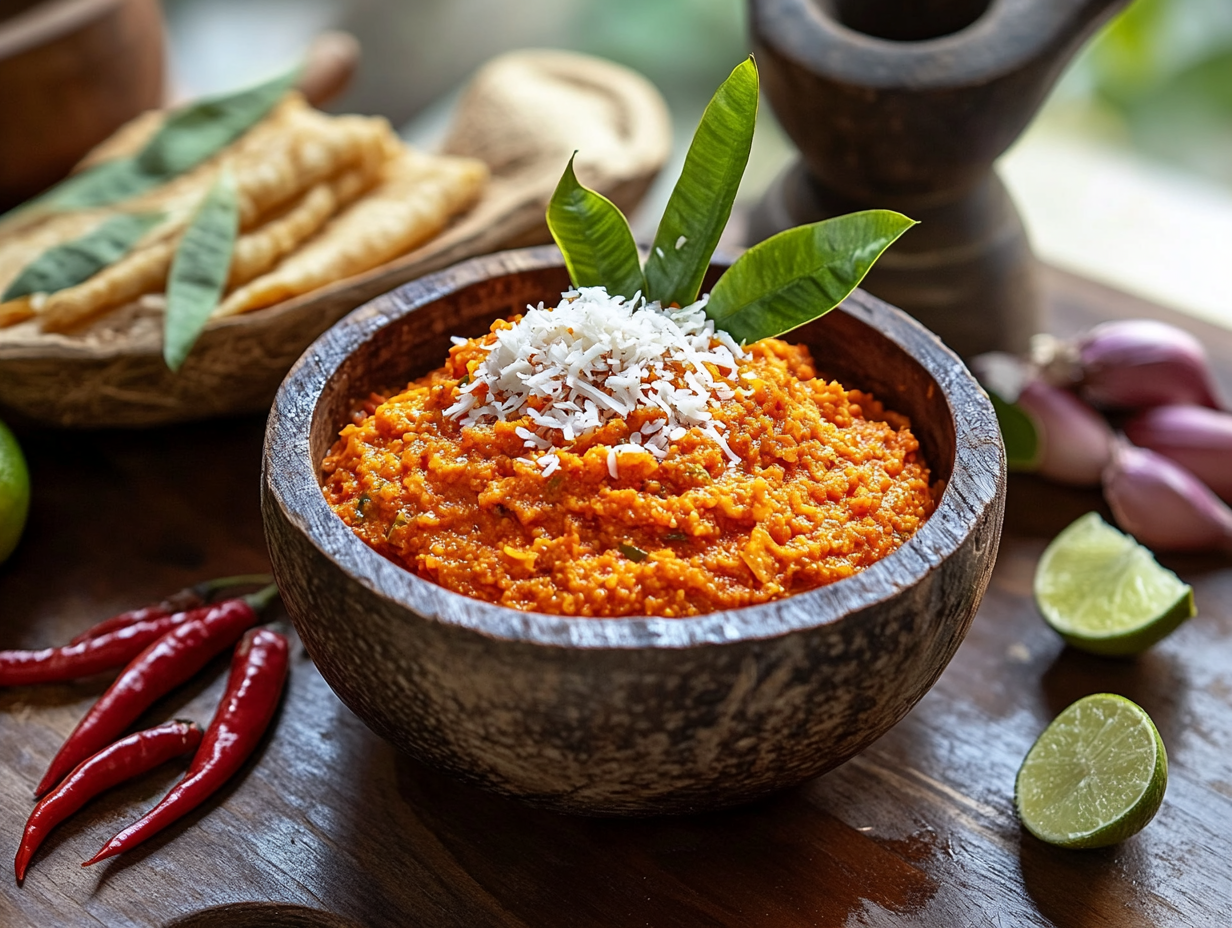
Sri Lankan Coconut Sambol

Ingredients
- 2 cups freshly grated coconut Choose a mature coconut for more flavor and texture
- 2 tablespoons dried red chilies adjust according to your spice preference
- 1 medium red onion finely chopped
- 1 tablespoon lime juice freshly squeezed
- 0.5 teaspoon salt to taste
- 8 leaves curry leaves fresh or frozen
Instructions
- Begin by soaking the dried red chilies in warm water for about 10 minutes until they're soft. This will enhance their flavor and make them easier to blend.
- In a mortar and pestle or a food processor, combine the softened red chilies, finely chopped red onion, and salt. Grind until you achieve a coarse paste. If using a food processor, pulse gently to maintain texture.
- Add the freshly grated coconut to the chili-onion mixture, blending well to combine the flavors thoroughly.
- Add the fresh lime juice into the mixture and gently mix it in, ensuring all elements are well combined. Taste and adjust salt or lime juice as needed.
- Finally, add the curry leaves. For a more enhanced flavor, you can lightly toast the leaves in a dry pan until aromatic before stirring them into the sambol.
Notes
Nutrition
Common questions
Can I use sweetened shredded coconut instead of fresh?
No — sweetened coconut will make the sambol cloying and throw off the chili-lime balance entirely. Unsweetened desiccated coconut rehydrated in warm water is the only practical substitute for fresh.
How spicy is this with the full 2 tablespoons of dried red chilies?
It’s genuinely hot — medium-to-hot by most standards. Start with 1 tablespoon if you’re unsure, taste the paste before adding the coconut, and work up from there.
How do I use this as a burger topping?
Spread it directly on the bottom bun in place of or alongside your usual sauce, or pile it on top of a grilled chicken or fish patty. It pairs especially well with burgers that have a plain mayo or yogurt-based sauce to cool the heat — the Korean Fried Chicken Burger on this site is a good match.
Do I need to soak the chilies if I’m using a food processor?
Yes, still soak them. Softened chilies blend more evenly and release their flavor more fully regardless of the tool you’re using. Dry chilies in a food processor tend to leave coarse, uneven flecks rather than integrating into the paste.
Can I make this ahead for a cookout?
Make it the morning of and refrigerate it — that’s the sweet spot. Made more than a day ahead, the onion flavor gets sharper and can overpower the coconut; made right before serving, the flavors haven’t had time to come together.
What to cook next
- Korean Fried Chicken Burger
- Hawaiian Teriyaki Burger Recipe
- Sweet Chili Chicken Burger
- Crispy Fish King Burger