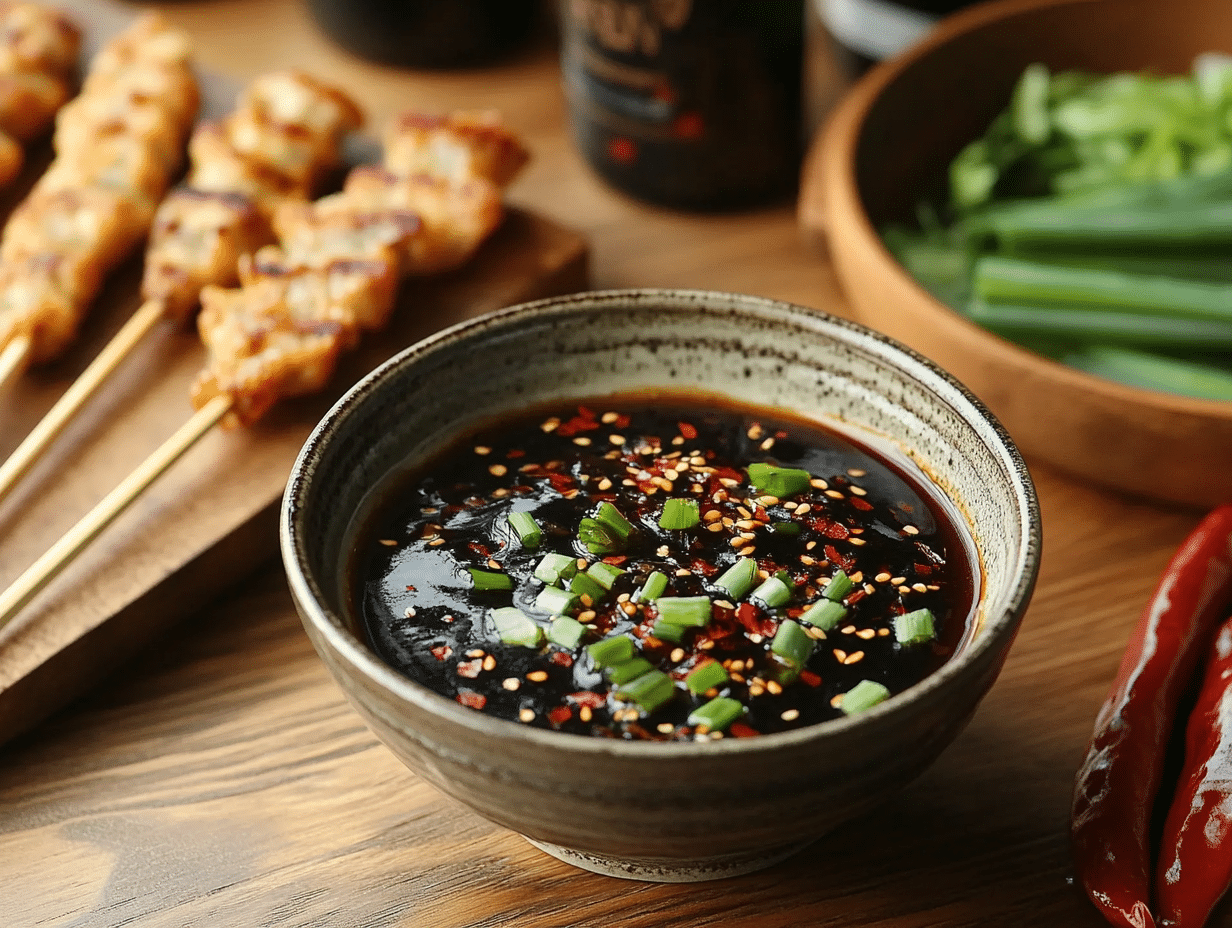
This ginger soy dipping sauce is a quick, no-cook condiment built from soy sauce, rice vinegar, sesame oil, honey, fresh ginger, and garlic. It comes together in about five minutes and does real work as a dipping sauce, a marinade, or a drizzle over just about anything coming off the grill. If you’re building a burger night with Asian-leaning flavors, this is the sauce that ties the whole plate together.
Smart swaps
- Soy sauce: Japanese-style low-sodium shoyu (Kikkoman, Yamasa) is the target. Regular soy sauce works but will taste saltier — cut the amount by about 20% and adjust at the end. Tamari is a solid gluten-free swap with nearly identical flavor.
- Rice vinegar: Use unseasoned. Seasoned rice vinegar already has sugar and salt added, which throws off the balance. White wine vinegar works in a pinch but is sharper — use a little less.
- Honey: Brown sugar or maple syrup both work. Brown sugar gives a slightly deeper, molasses-y note. Maple syrup keeps it lighter. Either way, start with the same amount the recipe calls for and taste before adding more.
- Toasted sesame oil: Don’t substitute plain sesame oil — it lacks the nutty, roasted character that makes this sauce distinctive. If you’re out, a few drops of tahini thinned with neutral oil is a reasonable workaround.
- Fresh ginger: Ground ginger is not a 1-for-1 swap. If fresh isn’t available, use about one-quarter the amount of ground and expect a slightly duller, less bright flavor.
Before you start
The one technique that actually matters here is how you handle the ginger and garlic. Grate or mince them as finely as you can — large chunks steep unevenly and leave pockets of sharp, raw bite in the finished sauce. If you’re using this as a burger sauce or marinade rather than a dipping sauce, strain the solids out after steeping so you get a smooth, consistent coating. Skip pressing the garlic through a garlic press — it releases too much liquid and turns the garlic paste bitter faster than mincing does. A sharp knife or a microplane gives you better control and a cleaner flavor.
If something goes sideways
- Sauce tastes too salty: Add a small amount of honey or a squeeze of citrus (lime works well) to pull the saltiness back into balance. Don’t add water — it dilutes everything, not just the salt.
- Ginger flavor is too sharp or aggressive: The ginger was likely minced too coarsely and didn’t steep long enough to mellow. Let the sauce sit for another 10 minutes, then strain and taste again. A small extra drizzle of honey also softens raw ginger heat.
- Sauce is too thin for use as a burger drizzle: Whisk in a small amount of cornstarch slurry (half a teaspoon cornstarch dissolved in a teaspoon of cold water) and warm the sauce briefly in a small saucepan over low heat until it thickens slightly. Don’t boil it or the sesame oil flavor will cook off.
- Sesame oil flavor is overwhelming: This usually means too much was added, or a lower-quality oil with a harsh finish was used. Balance it with a small extra splash of rice vinegar and a bit more soy sauce to dilute the ratio.
- Sauce separated in the fridge: Completely normal — just stir or shake it back together before using. The sesame oil and vinegar will always separate on standing; it doesn’t mean anything has gone wrong.
Make-ahead notes
This sauce keeps well. Store it in a sealed jar or airtight container in the refrigerator for up to five days — the flavor actually improves after the first 30 minutes as the ginger and garlic steep further into the liquid. If you want to make a larger batch for the week, double or triple the recipe without any adjustments needed. Freezing is not recommended; the sesame oil goes grainy and the fresh ginger loses its brightness after thawing. For meal prep, make the sauce the night before and pull it straight from the fridge — no reheating needed for dipping or drizzling, though if you’re using it as a warm marinade, 20 seconds in the microwave or a quick stir over low heat brings it back up to temperature.
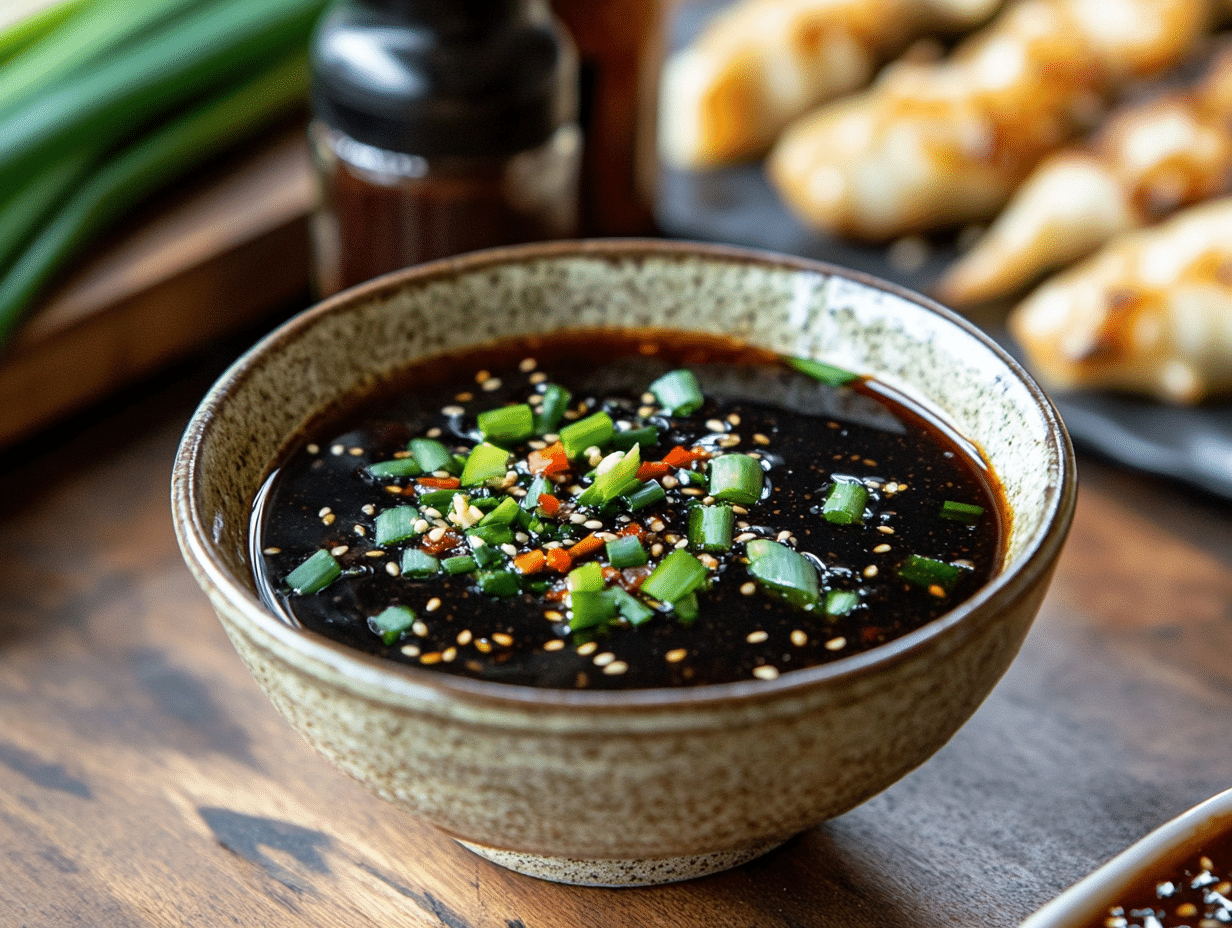
Ginger Soy Dipping Sauce

Ingredients
- ½ cup soy sauce preferably low-sodium Japanese-style soy sauce (like Kikkoman or Yamasa)
- 2 tablespoons rice vinegar unseasoned, for clean acidity
- 1 tablespoon toasted sesame oil dark, aromatic; adds depth and nuttiness
- 1 tablespoon honey for subtle sweetness; can substitute with maple syrup or brown sugar
- 1 teaspoon fresh ginger finely grated, peeled; young ginger is preferred for milder flavor
- 1 clove garlic minced; remove green germ for milder flavor
- 1 tablespoon scallions finely sliced green tops, for garnish
- 1 teaspoon red chili flakes optional, for a touch of heat
Instructions
- In a small saucepan over low heat, combine soy sauce, rice vinegar, toasted sesame oil, and honey. Heat gently for 3–5 minutes, just until warm and the honey is fully dissolved—avoid boiling to preserve the aromatics.
- Remove from heat and stir in grated ginger and minced garlic. Let the mixture steep for 5 minutes to allow the flavors to infuse. You should begin to smell the sharpness of garlic mellowed by the warmth of ginger.
- Transfer the mixture to a small bowl or dipping dish. Let it cool to room temperature before serving. Optional: garnish with sliced scallions and a light sprinkle of chili flakes for color and a kick of heat.
Notes
- For a gluten-free version, substitute soy sauce with tamari.
- If you prefer a sweeter profile, add an extra half tablespoon of honey or a dash of mirin.
- Fresh ginger is key—avoid using ground ginger, which lacks the pungency and moisture of the fresh root.
- Double the batch and store in an airtight jar in the refrigerator for up to 1 week.
Nutrition
Your questions, answered
Can I use this sauce as a marinade for the burger patty itself?
Yes, and it works well. Marinate chicken or beef patties in the sauce for 30 minutes to 2 hours in the fridge before cooking — don’t go longer or the vinegar and salt will start to break down the meat’s texture. Pat the patties dry before they hit the pan or grill so they sear rather than steam.
Does this sauce work on a beef burger or is it only for dumplings and vegetables?
It works great on beef, especially with a teriyaki-style burger build. The soy and ginger cut through the fat in a well-seasoned beef patty without overpowering it. Try it as a bun spread alongside mayo, or drizzle it directly over the patty just before you close the burger.
My grocery store only has seasoned rice vinegar. Can I still use it?
You can, but reduce or eliminate the honey in the recipe since seasoned rice vinegar already contains added sugar and salt. Taste the sauce before adding any sweetener and go from there — it’s easy to over-sweeten without realizing it.
How do I know when the ginger and garlic have steeped long enough?
Taste the sauce after five minutes and again at ten. You’re looking for the sharp raw edge of the ginger to soften slightly while the garlic becomes more rounded and less pungent. If it still tastes aggressively raw at ten minutes, give it another five, then strain and serve.
Can I make this sauce spicier without changing the overall flavor balance?
Add more red chili flakes gradually and taste as you go — they build heat without shifting the soy-vinegar-sesame balance the way fresh chilies or chili paste would. If you want a deeper, more complex heat, a small amount of chili crisp oil stirred in at the end adds both spice and texture.