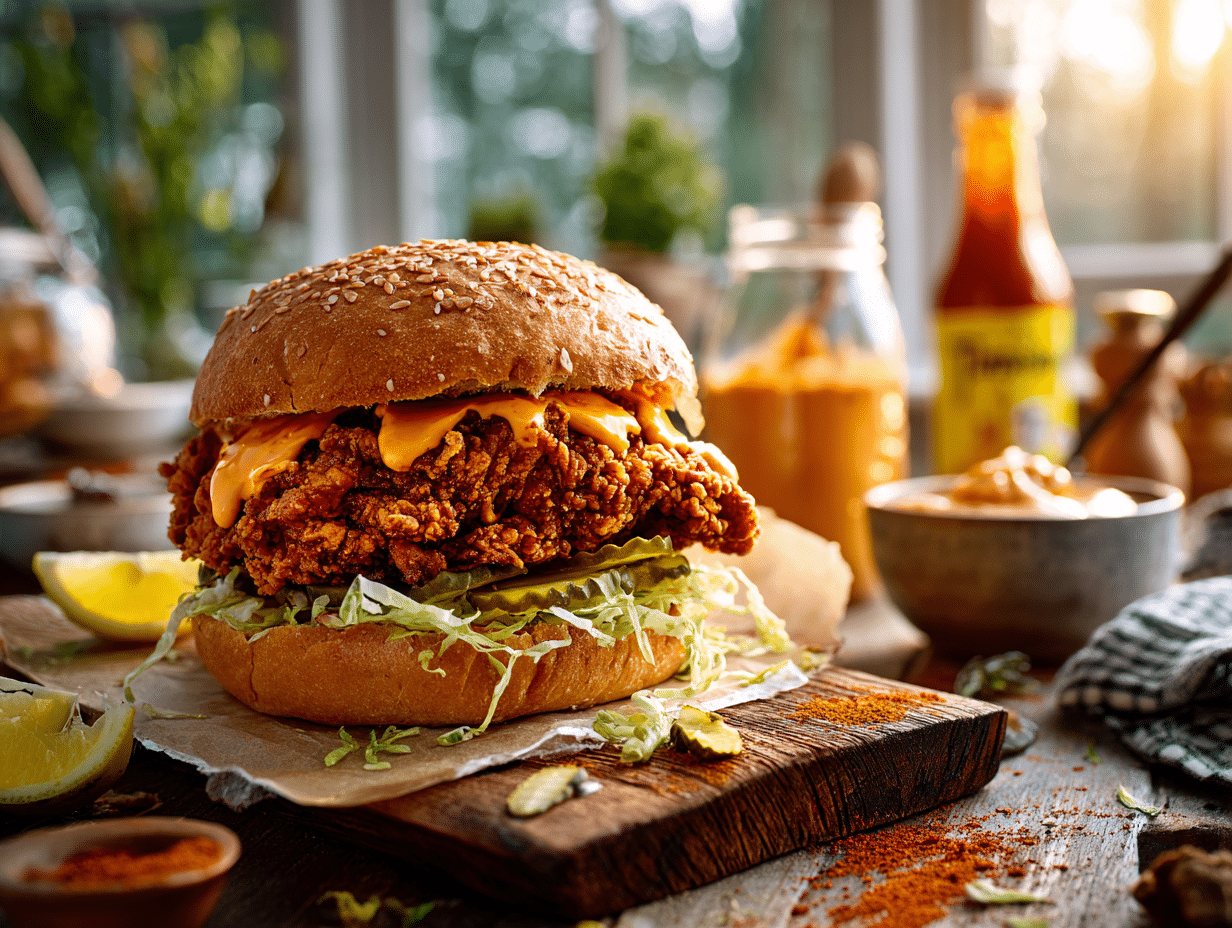
This is a copycat KFC Zinger — a buttermilk-marinated chicken fillet with a craggy, spiced crust fried until genuinely crispy, then loaded into a bun with lettuce and a creamy sauce. The honest reason to make it at home is control: you pick the heat level, you know exactly what’s in the coating, and you can actually get the chicken to 165°F without it being dry if you follow the steps carefully.
About the ingredients
- Cornstarch in the dredge: This is what creates the craggy, uneven crust. Don’t swap it for more flour — the two work differently and you need both.
- White pepper: It’s worth tracking down rather than doubling up on black pepper. White pepper has a sharper, more penetrating heat that sits differently in the coating.
- Buttermilk: If you don’t have it, stir 1 tablespoon of white vinegar or lemon juice into 1 cup of whole milk and let it sit for 5 minutes. Works just as well for tenderizing.
- Cayenne: This controls the burn. Start at the lower end of whatever the recipe card specifies and taste the dry mix before you dredge — raw flour with a pinch tells you a lot about where the heat is headed.
- MSG: Optional but genuinely useful here. A small amount rounds out the savory depth without tasting like anything specific. Skip it if you prefer, but don’t replace it with extra salt.
Before you start
Two things actually decide whether this works. First, let the dredged chicken rest on a wire rack for 10 minutes before it hits the oil — this lets the coating hydrate and bond to the surface, so it doesn’t slide off in the fryer. Second, oil temperature matters more than timing. If the oil is too cool, the crust absorbs fat and goes soft before it can set; too hot and the outside burns before the chicken reaches 165°F internally. A thermometer in the oil and a thermometer in the finished chicken are both worth using. Skip the egg in the dredge mix — it makes the coating dense and slightly rubbery instead of light and craggy.
If something goes sideways
- Coating falls off during frying: The chicken was probably too wet when it went into the dredge, or it skipped the resting step. Pat the chicken dry before the buttermilk soak, and always rest the coated pieces before frying.
- Crust is pale and greasy, not golden: Oil temperature dropped, most likely from adding too many pieces at once. Fry in smaller batches and give the oil a minute to recover between them.
- Chicken is cooked outside but raw inside: The pieces are too thick. Butterfly or pound the thickest part so the fillet is an even thickness throughout — this is the fix, not lowering the oil temperature.
- Coating is too salty or the spice is overwhelming: Mix your dry coating and taste a small pinch before dredging. You can still adjust at that point. Once it’s fried, you can’t take anything back.
- Reheated chicken goes soggy: See the leftovers section — the oven or air fryer is the only reliable way to bring the crust back.
Leftovers and meal prep
Cooked chicken fillets keep in the fridge for up to 3 days in an airtight container. To reheat, use an oven at 375°F or an air fryer at 350°F for 8–10 minutes — both will revive the crust reasonably well. The microwave will not. For meal prep, you can marinate the raw chicken in buttermilk for up to 24 hours in the fridge, which actually improves tenderness. The dry coating can be mixed and stored in a sealed jar for a couple of weeks, so it’s worth making a double batch. Freeze cooked fillets for up to 2 months; reheat from frozen in a 375°F oven for 15–18 minutes, flipping once halfway through.
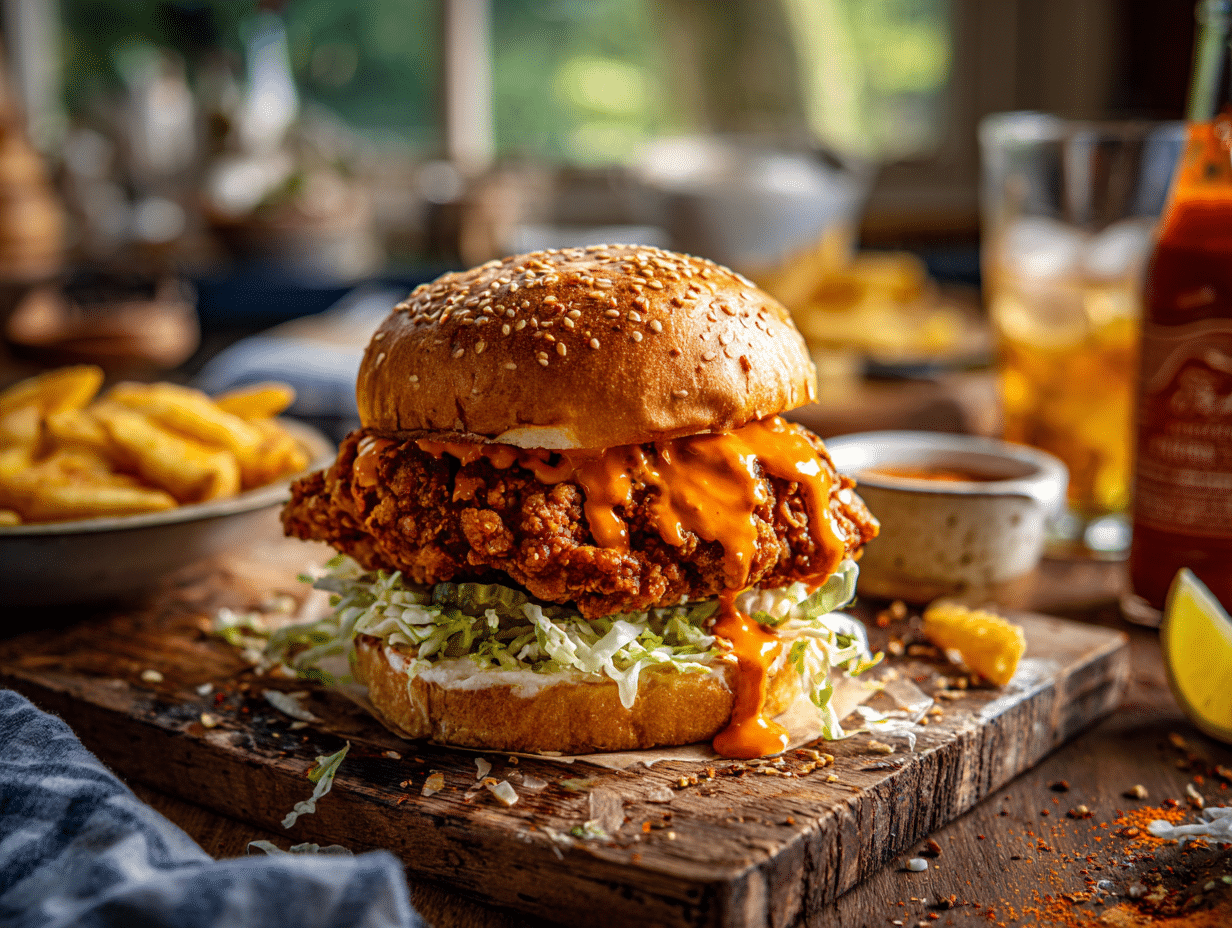
Spicy Zinger-Style Fried Chicken Burger

Ingredients
Chicken & Marinade
- 4 pieces boneless, skinless chicken thighs, trimmed 5 to 6 oz each; choose air-chilled for best texture
- 1 cup buttermilk Full-fat preferred for tenderness
- 1 tbsp hot sauce Classic Louisiana-style for tangy heat
- 1.5 tsp kosher salt Use Diamond Crystal; reduce if using Morton
- 1 tsp ground white pepper Signature warm, peppery aroma
- 1 tsp garlic powder Fine granules blend best
- 1 tsp onion powder
- 0.5 tsp ground ginger Adds subtle warmth
- 2 tsp sweet paprika Hungarian-style if available
- 0.5 tsp cayenne pepper Increase to 1 tsp for extra heat
- 0.5 tsp MSG (optional) Boosts savory depth
Seasoned Dredge
- 1.5 cups all-purpose flour Sifted for lightness
- 0.5 cup cornstarch For shattering crispness
- 1 tsp baking powder Creates airy ridges
- 1.5 tsp kosher salt
- 1 tsp freshly ground black pepper
- 2 tsp sweet paprika
- 0.5 tsp cayenne pepper Adjust to taste
- 0.5 tsp dry mustard powder Adds zesty backbone
- 0.5 tsp dried thyme, crushed Rub between fingers to release aroma
- 1 tsp garlic powder
Spicy Zinger Sauce
- 0.5 cup mayonnaise Full-fat; Japanese-style mayo adds extra tang
- 1.5 tbsp hot sauce (or sriracha) Choose your preferred heat level
- 1 tbsp ketchup (optional) Adds gentle sweetness and color
- 2 tsp fresh lemon juice Brightens and balances heat
- 0.5 tsp smoked paprika For a subtle smoky finish
- 0.5 tsp granulated sugar Balances acidity and spice
- 1 pinch kosher salt Season to taste
To Assemble & Fry
- 1.5 qt neutral high-heat oil Peanut, canola, or soybean; enough for 2 to 3 inches depth
- 4 whole sesame burger buns Soft and fresh; brioche or potato buns also excellent
- 2 tbsp unsalted butter, softened For toasting buns
- 2 cups shredded iceberg lettuce Crisp, very cold
- 12 pieces dill pickle chips Crinkle-cut for texture
Instructions
- Prep the Chicken (5 minutes): Trim any excess fat from the chicken thighs. Lightly pound the thick end to even thickness—about 1/2 inch—for uniform cooking. Pat dry thoroughly; a dry surface helps the marinade cling.
- Mix the Marinade and Rest (20 minutes): In a bowl, whisk buttermilk, hot sauce, salt, white pepper, garlic powder, onion powder, ground ginger, paprika, cayenne, and MSG (optional). Submerge the chicken, cover, and refrigerate for 20 minutes (up to 4 hours for deeper flavor). You’ll notice a faint garlic-chile aroma—the cue that your marinade is balanced.
- Make the Spicy Zinger Sauce (5 minutes): While the chicken marinates, whisk together mayonnaise, hot sauce, ketchup (optional), lemon juice, smoked paprika, sugar, and a pinch of salt. Taste for balance: it should be creamy, bright, and spicy with a smoky finish. Refrigerate.
- Mix the Seasoned Dredge (3 minutes): Combine flour, cornstarch, baking powder, salt, black pepper, paprika, cayenne, dry mustard, thyme, and garlic powder in a shallow dish. Use your fingers to aerate; you want a light, fluffy blend. The baking powder helps create craggy, crisp ridges.
- Heat the Oil to 350°F (175°C): Fill a deep, heavy pot with 2 to 3 inches of oil and heat to 350°F (175°C). Keep a steady medium heat; use a clip-on thermometer. Preheating typically takes about 8–10 minutes and can overlap the marinade time.
- Double-Dredge for Maximum Crunch (4 minutes): Working one piece at a time, let excess marinade drip off, then press into the seasoned flour. Dip back into the marinade, then once more into the flour, pinching and ruffling the surface so flour forms rough, shaggy bits—these become the signature crispy crags.If you don’t have a thermometer: drop a pinch of flour into the oil; it should sizzle vigorously but not smoke.
- Fry the Chicken (8 minutes): Carefully lower dredged thighs into the oil. Fry in batches to avoid crowding, maintaining 325–350°F (165–175°C). Cook 6–8 minutes total, turning once, until deep golden and an instant-read thermometer in the center reads 165°F (74°C). The oil should bubble lively around the edges; the aroma will shift from raw flour to toasted spice.
- Drain and Rest (5 minutes, passive): Transfer to a wire rack set over a sheet pan. Sprinkle lightly with salt. Rest 5 minutes so juices settle and the crust sets to maximum crunch.
- Toast the Buns (2 minutes): Smear cut sides with butter and toast in a skillet over medium heat (about 350–375°F / 175–190°C) until golden, 1–2 minutes. Alternatively, broil cut-side up at 450°F / 230°C for 60–90 seconds.
- Assemble: Spread a generous layer of Spicy Zinger Sauce on both bun halves. Add a cushion of shredded iceberg to the bottom bun, then nestle on a crispy chicken thigh. Top with dill pickle chips, more sauce if you like, and cap with the bun.
- Serve: Serve immediately while the crust crackles and the lettuce stays icy crisp. You should see a glossy orange-red sheen from the sauce, a bronzed, rugged crust, and steam rising as you bite.
Notes
Chef’s Tips
- Extra-craggy crust: After the first flour dip, drizzle 1–2 tbsp of marinade into the dredge and toss with fingers to form tiny flakes—press those onto the chicken.
- Heat control: If the oil drops below 325°F (165°C), the crust absorbs oil and softens; too hot above 365°F (185°C) and the spices burn. Adjust the burner as pieces go in.
- Substitutions: No buttermilk? Use 1 cup milk + 1 tbsp lemon juice, rest 5 minutes. For lighter sauce, swap half the mayo for Greek yogurt.
- Gluten-free: Use a 1:1 gluten-free flour blend and potato starch in place of cornstarch; fry at the same temperatures.
- Oven-fry alternative: Brush dredged chicken with oil and bake on a rack at 425°F (220°C) for 18–22 minutes, flipping once; finish with a 2–3 minute broil for color.
- Juiciness insurance: Thighs are forgiving; if using breasts, brine 30 minutes (4 cups water + 2 tbsp salt) before marinating, and pound to 1/2 inch.
Serving Suggestions
- Plating: Stack high on a warm plate, tuck lettuce just beyond the bun’s edge for a playful fringe, and add pickles on the side.
- Sides: Seasoned fries, tangy vinegar slaw, or corn on the cob with chili-lime butter.
- Drinks: An ice-cold lager, ginger beer, or a citrusy iced tea cuts the heat beautifully.
Culinary Context
The Zinger legacy pairs American Southern-style fried chicken technique with bold chili spice—a globe-trotting fast-food phenomenon. My twist leans into white pepper warmth, paprika sweetness, and a cooling lettuce crunch to capture that addictive balance.Optional Advanced Instructions
- Make-ahead: Sauce keeps 3 days refrigerated. Dredge can be mixed 1 day ahead and stored airtight.
- Parallel workflow: Marinate while you mix sauce, dredge, and preheat oil—this is how we keep Prep: 30 minutes tight.
- Beginner alternative: Single-dredge only; the crust will be thinner but still crisp.
Timing
Prep: 30 minutes (includes a 20-minute marination while making sauce and dredge).Cook: 14 minutes total (6–8 minutes frying + 1–2 minutes bun toasting per batch + brief resting). Times match the steps above.
Course & Cuisine
Course: Lunch or DinnerCuisine/Origin: American fast-food inspired, with Southern frying technique and global chili influences.
Nutrition
Your questions, answered
What internal temperature does the chicken need to reach?
The chicken must hit 165°F (74°C) at the thickest point — no exceptions for poultry. Use an instant-read thermometer rather than guessing by color or timing, since fillet thickness varies.
Can I use an air fryer instead of deep frying?
Yes, though the crust will be less craggy. Spray the coated fillet generously with oil on both sides and cook at 390°F for 18–20 minutes, flipping once, until the internal temperature hits 165°F.
How long should I marinate the chicken in buttermilk?
A minimum of 2 hours works, but overnight in the fridge gives noticeably more tender results. Beyond 24 hours the texture starts to break down, so don’t push past that.
What oil is best for frying this?
Use a neutral oil with a high smoke point — vegetable, canola, or peanut oil all work well. Avoid olive oil or butter; they’ll burn before the chicken is cooked through.
What should I serve with this to make it a full meal?
Coleslaw is the most practical side because it doubles as a burger topping and takes 10 minutes to make. Oven fries or chips started before you begin frying the chicken will be ready at roughly the same time.
My coating mix seems very spicy when I taste it dry — should I adjust before frying?
Yes, and now is exactly the right time to do it. Pull back the cayenne by half a teaspoon, mix again, and taste. The heat mellows slightly during frying but not dramatically, so what you taste raw is a fair guide.
Try these next
- KFC Crispy Colonel Copycat
- KFC Double Crunch Perfected
- Nashville Hot Chicken Perfected
- Better Than BK’s Spicy Chicken