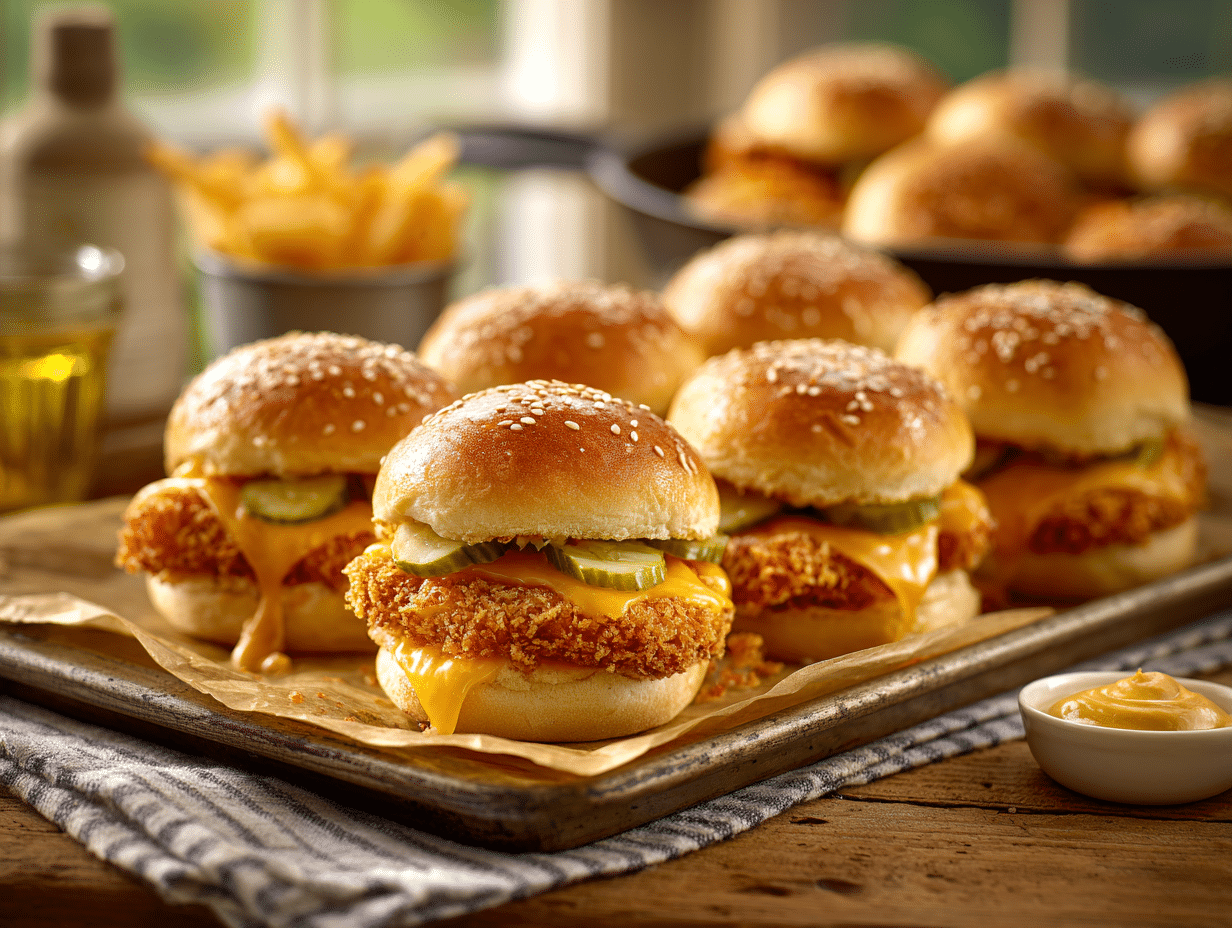
These are pull-apart slider bakes built around ring-shaped ground chicken patties, fried crispy and then steam-baked on a bed of onions inside a covered pan. They come together faster than you’d expect and feed a crowd from a single baking dish. If you want something genuinely fun to put on the table without a pile of dirty cookware, this is it.
The short version of why this works
Two things carry this recipe. First, the onion steam: as the sliced onions heat under the covered pan, they release moisture that keeps the chicken patties from drying out and softens the buns into that pillowy texture White Castle is known for. Without the lid, you just get dry buns and tough chicken. Second, the double breading — panko plus crushed cornflakes — gives you a crust thick enough to stay crispy even after the steam hits it. A thin single-coat breading would go soggy fast. Get those two things right and everything else falls into place.
Shopping notes
- Ground chicken: Buy it fresh, not frozen-then-thawed. Thawed ground chicken releases extra water and makes the rings harder to shape and fry cleanly.
- Cornflakes: Plain, unsweetened only. Frosted or honey varieties will burn in the oil before the chicken is cooked through.
- Slider buns: King’s Hawaiian or any soft dinner roll works. Avoid anything with a thick crust — it won’t steam-soften properly.
- Duke’s mayonnaise: Any full-fat mayo does the job. Low-fat mayo has more water and can make the chicken mixture loose.
- Neutral oil for frying: Vegetable, canola, or peanut oil. Olive oil smokes at 350°F and adds a flavor that doesn’t belong here.
Mistakes to avoid
- Skipping the ring shape and making flat patties instead: The ring shape isn’t just cosmetic — it lets the center cook at the same rate as the edges, so you don’t end up with overcooked outsides and an underdone middle. Ground chicken must reach 165°F (74°C) internal; the ring shape helps you get there evenly.
- Crowding the frying pan: Too many rings at once drops the oil temperature, and you get greasy breading instead of a crisp crust. Fry in batches and let the oil come back to 350°F between them.
- Lifting the lid during the steam-bake: Every time you peek, you lose the steam that’s doing the work. Set a timer and leave it alone.
- Using a shallow baking dish: You need enough depth to hold the onion layer plus the rings without the lid pressing down on them. A 9×13 pan with at least 2-inch sides is the right call — skip the shallow sheet pan.
- Assembling the sliders too far ahead: The fried rings stay crispier if you assemble right before the steam-bake. Don’t fry them an hour early and let them sit; the breading softens and you lose the textural contrast.
Leftovers and meal prep
Assembled leftover sliders keep in the fridge for up to 2 days in an airtight container. To reheat, put them in a covered baking dish with a tablespoon of water in the bottom and warm at 325°F for about 10 minutes — this brings back some of the steam-softened texture without making the buns rubbery. The microwave works in a pinch but turns the breading chewy. If you want to prep ahead, fry the chicken rings up to a day in advance and refrigerate them uncovered on a rack so they don’t steam themselves soggy; then do the onion steam-bake step fresh when you’re ready to serve. Unassembled fried rings also freeze well for up to 6 weeks — reheat from frozen in a 375°F oven for 12–15 minutes before assembling and steam-baking.
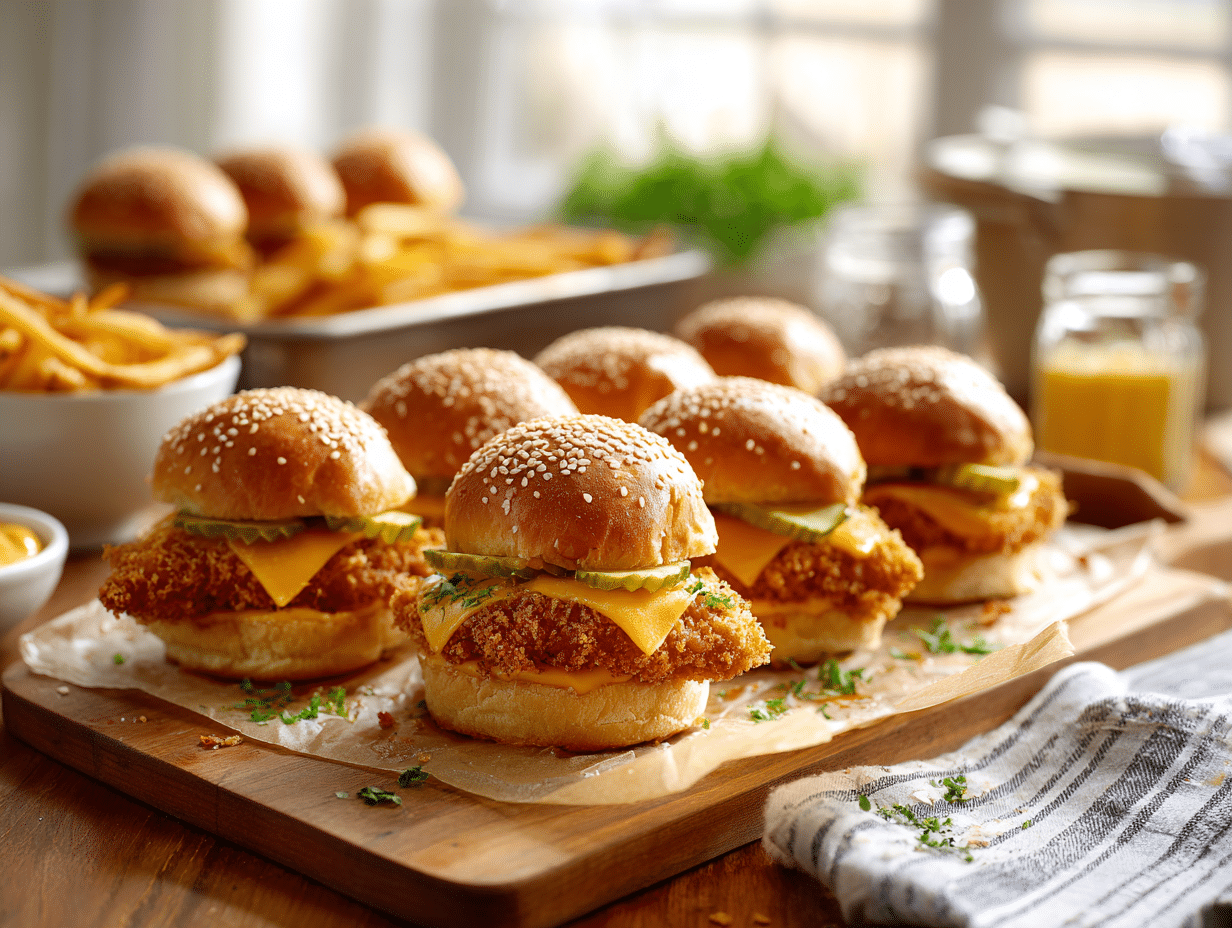
White Castle Chicken Ring Sliders

Ingredients
For the Onion Steam and Bake:
- 2 tbsp unsalted butter high-quality European-style butter preferred for richer flavor
- 1 tbsp neutral oil avocado, canola, or grapeseed
- 1 ½ cups yellow onion, very finely minced aim for confetti-fine pieces to mimic White Castle’s texture; about 1 large onion
- ½ cup water for gentle steaming of the buns
- 1 tsp kosher salt Diamond Crystal; use 3/4 tsp if using Morton’s
- 1 tsp granulated sugar balances onion sharpness; optional but recommended
For the Chicken Ring Mixture:
- 1 ½ lb ground chicken (93% lean) keep very cold for easier shaping and juicier texture
- 1 large egg room temp helps it blend evenly
- ⅓ cup mayonnaise Duke’s recommended for tang and emulsified moisture
- ⅓ cup yellow onion, finely minced extra moisture and sweetness in the mix
- 2 cloves garlic, grated microplane for a paste that disperses evenly
- 1 tsp kosher salt season the meat mixture lightly—breading adds more seasoning later
- ½ tsp black pepper, freshly ground
- 1 tsp onion powder
- ½ tsp smoked paprika adds gentle warmth and color
- ¼ tsp ground white pepper optional; echoes fast-food savoriness
- ¼ cup plain breadcrumbs just enough to bind while keeping the chicken tender
For Breading and Frying:
- 1 cup all-purpose flour for dredging; bleached or unbleached both work
- 1 tsp kosher salt for flour seasoning
- ½ tsp garlic powder
- ½ tsp paprika
- 2 large eggs for egg wash
- 2 tbsp milk loosens egg wash for even coating
- 2 cups panko breadcrumbs for a light, shattering crunch
- 1 cup cornflakes, crushed optional; mix with panko for extra crispness
- 3 cups vegetable oil, for frying or canola/peanut; enough to reach 2–2 1/2 inches in a Dutch oven (350°F / 175°C)
For Assembly and Finish:
- 12 whole soft slider buns (connected sheet preferred) Hawaiian rolls or classic slider buns work well
- 6 slices American cheese, halved classic melt and flavor; use high-quality deli American if possible
- 12 slices dill pickle chips thin crinkle-cut for the signature snap
- 2 tbsp yellow mustard optional; dot on each slider for classic tang
- 2 tbsp mayonnaise optional; a thin swipe on the top buns adds richness
- 2 tbsp unsalted butter, melted for brushing buns before baking
- 1 tbsp sesame seeds optional garnish for classic slider look
Instructions
- Start the Onion Steam Base (8 minutes): In a medium skillet over medium heat, melt 2 tbsp butter with 1 tbsp oil. Add 1 1/2 cups minced yellow onion and 1 tsp kosher salt; cook, stirring, until translucent and sweet but not browned, about 6 minutes. Stir in 1 tsp sugar and 1/2 cup water; simmer 2 minutes. Set aside. This will later steam the buns, echoing the White Castle method.
- Mix the Chicken Ring Base (10 minutes + 15 minutes chill): In a large bowl, combine 1 1/2 lb ground chicken, 1 large egg, 1/3 cup mayonnaise, 1/3 cup minced onion, 2 cloves grated garlic, 1 tsp kosher salt, 1/2 tsp black pepper, 1 tsp onion powder, 1/2 tsp smoked paprika, 1/4 tsp white pepper (optional), and 1/4 cup plain breadcrumbs. Mix gently with a fork or your hand until just combined; overmixing toughens the meat. Cover and refrigerate for 15 minutes to firm for shaping.
- Shape Into Rings (7 minutes): Lightly oil your hands. Divide the mixture into 12 equal portions (about 2 oz each). Roll each into a ball, then poke a finger through the center and gently stretch into a ring about 2 1/2 inches wide with a 1-inch hole. Tip: Use a small round cutter or the wide end of a pastry tip to stamp a clean hole, then smooth edges for even frying.
- Set Up the Breading Station (5 minutes): In one shallow dish, mix 1 cup flour, 1 tsp kosher salt, 1/2 tsp garlic powder, and 1/2 tsp paprika. In a second dish, whisk 2 eggs with 2 tbsp milk. In a third, combine 2 cups panko with 1 cup crushed cornflakes (optional). Dredge rings in seasoned flour (shake off excess), dip in egg wash, then coat thoroughly in the crumb mixture. Press crumbs on firmly for a cohesive crust.
- Fry the Chicken Rings (about 14 minutes total): Heat vegetable oil in a Dutch oven to 350°F (175°C). Fry in two batches (6 rings each) until deep golden and cooked through, about 3 minutes per side. Internal temperature should read 165°F (74°C). Transfer to a rack to drain. Air-fryer alternative: Spray rings with oil and cook at 400°F (205°C) for 10–12 minutes, flipping at 6 minutes.
- Assemble the Sliders (5 minutes): Heat oven to 350°F (175°C). Line a 9×13-inch pan with parchment. Spread half the onion mixture in an even layer. Slice the sheet of 12 slider buns horizontally. Place the bottom slab over the onions. Layer 12 half-slices American cheese, top with the hot chicken rings (one per bun), add a dill pickle chip and a tiny dot of yellow mustard if using. Cap with the top buns. Spoon the remaining onion mixture over the tops, brush with 2 tbsp melted butter, and sprinkle sesame seeds.
- Bake and Steam (12 minutes + 3 minutes rest): Cover pan tightly with foil and bake for 8 minutes to steam and soften the buns, then remove foil and bake 4 minutes more until lightly glossy and aromatic. Rest 3 minutes for clean slicing, then cut into 12 sliders and serve hot.
Notes
Chef’s Tips:
- Texture Insurance: Mayo in the meat mix keeps the chicken tender; don’t skip the short chill—it helps rings hold their shape.
- Breadcrumb Blend: Mixing panko with crushed cornflakes creates a light yet assertive crunch reminiscent of fast-food coatings.
- Onion Size: Go very fine on onions for both the steam base and the mix; it mimics the signature White Castle sweetness without chunky bites.
- Make-Ahead: Shape and bread rings up to 24 hours ahead; refrigerate on a rack, uncovered, to dry the coating for extra crispness.
- Oil Management: Keep frying temp near 350°F (175°C). Too cool = greasy; too hot = over-browned before the center cooks.
- Dietary Swaps: Use gluten-free panko and a 1:1 GF flour blend; check buns are GF. Dairy-free? Skip cheese and use plant mayo; brush buns with oil instead of butter.
Nutrition
FAQ
Can I use ground turkey instead of ground chicken?
Yes, ground turkey works as a direct swap. Stick with 93% lean rather than 99% fat-free — the extra fat helps the rings hold together and stay juicy, and turkey still needs to hit 165°F (74°C) internal temperature.
How do I keep the chicken rings from falling apart when I shape them?
Chill the seasoned chicken mixture for 20–30 minutes before shaping — cold fat firms up and the rings hold their form much better. Wet your hands lightly before shaping each ring to prevent sticking.
My breading keeps sliding off during frying. What’s going wrong?
The most common cause is skipping the rest after breading. Let the coated rings sit on a rack for at least 5 minutes before they go into the oil — this lets the coating adhere. Also make sure the oil is fully up to 350°F before the first batch goes in; cool oil causes the breading to absorb oil and detach.
Can I bake the chicken rings instead of frying them?
You can, but the crust won’t be as crisp and it will soften more during the steam-bake step. If you bake, use a wire rack over a sheet pan at 425°F and spray the rings generously with cooking spray — expect a less crunchy result.
Do I have to use a whole package of slider buns, or can I scale this down?
You can halve the recipe easily. Use a smaller baking dish — an 8×8 pan works for a half batch — and keep the onion layer depth roughly the same so there’s enough moisture to steam the buns properly.
What dipping sauces actually go well with these?
Plain yellow mustard is the most authentic pairing and cuts through the richness of the fried chicken. Ranch, honey mustard, or a simple sriracha mayo all work well too — keep the sauce on the side so the buns don’t get soggy before serving.
More burger recipes to try
- White Castle Jalapeño Cheese Slider
- Korean Fried Chicken Burger
- Crispy SmokeShack Chicken Burger
- Five Guys BLT Smash Burger