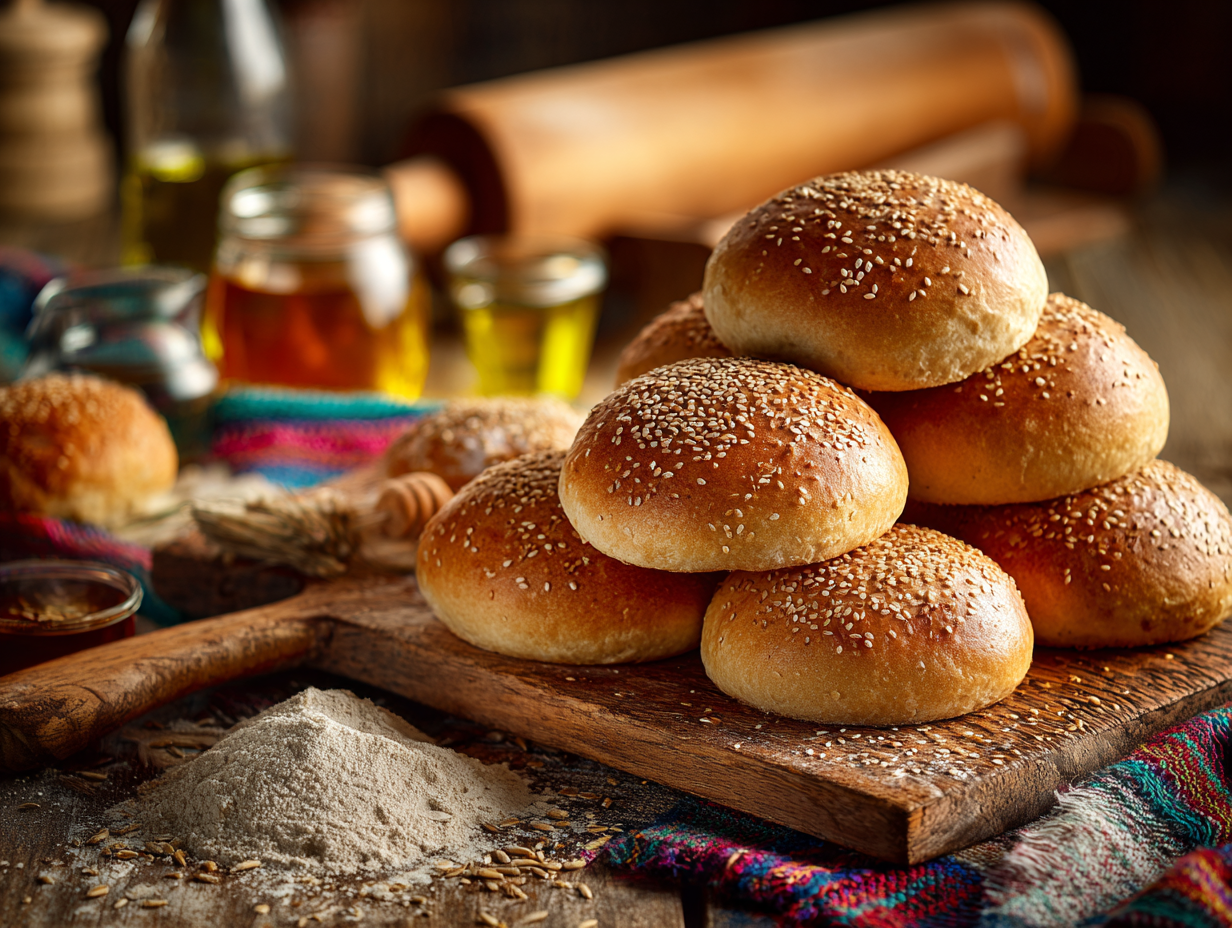
These are whole wheat burger buns made from scratch with pantry staples — flour, yeast, oil, honey, and salt. The honest reason to make them is cost: a batch of eight buns runs a fraction of what specialty whole wheat buns cost at the store, and you control every ingredient. They’re sturdy enough to hold a loaded burger without falling apart, and soft enough that nobody will complain about eating “healthy bread.”
Before you start
The one technique that determines whether these buns are light or brick-like is how you handle the yeast activation. Whole wheat flour is thirstier and heavier than white flour, so the yeast needs to be fully active before it meets all that bran — if your liquid is too hot (above 110°F) you’ll kill it, and if it’s too cool the dough will barely rise. Use a thermometer if you have one; if not, the water should feel comfortably warm on your wrist, not hot. The second thing that matters is the second rise. Don’t rush it. Shaped buns that haven’t fully puffed before they go in the oven bake up dense and tight. Give them the full time even if they look close — whole wheat dough rises more slowly than white, and patience here is what separates a fluffy bun from a hockey puck.
Mistakes to avoid
- Using only whole wheat flour when you’re out of bread flour: All whole wheat with no bread or all-purpose flour mixed in produces a very dense crumb. If the recipe calls for a blend and you’re short on one, lean toward more all-purpose rather than more whole wheat — the gluten structure will be better.
- Swapping honey with granulated sugar without adjusting liquid: Honey adds moisture; granulated sugar doesn’t. If you substitute cup-for-cup, the dough will be drier and the buns tougher. Add an extra teaspoon of water or milk to compensate.
- Skipping the oil entirely to cut calories: Oil is what keeps these buns soft after baking. Without it, the crust toughens quickly and the crumb dries out within hours. Any neutral oil — vegetable, canola, even melted coconut oil — works fine if you don’t have olive or avocado oil.
- Crowding the buns on the baking sheet: Whole wheat buns spread more than white flour buns during the second rise. If they’re too close together, they bake into each other and the sides stay pale and doughy. Leave at least two inches between each shaped bun.
- Cutting into them straight out of the oven: The interior is still setting as they cool. Slice too early and the crumb compresses and turns gummy. Give them at least 20 minutes on a wire rack before you cut.
Storage and reheating
Store cooled buns in an airtight bag or container at room temperature for up to 2 days — whole wheat goes stale faster than white bread, so don’t leave them sitting out uncovered. For longer storage, freeze them: slice each bun before freezing so you can pull out halves individually, wrap tightly in plastic wrap, and they’ll keep well for up to 2 months. To reheat from frozen, skip the microwave if you can — it makes the crumb rubbery. Instead, place the halves cut-side down in a dry skillet over medium heat for 2 to 3 minutes, or wrap in foil and warm in a 325°F oven for about 10 minutes. From the fridge (up to 5 days), a quick 30-second toast in a toaster or skillet brings them right back.
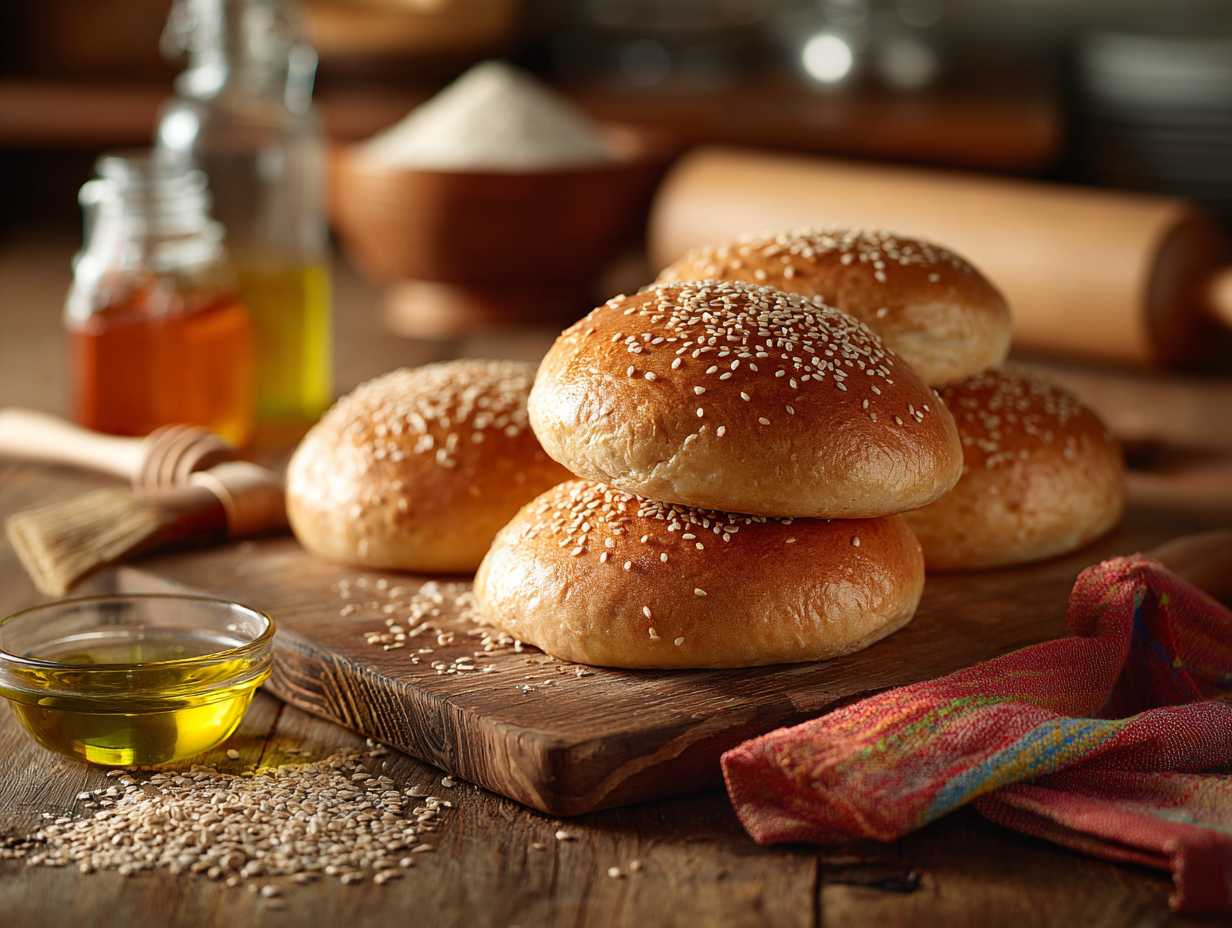
Healthy Whole Wheat Burger Buns

Ingredients
For the Dough:
- 1 cup warm water (100°F/38°C for activating yeast)
- 2 ¼ teaspoons active dry yeast (1 standard packet)
- 2 tablespoons raw honey (or pure maple syrup as vegan option)
- 3 cups whole wheat flour preferably stone-ground, sifted
- 1 teaspoon sea salt fine variety
- 1 large egg room temperature (omit for vegan, add flax egg)
- 2 tablespoons extra virgin olive oil or avocado oil
For the Topping:
- 1 tablespoon milk (for brushing - or use plant milk for vegan)
- 2 tablespoons sesame seeds optional, for topping
Instructions
- In a large mixing bowl, combine warm water, honey, and yeast. Stir gently and let sit for 5–7 minutes, until bubbly and foamy—this indicates the yeast is active.
- Add the egg (or flax egg), olive oil, and sea salt. Whisk until fully incorporated.
- Gradually add the whole wheat flour, 1 cup at a time, mixing with a wooden spoon. Once a shaggy dough forms, knead for 8–10 minutes on a lightly floured surface until the dough is smooth and slightly elastic. If sticky, add up to 2 more tablespoons of flour, but avoid over-flouring to keep the buns light.
- Transfer the dough to a lightly oiled bowl, cover with a clean kitchen towel or plastic wrap, and let rise in a warm, draft-free place for 1 hour, or until doubled in size.
- Punch down the risen dough and divide it into 8 equal portions. Shape each piece into a smooth ball and place them on a parchment-lined baking tray, spaced a few inches apart.
- Slightly flatten each ball with your palm. Cover loosely with a towel and let rise for another 25–30 minutes, until slightly puffy.
- Preheat your oven to 375°F (190°C). Brush the buns gently with milk and sprinkle sesame seeds on top if desired.
- Bake for 18–20 minutes, or until the tops are golden brown and the buns sound hollow when tapped on the bottom. Let them cool for 10 minutes on a wire rack before slicing.
Notes
- Use a kitchen scale for best accuracy when working with whole wheat flour.
- To make it vegan, replace the egg with a flax egg (1 tbsp ground flax mixed with 2.5 tbsp water) and use plant milk.
- For extra soft buns, brush with melted plant butter after baking and cover with a kitchen towel to cool slowly.
Nutrition
Common questions
Can I use all-purpose flour instead of whole wheat flour?
Yes, all-purpose flour works and will produce a softer, lighter bun. You’ll lose the nuttier flavor and extra fiber that whole wheat provides, but the method stays exactly the same.
I don’t have honey — what can I use?
Maple syrup, agave, or plain granulated sugar all work as substitutes. If using sugar, add an extra teaspoon of water to the dough since sugar doesn’t contribute moisture the way liquid sweeteners do.
My dough isn’t rising. What went wrong?
The most likely cause is yeast that was killed by water that was too hot, or yeast that’s past its expiration date. Proof a fresh teaspoon of yeast in warm water with a pinch of sugar — if it doesn’t foam within 10 minutes, the yeast is the problem, not the dough.
Can I make these without eggs?
Yes. A flax egg (1 tablespoon ground flaxseed mixed with 3 tablespoons water, rested 5 minutes) is a reliable swap. The buns will be very slightly less rich but still hold together well.
Can I use instant yeast instead of active dry yeast?
Instant yeast works and doesn’t need to be proofed first — just mix it directly into the dry ingredients. Use about 25 percent less than the recipe calls for, since instant yeast is more potent.
Why are my buns flat even though the dough rose fine?
Flat buns after baking usually mean the dough over-proofed during the second rise and collapsed in the oven — the yeast ran out of fuel before the heat could set the structure. Next time, bake them when the buns look puffy but still spring back slowly when you poke them gently.
Try these next
- Beyond Western Bacon Cheeseburger
- Veggie Sauce Burger Perfection
- Five Guys Veggie Sandwich Style
- Halloumi King Burger Homage