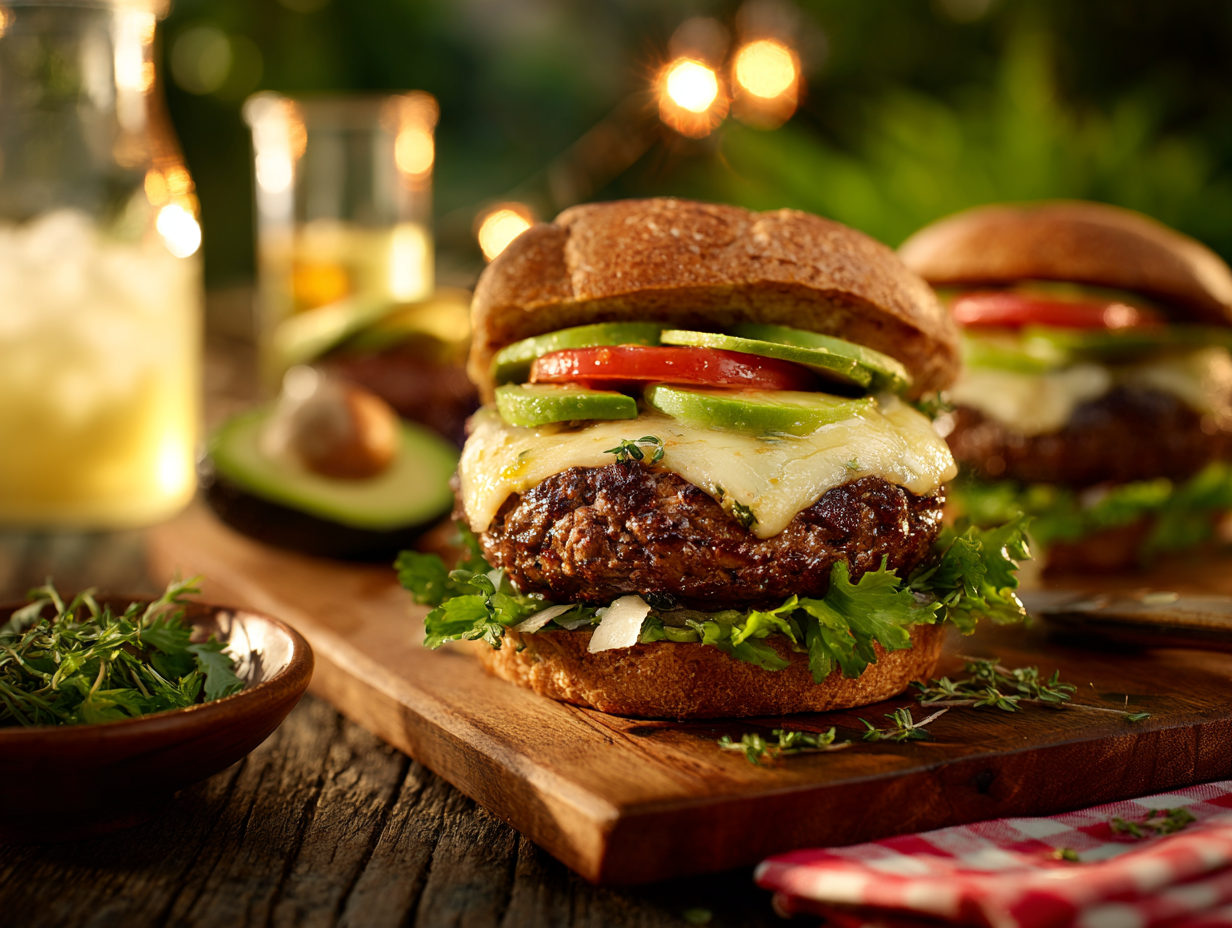
This is a beef burger seasoned with fresh parsley, garlic, red onion, and dried oregano instead of salt. It works because the herbs do real flavor work — you won’t miss the sodium. If you or someone you cook for is watching salt intake, this is a practical weeknight option that doesn’t taste like a compromise.
Before you start
Two things matter here more than anything else. First, keep your hands cold and mix the beef as little as possible — just enough to distribute the herbs evenly. Overworking the meat squeezes out fat and moisture, and you end up with a dense, dry patty no amount of toppings can fix. Second, make sure your grill or skillet is genuinely hot before the patties go on. A proper sear builds a crust that delivers the savory, slightly caramelized flavor that salt usually handles. A lukewarm pan just steams the meat. Skip the egg in the mix — it makes the patty mushy and adds nothing the herbs and beef fat aren’t already providing.
Common problems and fixes
- Patties taste flat even with all the herbs: Your herbs may be old. Dried oregano loses most of its punch after six months. Rub a pinch between your fingers — if it barely smells like anything, replace it before you start.
- Cheese won’t melt before the beef overcooks: Add the cheese slice earlier than you think you need to, then tent the patty loosely with the skillet lid or a metal bowl for 30–45 seconds. The trapped steam finishes the melt fast without drying out the patty.
- Avocado turns brown before serving: Slice it right before you assemble. If you’re prepping ahead, leave the pit in the unused half and press plastic wrap directly against the cut surface.
- Patty shrinks into a thick puck: The dimple in the center helps, but also make sure your patties are pressed out wider than the bun — they will pull inward as they cook. Aim for about half an inch wider than the bun diameter when raw.
- Burger tastes underseasoned after cooking: A squeeze of fresh lemon juice over the assembled burger right before eating brightens everything up without adding sodium. It’s a fast fix that actually works.
Storage and reheating
Cooked patties keep in an airtight container in the fridge for up to 3 days. To reheat, put the patty in a dry skillet over medium-low heat with a lid on — about 3 to 4 minutes per side — until it hits 165°F internally if you used turkey or chicken, or is heated through if beef. The microwave works in a pinch but dries the edges out fast, so use 50% power in 30-second bursts. Raw formed patties freeze well: stack them with parchment between each one, seal tightly, and use within 2 months. Thaw overnight in the fridge before cooking — never cook from frozen on a home grill or skillet, since the outside chars before the center reaches a safe temperature.
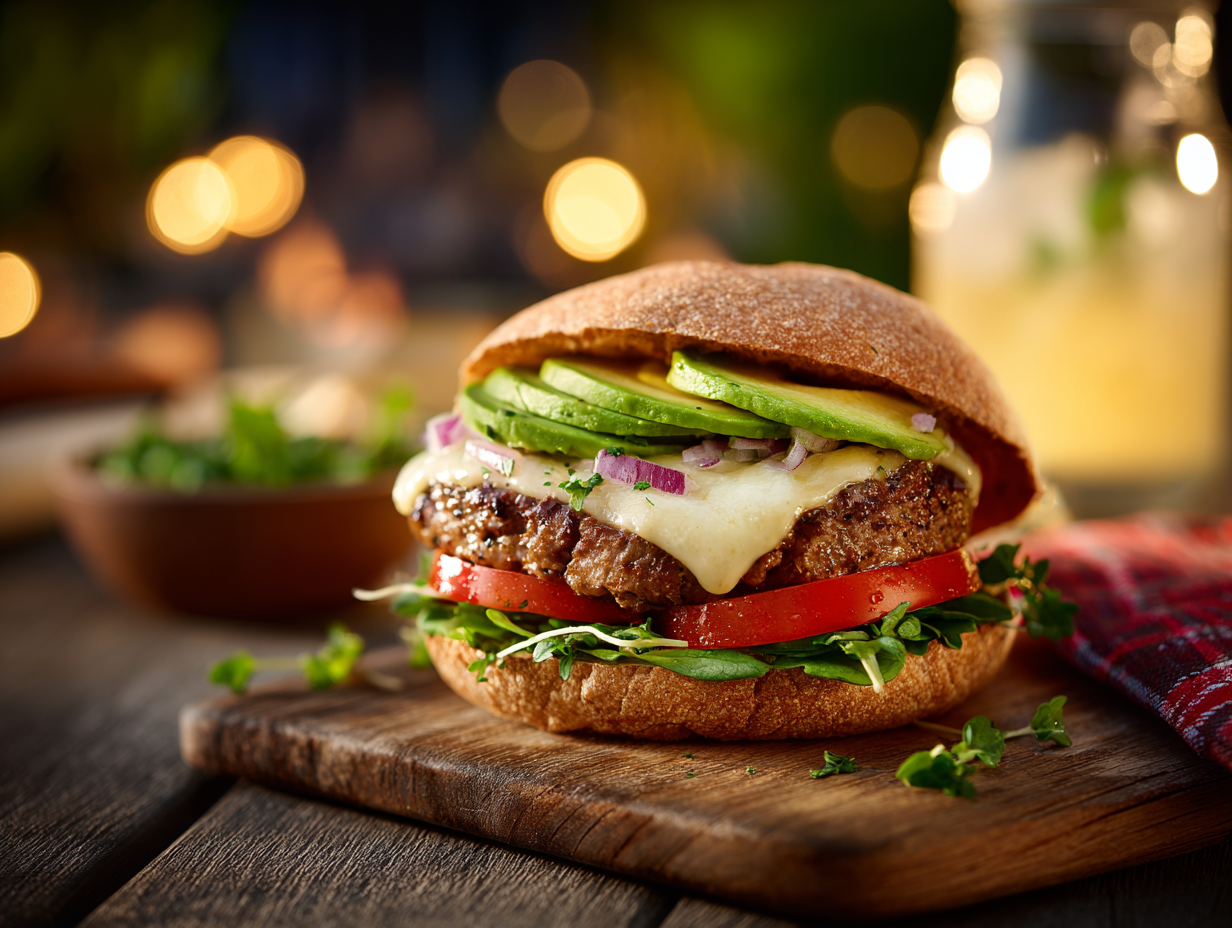
Low Sodium Herb-Infused Hamburger

Ingredients
For the Burger Patties:
- 1 pound lean ground beef (90% lean) preferably grass-fed for better flavor and texture
- ¼ cup finely diced red onion use fresh onion for bright aromatics
- 2 cloves garlic minced
- 1 tablespoon fresh parsley finely chopped
- 1 teaspoon dried oregano
- 1 teaspoon black pepper freshly ground for best aroma
For the Burger Assembly:
- 4 slices low-sodium cheese such as Swiss or mozzarella
- 4 whole whole wheat burger buns low-sodium or no-salt-added variety
- 1 cup butter lettuce leaves washed and patted dry
- 1 whole tomato sliced into 1/4-inch rounds
- 1 medium avocado sliced
Instructions
- Preheat your grill or skillet to medium-high heat (about 375–400°F / 190–204°C). Lightly oil the surface if needed.
- In a medium mixing bowl, combine ground beef, red onion, garlic, parsley, oregano, and black pepper. Mix just until incorporated—avoid overmixing to keep the patties tender.
- Divide mixture into 4 equal portions (approximately 4 oz each) and shape into patties about 3/4 inch thick. Use your thumb to create a slight dimple in the center of each to prevent puffing up.
- Place patties onto the grill or skillet and cook for 4–5 minutes per side, flipping once. Internal temp should reach 160°F (71°C).
- In the final minute of cooking, place a slice of low-sodium cheese on each patty and cover to melt.
- Toast the whole wheat buns lightly on the skillet or grill for extra flavor and texture.
- Assemble the burgers by layering lettuce, a slice of tomato, the cheesy patty, and avocado on the bun base. Top with the lid and serve immediately.
Notes
- Optional: Add a splash of lemon juice in the burger mixture for brightness without salt.
- You can substitute ground turkey for beef for an even leaner option.
- Try a dollop of hummus or salt-free mustard to add a creamy tang without upping the sodium.
Nutrition
Your questions, answered
Can I use ground turkey instead of beef?
Yes, ground turkey works well here. Cook turkey patties to an internal temperature of 165°F (74°C) — they should never be served pink in the center, so use a meat thermometer to be sure.
How do I know the burger is done without a thermometer?
Get a thermometer — it’s the only reliable way. Ground beef patties need to reach 160°F (71°C) all the way through, and visual cues like juice color aren’t accurate enough to trust with ground meat.
Can I use dried parsley instead of fresh?
You can, but use about one-third the amount since dried herbs are more concentrated. Fresh parsley gives a noticeably brighter flavor here, so it’s worth picking up a bunch if you can.
What low-sodium cheese actually melts well?
Low-sodium Swiss melts cleanly and has enough fat to go smooth without getting greasy. Low-sodium mozzarella also works but can be a little stringy — both are better than low-sodium American, which sometimes doesn’t melt at all.
Can I make the patties ahead of time?
Yes — form the patties, stack them with parchment between each one, and refrigerate for up to 24 hours before cooking. The resting time actually helps the herbs distribute more evenly through the meat.
My store only has 80/20 ground beef. Will that work?
It will cook fine, but expect more shrinkage and some flare-ups on the grill. The higher fat content also means the patty will taste richer, which can mask the herb flavors slightly — not a dealbreaker, just something to know.
What to cook next
- Angus Bacon Guacamole Burger
- Ultimate Avocado Bacon Smash Burger
- Ultimate Guacamole Bacon Burger
- Veggie Sauce Burger Perfection