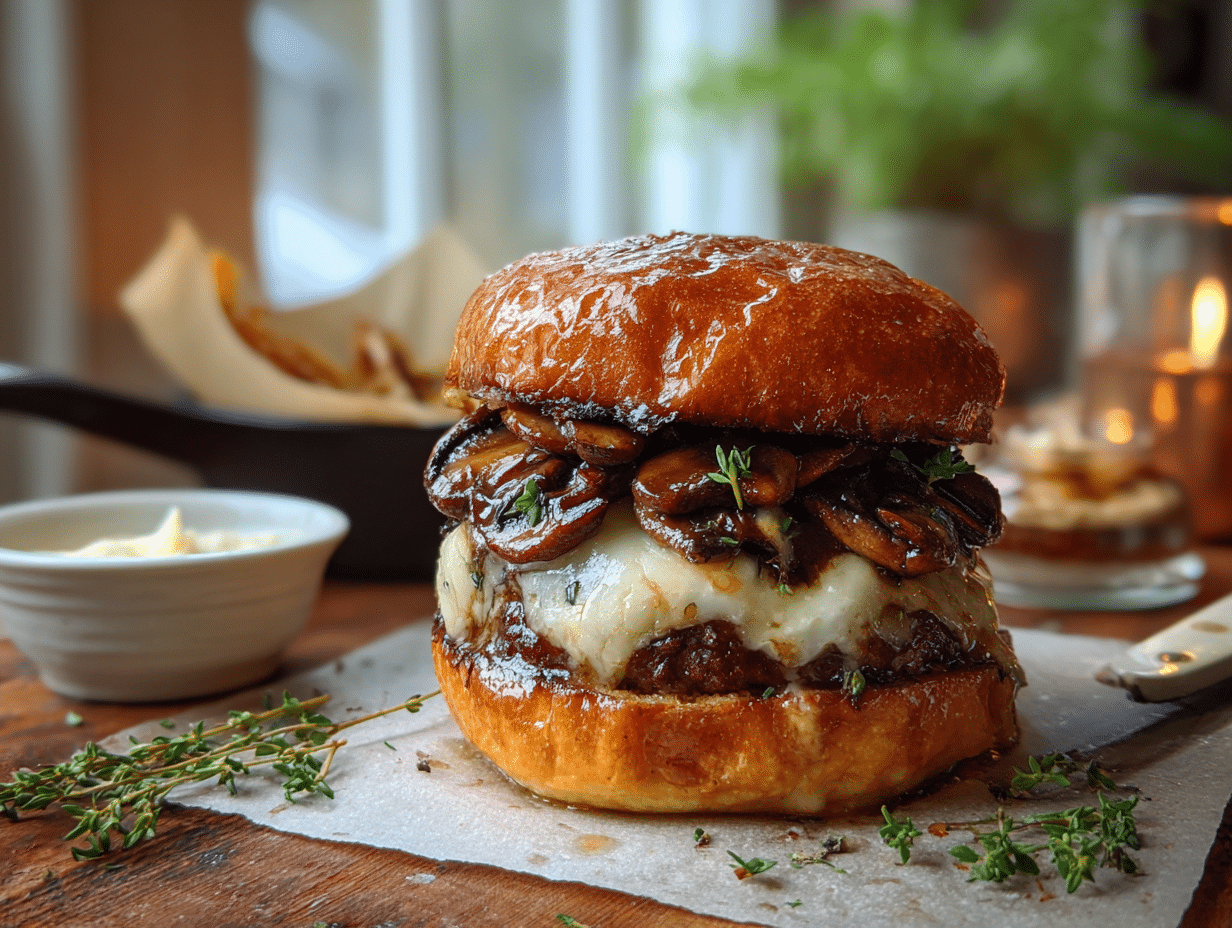
The Story Behind Culver’s Mushroom and Swiss ButterBurger
In the heart of America’s Dairyland, where butter isn’t just an ingredient but a way of life, the ButterBurger stands as a testament to Wisconsin’s culinary ingenuity. This isn’t just another burger—it’s a cultural icon that emerged from the crossroads of German immigrant traditions, Midwest dairy farming, and American diner innovation.
The Culver’s Legacy
When Craig and Lea Culver opened their first restaurant in Sauk City, Wisconsin, in 1984, they weren’t just starting another fast-food chain. They were carrying forward a family tradition that dated back to the 1960s, when Craig’s parents ran A&W restaurants. The ButterBurger concept itself predates even Culver’s, with roots stretching back to Wisconsin’s taverns and diners of the 1930s and 1940s, where German immigrants applied their love of butter to the American hamburger.
What set Culver’s apart was their commitment to doing things the “Wisconsin Way”—fresh, never frozen beef, real Wisconsin dairy, and most importantly, buns lovingly toasted in butter. This wasn’t just about flavor; it was about honoring the state’s dairy heritage in every bite.
The Mushroom and Swiss Evolution
The addition of mushrooms and Swiss cheese to the ButterBurger represents a natural evolution of the American burger, influenced by the continental tastes that waves of European immigrants brought to the Midwest. Swiss cheese, with its nutty complexity, found a natural home in Wisconsin, already America’s cheese capital. The pairing of earthy mushrooms with Swiss cheese emerged in American steakhouses in the 1960s and 1970s, eventually making its way onto burgers as diners sought more sophisticated flavor profiles.
The Art of the Butter Toast
The signature move—toasting buns in butter—transforms an ordinary burger into something extraordinary. This technique creates what food scientists call the Maillard reaction on steroids: the milk solids in the butter caramelize on the bun’s surface, creating hundreds of flavor compounds that plain toasting simply can’t achieve. It’s a technique that requires precision; too hot and the butter burns, too cool and you miss that golden-brown perfection.
The Smash Technique
While Culver’s doesn’t traditionally use the smash technique, the method has deep roots in American burger culture, dating back to the 1920s at places like White Castle. The science is compelling: smashing creates maximum surface contact with the hot griddle, resulting in what burger aficionados call “lacy edges”—those crispy, caramelized bits that concentrate beef flavor through rapid moisture evaporation and fat rendering. When combined with the ButterBurger philosophy, it creates a burger that honors both tradition and technique.
Wisconsin’s Butter Culture
To understand the ButterBurger, you must understand Wisconsin’s relationship with butter. By the early 1900s, Wisconsin had become America’s leading dairy state, with butter production reaching over 300 million pounds annually by the 1920s. This wasn’t just about quantity—Wisconsin butter, with its high butterfat content and sweet cream flavor, became the gold standard. The state’s cool climate, lush pastures, and dedication to dairy science created butter so prized that using it liberally became a point of pride.
The Mushroom Preparation Philosophy
The approach to mushrooms in this recipe reflects professional cooking wisdom accumulated over decades. The technique of not salting mushrooms until after initial browning, the use of dry sherry for deglazing, and the addition of Worcestershire sauce all stem from classical French cooking methods adapted to American tastes. The goal is to concentrate the mushroom’s natural umami while adding layers of complementary flavors—a far cry from the often soggy, under-seasoned mushroom toppings found at lesser establishments.
Cultural Impact
The ButterBurger has transcended its regional origins to become a symbol of Midwest comfort food done right. Food writers and chefs have praised it as an example of how regional specialties can achieve national recognition without losing their soul. It represents a broader movement in American cuisine toward celebrating regional ingredients and techniques rather than homogenizing them.
The Modern Revival
In recent years, as the farm-to-table movement has swept across America, the ButterBurger’s philosophy of using quality, local ingredients has proven prescient. What was once seen as indulgent is now recognized as authentic—real butter, fresh beef, and careful technique producing flavors that processed alternatives simply can’t match.
Today’s home cooks recreating this burger aren’t just following a recipe; they’re participating in a culinary tradition that celebrates craftsmanship, regional pride, and the simple pleasure of doing something right. Every butter-toasted bun and carefully seared patty connects us to a time when food was made with intention, when a burger wasn’t just fuel but an experience worth savoring.
The Mushroom and Swiss ButterBurger stands as proof that some classics endure not through nostalgia alone, but because they represent a perfect marriage of technique, tradition, and taste—a trinity that no amount of culinary innovation can improve upon.
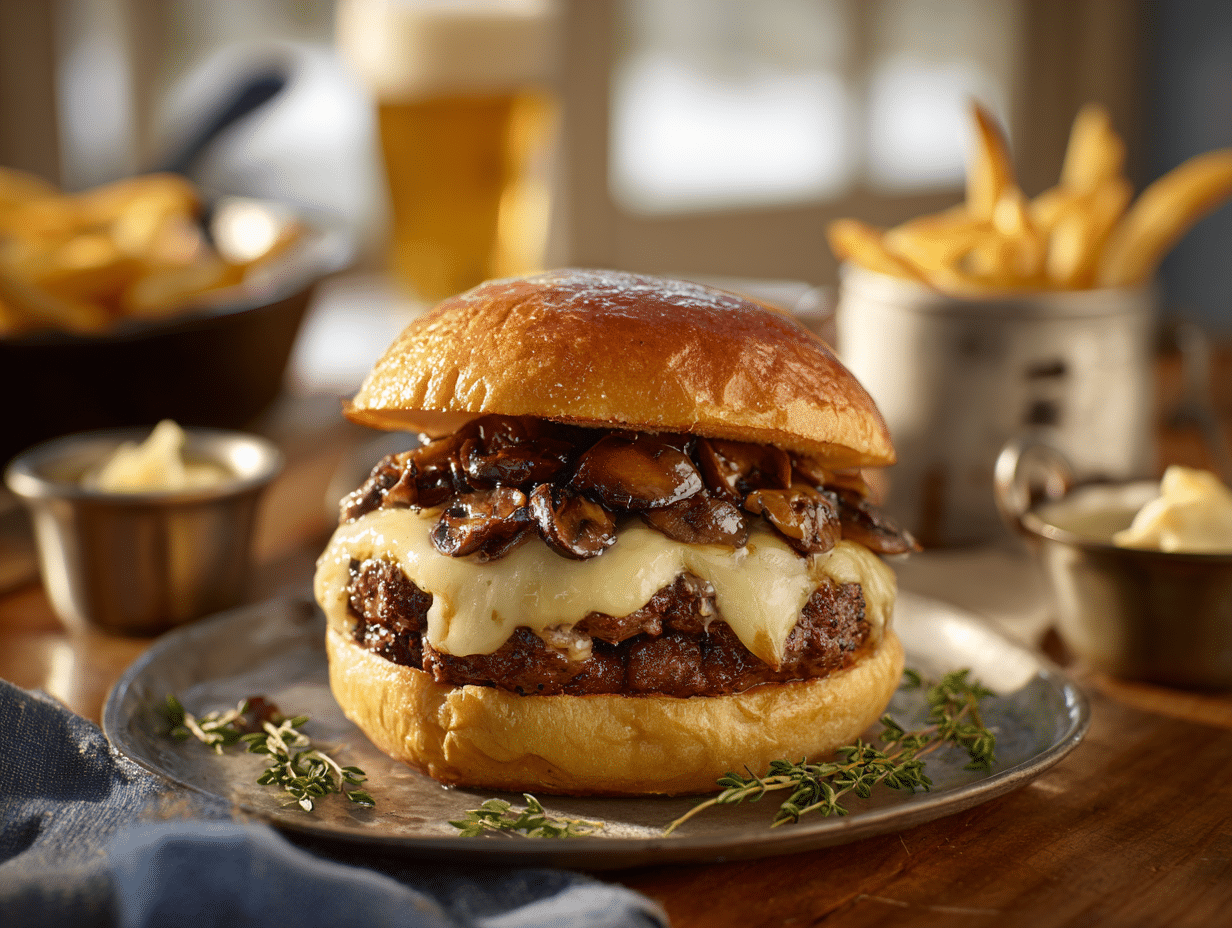
Culver’s-Style Mushroom and Swiss Butter Burger

Ingredients
For the Buns & Butter:
- 4 tbsp unsalted Wisconsin butter, softened for toasting the buns; choose high-fat butter for best flavor
- 4 whole soft bakery burger buns potato or brioche-style; split
For the Mushroom Topping:
- 1 tbsp unsalted butter for sautéing mushrooms
- 1 tbsp olive oil optional; helps even browning
- 12 oz cremini mushrooms, sliced 1/4-inch choose firm, dry mushrooms; avoid washing—wipe clean
- 2 cloves garlic, minced freshly minced for best aroma
- 1 tsp fresh thyme leaves or 1/2 tsp dried thyme
- ½ tsp kosher salt for mushrooms; season to taste
- ¼ tsp freshly ground black pepper for mushrooms
- 1 tbsp Worcestershire sauce adds savory depth
- 2 tbsp dry sherry or dry white wine optional; deglazes and adds aroma
- ¼ cup low-sodium beef broth creates a glossy glaze for mushrooms
For the Patties & Seasoning:
- 1.25 lb 80/20 ground chuck, very cold higher fat for buttery flavor and crisp edges
- 1 tsp kosher salt for patties
- ½ tsp freshly ground black pepper for patties
- ½ tsp onion powder classic diner-style seasoning
- ¼ tsp ground mustard subtle tang; optional
- 1 tbsp neutral oil (canola or grapeseed) for the skillet or griddle
For the Cheese & Build:
- 8 slices Swiss cheese 2 slices per burger for a lush melt
- 2 tsp Dijon mustard optional, for spreading on buns
- 1 tbsp mayonnaise optional, for spreading on buns
- 1 pinch flaky sea salt optional pinch to finish
Instructions
- Mise En Place (about 20 minutes): Soften the butter; split buns. Wipe mushrooms clean and slice 1/4-inch. Mince garlic, strip thyme leaves, and pre-mix patty seasoning (salt, pepper, onion powder, mustard). Chill beef until just before cooking. Warm an oven to 200°F/95°C for holding, if desired.
- Start the Mushrooms (4 minutes): Heat a 12-inch skillet over medium-high until hot, about 2 minutes. Add 1 tbsp butter and 1 tbsp olive oil. When shimmering, add mushrooms in an even layer. Cook undisturbed for 4 minutes to brown.
- Sauté and Season (6 minutes): Stir; add thyme, 1/2 tsp kosher salt, and 1/4 tsp pepper. Cook, stirring occasionally, until mushrooms are deep golden and concentrated, about 6 minutes. Add garlic and cook 30 seconds until fragrant.
- Glaze (2 minutes): Deglaze with sherry or white wine (if using); reduce for 1 minute. Add Worcestershire and beef broth; simmer 1 minute until glossy and saucy. Transfer mushrooms to a warm bowl; hold in the 200°F/95°C oven or cover to keep warm.
- Butter-Toast the Buns (3 minutes): Wipe the skillet lightly. Spread cut sides of buns with 4 tbsp softened butter. Toast cut-side down over medium heat (about 350°F/175°C surface temp) until deep golden, 2–3 minutes. Keep warm.
- Portion the Beef: Divide 1.25 lb ground chuck into 8 balls, about 2.5 oz each. Keep them cold; cold fat equals better frilly edges when smashed.
- Preheat the Griddle/Skillet (2 minutes): Heat a heavy skillet or griddle over medium-high to a surface temp of about 400°F/205°C. Add 1 tbsp neutral oil and heat until just smoking.
- Smash the First Batch (2 minutes on first side): Place 4 beef balls on the hot surface. Immediately cover each with a small square of parchment and press hard with a flat metal spatula until ~1/4-inch thick. Do not move; cook 2 minutes until the edges are brown and lacy and you see rendered fat bubbling.
- Flip, Cheese, and Finish (about 2 minutes): Scrape firmly under each patty to release the crust and flip. Top each patty with a slice of Swiss. Cook 1 minute, then add a teaspoon of water to the pan and cover briefly to steam-melt, 30–60 seconds. Transfer to a warm tray.
- Repeat the Second Batch (about 4 minutes): Smash-sear the remaining 4 patties the same way: 2 minutes first side, 1 minute after the flip, 30–60 seconds to melt cheese.
- Assemble (3 minutes): Spread Dijon and/or mayo lightly on bottom buns if using. Place one cheese-topped patty on each bun, stack a second patty, then spoon a generous quarter of the mushroom mixture over each. Cap with the top bun and add a tiny pinch of flaky salt to the crown.
- Serve: Enjoy immediately while the edges are crisp and the cheese is luxuriously melted.
Notes
Chef’s Tips:
- The Smash: Use a stiff metal spatula and a square of parchment to prevent sticking. Press within the first 10 seconds for best crust.
- Mushroom Browning: Don’t salt until after the first sear; early salt pulls moisture and inhibits caramelization.
- Butter Matters: A high-fat Wisconsin butter makes the buns deeply aromatic. For extra gloss, brush the tops with a whisper of melted butter just before serving.
- Cheese Melt: A small splash of water and a lid creates a quick steam melt without overcooking.
- Substitutions: Use baby bella mushrooms, or mix in a few shiitakes for extra umami. Swiss can be swapped for Emmental or Gruyère. For a plant-forward twist, use a sturdy plant-based patty and vegetable broth.
- Dietary Tweaks: Gluten-free buns toast beautifully; for low-carb, serve in lettuce wraps and reduce broth to keep mushrooms thick and glossy.