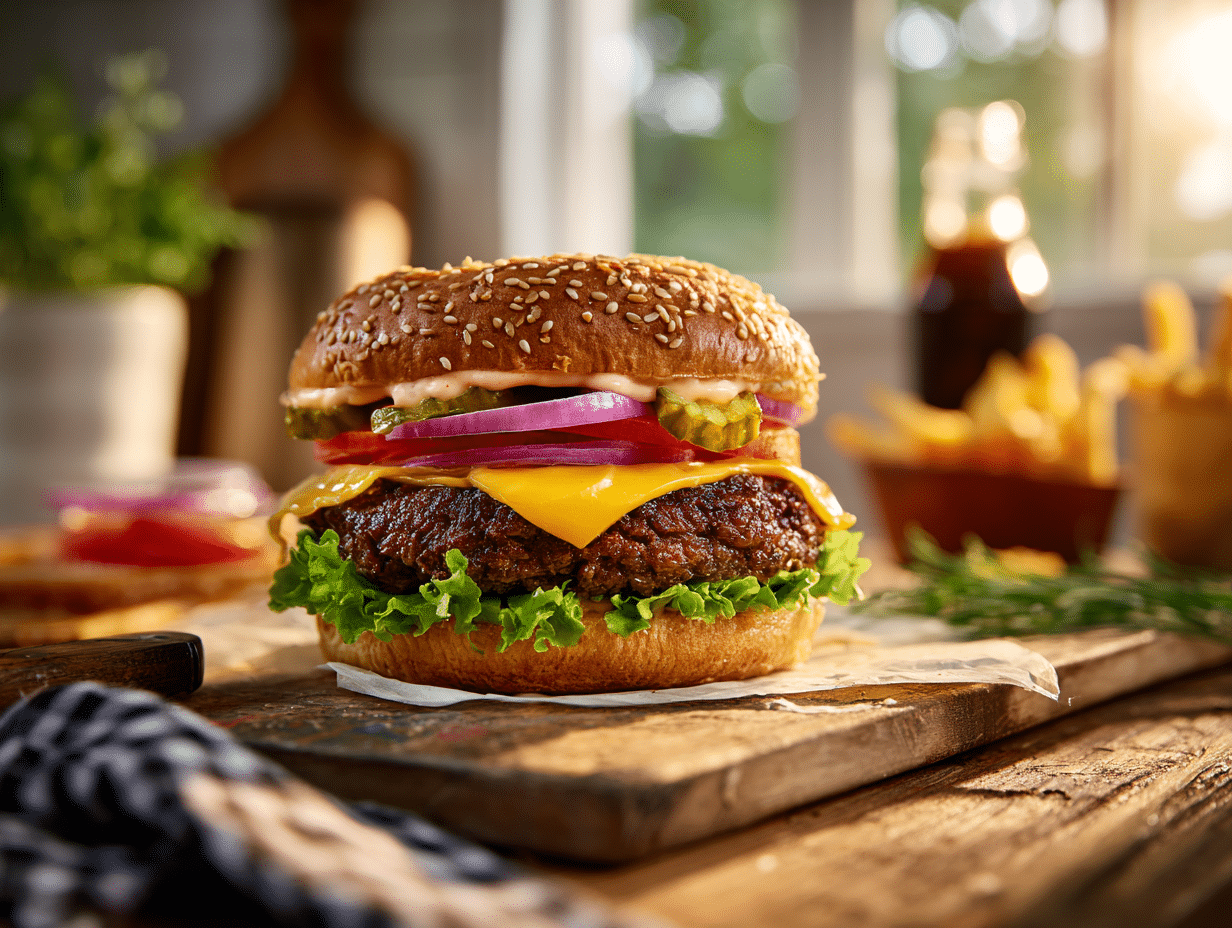
This is a copycat of the Hardee’s Original Thickburger — a 1/3-pound, 80/20 beef patty cooked over high heat with American cheese, lettuce, tomato, red onion, pickles, and the classic ketchup-mustard-mayo trio. It’s worth making at home because you get the charbroiled crust and genuine thickness that a fast-food line can’t consistently deliver, and the patties hold up well through a week of fridge or freezer storage.
The technique that matters
Two things decide whether this burger works. First, heat: you need your grill or cast-iron at 450–500°F before the patty touches it. Anything lower and you steam the meat instead of searing it — you lose the crust and the smoky edge that defines this burger. Second, patty prep: press a shallow thumbprint into the center of each raw patty so it cooks flat instead of puffing into a meatball. Don’t salt the beef until the moment before it hits the heat; salting early pulls moisture out and changes the texture. Skip the egg in the mix — it makes the patty mushy and you don’t need a binder for a patty this thick.
Substitutions that actually work
- 80/20 ground beef: This fat ratio is non-negotiable for juiciness at this thickness. Leaner blends will give you a dry, crumbly result. If your store only carries 85/15, mix in a tablespoon of softened butter per patty before forming.
- American cheese: It melts better than cheddar or Swiss at high heat. If you prefer real cheese, go with a young provolone — it melts cleanly without breaking.
- Red onion: White or yellow onion works fine raw. For a milder bite, soak slices in cold water for 10 minutes before building the burger.
- Dill pickles: Bread-and-butter pickles will shift the flavor profile toward sweet. Stick with dill for the classic result.
What can go wrong
- Patties shrink and curl: This happens when the fat renders faster than the muscle fibers relax. The thumbprint helps, but also make sure your patties are an even thickness edge-to-edge before cooking — thin edges cook faster and pull the whole patty into a dome.
- Cheese won’t melt properly: If you add the cheese too late, it just sits on top. Add it in the last 60–90 seconds of cook time and cover the patty with a metal bowl or lid to trap steam and melt it through.
- Patties fall apart when flipped: Usually means the patties were formed too loosely or handled too much after forming. Pack them firmly once, then leave them alone. Refrigerate formed patties for at least 20 minutes before cooking — they hold together much better cold.
- Bun gets soggy before you’re ready to eat: If you’re prepping ahead, keep condiments and tomato separate and assemble right before eating. Toasting the cut side of the bun creates a barrier that slows sogginess significantly.
- Uneven cook on a gas grill: Hot spots cause one side to char while the other stays pale. Rotate the patty 90 degrees halfway through each side — don’t just flip once and walk away.
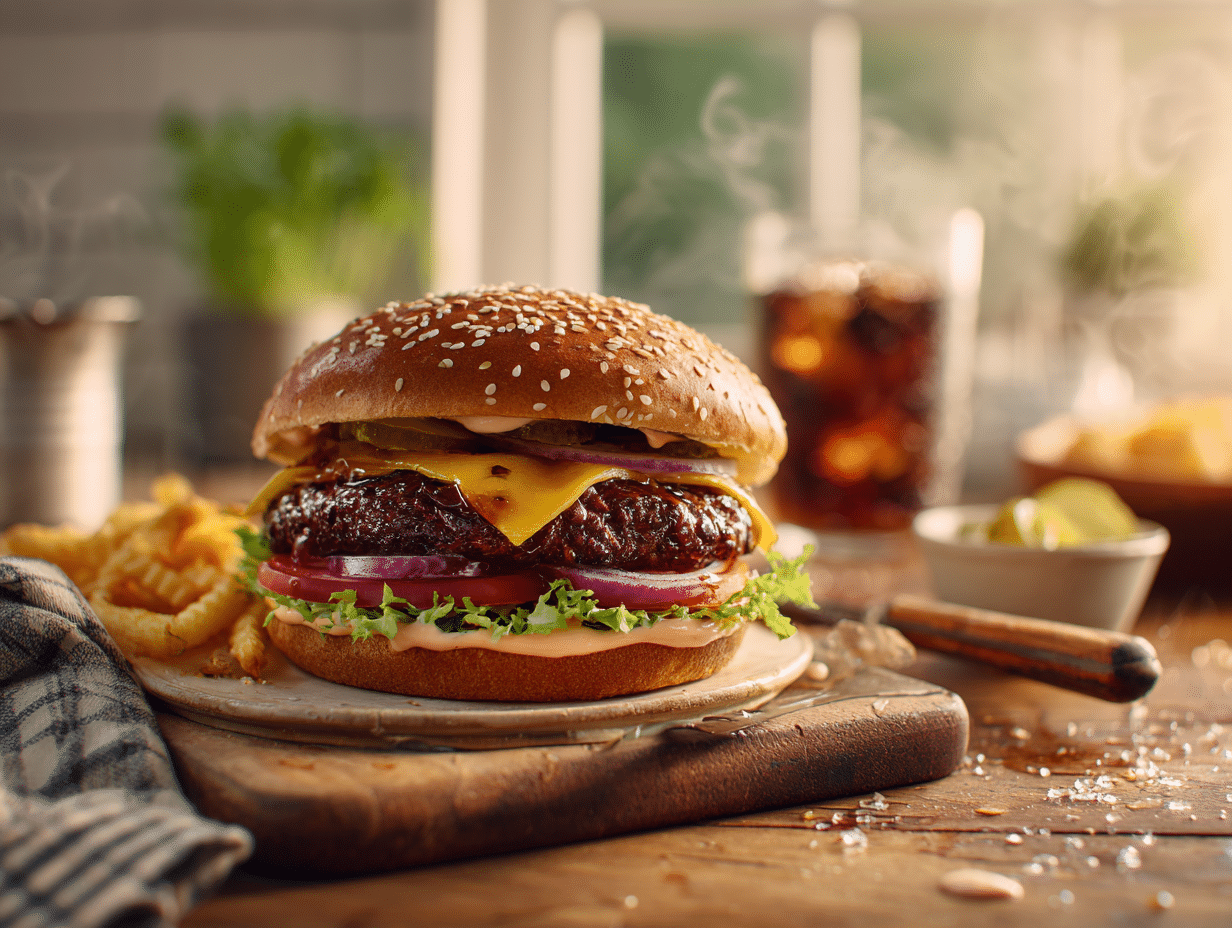
Original-Style Thickburger (Hardee’s-Inspired)

Ingredients
For the Burger Sauce:
- ⅓ cup mayonnaise (full-fat) use a high-quality, tangy mayo for best balance
- 2 tbsp ketchup classic American style
- 2 tsp yellow mustard bright, ballpark-style mustard
- 1 tsp dill pickle brine from the pickle jar; adds acidity
- ¼ tsp smoked paprika optional, for subtle smokiness
For the Produce & Toppings:
- 4 pieces green leaf lettuce crisp, rinsed, and well-dried
- 2 medium ripe tomatoes, sliced 1/4-inch thick choose firm, in-season tomatoes
- 1 small red onion, thinly sliced into rings about 1/2 cup slices
- 12 pieces dill pickle slices crinkle-cut preferred for texture
For the Beef & Buns:
- 1 ⅓ lb ground beef (80/20, preferably chuck or chuck/brisket blend) cold, freshly ground if possible
- 1 tsp kosher salt Diamond Crystal preferred
- ½ tsp freshly ground black pepper medium grind for bite
- 4 whole sesame seed hamburger buns brioche or potato with sesame seeds
- 2 tbsp unsalted butter, softened for toasting buns
- 4 slices American cheese deli-cut for better melt
- 1 tbsp neutral oil (canola or grapeseed) for skillet cooking
Instructions
- Make the Sauce (5 minutes): In a small bowl, whisk together the mayonnaise, ketchup, yellow mustard, dill pickle brine, and smoked paprika until smooth. Let it stand 10 minutes to marry flavors while you prep the produce.
- Prep the Produce (10 minutes): Rinse and pat the lettuce fully dry. Slice tomatoes into neat 1/4-inch rounds. Thinly slice the red onion into crisp rings. Keep everything chilled for maximum crunch.
- Portion and Shape Patties (8 minutes): Divide the ground beef into four 1/3-lb (about 5.3 oz) portions. Gently form 4 1/2-inch wide, 3/4-inch thick patties with a shallow thumbprint in the center to prevent doming. Avoid overworking the meat to keep it tender.
- Preheat Your Cooking Surface (10 minutes): For a grill, heat to medium-high, about 450°F / 232°C. For a cast-iron skillet, heat over medium-high until just smoking, then add the neutral oil and swirl to coat.
- Season Just Before Cooking (30 seconds): Sprinkle patties evenly with kosher salt and black pepper on both sides.
- Sear the First Side (3–4 minutes): Place the patties onto the hot grill or skillet. You should hear a lively sizzle. Cook undisturbed until the edges darken and the bottom develops a deep brown crust with a hint of char.
- Flip, Finish, and Melt (2 1/2–3 1/2 minutes): Flip the patties. Top each with a slice of American cheese during the last 30–45 seconds. Aim for an internal temperature of 135°F / 57°C for medium, or cook to 160°F / 71°C for well-done. Juices should run mostly clear and the cheese glossy and fully melted.
- Toast the Buns (45–60 seconds): Spread the cut sides of the buns lightly with softened butter. Toast, cut side down, on the grill or skillet until golden and fragrant.
- Assemble (2–3 minutes): Spread 1 tablespoon of sauce on each bottom bun. Layer 3 dill pickle chips, then the cheeseburger patty. Add onion rings, 2 tomato slices, and a lettuce leaf. Spread a thin lick of sauce on the top bun (or a light stripe of ketchup and mustard if you prefer the classic trio) and cap the burger.
- Rest, then Serve (2 minutes): Let the burgers sit for 1–2 minutes so juices settle. The bun should feel warm, the cheese drapey, and the aroma smoky-tangy.
Notes
Chef’s Tips:
- Grind Matters: For next-level flavor, ask your butcher for an 80/20 chuck–brisket blend. Chill the meat and your hands before shaping to maintain a loose, tender texture.
- Char Without a Grill: A preheated cast-iron skillet delivers superb crust. For a faux-char note, add a whisper of smoked paprika to the sauce (as written) or finish patties with a quick covered melt to trap aromas.
- Juiciness Insurance: The thumbprint prevents doming and promotes even cooking. Resist pressing the patty while cooking—pressing forces out flavorful juices.
- Make it Your Own: Swap American cheese for sharp cheddar, pepper jack, or white American. Use butter lettuce for a softer bite or iceberg for extra crunch.
- Dietary Tweaks: For gluten-free, use GF buns. For dairy-free, choose a plant-based American-style slice and toast buns in oil. For a lighter option, try a 90/10 beef blend and brush with a touch of beef tallow for richness.
Nutrition
Frequently asked questions
Can I cook these patties ahead and reheat them later?
Yes — cook the patties to 160°F (71°C), let them cool completely, then refrigerate for up to 4 days or freeze for up to 3 months. Reheat in a covered skillet over medium heat with a splash of water to restore moisture, not in a microwave, which turns the crust rubbery.
What’s the best way to freeze a batch of raw patties so they don’t stick together?
Stack them with a square of parchment paper between each patty before freezing. Once frozen solid (about 2 hours), transfer to a zip-lock bag and press out the air — they’ll keep their shape and separate cleanly when you pull out just what you need.
Do I need a grill, or can I get a good result in a cast-iron skillet?
A cast-iron skillet works well and is actually easier to control than a grill for this thickness. Get it ripping hot over high heat, add a light film of neutral oil, and you’ll get a solid crust — you just won’t have grill marks or smoke flavor, so consider adding a tiny pinch of smoked paprika to the seasoning if that matters to you.
How do I know when a 1/3-pound patty is done without cutting into it?
Use an instant-read thermometer and pull the patty at 160°F (71°C) — that’s the safe internal temperature for ground beef. At that thickness, timing alone isn’t reliable because grill temperatures vary too much; a thermometer is the only honest answer.
Can I use a leaner beef blend to make it healthier?
You can, but expect a noticeably drier patty. If you go below 80/20, the burger loses the juiciness that makes this style work. A better trade-off is keeping the 80/20 beef and simply using a smaller patty — you get the right texture with less total fat per serving.
If you liked this one
- Carl’s Jr Philly Cheesesteak Burger
- Perfect Bacon Double Cheeseburger
- BBQ Cheeseburger Recipe
- Angus Bacon Guacamole Burger