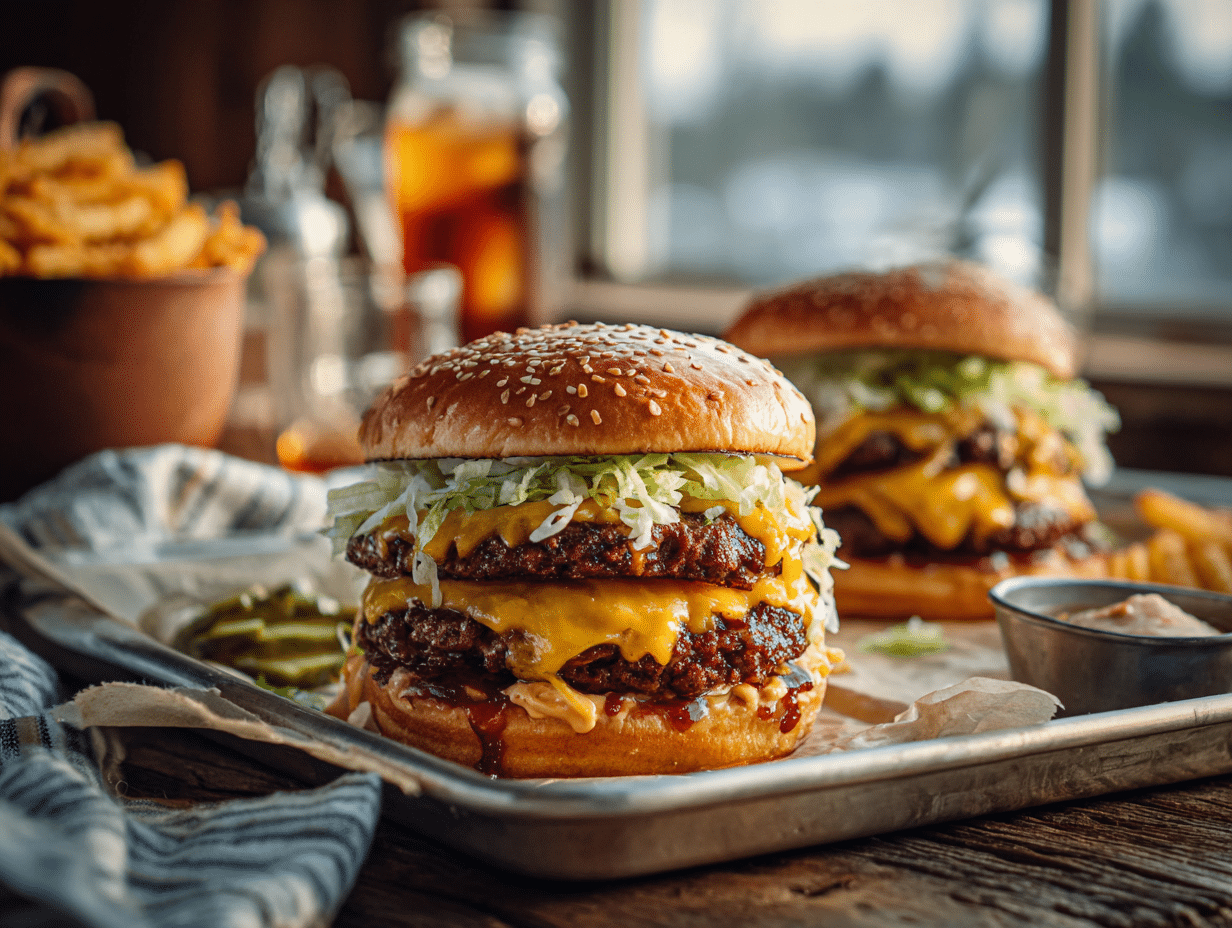
This is a homemade take on the Big Hardee double cheeseburger — two char-grilled beef patties, American cheese, shredded iceberg, pickles, onion, and a tangy mayo-based special sauce on a sesame seed bun. The honest reason to make it: you get the same smoky, saucy flavors you remember, but with better beef and a sauce you can actually taste. It comes together in 35 minutes and scales cleanly for a crowd.
The short version of why this works
Two things matter most here. First, the char. Thin patties cooked over direct high heat — grill grates, not a flat pan — develop a browned, slightly crisp exterior fast, before the inside overcooks and dries out. That surface char is what makes this taste like the real thing. Second, the sauce ratio. The vinegar in the special sauce isn’t decoration; it cuts through two patties and two slices of American cheese without making the whole sandwich taste sour. Get those two things right and everything else falls into place.
Smart swaps
- American cheese: Don’t substitute cheddar or Swiss here — American melts into the patties in a way that thicker, drier cheeses won’t. If you can’t find American slices, a white American or mild processed cheese works fine.
- Sweet pickle relish: Bread-and-butter relish is a reasonable stand-in if that’s what you have. Dill relish changes the flavor profile noticeably — use it only if you prefer a sharper sauce.
- Yellow mustard: Classic ballpark-style is correct. Dijon or spicy brown will overpower the sauce and pull it in the wrong direction.
- Full-fat mayonnaise: Skip the light mayo — the sauce turns thin and watery. Full-fat is the right call here.
Make-ahead notes
The special sauce keeps well — mix it up to 5 days ahead and store it covered in the fridge. The flavor actually improves after a few hours as the vinegar and relish settle in, so making it the night before a cookout is a smart move. Raw patties can be formed, stacked between parchment squares, and refrigerated up to 24 hours or frozen for up to 2 months; thaw overnight in the fridge before grilling. Cooked patties reheat acceptably in a covered skillet over low heat with a splash of water, but they’re noticeably better fresh off the grill, so for a crowd, stagger your cooking in batches rather than cooking everything ahead.
What can go wrong
- Patties puff up in the middle: Press a shallow thumb indent into the center of each raw patty before it hits the grill. Without it, the center swells and you get uneven cooking and a bun that tips sideways under the weight.
- Cheese won’t melt properly: Add the cheese slice in the last 60 seconds of cook time and close the grill lid. If you’re cooking indoors, add a small splash of water to the pan and cover it briefly — the steam does the job.
- Bottom bun goes soggy: Sauce on the top bun, not the bottom. The bottom bun sits under two patties and their juices; adding sauce there turns it to mush before anyone takes a bite.
- Patties stick to the grates: Make sure the grill is fully preheated and the grates are clean and oiled before the patties go on. A cold or dirty grate tears the crust and the patty falls apart when you try to flip it.
- Undercooked beef: These are thin patties and they cook fast, but fast doesn’t mean done — use an instant-read thermometer and pull them at 160°F (71°C). Color alone isn’t reliable with thin patties.
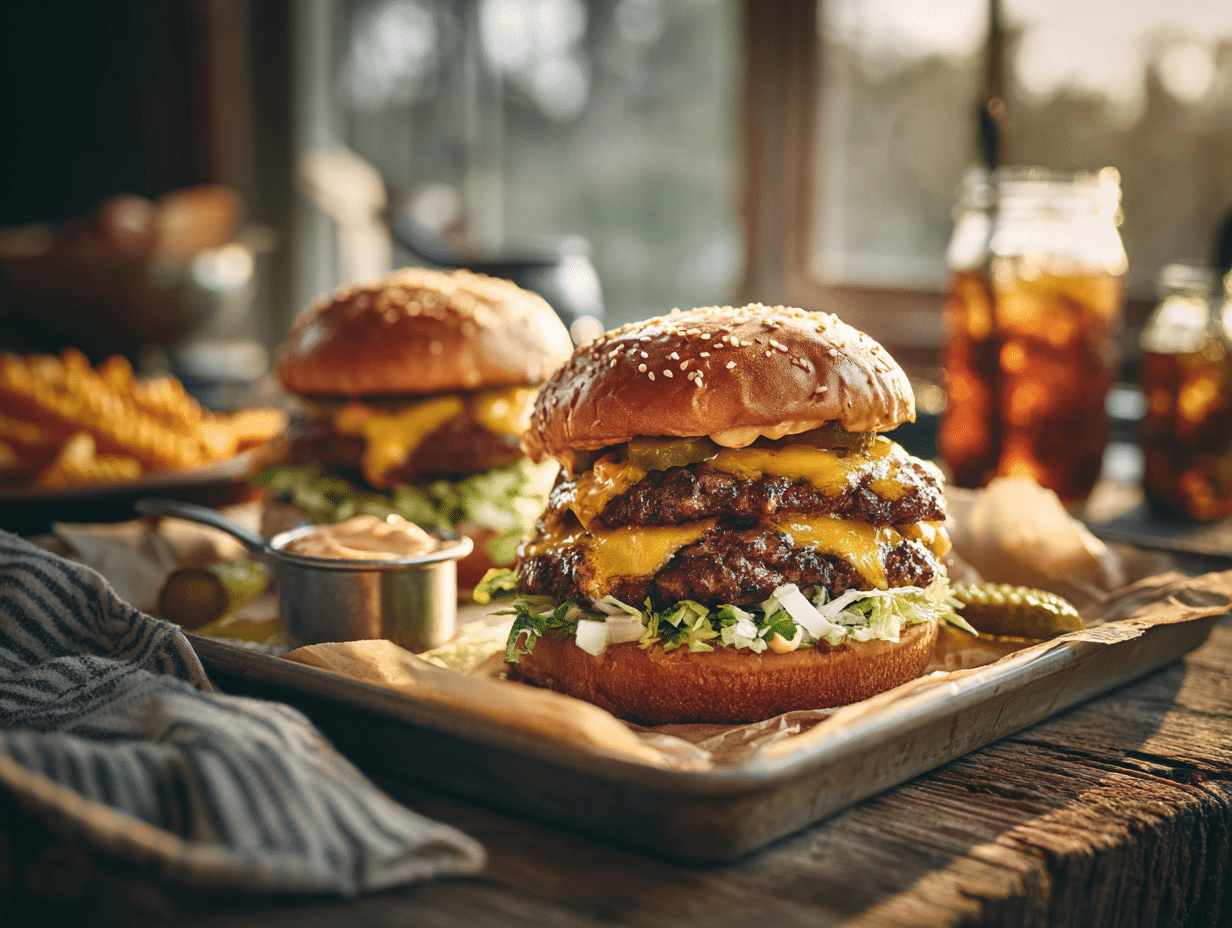
Big Hardee–Style Double Cheeseburger (Chef’s Homage)

Ingredients
- ⅓ cup mayonnaise (full-fat) use a good-quality, full-fat mayo for best mouthfeel
- 2 tbsp ketchup classic American-style ketchup
- 1 tbsp sweet pickle relish look for a crisp, bright relish; drain if watery
- 1 tsp yellow mustard classic ballpark-style
- 1 tsp distilled white vinegar for brightness and balance
- ½ tsp granulated sugar just a touch to round the edges
- ¼ tsp paprika sweet or smoked; smoked adds depth
- ¼ tsp onion powder
- ⅛ tsp garlic powder
- 1 pinch kosher salt to taste, for the sauce
- 1 cup iceberg lettuce, finely shredded chill and dry well for maximum crunch
- 2 tbsp white onion, finely minced soak in ice water 5 minutes to mellow, then drain well
- 8-10 pieces dill pickle chips pat dry to prevent soggy buns
- 12 oz 80/20 ground beef divide into four 3 oz patties; keep very cold
- 1 tsp kosher salt for seasoning the patties
- ½ tsp freshly ground black pepper
- ½ tsp granulated garlic (optional) for a subtle savory boost
- 1 tbsp neutral oil (canola or grapeseed) for skillet/griddle searing
- 2 whole sesame seed hamburger buns, split bakery-style, about 4-inch diameter
- 1 tbsp unsalted butter, softened for toasting buns
- 4 slices American cheese deli-cut melts best; 2 slices per burger
- 2 tsp yellow mustard (optional, for mustard-sear)
Instructions
- Make the Sauce (5 minutes + optional rest): In a small bowl, whisk together mayonnaise, ketchup, sweet relish, yellow mustard, white vinegar, sugar, paprika, onion powder, garlic powder, and a pinch of salt until smooth and peachy-orange. Cover and let stand 10 minutes to bloom flavors (or chill up to 24 hours for deeper integration).
- Prep the Crisp Toppings (5 minutes): Finely shred the iceberg lettuce and keep it chilled. Mince the white onion, soak in ice water for 5 minutes to mellow, then drain and pat dry. Pat dill pickle chips dry as well—this preserves bun structure.
- Portion and Shape the Patties (5 minutes): Divide the 12 oz ground beef into four 3 oz portions. Gently form thin, even patties about 4 inches wide (roughly 1/4-inch thick). Do not overwork; visible flecks of fat should remain. Keep patties chilled until cooking.
- Preheat Your Cooking Surface (3–5 minutes): For a grill, preheat to 450–500°F (232–260°C). For a cast-iron skillet or griddle, heat over medium-high until a drop of water skitters and evaporates on contact—about 450°F (232°C). For an oven broiler, preheat on High to about 500°F (260°C) and place a cast-iron pan on the top rack to preheat with it.
- Toast the Buns (1–2 minutes): Lightly butter the cut sides of the sesame buns. Toast cut-side down on the grill or skillet until deeply golden at the edges (about 1–2 minutes). Aim for a uniform, golden-brown crust—your moisture barrier. Keep warm.
- Season and Sear the Patties (4–6 minutes): Season each patty with kosher salt, black pepper, and optional granulated garlic just before cooking. Film the hot skillet/griddle lightly with neutral oil. Sear patties for 1.5–2 minutes on the first side until a mahogany crust forms and edges look slightly browned. If using the mustard-sear, brush or squeeze a thin layer of yellow mustard onto the raw top side just before flipping. Flip, lay a slice of American cheese on each patty, and cook another 1.5–2 minutes until the cheese melts and the patties reach an internal temperature of about 160°F (71°C) for fully cooked. Grill or broiler method: mirror the timing; keep a close eye on melting cheese and pull when glossy and drapey.
- Build the Big Hardee–Style Stack (2 minutes): Spread a generous spoon of sauce on both the heel (bottom bun) and crown (top bun). On the heel, layer shredded lettuce, pickles, and a sprinkle of onion. Add one cheesy patty, then the second cheesy patty. Spoon on a touch more sauce if desired. Cap with the crown.
- Rest and Serve (1 minute): Let the burger sit for 60 seconds so juices settle and the sauce warms slightly. Serve immediately while the cheese is glossy and the bun is still crisp to the touch.
Notes
Chef’s Tips:
- Keep the beef cold so fat stays solid, yielding a better sear and juicier patties.
- Dry your pickles and lettuce well—excess moisture thins the sauce and softens the bun.
- Toast buns more than you think; a deeply golden interior is your moisture barrier.
- For extra fast-food flair, brush a whisper of yellow mustard onto the patties right before flipping (mustard-sear).
- Substitutions: Use 85/15 beef for leaner; turkey or a quality plant-based patty for dietary needs; gluten-free sesame buns as needed; lactose-free American-style slices if dairy-sensitive.
- For a char-broiled hint indoors, add a small piece of smoking wood to a hot, dry skillet for 30–45 seconds before searing (use with good ventilation), or add a drop of liquid smoke to the sauce.
- Always Prioritize Food Safety: Cook ground beef to 160°F (71°C) unless following specific reduced-risk methods.
Nutrition
Your questions, answered
Can I make this on a stovetop instead of a grill?
Yes, a cast iron skillet over high heat is the best indoor option. You won’t get the same smoke, but you’ll get a solid sear — preheat the pan until it’s very hot before the patties go in, and don’t move them until they release cleanly on their own.
How do I keep everything organized when I’m making these for a big group?
Pre-mix the sauce, form all the patties, and set up a toppings station before you light the grill. Cook in waves of four patties at a time so the grill temperature stays consistent and you’re not juggling too many at once.
Can I use frozen pre-formed beef patties instead of making my own?
You can, but cook them from thawed, not frozen — frozen patties on a hot grill char on the outside before the inside reaches 160°F. Thaw them overnight in the fridge and pat them dry before grilling.
What’s the best way to toast the buns without burning them?
Place them cut-side down on the grill or in a dry skillet for 30 to 45 seconds over medium heat — that’s all they need. Pull them the moment they’re golden; buns go from toasted to scorched quickly, especially over residual grill heat.
More burger recipes to try
- Perfect Bacon Double Cheeseburger
- Carl’s Jr Philly Cheesesteak Burger
- Flame-Kissed Bacon Double Perfection
- Triple Cheeseburger Copycat Recipe