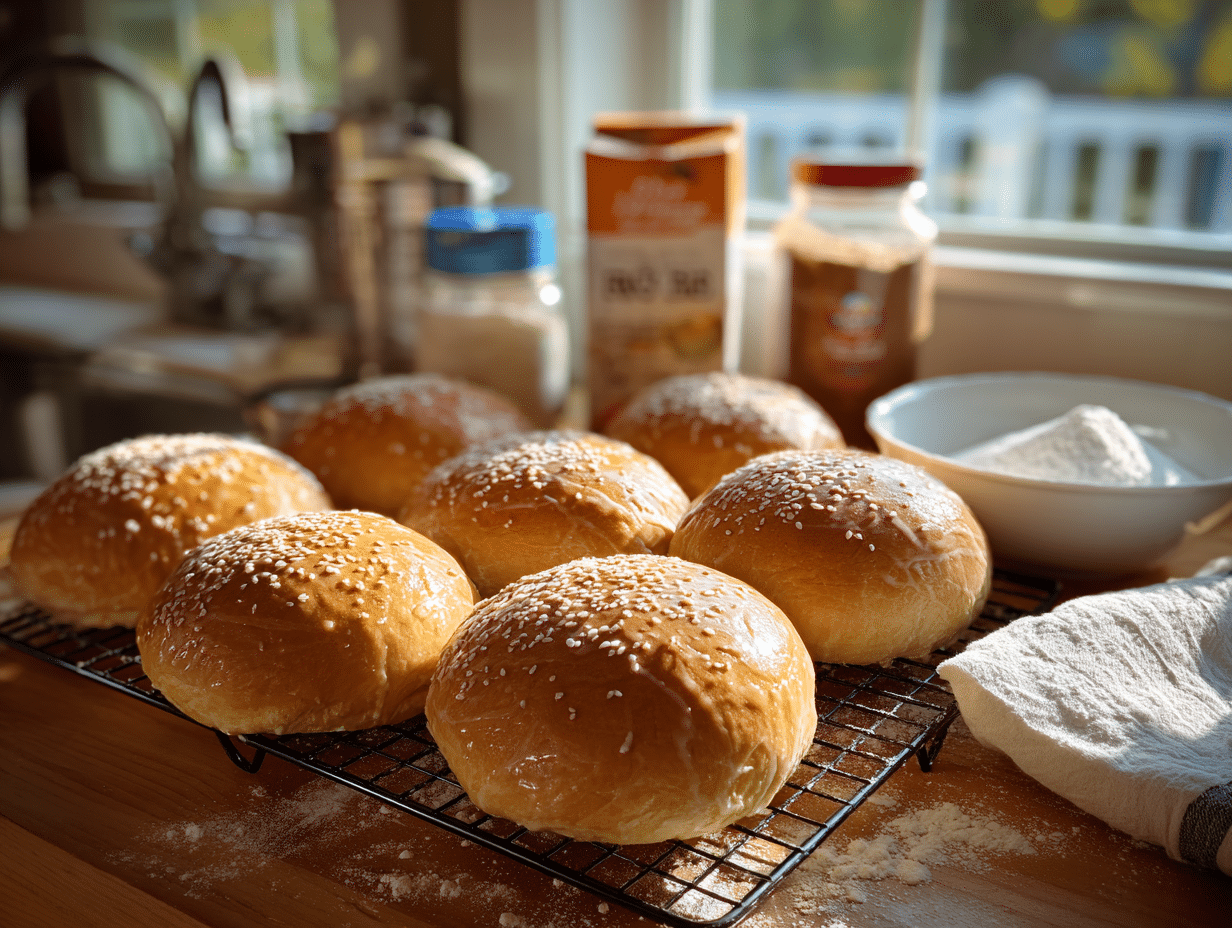
These are yeasted, lightly sweet sandwich buns made with plant milk and neutral oil instead of eggs and dairy. They bake up soft with a tender crumb and a golden top — and they hold together under a loaded burger without going soggy. The real reason to make them at home is control: you get the right size, the right softness, and a freezer stash ready for the whole week.
The technique that matters
Two things decide whether these buns are fluffy or dense. First, your plant milk temperature: it needs to be between 100°F and 110°F when it hits the yeast. Too cool and the yeast sits there doing nothing; too hot and it dies. Use a thermometer — guessing costs you the whole batch. Second, the second proof after shaping is not optional. Once you’ve formed the rounds and flattened them slightly, they need a full 30 to 45 minutes to puff back up before they go in the oven. Rushing this step is the single most common reason homemade buns bake up tight and bread-like instead of pillowy. Oat milk gives a noticeably richer crumb than almond milk here — if you want the closest match to a classic diner bun, oat milk is the better call.
Troubleshooting
- Buns spread flat instead of doming: The dough was too warm or too wet going into the second proof. Chill it for 10 minutes before shaping, and make sure you’re not over-flattening the rounds — press them to about 3/4 inch thick, not thinner.
- Crust is pale after 20 minutes: Oven temperature varies. Brush the tops with a second coat of plant milk at the 15-minute mark and give them another 3 to 5 minutes. A pale bun also tends to feel gummy inside.
- Buns are dense and chewy: Gluten was overdeveloped, usually from kneading too long on a warm day when the dough is already active. Stop kneading as soon as the dough is smooth and springs back when poked — don’t go past that point.
- Sesame seeds fall off after baking: They need to go on before the second proof, not right before the oven. Pressing them gently into the milk-brushed surface gives them time to grip the dough as it rises.
- Buns stick together in storage: They must be fully cool — at least an hour at room temperature — before you stack or bag them. Residual steam turns the crust tacky and makes them tear when you pull them apart.
Ingredient notes
- Plant milk: Oat and soy milk both have enough fat and protein to produce a soft, slightly rich crumb. Almond milk works but gives a lighter, slightly drier result. Avoid anything with added flavors like vanilla.
- Neutral oil: Canola, grapeseed, or refined avocado oil all work. Skip unrefined coconut oil — it adds a detectable coconut flavor that fights the savory toppings on most burgers.
- Whole wheat swap: If you replace up to one-third of the all-purpose flour with whole wheat, add one extra tablespoon of plant milk to compensate for the higher absorption. Going beyond one-third makes the buns noticeably heavier.
- Sugar: Plain white sugar is fine. Cane sugar, coconut sugar, and light brown sugar all work — brown sugar adds a faint molasses note that pairs well with smoky burger fillings.
Keeping and reheating
Store baked, fully cooled buns in an airtight bag at room temperature for up to 3 days — after that they start to dry out. For longer storage, freeze them individually wrapped in plastic, then bagged together, for up to 2 months. Thaw at room temperature for about an hour, or wrap a frozen bun in a damp paper towel and microwave for 30 to 40 seconds. For the best texture, split and toast the thawed bun cut-side down in a dry skillet over medium heat for 60 to 90 seconds — it firms up the crumb so it doesn’t compress under the patty and toppings. If you’re prepping for the week, bake a full batch, freeze all of them, and pull out what you need each day rather than leaving the whole batch at room temperature.
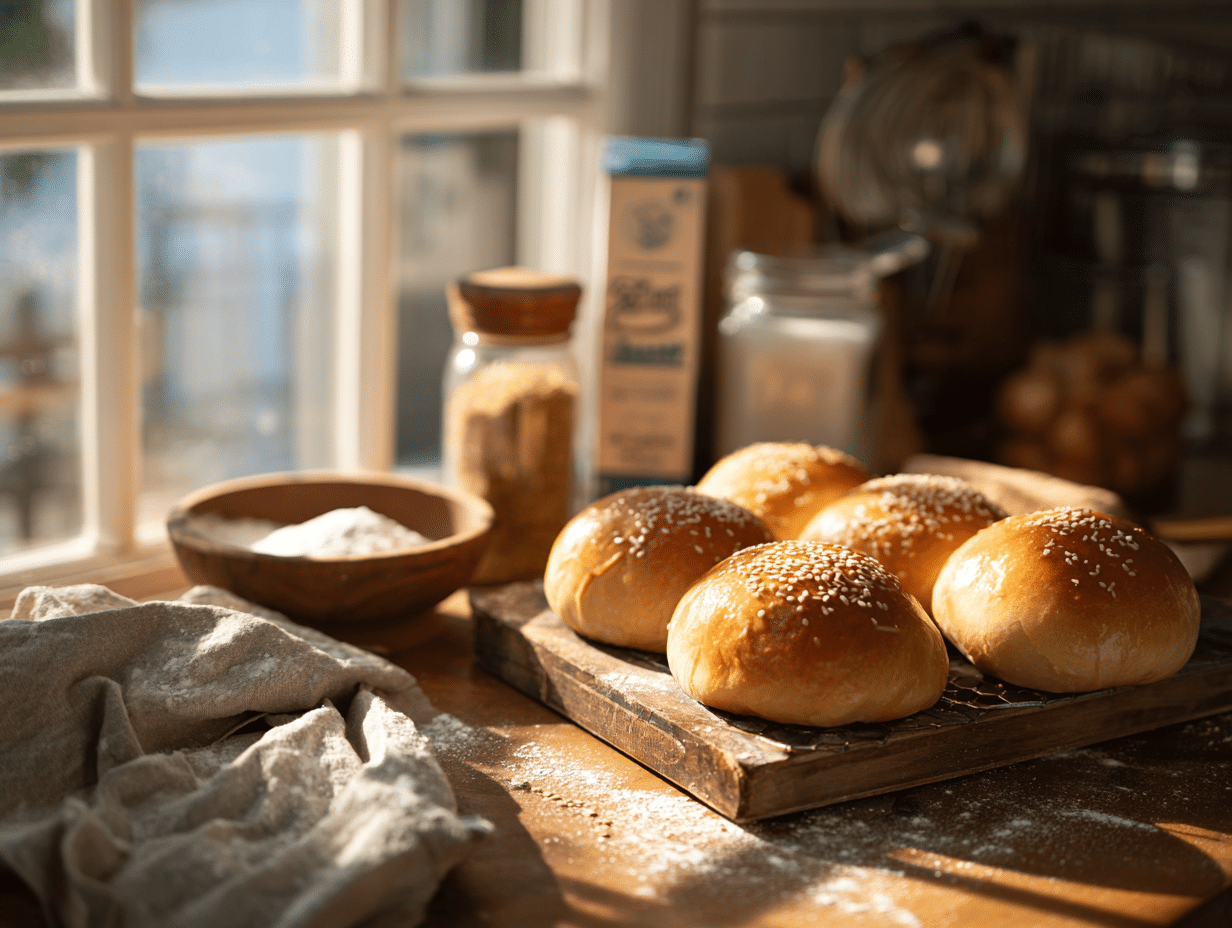
Fluffy Vegan Burger Buns

Ingredients
For the Burger Bun Dough:
- 1 cup unsweetened almond milk warmed to 110°F (43°C) – should feel warm, not hot
- 2 ¼ teaspoons active dry yeast or one packet
- 2 tablespoons organic cane sugar
- 3 cups all-purpose flour plus up to 1/2 cup more, as needed
- 1 teaspoon fine sea salt
- 3 tablespoons neutral vegetable oil such as grapeseed or canola
For the Topping:
- 2 tablespoons unsweetened almond milk for brushing tops before baking
- 1 tablespoon sesame seeds optional, for garnish
Instructions
- In a large mixing bowl, combine the warm almond milk, sugar, and active dry yeast. Stir gently and let sit for 10 minutes until foamy—this signals the yeast is active and ready.
- Add in vegetable oil and sea salt. Stir to combine.
- Gradually add in flour, one cup at a time, mixing with a wooden spoon or dough hook attachment on a stand mixer. When the dough begins to form a shaggy mass, transfer it to a lightly floured surface and knead for about 8-10 minutes until it becomes soft, elastic, and slightly tacky but not sticky.
- Place the dough in a lightly oiled bowl, cover with a clean kitchen towel or plastic wrap, and let it rise in a warm spot for 1 hour, or until doubled in size.
- After rising, gently deflate the dough and divide it into 8 equal pieces. Shape each into a tight ball by tucking edges underneath and rolling gently in a circular motion against the counter.
- Place each dough ball onto a parchment-lined baking sheet, spaced at least 2 inches apart. Press each one slightly to flatten into a bun shape. Cover loosely and let them rise again for 25–30 minutes until slightly puffy.
- Preheat your oven to 375°F (190°C). Brush the tops of buns with almond milk and sprinkle sesame seeds if using.
- Bake for 18–20 minutes until the tops are golden brown. Cool on a wire rack for at least 10 minutes before slicing.
Notes
- You can substitute any plant milk, but oat or soy milk adds a richer texture than almond.
- For a quicker rise, preheat your oven to 200°F (93°C), then shut it off, and place the dough in the warm oven.
- For whole wheat buns, replace 1 cup of all-purpose flour with whole wheat flour—just add an extra tablespoon of liquid if dough is too stiff.
Nutrition
Your questions, answered
Can I make the dough the night before?
Yes — after the first proof, punch the dough down, cover it tightly, and refrigerate it overnight. The next day, let it sit at room temperature for 30 minutes before shaping, then proceed with the second proof as normal. Cold fermentation actually improves the flavor slightly.
How do I know when the dough has proofed enough during the first rise?
It should roughly double in size, which takes 60 to 90 minutes depending on how warm your kitchen is. The reliable test: poke the dough with a floured finger — if the indent springs back slowly and only halfway, it’s ready. If it springs back immediately, give it more time.
Can I make smaller slider-size buns with this recipe?
Yes. Divide the dough into 12 pieces instead of 8 and reduce the bake time to about 14 to 16 minutes, checking for a golden top. The second proof time stays the same — don’t skip it just because they’re smaller.
My yeast didn’t foam after 10 minutes — what went wrong?
The yeast is either dead or the milk was the wrong temperature. Toss the mixture and start over with fresh yeast and milk that’s been measured with a thermometer to land between 100°F and 110°F. Using yeast that’s past its expiration date is the most common culprit.
Try these next
- Beyond Western Bacon Cheeseburger
- Beyond Famous Star Copycat
- Veggie Sauce Burger Perfection
- Chef’s McPlant Burger Recreation