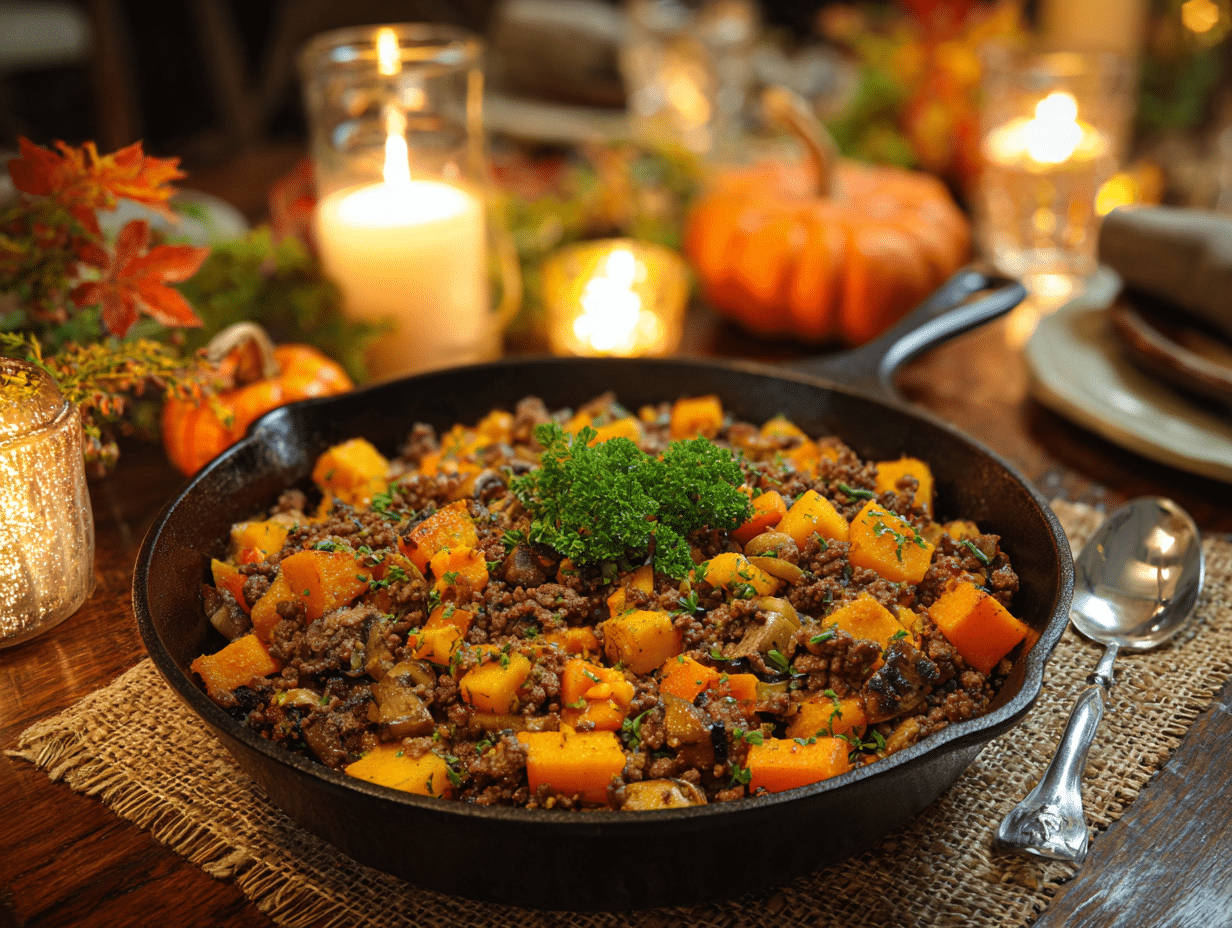
This is a one-pan ground beef skillet with butternut squash, cremini mushrooms, and warm spices — cinnamon, nutmeg, and sage — finished with a splash of apple cider vinegar. It comes together in a single skillet, which means less cleanup and a dinner that actually fits into a busy weeknight. The flavor is savory and a little earthy, not sweet, and it reheats well.
Before you start
Two things make or break this recipe. First, get the squash cubes dry before they hit the pan — pat them with a paper towel if they look wet. Wet squash steams instead of browning, and you lose the caramelized edges that give the dish most of its flavor. Second, brown the beef in batches if your skillet is crowded. Piling too much meat in at once drops the pan temperature and the beef turns gray and watery rather than getting a proper sear. A good sear on the beef means more fond on the bottom of the pan, and that fond is what makes the whole skillet taste like it took longer than it did.
Shopping notes
- Butternut squash: Pre-cut cubes from the produce section save real time and are worth the small price premium — the squash is one of the harder vegetables to break down safely at home.
- Cremini mushrooms: Standard white button mushrooms work fine as a swap, but creminis have more flavor. Either way, don’t rinse them under water — wipe them clean with a damp cloth so they don’t absorb moisture before cooking.
- Ground sage: Rubbed sage and ground sage are not the same. Ground sage is more concentrated; use about half as much if that’s what you have.
- Apple cider vinegar: Don’t skip it or substitute white vinegar. The mild fruitiness of ACV is what keeps the dish from tasting flat at the end.
Make-ahead notes
This skillet holds up better than most ground beef dishes after a day or two in the fridge — the spices actually deepen overnight. Store it in an airtight container for up to 4 days. To reheat, add a tablespoon of water or broth to the pan before warming over medium-low heat; this prevents the squash from drying out and sticking. For freezing, portion it into individual containers before freezing and use within 2 months — the squash softens a bit after thawing but the flavor stays solid. Thaw overnight in the fridge rather than on the counter, and reheat to 165°F if you’re unsure how long it’s been sitting.
Mistakes to avoid
- Adding the spices too late: Cinnamon, nutmeg, and sage need a minute or two in the hot fat with the aromatics to bloom properly. Stirring them in at the end leaves them tasting raw and dusty.
- Not draining excess fat: Depending on the fat content of your ground beef, you may need to drain the pan after browning. Leaving too much fat behind makes the finished dish greasy and mutes the spice flavors — skip the egg in the mix if you’re tempted to add a binder, it makes the texture mushy and holds onto grease.
- Cutting the squash too large: Chunks bigger than ¾ inch won’t cook through in the same time as the rest of the ingredients. Keep them uniform and on the smaller side so everything finishes together.
- Overcrowding the mushrooms: Add them in a single layer and resist stirring for the first couple of minutes. Mushrooms release a lot of water; crowding them means they braise instead of brown, and you get a soggy skillet.
- Skipping the vinegar at the end: The dish can taste heavy without it. A small amount of acid at the finish pulls all the flavors into focus — don’t leave it out.
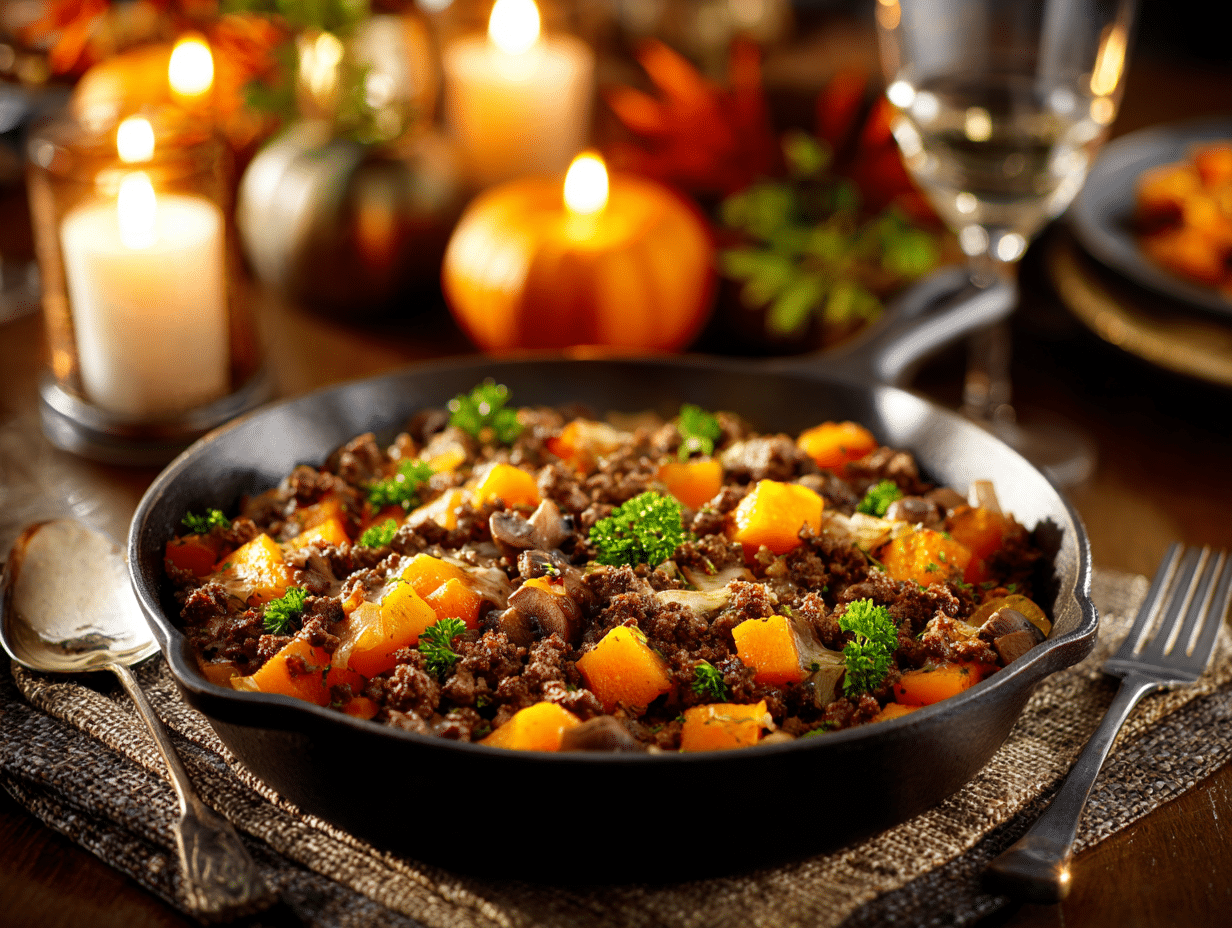
Autumn-Spiced Harvest Hamburger Skillet

Ingredients
- 1 pound ground beef 80/20 blend for best flavor and juiciness
- 2 tablespoons olive oil extra virgin
- 1 cup yellow onion finely chopped
- 2 cloves garlic minced
- 2 cups butternut squash peeled and diced into 1/2-inch cubes
- 1 cup cremini mushrooms sliced
- 1 teaspoon ground cinnamon freshly ground preferred
- 1 teaspoon dried sage rubbed or ground
- 0.5 teaspoon nutmeg freshly grated if possible
- 0.75 teaspoon kosher salt or to taste
- 0.5 teaspoon black pepper freshly ground
- 1 cup beef broth low-sodium
- 1 tablespoon apple cider vinegar adds brightness and acidity
- 0.25 cup fresh parsley chopped, for garnish
Instructions
- In a large heavy-bottomed skillet, heat the olive oil over medium heat (about 350°F / 175°C). Add the chopped onion and sauté until translucent and beginning to caramelize, about 5–7 minutes.
- Add the garlic and stir until fragrant, about 1 minute. Add the ground beef. Break it apart with a wooden spoon and cook until browned with no pink left, about 7–8 minutes. Drain excess fat if necessary.
- Stir in the diced butternut squash and cook for 5 minutes, stirring occasionally. Then add the sliced mushrooms and cook another 4–5 minutes until the mushrooms soften and the squash begins to caramelize on the edges.
- Add cinnamon, sage, nutmeg, salt, and pepper. Stir to coat the mixture evenly in the warm spices. Toast the spices in the meat and vegetables for 1 minute to deepen flavor.
- Pour in the beef broth and bring to a gentle simmer. Cover with a lid and reduce heat to low. Simmer for 10 minutes or until the squash is fork-tender.
- Remove from heat and stir in the apple cider vinegar for a subtle tang. Taste and adjust seasoning. Sprinkle with fresh parsley just before serving.
Notes
- For a vegetarian version, replace the beef with lentils or plant-based meat and use vegetable broth.
- Add a pinch of smoked paprika for added depth if skipping beef.
- To elevate, finish with crumbled goat cheese or a drizzle of maple balsamic glaze.
Nutrition
Common questions
Can I use a different ground meat instead of beef?
Yes, ground turkey or ground pork both work here. If you use either, cook the meat to an internal temperature of 160°F (71°C) for pork or 165°F (74°C) for turkey — don’t pull it early. Ground turkey in particular can dry out faster than beef, so watch the pan and don’t overcook it after the liquid goes in.
How do I know when the butternut squash is done?
It’s done when a fork slides in without resistance and the edges have some color on them. If the squash is tender but pale, give it another minute or two uncovered on higher heat to get some browning — soft and pale means it steamed rather than cooked properly.
Can I make this vegetarian?
Swap the ground beef for cooked green or brown lentils and use vegetable broth in place of any beef broth the recipe calls for. Add the lentils after the vegetables are mostly cooked through since they’re already done — they just need a few minutes to absorb the spiced broth and come up to temperature.
More burger recipes to try
- Mushroom Swiss King Copycat
- BBQ Cheeseburger Recipe
- Angus Bacon Guacamole Burger
- Copycat Quarter Pounder Recipe