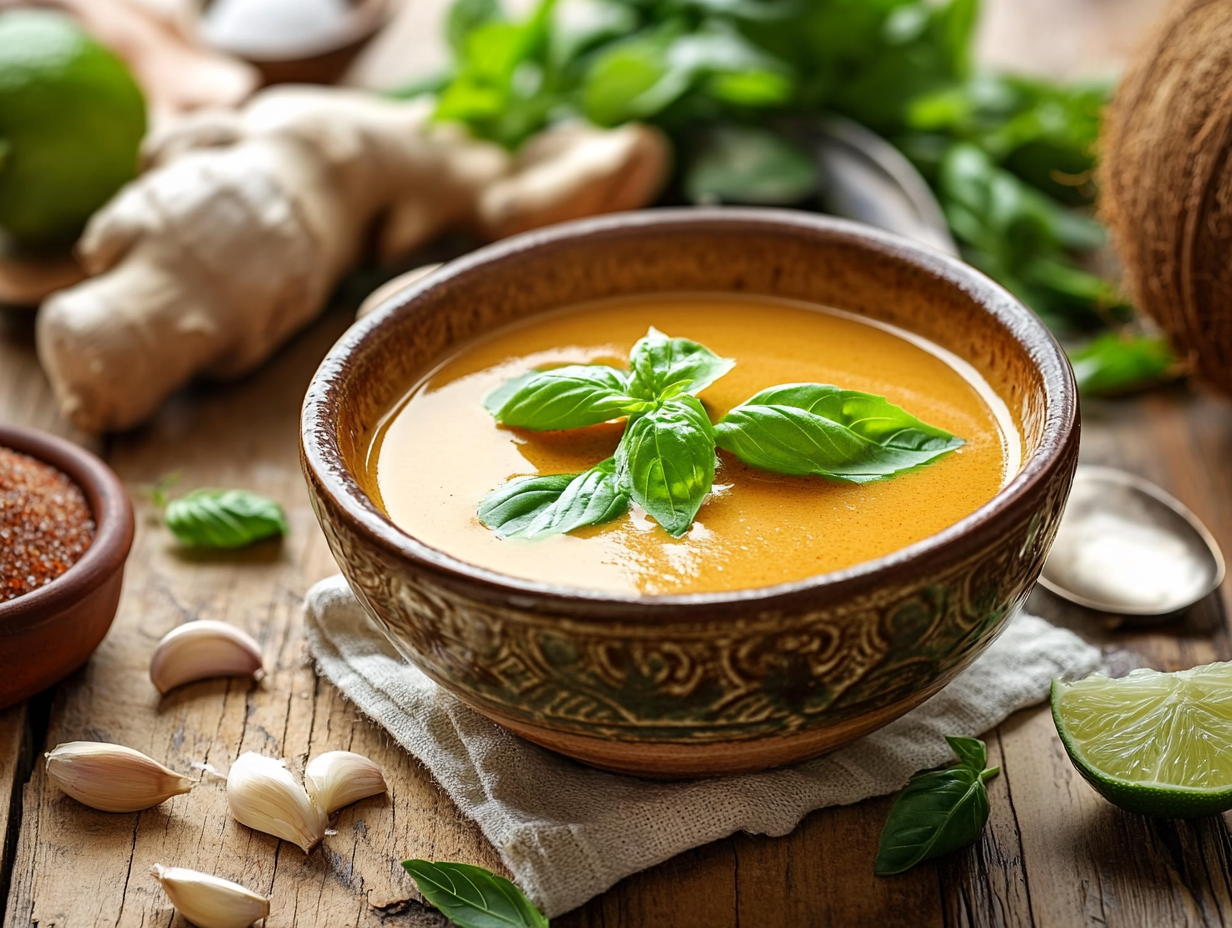
This Thai coconut curry sauce comes together in about 50 minutes from a short list of ingredients you can find at most grocery stores. It’s rich, a little spicy, and works on grilled chicken burgers, shrimp, roasted vegetables, or spooned over rice — which makes it genuinely useful to have in the fridge. Make a full batch on Sunday and you’ll have a ready-made sauce for several meals during the week.
About the ingredients
- Red curry paste: Brands vary a lot in heat. Mae Ploy runs hotter than Maesri; start with the lower end of your paste amount if you’re using a brand you haven’t tried before.
- Fish sauce vs. soy sauce: Fish sauce gives you a deeper, saltier umami base. Soy sauce works fine for a vegetarian version but the flavor will be slightly flatter — add an extra squeeze of lime to compensate.
- Palm sugar: Worth tracking down at an Asian grocery store. It dissolves smoothly and has a mild caramel note that light brown sugar doesn’t quite match, though brown sugar is a perfectly usable substitute.
- Thai basil: Don’t swap in Italian basil — the flavor is noticeably different. If you can’t find Thai basil, fresh mint is a closer stand-in than Italian basil.
- Full-fat coconut milk: Skip the light version here. The fat is what gives the sauce its body and helps it cling to whatever you’re serving it with.
Why this recipe works
Two steps carry most of the weight. First, blooming the curry paste in hot oil for a full two minutes before adding any liquid drives off the raw, slightly metallic edge that paste can have straight from the can — it makes the finished sauce taste cooked through rather than jarred. Second, the Thai basil and lime juice go in only after the heat is off. Both are volatile; even a few minutes of simmering will dull the basil and turn the lime bitter. Adding them at the end keeps the sauce bright and aromatic instead of flat.
Common problems and fixes
- Sauce tastes bitter: The coconut milk likely scorched on the bottom. Keep the heat at a genuine gentle simmer — small bubbles only — and stir every few minutes. If it’s already bitter, a small pinch of sugar can pull it back.
- Sauce is too thin after 15 minutes: Let it simmer uncovered for an extra 5 minutes. Coconut milk reduces quickly once you give it time; pulling it too early is the most common reason the sauce doesn’t coat properly.
- Sauce is too spicy to fix with more coconut milk: A teaspoon of palm sugar or brown sugar will blunt the heat faster than diluting with more liquid, which just makes the sauce runny.
- Garlic and ginger turned brown: They’ll add a slightly bitter note to the whole batch. Keep the heat at medium and don’t walk away during that first minute — they only need 60 seconds and they burn fast.
- Sauce separates or looks greasy after reheating: Whisk it over low heat while it warms up. Coconut milk sauces split when reheated too fast over high heat; low and slow with constant stirring brings it back together.
Storage and reheating
Store the cooled sauce in an airtight container in the fridge for up to 4 days — this is the sweet spot for batch cooking, since the flavors actually deepen by day two. For longer storage, freeze it in portions (silicone ice cube trays work well) for up to 2 months; thaw overnight in the fridge rather than on the counter. Reheat gently in a small saucepan over low heat, whisking as it warms. Skip reheating with the basil already in it — the leaves turn dark and lose their flavor fast, so if you’re prepping ahead, stir in fresh basil and a small squeeze of lime only when you’re ready to serve.
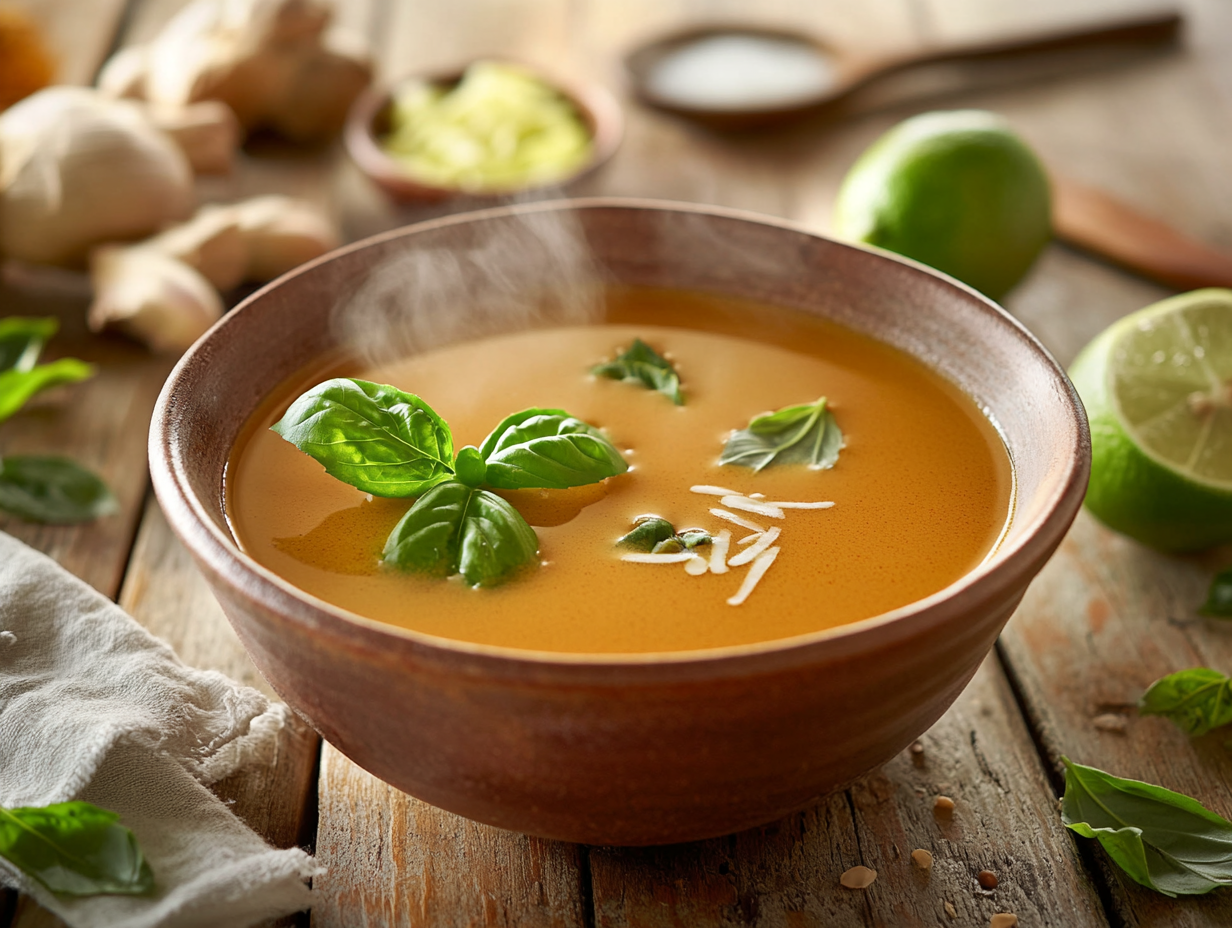
Thai Coconut Curry Sauce

Ingredients
- 2 tablespoons vegetable oil preferably coconut oil
- 1 cup organic shallots finely chopped
- 3 cloves garlic minced
- 1 tablespoon fresh ginger grated
- 1 tablespoon red curry paste adjust based on spice preference
- 1 can coconut milk 400ml, full fat for richness
- 1 tablespoon fish sauce or soy sauce for a vegetarian version
- 1 tablespoon palm sugar or light brown sugar as a substitute
- 1 cup thai basil leaves washed and roughly chopped
- 1 lime juice freshly squeezed
Instructions
- Heat the vegetable oil in a large saucepan over medium heat (around 180°C/350°F). Add the shallots and sauté until they become translucent and fragrant, approximately 2-3 minutes.
- Stir in the garlic and ginger, cooking for another minute until the aroma fills the kitchen, but do not let them brown.
- Add the red curry paste and continue to stir for 2 minutes to allow the spices to bloom.
- Pour in the coconut milk, fish sauce, and palm sugar, stirring gently to combine. Bring the mixture to a gentle simmer, allowing the flavors to meld together over 15 minutes.
- Remove from heat. Stir in chopped Thai basil leaves and lime juice right before serving to maintain their vibrant flavor.
Notes
Nutrition
FAQ
Can I make this sauce ahead of time and freeze it?
Yes — freeze it without the basil and lime juice, which you add fresh when serving. Portion it into freezer-safe containers or an ice cube tray, freeze for up to 2 months, and thaw in the fridge overnight.
What proteins work best with this sauce on a burger?
Grilled chicken thigh burgers are the strongest match — the richness of the sauce holds up well against the char. If you’re using ground chicken or turkey patties, cook them to 165°F (74°C) internal temperature before saucing.
My grocery store doesn’t carry Thai basil — what can I do?
Fresh mint is the closest substitute and won’t taste out of place. Italian basil is a distant third option; use less of it since the flavor is milder and slightly sweet in a different way.
How do I keep the sauce from being too rich or heavy?
A little extra lime juice at the end cuts through the fat and brightens the whole thing. You can also finish with a splash of water — a tablespoon at a time — to loosen the consistency without dulling the flavor.
What to cook next
- Hawaiian Teriyaki Burger Recipe
- Korean Fried Chicken Burger
- Sweet Chili Chicken Burger
- Korean Rice Bulgogi Burger