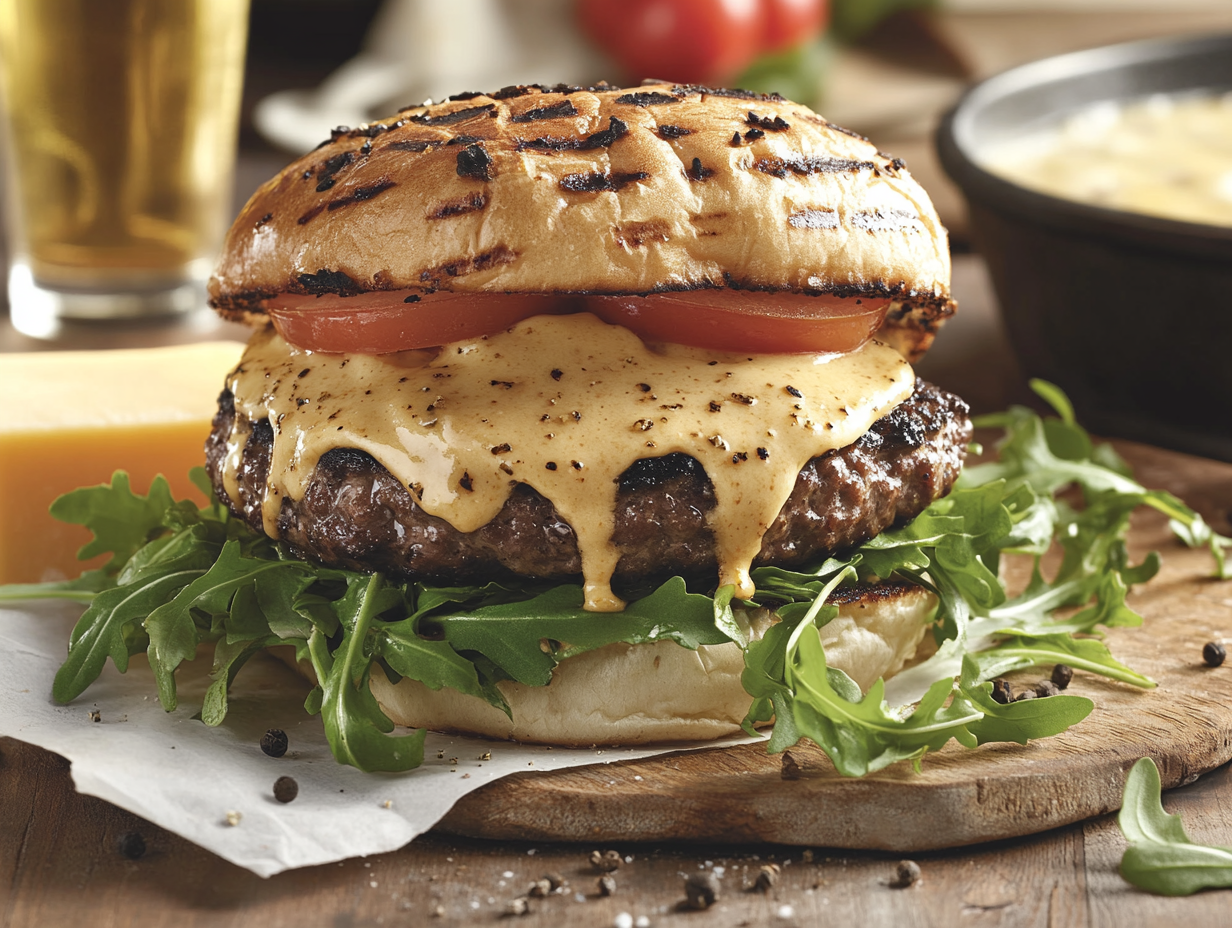
The “Belgian Beer Cheese Burger” is a fusion of two beloved culinary traditions—the indulgent, comfort-food appeal of a classic burger and the robust flavors of Belgian beer and cheese. This recipe takes a simple beef patty and elevates it with rich, complex flavors inspired by traditional Belgian cooking, making it a perfect dish for craft beer lovers and food enthusiasts alike.
“Belgian Influence in the Burger”
Belgium is renowned for its exceptional beer culture, with a brewing heritage that spans centuries. From Abbey ales to Trappist brews, Belgian beers are known for their deep flavor profiles, ranging from malty and sweet to hoppy and bitter. Many of these beers are also used in cooking, adding depth and richness to sauces, marinades, and stews, such as the classic “Carbonnade Flamande” (a Belgian beer-braised beef stew). Drawing inspiration from this, the “Belgian Beer Cheese Burger” infuses beer into a creamy cheese sauce, resulting in a luxurious, slightly tangy addition that enhances the flavor of the beef.
Belgium is also famous for its cheeses, with varieties such as Chimay, Limburger, and aged Gruyère commonly found in local cuisine. For this burger, cheddar is used to make the beer cheese sauce, as its sharp flavor balances the malty sweetness of the beer, creating a velvety, tangy, and umami-rich topping that coats each bite.
“The Beer Cheese Sauce: A Game-Changer”
The standout feature of this burger is undoubtedly the beer cheese sauce. The sauce starts with a simple roux made from butter and flour, which helps form a creamy base. Belgian beer, preferably a blonde ale, is then whisked in, bringing a subtle sweetness and mild hoppiness. The star ingredient, sharp cheddar cheese, is melted into the mixture, producing a velvety sauce that drapes over the burger like a delicious blanket. Alternative beers, such as a dark ale, can be used to create a deeper, more caramelized flavor in the sauce.
“Crafting the Perfect Patty”
The burger patty itself stays simple to allow the beer cheese sauce to shine. Ground beef with a fat content of around 20% ensures juiciness and flavor. Worcestershire sauce is added for an umami kick, while salt and freshly ground black pepper enhance the beef’s natural taste. The patties are grilled or pan-seared to produce a caramelized crust, contributing a smoky, rich contrast to the creamy cheese sauce.
“Balancing the Burger”
To cut through the richness of the beef and cheese, the burger is paired with fresh, peppery arugula, which adds a slight bitterness that complements the sweetness of the beer. Slices of ripe tomato introduce a bright acidity, balancing the cheese and meat. The toasted buns provide the final element, offering a light, crispy texture that holds all the ingredients together.
“A Perfect Pairing”
Given its Belgian beer inspiration, this burger pairs exceptionally well with beer. A cold glass of the same beer used in the sauce will complement every bite, while alternatives like a dubbel or tripel can add bolder, fruitier, and spicier notes to the experience. Whether for casual gatherings, game nights, or a weekend indulgence, the “Belgian Beer Cheese Burger” brings gourmet flavors to a simple, crowd-pleasing favorite.
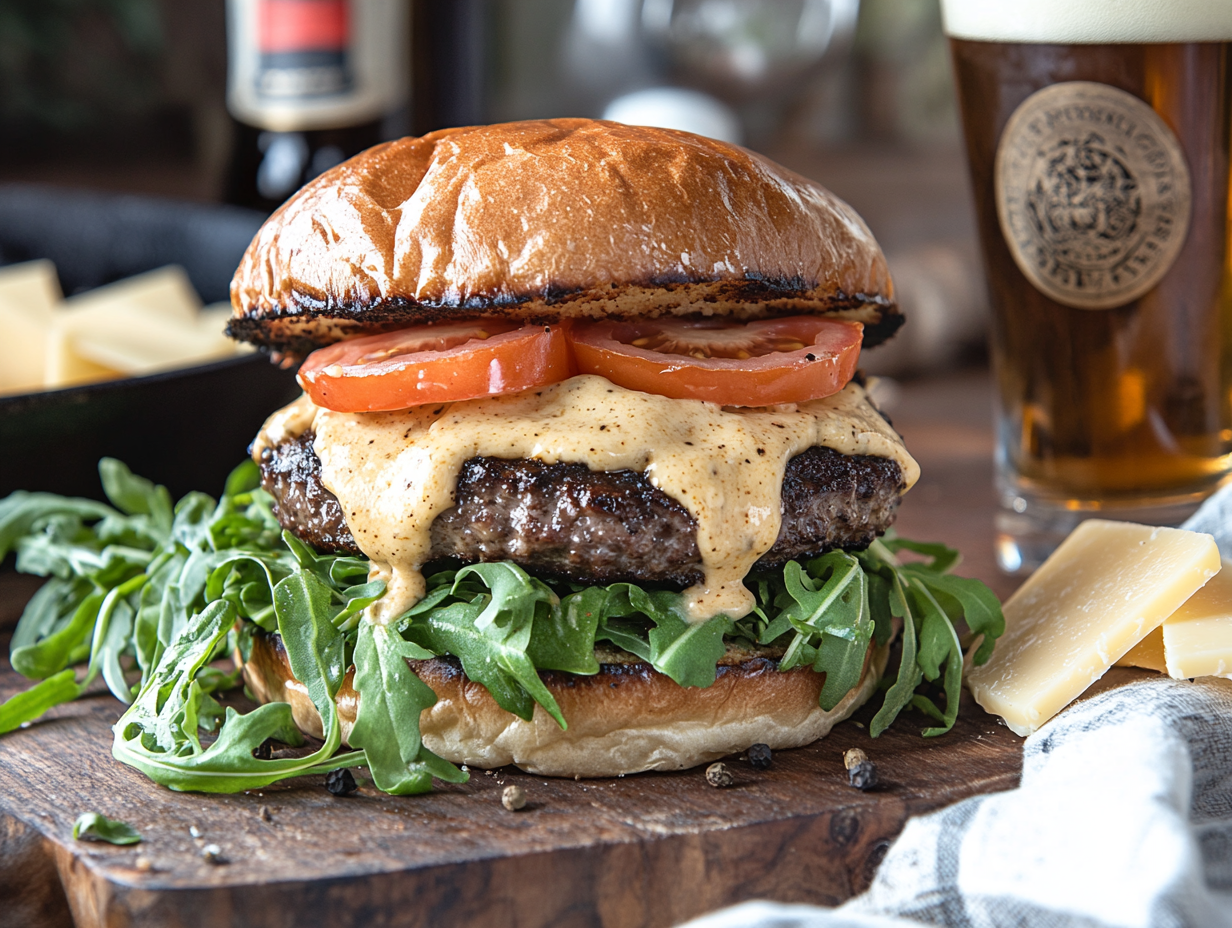
Belgian Beer Cheese Burger

Ingredients
Patties
- 0.5 kilograms ground beef preferably 80% lean for juiciness
- 1 tablespoon Worcestershire sauce
- 1 teaspoon salt
- 0.5 teaspoon black pepper freshly ground
Beer Cheese Sauce
- 1 tablespoon unsalted butter
- 1 tablespoon all-purpose flour
- 0.5 cup Belgian beer like a blonde ale for sweetness
- 1 cup shredded sharp cheddar cheese
Assembly
- 4 medium burger buns lightly toasted
- 1 handful arugula for peppery freshness
- 1 large ripe tomato sliced
Instructions
Prepare the Beef Patties:
- In a large bowl, combine the ground beef with Worcestershire sauce, salt, and black pepper. Gently mix until just combined, being careful not to overwork the meat. Form into four equal patties, each about ¾ inch thick. Indent the center with your thumb to help them cook evenly.
- Heat a grill or a skillet to medium-high heat. Cook the patties for about 4 minutes per side for medium-rare, or adjust the time for desired doneness. Look for a rich caramelized crust and clear juices.
Make the Beer Cheese Sauce:
- In a small saucepan over medium heat, melt the butter. Whisk in the flour and cook, whisking continuously, for about 1 minute until bubbling. Gradually whisk in the Belgian beer, allowing it to thicken slightly, about 2 minutes. Reduce the heat and stir in the cheese until smooth and creamy. Remove from heat and set aside.
Assemble the Burgers:
- Place a handful of arugula on the bottom half of each bun. Top with a cooked beef patty, followed by a generous spoonful of beer cheese sauce. Add tomato slices, then cap with the top half of the bun. Serve immediately.