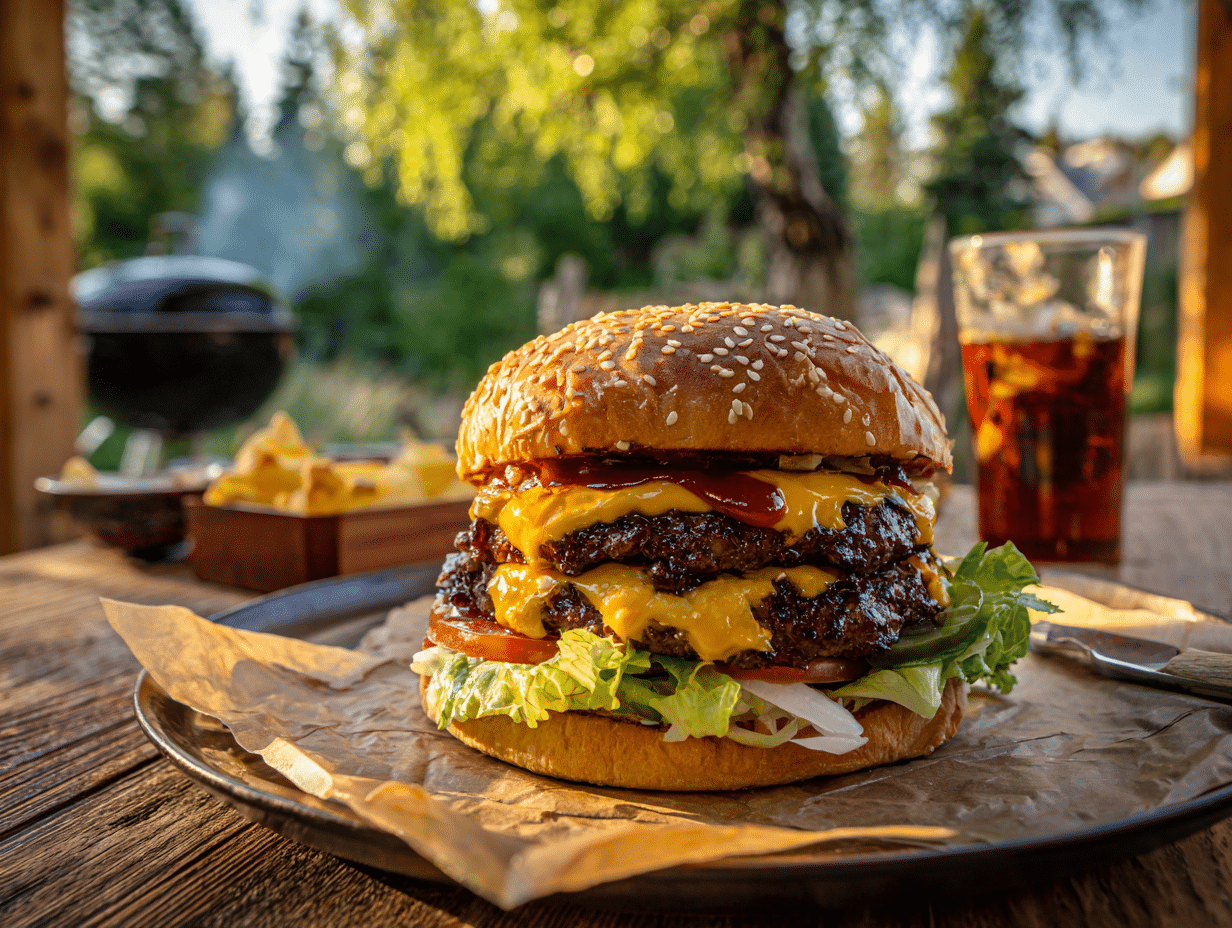
This is a three-patty copycat of Burger King’s Triple Whopper, built at home with an 80/20 beef blend, a quick homemade sauce, and the standard Whopper toppings. The honest reason to make it: you get a significantly better burger than the drive-through version for about the same cost, and you control every component.
Why this recipe works
Two things actually move the needle here. First, the patties are kept thin — each one has a large surface area relative to its thickness, so you get a proper crust from the grill before the inside overcooks and dries out. That crust is where most of the flavor lives. Second, the sauce uses smoked paprika to stand in for the char you’d get from a commercial flame broiler; without it, a home-grilled patty tastes noticeably flat compared to the original. Those two details — thin patties cooked fast over high heat, and smoke in the sauce — are what make this taste like the real thing instead of just a big beef stack.
Ingredient notes
- 80/20 ground beef: Don’t swap this for leaner beef. The fat is what keeps three thin patties from turning into hockey pucks. If your store only has 85/15, add a small drizzle of neutral oil to the grill surface before cooking.
- Smoked paprika: Regular paprika won’t give you the same result. If you’re out, a small amount of chipotle powder (about half the quantity) works as a substitute — it adds smoke with a little heat.
- Pickle relish in the sauce: Standard sweet relish is fine. Dill relish also works and cuts the sweetness if you prefer a sharper sauce.
- Sesame seed buns: Plain burger buns are a perfectly acceptable swap. The sesame flavor is subtle in the finished burger anyway.
- American cheese: Mild cheddar slices melt acceptably, but American cheese melts faster and more evenly between the hot patties — skip the egg in the mix — it makes the patty mushy, and the same logic applies here: use the ingredient that actually does the job.
Keeping and reheating
Store cooked patties separately from the bun and toppings. Patties keep in the fridge for up to 3 days in an airtight container, or in the freezer for up to 2 months — freeze them in a single layer first, then stack with parchment between them. To reheat from the fridge, use a skillet over medium heat with a splash of water and a lid; this takes about 2 minutes per side and keeps the patties from drying out. From frozen, thaw overnight in the fridge before reheating the same way. The sauce keeps separately in the fridge for up to a week. Assemble fresh every time — a pre-built Triple Whopper turns into a soggy mess within about 20 minutes.
Mistakes to avoid
- Pressing the patties while they cook: It squeezes out the fat and juice you need to keep thin patties from going dry. Leave them alone after they hit the grill.
- Adding cheese too late: With three patties, you need the cheese to melt completely so it acts as a layer of grip between the stacks. Lay the cheese on each patty while it’s still on the heat, not after you pull it off.
- Cold patties straight from the fridge: If the beef is fridge-cold when it hits the grill, the outside chars before the center reaches a safe 160°F (71°C). Let the shaped patties sit at room temperature for 10–15 minutes before cooking.
- Overloading the sauce: Three patties already make this burger tall and slippery. Too much sauce and the whole thing collapses on the first bite. A thin, even spread on both bun halves is enough.
- Toasting the bun too early: Toast it right before assembly. A bun toasted five minutes ahead goes from crisp to chewy and doesn’t hold up to the weight of three patties.
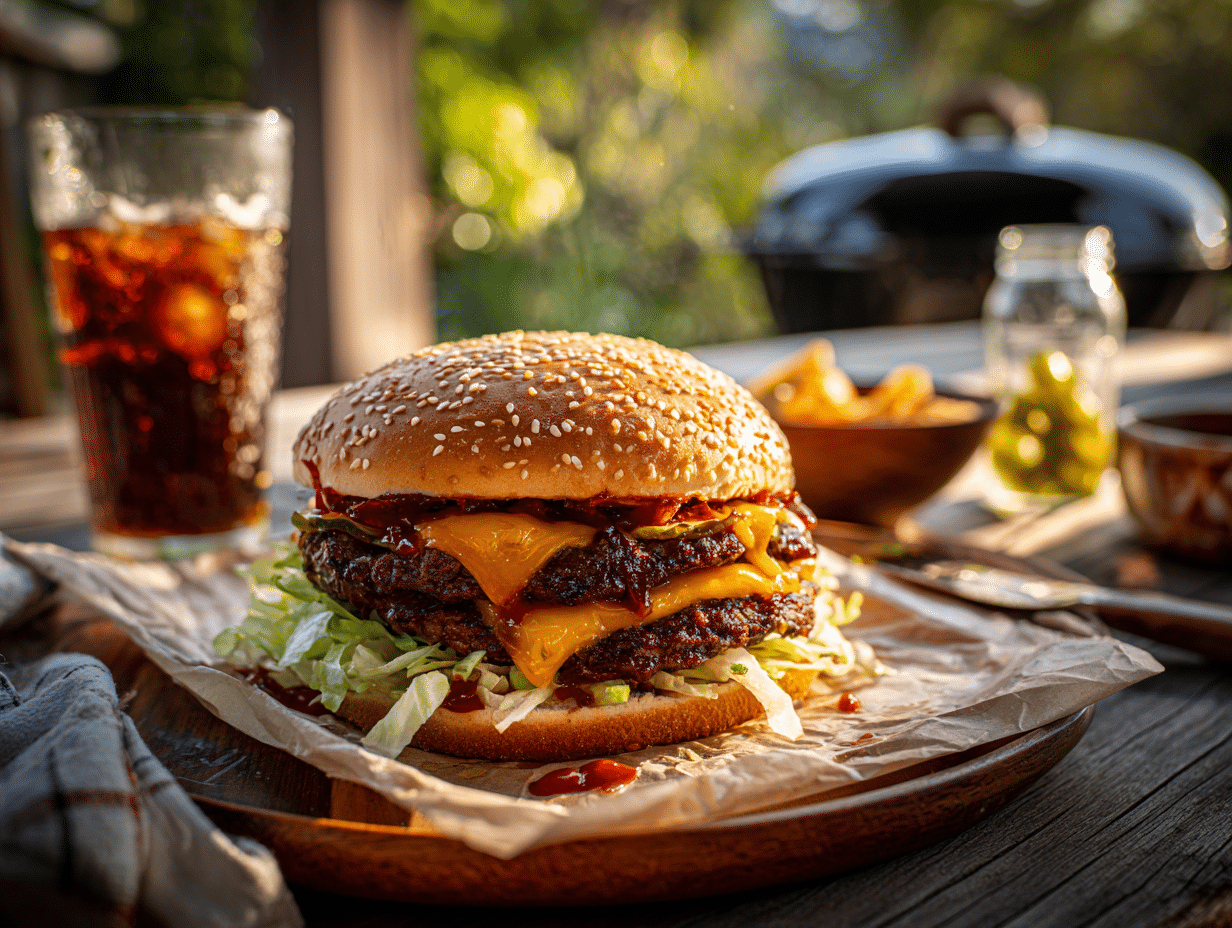
Burger King Triple Whopper–Style Flame‑Grilled Burger (Chef’s Copycat)

Ingredients
For the House Sauce (optional):
- 3 tbsp mayonnaise full-fat for best mouthfeel
- 2 tbsp ketchup classic style; not reduced sugar
- 1 tsp dill pickle relish adds brightness and texture
- ½ tsp distilled white vinegar balances the richness
- ¼ tsp smoked paprika hints of smoke to echo flame grilling
- ⅛ tsp garlic powder subtle savory depth
For the Beef Patties:
- 12 oz ground beef (80/20 chuck) cold; divide into three 4 oz portions
- ¾ tsp kosher salt Diamond Crystal; adjust if using Morton
- ½ tsp freshly ground black pepper medium grind
- ¼ tsp onion powder classic diner note
- 1 tsp neutral oil for grill grates or skillet (canola or grapeseed)
For the Assembly & Toppings:
- 1 large sesame seed hamburger bun 4.5–5 inch; lightly fresh or day-old for better toasting
- 3 slices American cheese deli‑cut or quality processed for best melt
- 1 cup iceberg lettuce, shredded ice‑cold and dried for crispness
- 3 slices ripe tomato beefsteak or vine‑ripe, 1/4 inch thick
- 4 rings white onion cut into crisp rings
- 6 chips dill pickles crinkle‑cut preferred
- 1 tbsp ketchup (for assembly, if not using house sauce)
- 1 tbsp mayonnaise (for assembly, if not using house sauce)
Instructions
- Make the House Sauce (5 minutes): In a small bowl, whisk together 3 tbsp mayonnaise, 2 tbsp ketchup, 1 tsp dill relish, 1/2 tsp white vinegar, 1/4 tsp smoked paprika, and 1/8 tsp garlic powder. Taste and adjust salt if needed. Cover and refrigerate to meld flavors.
- Prep the Produce (5 minutes): Wash and slice the tomato into 3 even slices (about 1/4 inch). Slice white onion into rings and separate. Shred iceberg lettuce, then chill the vegetables; colder produce stays crisper against hot patties.
- Preheat Grill or Skillet (8 minutes): Preheat a gas or charcoal grill to high (500°F / 260°C). Clean and oil grates lightly with 1 tsp neutral oil. Alternatively, preheat a cast‑iron skillet over medium‑high to high until it shimmers, or set your oven broiler to high (about 550°F / 288°C) with the rack 6 inches (15 cm) from the element.
- Portion and Season the Patties (5 minutes): Divide 12 oz 80/20 ground beef into three equal 4 oz portions. Gently press into thin patties about 4.5 inches wide and 1/4 inch thick. Make a slight dimple in the center to prevent doming. Season both sides with 3/4 tsp kosher salt, 1/2 tsp black pepper, and 1/4 tsp onion powder total. Keep patties cold until they hit the heat.
- Grill for Flame‑Kissed Char (6 minutes): Place patties on the hot grill. Cook 2–3 minutes per side for thin patties, aiming for well‑browned edges and a few char marks. For food safety, target an internal temperature of 160°F / 71°C (carryover from 155°F / 68°C). In the last 30–45 seconds, top each patty with a slice of American cheese and close the lid to melt.Alternative: In a cast‑iron skillet, sear with a light film of oil, or broil on a preheated sheet; flip once and finish with cheese under the broiler for 20–30 seconds.
- Toast the Bun (1 minute): Split the sesame bun. Toast cut‑side down directly on the grill grates or in the skillet until lightly golden (about 30–60 seconds). You’re looking for a crisp edge with a soft interior—this protects the bun from sauces and juices.
- Assemble Like a Pro (2 minutes resting included): Let patties rest 2 minutes on a rack. Smear house sauce or mayonnaise on the top bun and a ribbon of ketchup on the bottom bun. Layer in this order for balance and grip: bottom bun → ketchup → pickles → first patty → second patty → third patty → onion rings → tomato slices → a mound of shredded lettuce → sauced top bun. Press gently to set.
- Serve Immediately: Wrap the lower half in parchment or burger paper for that classic feel and structural support. The ideal bite is hot, juicy, and crisp‑cool at the edges with every layer distinct.
Notes
Chef’s Tips:
- Beef Blend: 80/20 chuck delivers the juiciest result. For deeper flavor, blend in 20% brisket or short rib.
- Flame Factor: A tiny pinch of smoked paprika in the seasoning or sauce boosts “grilled” character, especially if using a skillet.
- Don’t Press: Once patties hit the heat, avoid pressing—keep the juices in.
- Veg Texture: Keep lettuce ice‑cold and well‑dried so it stays perky against hot patties.
- Dietary Swaps: Use plant‑based patties and vegan mayo/cheese for a vegan spin; choose a gluten‑free bun to accommodate GF diets.
- No Mortar & Pestle Needed: For the sauce, a whisk is perfect; a mini‑processor works but can over‑puree relish.
Nutrition
Common questions
Can I cook the patties in a skillet instead of on a grill?
Yes, a cast iron skillet over high heat works well. You won’t get grill marks, but a flat sear in a hot dry skillet gives you a better crust than a grill pan with ridges — the full contact with the surface browns more of the patty.
How do I keep a three-patty burger from falling apart when I eat it?
Let the assembled burger rest for about 60 seconds before you pick it up — the cheese firms slightly and everything settles. Pressing down gently with your palm before the first bite also helps compress the stack without making a mess.
Can I use frozen pre-formed beef patties instead of making my own?
You can, but check the fat content on the package — anything leaner than 80/20 will cook up dry at the thin size this recipe needs. Cook frozen patties from frozen over medium-high heat and use a meat thermometer to confirm they hit 160°F (71°C) all the way through.
If you liked this one
- Texas Double Whopper Copycat
- BBQ Bacon Whopper Copycat
- Cheddar Bacon King Copycat
- Perfect Bacon Double Cheeseburger