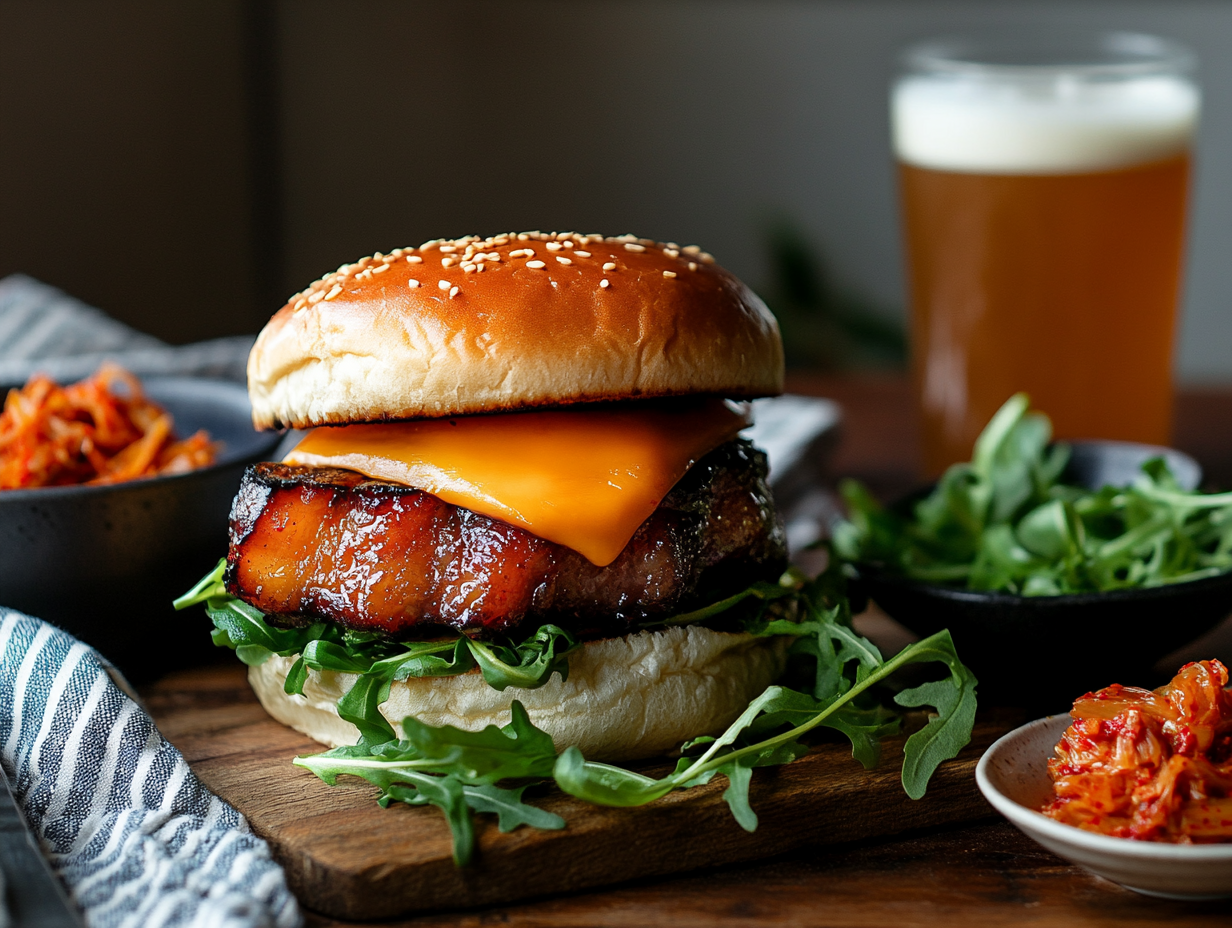
This is a roasted pork belly burger marinated in gochujang — a Korean chili paste — and stacked with kimchi, cheddar, and arugula on a brioche bun. The honest reason to make it: pork belly is forgiving to roast, the marinade does most of the flavor work overnight, and the result is genuinely different from anything you can order at a drive-through.
The technique that matters
The marinade time is not optional decoration in this recipe — it is the technique. Gochujang is thick and dense, and pork belly has a fat cap that resists quick absorption. Two hours gets you surface flavor; overnight gets the paste working into the meat itself, so every bite carries heat and depth rather than just the outside layer. The second thing worth getting right is roasting skin-side up without flipping. The fat renders downward through the meat as it cooks, keeping the interior moist while the skin crisps. If you flip the pieces, you lose that process and end up with steamed pork instead of roasted. Pull the pork when the internal temperature hits 160°F (71°C) — use a meat thermometer if you have one.
Mistakes to avoid
- Crowding the baking sheet. If the pork belly pieces are touching, steam builds up between them and the skin won’t crisp. Leave at least half an inch of space around each piece.
- Skipping the pat-dry step before marinating. Surface moisture on the pork dilutes the marinade and slows browning. Pat the pieces dry with paper towels before you mix them into the paste.
- Adding kimchi straight from the fridge. Cold kimchi on hot pork cools the whole burger down fast. Let it sit at room temperature for 10 minutes while the pork rests, or give it 30 seconds in a dry pan.
- Cutting the pork immediately out of the oven. Rest the pieces for 5 minutes on a rack. Cutting too soon lets the juices run out onto the baking sheet instead of staying in the meat.
- Using low-sodium soy sauce without adjusting. The marinade is calibrated for regular light soy sauce. Low-sodium versions will make the final flavor flat — if that’s all you have, add a small pinch of salt to compensate.
About the ingredients
- Gochujang: Sold in most Asian grocery stores and increasingly in mainstream supermarkets, usually in a red tub or squeeze bottle. Brands vary in heat level — taste a small amount before you commit to 3 tablespoons. The recipe notes sriracha plus fermented soy paste as a backup, and that works, but real gochujang has a fermented sweetness those two don’t fully replicate.
- Pork belly (skin-on): Ask at the butcher counter if you don’t see it pre-packaged. Free-range is listed as preferred in the recipe; standard supermarket pork belly works fine and cooks the same way.
- Kimchi: Store-bought is completely fine here. Finely chop it so it sits in the burger without sliding out. If you find kimchi too sour, a quick 60-second sauté in a dry pan mellows the acidity without killing the crunch.
- Aged cheddar: Skip mild cheddar — it melts into nothing against the strong marinade. Aged cheddar holds its flavor. Sharp or extra-sharp both work.
Storage and reheating
Store leftover roasted pork belly pieces in an airtight container in the fridge for up to 3 days. Keep the kimchi, arugula, and buns separate — assembled burgers go soggy fast. To reheat, put the pork belly pieces on a wire rack over a baking sheet in a 375°F (190°C) oven for 8–10 minutes; this brings the skin back to crisp better than a microwave ever will. The microwave makes the skin rubbery, so use it only if you’re in a hurry and have accepted that trade-off. Cooked pork belly freezes well for up to 2 months — wrap pieces individually in foil, then bag them. Thaw overnight in the fridge before reheating in the oven.
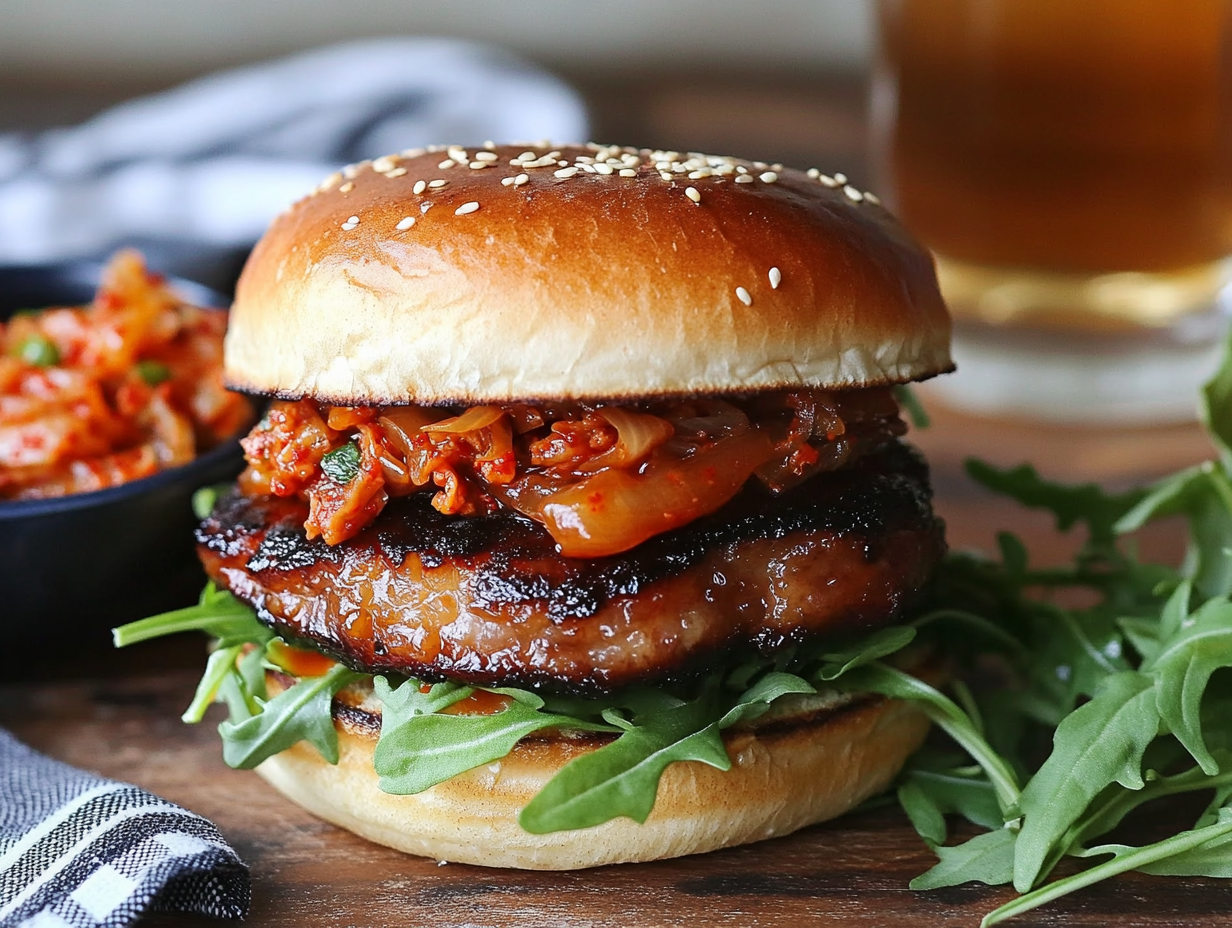
Gochujang Pork Belly Burger

Ingredients
For the Pork Belly
- 500 grams pork belly skin on, preferably free-range
- 3 tablespoons gochujang Korean chili paste
- 2 tablespoons soy sauce light
- 1 tablespoon honey or maple syrup for a richer flavor
- 1 tablespoon sesame oil toasted
- 2 cloves garlic finely minced
For Assembly
- 4 whole brioche buns soft and slightly sweet
- 1 cup kimchi store-bought or homemade, finely chopped
- 4 slices cheddar cheese aged for more depth
- 1 cup fresh arugula for crunchiness
Instructions
- Cut pork belly into eight even pieces. In a bowl, combine gochujang, soy sauce, honey, sesame oil, and minced garlic. Marinate pork belly pieces for at least 2 hours, or overnight for deeper flavors.
- Preheat the oven to 180°C (350°F). Arrange the marinated pork belly on a baking sheet, skin side up. Roast for 40-50 minutes until the skin is crispy and the meat tender.
- Slice brioche buns in half and lightly toast them. Top the bottom halves with slices of cheddar cheese.
- Place roasted pork belly on top of the cheese and layer with chopped kimchi and a handful of fresh arugula.
- Cover with the top half of the bun and press lightly to meld the flavors.
Notes
Nutrition
Common questions
Can I marinate the pork belly for less than 2 hours?
You can, but the flavor will be noticeably shallower. Even 30 minutes is better than nothing, but if you have any flexibility, marinate it the night before — the difference in depth is significant.
How do I know when the pork belly is done?
The safe internal temperature for pork is 160°F (71°C) — a cheap instant-read thermometer removes all guesswork. Visually, the skin should be golden and firm, not pale or soft, and the fat layers should look rendered rather than opaque white.
My skin isn’t getting crispy — what’s going wrong?
The two most common causes are moisture on the surface before roasting and overcrowding on the pan. Make sure the pieces are fully dry before they go in the marinade, space them out on the baking sheet, and don’t cover the pan with foil.
Is this burger very spicy?
At 3 tablespoons of gochujang it has real heat — noticeable but not punishing for most people. If you’re sensitive to spice, start with 1.5 tablespoons and taste the marinade before adding the pork.
Can I cook the pork belly on a stovetop instead of the oven?
A cast-iron skillet works — sear the pieces skin-side down over medium-high heat for 4–5 minutes to crisp the skin, then flip and cook on medium until the internal temperature reaches 160°F (71°C), roughly another 10–12 minutes depending on thickness. You won’t get quite the same even rendering as the oven, but it’s a solid alternative.
What to cook next
- Korean Fried Chicken Burger
- Korean Rice Bulgogi Burger
- Hawaiian Teriyaki Burger Recipe
- Sweet Chili Chicken Burger