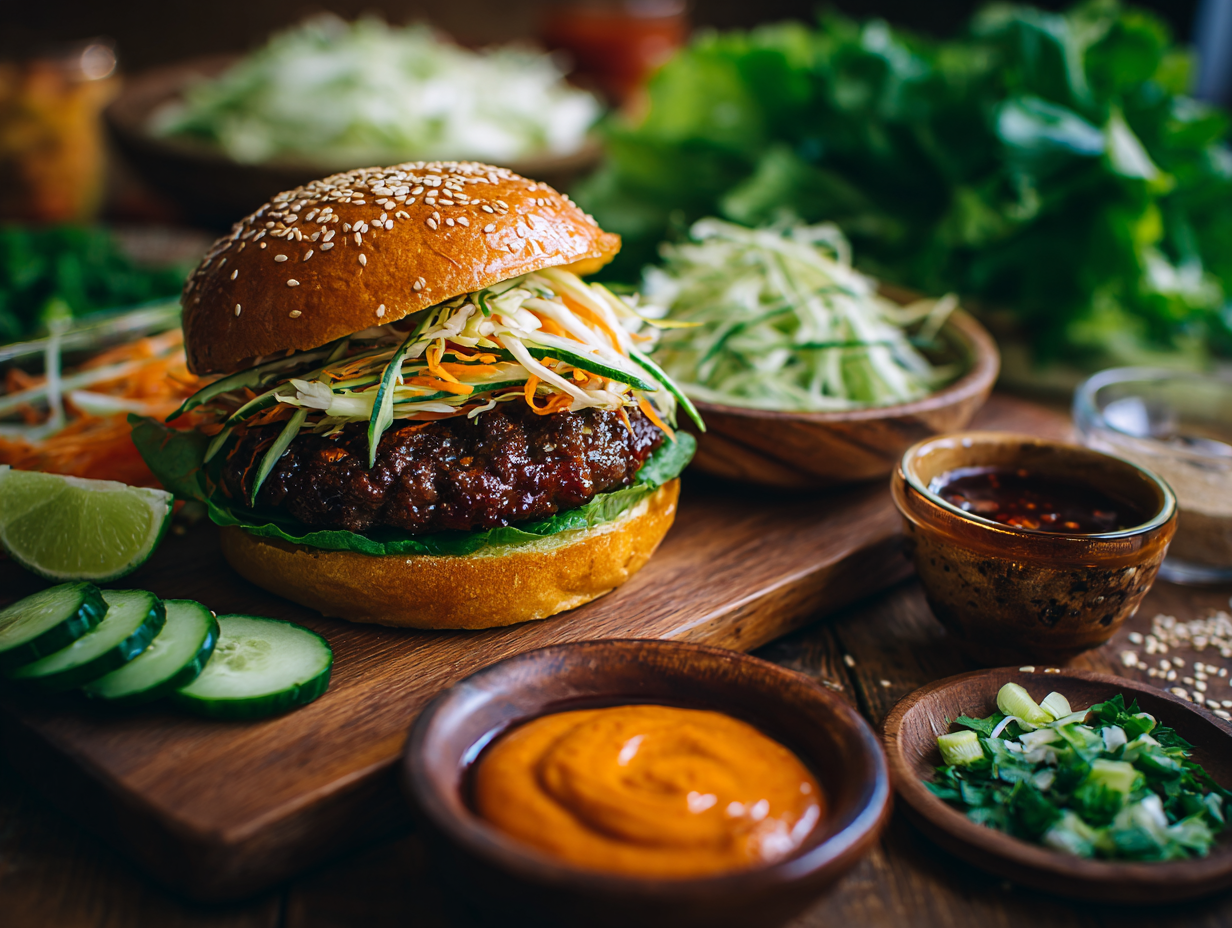
This is a ground beef burger seasoned with a bulgogi-style marinade — soy sauce, brown sugar, garlic, sesame oil, ginger, and a splash of rice vinegar — then topped with a spicy gochujang aioli and a crisp napa cabbage slaw. It takes about 45 minutes start to finish, and the result is a genuinely juicy, well-seasoned patty that tastes like more effort than it was. If you like bold flavors and a burger that doesn’t need ketchup, this one’s worth your time.
The short version of why this works
Two things make this burger land. First, the marinade does double duty: the soy sauce seasons the meat all the way through, not just on the surface, and the brown sugar helps the patty develop a solid crust on a hot pan or grill. Twenty minutes is enough — longer and the salt starts to break down the proteins and you lose that snappy bite. Second, the gochujang aioli isn’t just heat. Gochujang is fermented, so it brings a deep, slightly funky richness that cuts through the fat in the beef. Lime juice keeps it from feeling heavy. Those two elements — a well-marinated patty and a properly acidic sauce — are what hold the whole build together.
Common problems and fixes
- Patties fall apart on the grill: The marinade adds moisture, which can make the mix loose. Chill the formed patties for 15 minutes before cooking — cold fat holds the shape better under high heat.
- Patty tastes flat despite the marinade: Ground beef needs a light pinch of salt on the outside right before it hits the pan. The marinade seasons the interior, but surface salt is what builds crust and flavor on the outside.
- Slaw goes soggy before serving: Salt the cabbage for 10 minutes, then squeeze out the water before dressing it. This keeps it crunchy for the full meal instead of wilting by the second bite.
- Gochujang aioli is too thick to spread: Add the lime juice last and thin with a few drops of water if needed. It should coat a spoon but still move — not sit like a paste.
- Bun gets soggy fast: Spread a thin layer of aioli on both cut sides of the toasted bun before adding anything else. It acts as a moisture barrier between the slaw and the bread.
Substitutions that actually work
- Gochujang: If you can’t find it, a mix of sriracha and a small amount of white miso gets you most of the way there — spicy and fermented, though less complex. Find gochujang in the international aisle or any Korean grocery; it keeps in the fridge for months.
- Toasted sesame oil: Don’t swap this for regular sesame oil or vegetable oil. The toasted version is what gives the patty its nutty depth. A little goes a long way — don’t double the amount.
- Napa cabbage: Regular green cabbage works fine. It’s slightly tougher, so slice it thinner than you think you need to.
- Brioche bun: A potato roll is the best substitute — similar softness and a little sweetness. A standard sesame bun works but toasts up drier, so watch it closely.
- Ground beef: Ground turkey works as a swap. Cook it to 165°F (74°C) internal temperature — no pink — and note that it will be slightly less juicy, so don’t skip the marinade time.
Keeping and reheating
Cooked patties keep in the fridge for up to 3 days in an airtight container. Reheat them in a covered skillet over medium-low with a splash of water — about 3 to 4 minutes — which steams them back to juicy rather than drying them out in a microwave. Raw marinated patties can be frozen for up to 2 months; freeze them flat on a sheet pan first, then transfer to a bag. Thaw overnight in the fridge before cooking. The slaw is best made fresh, but the gochujang aioli keeps well for up to a week refrigerated — make a double batch and use it on sandwiches all week.
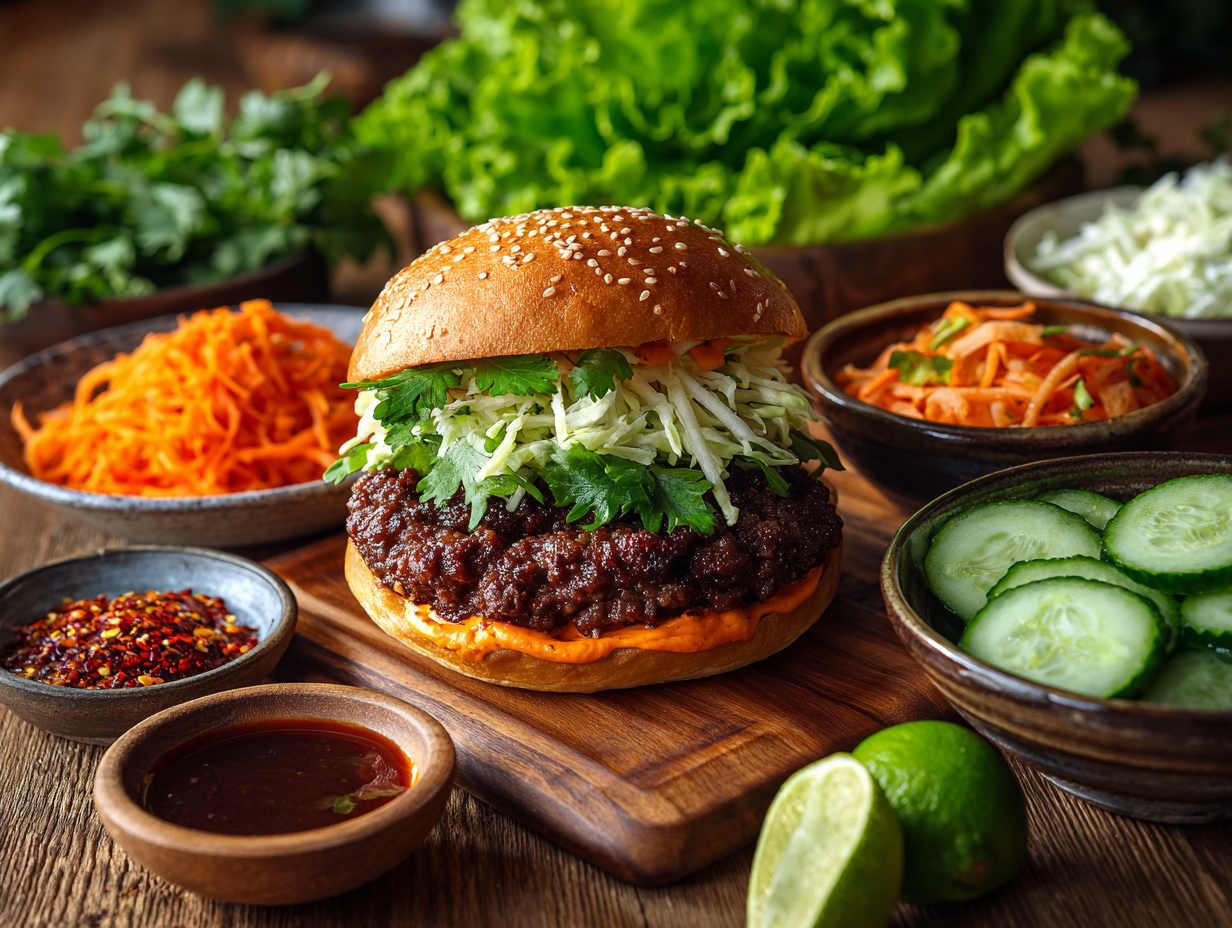
Korean Bulgogi Burger with Gochujang Aioli

Ingredients
For the Bulgogi Burger Patties:
- 1 pound ground beef (80/20) fresh and high-quality
- 2 tablespoons soy sauce preferably low-sodium
- 1 tablespoon toasted sesame oil
- 1 tablespoon brown sugar dark brown for deeper molasses flavor
- 2 cloves garlic, minced
- 1 teaspoon grated fresh ginger
- 1 teaspoon rice vinegar
- ¼ teaspoon black pepper
For the Gochujang Aioli:
- ⅓ cup mayonnaise full-fat for best flavor
- 1 tablespoon gochujang (Korean red chili paste) adjust to desired heat
- 1 teaspoon lime juice fresh-squeezed
For the Asian Slaw:
- 1 cup shredded Napa cabbage or green cabbage
- ½ cup shredded carrots
- 1 tablespoon rice vinegar
- 1 teaspoon honey
- ½ teaspoon sesame oil
For Assembly:
- 4 whole brioche burger buns, toasted
- ½ cup thinly sliced cucumber preferably Persian or seedless
- 1 teaspoon toasted sesame seeds for garnish
- 4 leaves butter lettuce optional, for freshness
Instructions
- Marinate the Beef: In a large mixing bowl, combine ground beef, soy sauce, sesame oil, brown sugar, garlic, ginger, rice vinegar, and black pepper. Mix with your hands until just combined. Do not overmix. Cover and let marinate in the refrigerator for 20 minutes.
- Make the Gochujang Aioli: In a small bowl, stir together mayonnaise, gochujang, and lime juice until well blended. Chill until ready to use.
- Prepare the Slaw: In a medium bowl, toss together Napa cabbage, shredded carrots, rice vinegar, honey, and sesame oil. Toss well to coat. Let slaw sit for at least 10 minutes for flavors to meld.
- Shape and Cook Patties: Divide beef mixture into 4 equal portions and form into burger patties, pressing a small indentation in the middle to prevent puffing. Heat a skillet or grill to medium-high (375°F / 190°C). Cook burgers for about 4-5 minutes per side, or until fully cooked and nicely seared.
- Toast the Buns: While burgers are cooking, lightly toast the brioche buns on the grill or in a dry skillet until golden.
- Assemble: Spread gochujang aioli on bottom half of each bun. Place butter lettuce if using, then add patty, slaw, and cucumber slices. Sprinkle with toasted sesame seeds and top with the other half of the bun.
Notes
- For extra heat, add a dash of sriracha to the aioli or top with sliced fresh chilies.
- Substitute beef with ground turkey or plant-based meat for alternative diets.
- Freeze extra aioli in an ice cube tray for later use on sandwiches or salad dressings.
Nutrition
Your questions, answered
What internal temperature should the bulgogi burger patty reach?
Cook ground beef patties to 160°F (71°C) internal temperature. Unlike a whole-muscle steak, ground beef can carry bacteria throughout the meat, so a lower temperature isn’t safe regardless of how the outside looks.
Can I make the patties ahead of time?
Yes — form and marinate the patties up to 24 hours ahead, covered in the fridge. Don’t go longer than that; the salt in the soy sauce will start to cure the meat and change the texture.
My gochujang aioli came out very spicy. How do I dial it back?
Add more mayonnaise a tablespoon at a time until the heat is where you want it. A small drizzle of honey also tames the spice without making it taste sweet.
Can I cook these on a grill instead of a skillet?
Yes, and the char from the grill works well with the sweet marinade. Make sure the grates are clean and well-oiled — the brown sugar in the marinade will stick and tear the patty if the grates aren’t prepped.
Where do I find gochujang if my regular grocery store doesn’t carry it?
Any Korean or Asian grocery store will have it, usually in a red tub or squeeze bottle. It’s also widely available online and increasingly stocked in the international aisle of larger supermarkets.
The patty came out dense and tough. What went wrong?
Overmixing is almost always the cause — working the meat too much develops the proteins and makes the texture tight. Mix just until the marinade is combined, then stop and form the patties gently.
More burger recipes to try
- Korean Fried Chicken Burger
- Korean Rice Bulgogi Burger
- Hawaiian Teriyaki Burger Recipe
- Sweet Chili Chicken Burger