
The KFC Zinger Burger is more than just a spicy chicken sandwich—it’s a pop culture icon that has taken on a life of its own across continents. Launched in the mid-1980s by Kentucky Fried Chicken (KFC), the Zinger was one of the first prominent fast food chicken sandwiches marketed for its heat and bold seasoning, specifically designed to cater to an international audience that loved spice. Over time, it became a fan favorite around the globe, particularly in markets like Asia, the Middle East, and the United Kingdom, where palates typically lean toward the flavorful and fiery.
But what truly sets the Zinger apart is the memorable combination of juicy, tender chicken enrobed in a crunchy, spicy coating that’s deep-fried to golden perfection. Add to that a soft, toasted bun, a slather of mayonnaise, crisp iceberg lettuce, and sometimes a slice of tomato, and you’ve got a caloric comfort food bomb that satisfies cravings like no other—a sandwich designed to excite the senses and deliver a textural contrast in every bite.
As a chef, I was inspired to reimagine the Zinger Burger not out of a desire to replicate fast food exactly, but to elevate it—to create a version that honors the spirit of the original while focusing on freshness, quality ingredients, and homemade flavor. That’s the beauty of recreating fast food at home: you can take creative liberties, tweak spice levels to suit your taste, and pay attention to the little details that make a big difference when you’re making the dish from scratch.
At the heart of this burger lies the chicken. Instead of opting for the traditional chicken breast, I chose skinless boneless chicken thighs. Thighs are naturally juicier, more flavorful, and harder to overcook. The chicken is marinated in a full-fat buttermilk bath, infused with salt and hot sauce. This step is essential in two ways—first, the buttermilk tenderizes the chicken, breaking down muscle fibers slowly over time. Second, the marinade acts as a carrier for the spices and a binder for the flour coating. By letting the chicken rest in this marinade for at least 30 minutes—or ideally overnight—you build layers of flavor that go beyond surface level. When you fry it, you’ll taste that delicious heat and seasoning in every bite, not just on the crust.
The crispy coating is another area where I drew on professional cooking techniques often overlooked in home kitchens. This recipe combines all-purpose flour with a touch of cornstarch—an ingredient used frequently in Chinese and Korean fried chicken. The addition of cornstarch lightens the flour, resulting in a wonderfully crisp crust that isn’t heavy or greasy. The spice blend in the coating—paprika, garlic powder, onion powder, cayenne, and salt—is key in achieving the signature “Zinger” kick. Feel free to experiment here. Want more heat? Add chili flakes or extra cayenne. Prefer smoky flavor? Swap in chipotle powder or smoked paprika.
A critical trick to getting those rough, craggy edges that make restaurant-style fried chicken so satisfying is the press-and-rest method. After dredging the marinated chicken in the flour mix, gently press the coating onto the meat and let it rest for about 10 minutes before frying. This resting period allows the flour mixture to hydrate slightly and cling better to the chicken, forming ridges that will become beautifully golden and crispy in hot oil.
Deep frying can seem intimidating to home cooks, but it’s actually quite manageable once you control your oil temperature. The ideal frying temp is 350°F (175°C). Too low, and the chicken absorbs oil and turns greasy; too high, and it browns too quickly without cooking through. A thermometer is invaluable here, and frying in batches ensures steady oil temperature. If you’re looking for a slightly healthier version, this chicken can also be baked, though you’ll sacrifice some of that signature crunch.
To assembly—a burger is nothing without its bun. A good bun makes or breaks the sandwich. In this case, I recommend a soft brioche-style bun that’s been lightly toasted to bring out its sweetness and provide a slight crispness. Contrast is key in great food. The creamy mayonnaise balances out the spice of the chicken, and a mound of shredded iceberg lettuce adds freshness and cooling texture. A slice of tomato is optional but highly recommended for juiciness and an extra layer of flavor.
In recreating the KFC Zinger Burger at home, you’re not just copying a popular fast-food meal—you’re participating in a global food movement. The Zinger is a textbook example of how street food and fast food shapes culinary culture, how a single sandwich can capture the hearts of millions, and how even the most casual foods benefit from careful technique, balanced flavor, and ingredient quality.
Whether you’re making this for lunch, dinner, or a backyard gathering, the homemade Zinger stands out as a deeply satisfying, crowd-pleasing dish. It captures the nostalgia of grabbing one from your nearest KFC, but with a distinctly homemade soul that fast food simply can’t replicate. This burger celebrates one of the most beloved flavor profiles in the world—crispy, spicy, juicy, and utterly delicious.
So roll up your sleeves, heat up that oil, and take a bite of your own kitchen-crafted Zinger. You might just find that it’s even better than the original.
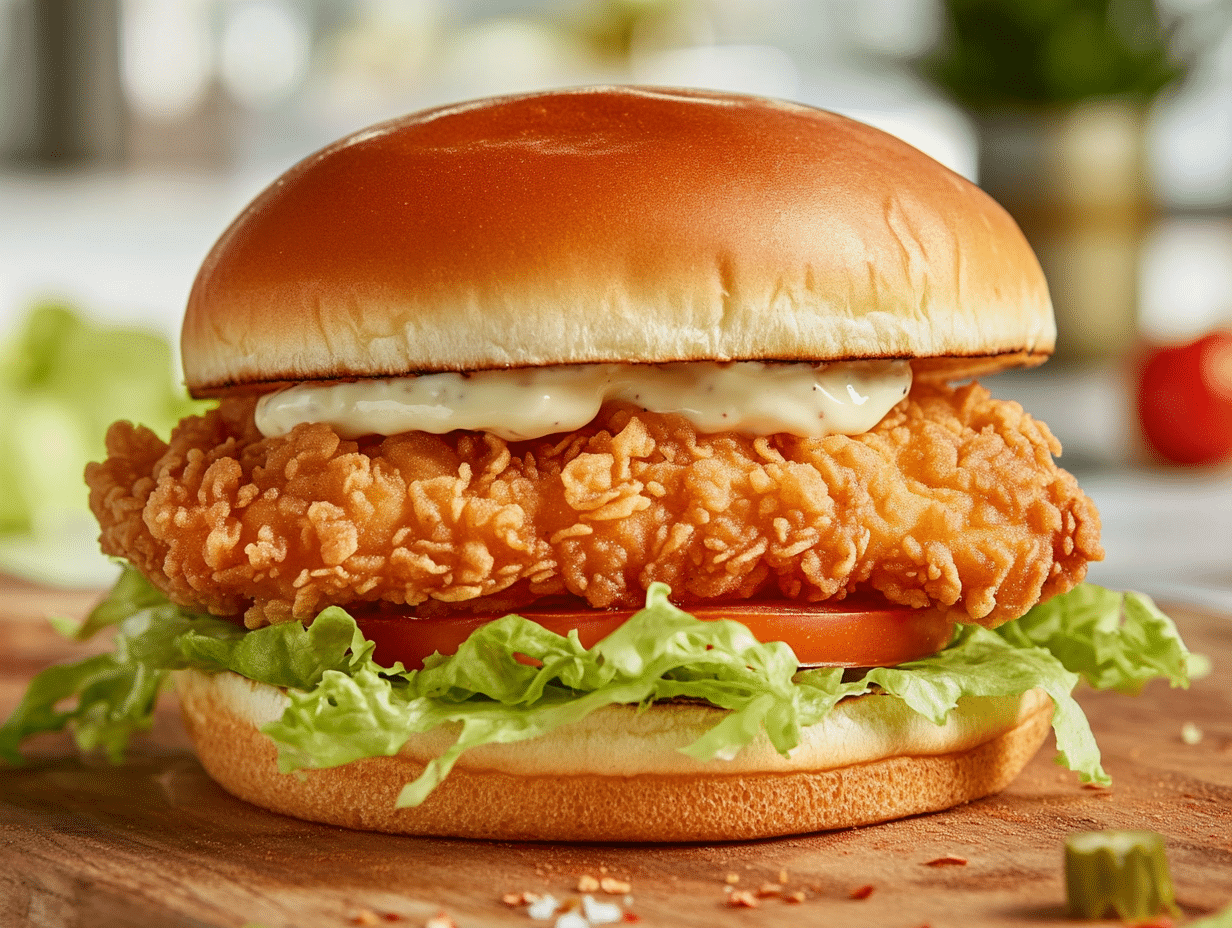
KFC-Style Zinger Burger

Ingredients
For the Chicken Marinade:
- 4 pieces boneless chicken thighs skinless, trimmed of excess fat
- 1 cup buttermilk full-fat preferred for flavor and tenderness
- 1 tbsp hot sauce such as Frank’s RedHot or Tabasco
- 1 tsp salt
For the Crispy Coating:
- 1 ½ cups all-purpose flour
- 1 tbsp cornstarch adds extra crispiness
- 2 tsp paprika preferably smoked
- 1 ½ tsp garlic powder
- 1 tsp onion powder
- 1 tsp cayenne pepper adjust to taste if less spice is desired
- 1 tsp salt to season flour mixture
For Frying:
- 3 cups vegetable oil for deep frying; peanut oil is an excellent option
To Assemble:
- 4 pieces burger buns brioche buns recommended, sliced and toasted
- 4 tbsp mayonnaise or spicy mayonnaise for a kick
- 1 cup iceberg lettuce shredded finely
- 1 medium tomato sliced, optional
Instructions
- Place boneless chicken thighs in a bowl with buttermilk, hot sauce, and salt. Mix thoroughly, then cover and refrigerate for at least 30 minutes, up to overnight for optimal flavor and tenderness.
- In a separate bowl, combine flour, cornstarch, paprika, garlic powder, onion powder, cayenne, and salt. Mix well until evenly incorporated.
- Remove chicken from marinade, allowing excess to drip off. Dredge each thigh generously in the flour mixture, pressing gently to form rough, crispy ridges. Set on a tray to rest for 10 minutes.
- Heat vegetable oil in a deep pot to 350°F (175°C). Fry chicken in batches without overcrowding for 6–8 minutes, turning halfway until golden brown and internal temperature reaches 165°F (74°C). Drain on a wire rack.
- Lightly toast burger buns on a skillet or griddle until golden.
- To Assemble: Spread 1 tbsp of mayonnaise on each bun base, layer with shredded lettuce, add a crispy chicken thigh, a slice of tomato (if using), and top with the other half of the bun. Serve hot.
Notes
- For extra heat, add chili flakes to the flour mix or use a spicier hot sauce.
- To keep chicken extra juicy, marinate for at least 2–4 hours.
- If baking instead of frying, brush coated chicken lightly with oil and bake at 400°F (200°C) for 25–30 minutes, flipping once.