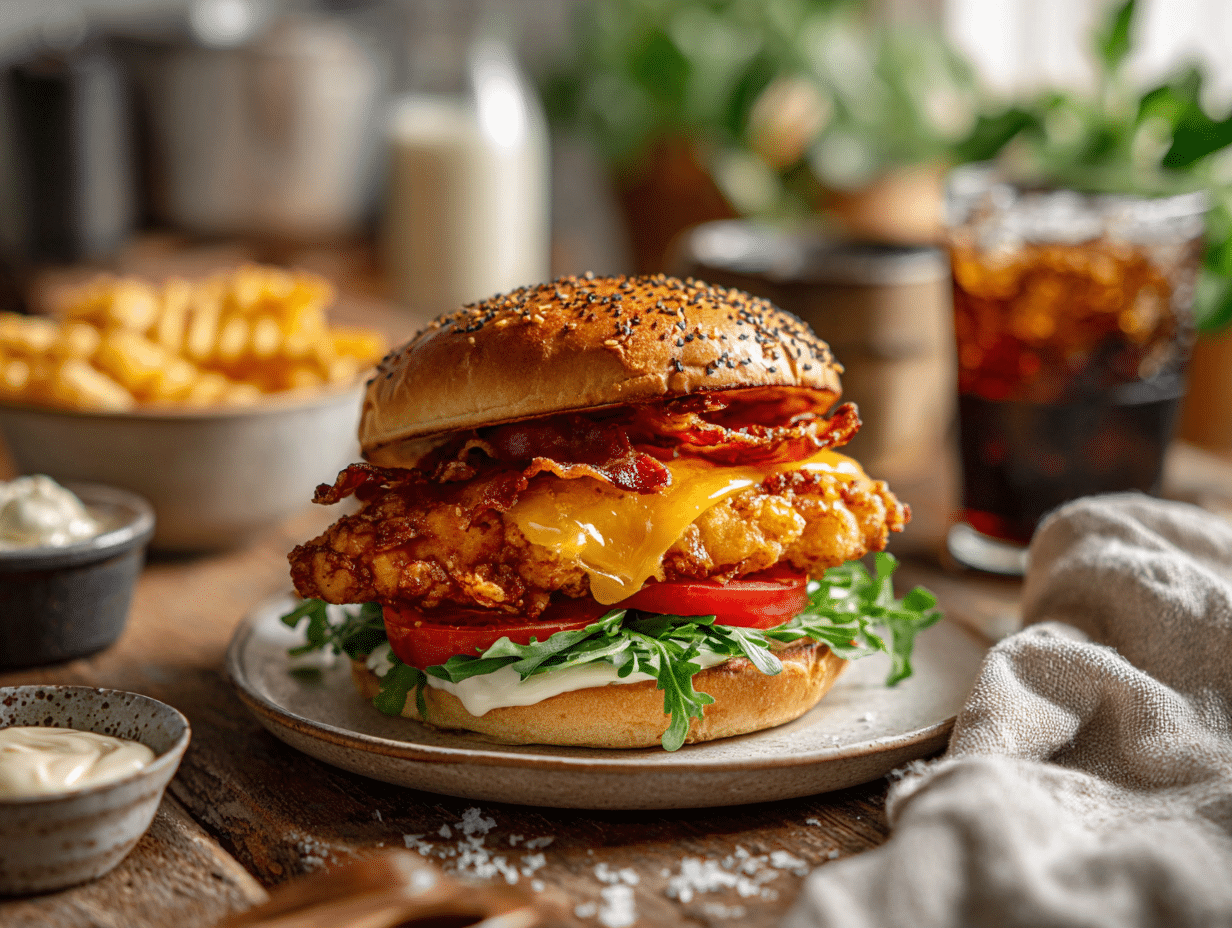
The Story Behind the Burger King Cheese and Bacon Tendercrisp
The Tendercrisp sandwich represents a pivotal moment in fast-food history, marking Burger King’s bold entry into the premium crispy chicken sandwich arena. Launched in the early 2000s, this sandwich was engineered to compete directly with other chains’ crispy chicken offerings, but with a distinctly BK twist—that signature peppery mayo that set it apart from its competitors.
Origins and Development
Burger King introduced the Tendercrisp as part of their broader menu modernization strategy. The sandwich emerged during an era when fast-food chains were racing to perfect the crispy chicken formula—a quest for that ideal balance between a shatteringly crisp exterior and juicy interior that could withstand the rigors of quick-service preparation while maintaining quality.
What made the Tendercrisp special wasn’t just the chicken itself, but the carefully orchestrated combination of elements. The development team spent months perfecting the breading blend, which featured a proprietary mix of seasonings designed to complement rather than overpower the chicken. The result was a coating that stayed crispy even under the assault of mayo, lettuce moisture, and tomato juices.
The Signature Elements
The genius of the Tendercrisp lies in its simplicity paired with precise execution. Each component serves a specific purpose:
The Chicken: Unlike many competitors who used formed patties, Burger King opted for whole muscle chicken breast, pounded to uniform thickness. This choice delivered better texture and allowed for more even cooking.
The Breading: The signature craggy coating wasn’t just for show. Those irregular peaks and valleys increased surface area, creating more opportunities for crispness while trapping pockets of seasoning.
The Peppercorn Mayo: Perhaps the most distinctive element, this wasn’t your standard fast-food mayo. The coarse-ground black pepper provided both visual appeal and a sharp counterpoint to the rich chicken and bacon.
The Bacon: Two strips, crisscrossed for optimal coverage and structural integrity. The bacon served as both a flavor enhancer and a textural bridge between the crispy chicken and soft bun.
Cultural Impact and Legacy
The Tendercrisp became more than just a menu item—it evolved into a cultural touchstone for a generation of fast-food enthusiasts. Its introduction coincided with the rise of food blogging and online reviews, making it one of the first fast-food items to achieve viral status through word-of-mouth marketing.
Food critics praised its balanced approach to the crispy chicken sandwich, noting how it avoided the common pitfalls of either over-seasoning or blandness. The sandwich struck a chord with consumers who wanted something more sophisticated than a basic chicken sandwich but still craved the comfort of familiar fast-food flavors.
Technical Innovation
From a culinary perspective, the Tendercrisp showcased several technical innovations in fast-food preparation. The breading system incorporated elements typically found in higher-end restaurants, including the use of buttermilk for tenderness and cornstarch for extra crispness. The double-breading technique, while time-consuming, created the signature texture that distinguished it from competitors.
The oil temperature management was crucial—maintaining the sweet spot between 335-355°F ensured the coating crisped properly without absorbing excess oil. This precision requirement pushed Burger King to upgrade their frying equipment and training procedures across locations.
Evolution and Variations
Over the years, the Tendercrisp platform spawned numerous variations. The Original Chicken Sandwich shared the same base but with simpler toppings. Regional variations included spicy versions with cayenne-spiked breading and specialty editions featuring different cheese options or premium bacon varieties.
The sandwich’s flexibility made it a testing ground for new flavor profiles. Limited-time offerings included BBQ versions, ranch variations, and even internationally-inspired takes that incorporated flavors from Burger King’s global markets.
The Home Cook’s Challenge
Recreating the Tendercrisp at home presents unique challenges and opportunities. While home cooks lack the specialized equipment of commercial kitchens, they can actually achieve superior results in some areas. The ability to work in smaller batches allows for better temperature control, and the freedom to source higher-quality ingredients can elevate the final product.
The key to success lies in understanding the science behind each element. The buttermilk marinade serves dual purposes—tenderizing the meat while providing a tacky surface for breading adhesion. The flour-cornstarch blend mimics commercial coating mixes, creating a lighter, crispier crust than flour alone. The addition of baking powder introduces tiny air pockets that expand during frying, further enhancing crispness.
Modern Relevance
In today’s culinary landscape, where the lines between fast food and casual dining continue to blur, the Tendercrisp’s influence can be seen across the industry. Its success proved that fast-food customers would embrace more complex, chef-inspired preparations if executed properly.
The sandwich’s emphasis on textural contrast—crispy chicken, creamy mayo, crunchy lettuce, juicy tomato—established a template that countless restaurants still follow. The peppercorn mayo, once considered daring for a mainstream fast-food item, paved the way for the specialty sauces and aiolis now common across the industry.
Conclusion
The Burger King Cheese and Bacon Tendercrisp represents more than just a successful menu item—it’s a snapshot of fast food’s evolution from simple, standardized offerings to more sophisticated, chef-driven creations. Its enduring popularity, even inspiring home cooks to recreate it years later, speaks to its perfect balance of innovation and comfort. In recreating this sandwich at home, we’re not just making dinner; we’re participating in a piece of culinary history that changed how America thinks about fast-food chicken.
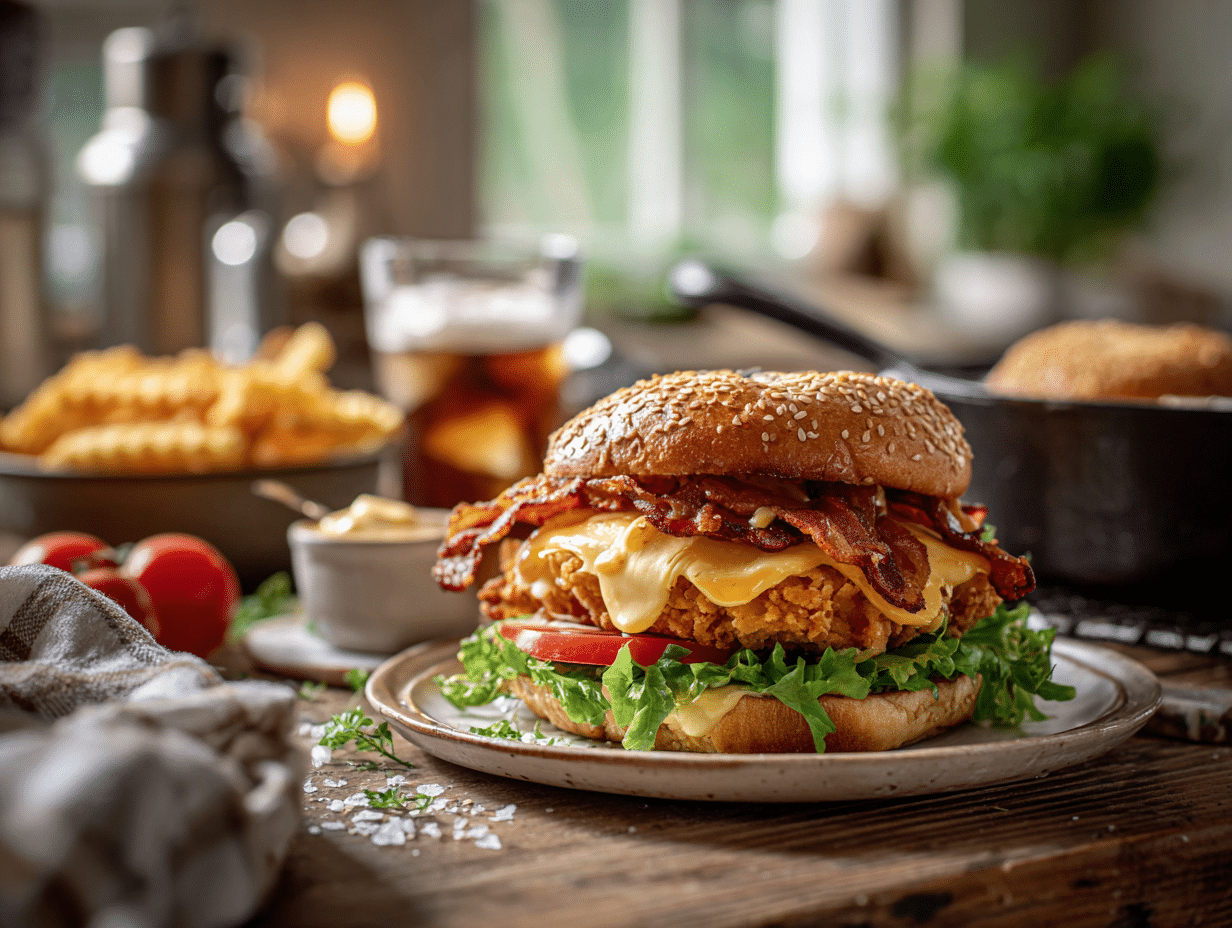
Copycat Burger King Cheese and Bacon Tendercrisp

Ingredients
For the Crispy Chicken:
- 4 pieces boneless, skinless chicken breasts (about 5–6 oz each), pounded to 1/2 inch thick organic or air-chilled for best texture and flavor
- 1 cup buttermilk full-fat preferred for better cling
- 1 tsp hot sauce optional, for subtle tang and color
- 1 tsp kosher salt Diamond Crystal; halve if using Morton
- 1 ½ cups all-purpose flour unbleached
- ½ cup cornstarch for extra crispness
- 1 tsp baking powder lightens the crust
- 1 ½ tsp paprika sweet or smoked; smoked adds BBQ depth
- 1 tsp garlic powder
- 1 tsp onion powder
- ½ tsp freshly ground black pepper
- ½ tsp ground white pepper optional, for fast-food style warmth
- 1 tsp fine sea salt adjust to taste
- 2 tbsp buttermilk (for flour craggies) drizzle into dredge to create crunchy bits
- 2 quarts neutral frying oil (canola, peanut, or corn) enough for 1 1/2–2 inches depth
For the Peppercorn Mayo:
- ½ cup mayonnaise Duke’s or Kewpie for best body
- 1 tsp freshly cracked black pepper coarse grind for aroma
- 1 tsp Dijon mustard adds gentle heat and balance
- 1 tsp lemon juice freshly squeezed
- 1 clove garlic, very finely grated microplane for a smooth sauce
- 1 pinch granulated sugar balances the pepper
For the Assembly:
- 8 slices thick-cut bacon applewood-smoked recommended
- 4 slices cheese (American or mild cheddar) American melts most like the original
- 4 pieces sesame seed burger buns brioche or potato buns toast beautifully
- 2 tbsp unsalted butter, softened for toasting buns
- 4 pieces green leaf lettuce iceberg works for maximum crunch
- 1 large ripe tomato, sliced heirloom or beefsteak, 4 slices
Instructions
Pound and Marinate the Chicken (10 minutes):
- Place each chicken breast between two sheets of plastic wrap and pound to 1/2 inch thickness with a meat mallet. You’re aiming for even thickness so it cooks uniformly and stays juicy.
- In a bowl, whisk 1 cup buttermilk, 1 tsp hot sauce, and 1 tsp kosher salt. Add chicken and toss to coat. Let sit 10 minutes at room temperature. (Optional longer soak up to 4 hours in the fridge for deeper seasoning.)
Make the Peppercorn Mayo (5 minutes):
- In a small bowl, combine 1/2 cup mayonnaise, 1 tsp cracked black pepper, 1 tsp Dijon, 1 tsp lemon juice, 1 grated garlic clove, and a pinch of sugar. Whisk until glossy and speckled. The aroma should be lemony with a peppery lift.
Set Up the Dredge (5 minutes):
- In a shallow dish, mix 1 1/2 cups flour, 1/2 cup cornstarch, 1 tsp baking powder, paprika, garlic powder, onion powder, black pepper, white pepper, and fine sea salt. Drizzle in 2 tbsp buttermilk and toss with fingers to form tiny flour pearls—these become ultra-crispy “craggies.”
Preheat Oil and Holding Oven (5 minutes):
- Pour oil into a heavy 12-inch skillet or Dutch oven to a depth of 1 1/2–2 inches. Heat to 350°F / 175°C. Use a thermometer for accuracy; the surface should shimmer.
- Set oven to 200°F / 93°C to keep cooked cutlets warm, placing a wire rack over a sheet pan.
Crisp the Bacon (8 minutes):
- In a skillet over medium heat, cook 8 slices bacon until deep golden and wavy, about 8 minutes. Transfer to paper towels. (Alternative: bake at 400°F / 205°C for 12–15 minutes.)
Dredge and Fry the Chicken (16–18 minutes total; two batches):
- Working one piece at a time, lift chicken from buttermilk, let excess drip, then press into the seasoned flour, packing on the craggies. Shake off loose flour.
- Fry 2 cutlets per batch at 350°F / 175°C until deep golden and crisp, about 3–4 minutes per side (7–8 minutes total), to an internal temp of 165°F / 74°C. Return oil to 350°F between batches.
- Transfer to the rack in the warm oven while you finish the rest. Total frying time for 4 cutlets: ~16 minutes.
Melt the Cheese (1 minute):
- Top each hot cutlet with 1 slice cheese. Tent the skillet briefly with a lid off heat for 30–60 seconds until glossy and just melted.
Toast the Buns (2 minutes):
- Split the 4 sesame buns, spread cut sides with softened butter, and toast in a skillet or under the broiler until lightly caramelized—about 1–2 minutes. Edges should be golden, not dark brown.
Assemble (2 minutes):
- Spread peppercorn mayo on both bun halves.
- Layer lettuce and a juicy tomato slice on the bottom bun.
- Add the cheese-topped crispy chicken, then crisscross with 2 bacon slices.
- Cap with the top bun. The sandwich should feel light yet substantial, the crust audibly crisp.
Notes
Chef’s Tips:
- Extra Crunch: Double-dip—briefly dunk floured chicken back into buttermilk, then flour again.
- Oil Management: Keep between 335–355°F (168–179°C). Too cool = greasy; too hot = scorched crust.
- Cheese Choices: American for classic melt, mild cheddar for sharper bite, Monterey Jack for stretch.
- Dietary Swap: Use gluten-free all-purpose flour and starch blend; fry as directed.
- Air Fryer Option: Spray dredged cutlets with oil and cook at 375°F / 190°C for 12–14 minutes, flipping halfway; add cheese in last minute.
- Faster Bacon: Start in a cold pan; the gentle render speeds crisping.
- Allergens: Wheat, egg (if in mayo), dairy (buttermilk, cheese).
- For a lighter version, air-fry as noted and use turkey bacon.
- Store leftover cooked chicken in an airtight container up to 2 days; re-crisp at 400°F / 205°C for 6–8 minutes.