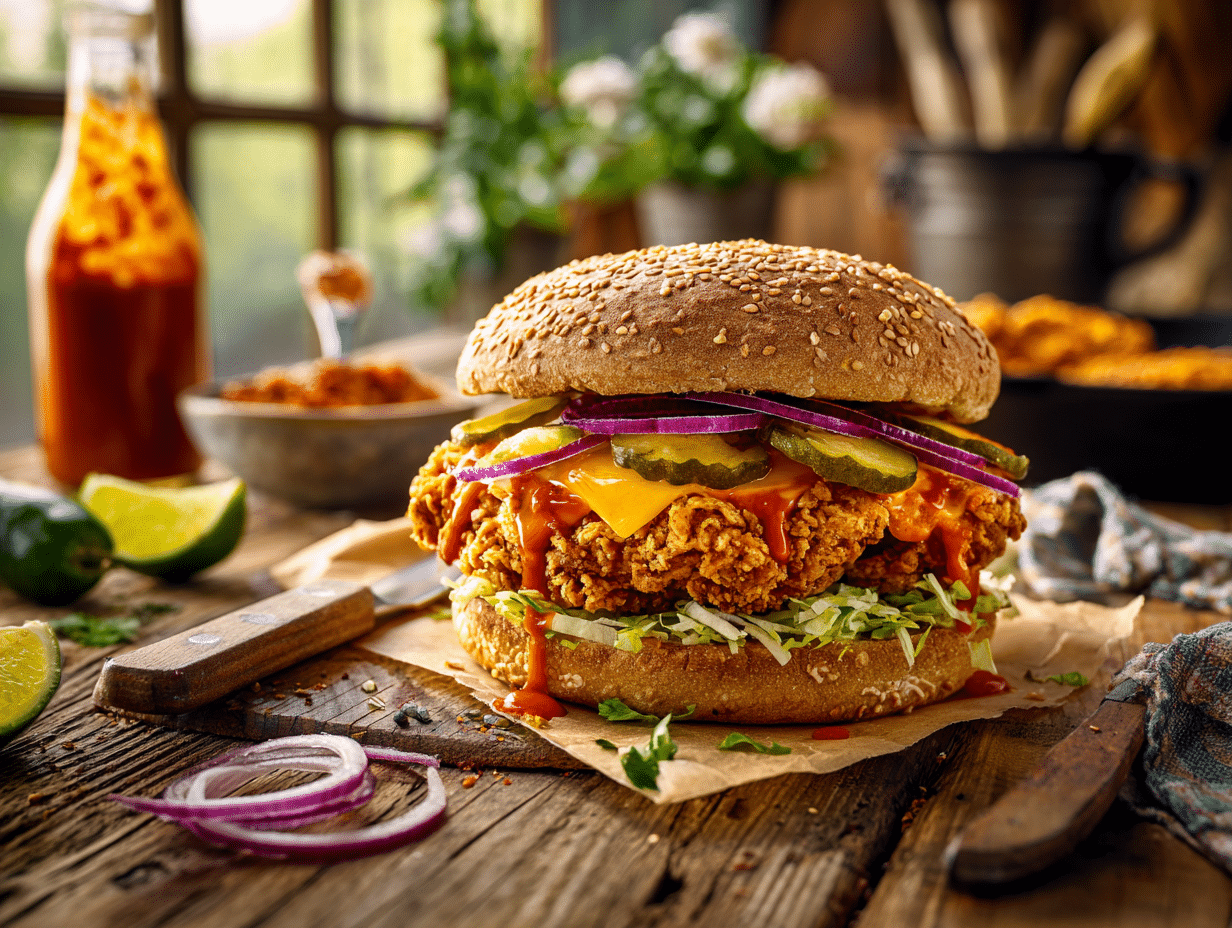
This is a homemade take on KFC’s Flamin’ Wrapstar — a crispy fried chicken fillet wrapped in a flour tortilla, loaded with a spicy mayo-based sauce, and served in a toasted bun. The real reason to make it at home is control: you get to dial the heat exactly where you want it and pull the chicken when it’s genuinely juicy, not when a heat lamp says so.
Why this recipe works
Two things carry this recipe. First, the buttermilk brine does real work — the acid tenderizes the chicken and the fat helps the seasoned coating stick, so you get a crust that stays on through the sauce and the tortilla wrap. Second, the flour-cornstarch dredge ratio matters more than most people expect: too much flour alone gives you a thick, bready shell, but cutting in cornstarch keeps the crust thin, shattery, and genuinely crispy even after you add the sauce. Get those two right and the rest of the build is straightforward.
Mistakes to avoid
- Frying cold chicken straight from the brine: Cold chicken drops your oil temperature fast, which means the crust absorbs oil before it sets. Let the brined fillet sit at room temperature for 15–20 minutes before dredging.
- Skipping the wire rack after frying: Resting fried chicken on paper towels traps steam underneath and softens the bottom crust within minutes. A wire rack over a sheet pan keeps air circulating on all sides.
- Under-seasoning the dredge: The brine seasons the meat, but the coating needs its own salt and spice. Taste a pinch of your dry mix — it should taste boldly seasoned on its own, not just faintly spiced.
- Wrapping the tortilla too tight around hot chicken: A tortilla pulled snug while the chicken is steaming hot will go soggy fast. Wrap it loosely and let it sit seam-side down for 30 seconds so it holds its shape without steaming itself soft.
- Overloading the sauce before assembly: The flamin’ sauce is the dominant flavor here. Add it in two stages — a layer on the bun base and a smaller drizzle on top of the wrapped chicken — rather than dumping it all in one place, or every bite won’t taste the same.
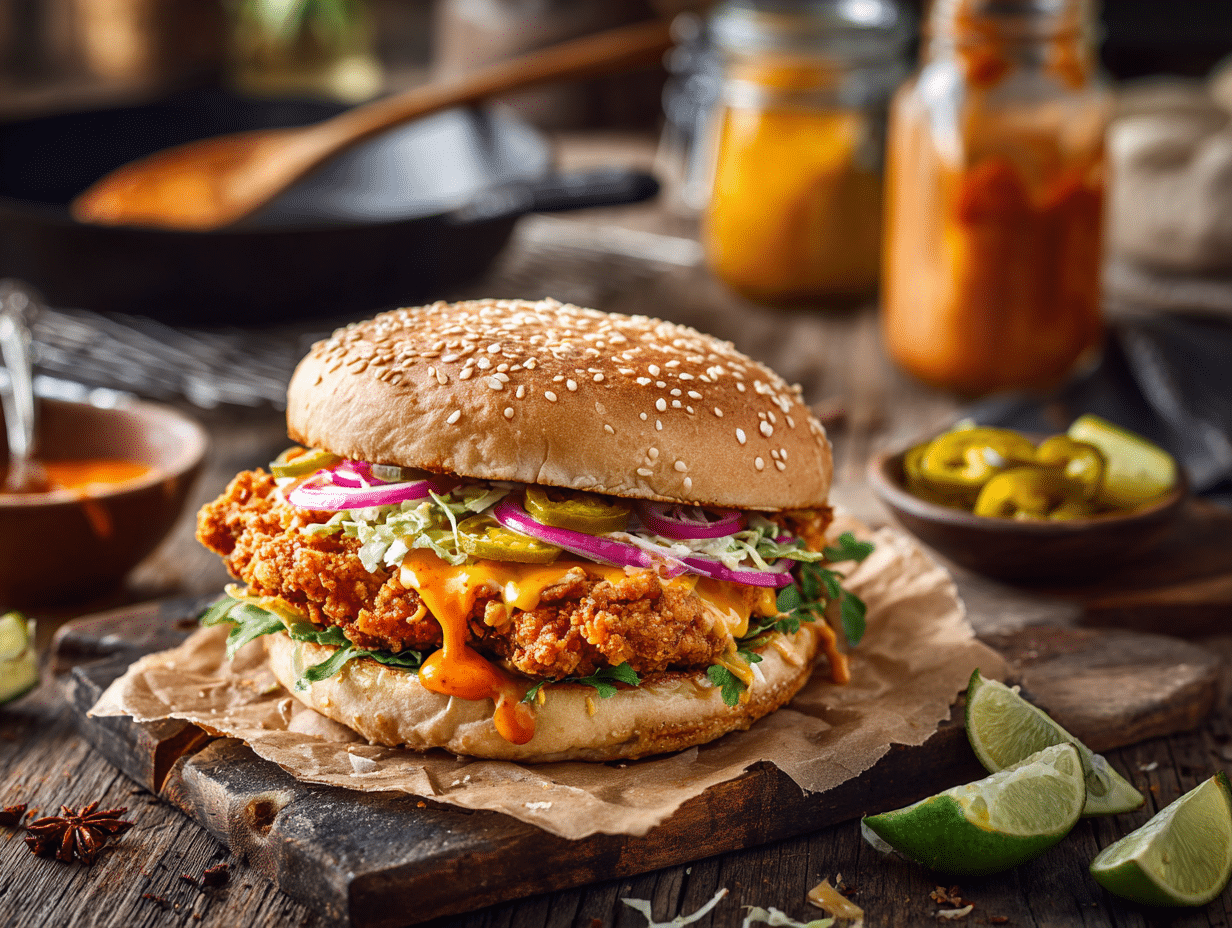
KFC Flamin Wrapstar Burger (Gourmet Copycat)

Ingredients
For the Spicy Buttermilk Brine:
- 1.5 lb boneless skinless chicken thighs trimmed; 4 medium thighs for even portions
- 1 cup buttermilk full-fat preferred for tenderness
- 2 tbsp hot sauce Frank’s RedHot or your favorite
- 1 tsp kosher salt Diamond Crystal; reduce to 3/4 tsp if using Morton
- 1 tsp garlic powder
- 0.5 tsp onion powder
- 0.5 tsp ground white pepper adds gentle heat without dark flecks
For the Seasoned Dredge:
- 1.5 cups all-purpose flour bleached for extra crispness, if available
- 0.5 cup cornstarch for ultra-crisp crust
- 2 tsp kosher salt
- 1.5 tsp smoked paprika Spanish pimentón adds depth
- 1 tsp cayenne pepper increase to 1 1/2 tsp for extra heat
- 1 tsp ground black pepper freshly ground
- 1 tsp baking powder lightens the crust
- 1 tsp MSG (optional) accent brand; boosts savoriness
- 1 tsp dried oregano rub between fingers to release oils
For Frying:
- 1.5 qt neutral frying oil peanut, canola, or corn oil; enough for 2 in depth
For the Flamin’ Sauce:
- 0.5 cup mayonnaise full-fat for best mouthfeel
- 2 tbsp sriracha or your preferred hot chili sauce
- 1 tbsp chili crisp or sambal oelek optional for texture and heat
- 1 tsp Dijon mustard
- 1 tsp honey balances heat
- 1 tsp fresh lime juice brightens the sauce
- 1 pinch kosher salt to taste
For Assembly:
- 4 pieces sesame burger buns, split soft brioche or potato buns also great
- 2 tbsp unsalted butter, softened for toasting buns
- 4 pieces soft flour tortillas (6 in) warm and pliable
- 4 slices pepper jack cheese for melty heat
- 1 cup shredded iceberg lettuce crisp and cold
- 8 chips dill pickles crinkle-cut preferred
- 1 small red onion, thinly sliced rinsed under cold water to mellow bite
- 1 piece fresh jalapeño, thinly sliced (optional) for extra flamin’ heat
Instructions
- Brine the Chicken (30 minutes): Trim excess fat from the thighs and lightly pound to an even 1/2 in thickness for uniform cooking. In a bowl, whisk buttermilk, hot sauce, salt, garlic powder, onion powder, and white pepper. Submerge chicken, cover, and refrigerate for 30 minutes (up to 8 hours for deeper flavor).
- Make the Flamin’ Sauce (5 minutes): Whisk mayonnaise, sriracha, chili crisp, Dijon, honey, lime juice, and a pinch of salt until smooth. Taste: it should be creamy, tangy, and fiery. Refrigerate to meld flavors.
- Set Up the Dredge (5 minutes): In a shallow bowl, whisk flour, cornstarch, salt, smoked paprika, cayenne, black pepper, baking powder, MSG, and oregano. Lift chicken from brine, letting excess drip. Toss in dredge, then press firmly so little shaggy flakes form—these become the signature craggy crunch. Set coated chicken on a wire rack to rest while you heat the oil.
- Heat the Oil (about 10 minutes): Pour oil into a heavy pot to a 2 in depth and heat to 350°F / 175°C. Stabilize between 325–350°F / 165–175°C for best crispness. Preheat an oven to 250°F / 120°C with a rack over a sheet pan to keep fried chicken warm and crisp.
- Fry the Chicken (about 16 minutes total for 2 batches): Fry in two batches to avoid crowding. Lower fillets gently—listen for a lively, steady sizzle. Fry 4 minutes, flip, then 4 minutes more, until deep golden-copper and internal temp reads 165°F / 74°C. Drain on the rack and hold warm in the oven. Repeat for the second batch.
- Toast Buns and Warm Tortillas (4 minutes): Brush cut sides of buns with butter and toast in a skillet over medium heat until golden, 1–2 minutes. Warm tortillas directly over a burner flame or in a dry skillet, 30–45 seconds per side until supple. Optionally, lay a warm tortilla on the bottom bun in the skillet and toast lightly 1–2 minutes so the edges crisp—your "wrapstar halo" for extra texture.
- Assemble (about 5 minutes): Spread flamin’ sauce on both bun halves. Pile lettuce and pickles on the bottom bun. Add a fried chicken fillet, top with pepper jack, then drape or fold a warm tortilla around the fillet so it hugs the sides. Finish with red onion, optional jalapeño, a final spoon of sauce, and the bun crown. The perfect bite smells toasty and spicy, feels crackly outside and plush within, and leaves a soft heat that blooms after 2–3 seconds.
Notes
Chef’s Tips:
- Craggier Crust: After dredging, mist the coated chicken lightly with the leftover buttermilk (or flick a few drops on) and re-dredge. Those extra flakes equal extra crunch.
- Heat Control: If the sizzle sounds aggressive and sharp, your oil’s too hot. A gentle but steady fizz is ideal.
- No Deep-Fry? Bake on a rack at 425°F / 220°C for 18–22 minutes, flipping halfway; spritz with oil for better browning. Air-fryer: 390°F / 200°C for 14–16 minutes, flipping once.
- Dietary Swaps: Use gluten-free all-purpose flour and cornstarch 1:1; for dairy-free, sub unsweetened oat milk plus 1 tsp lemon juice for buttermilk.
- Saucier Spectrum: Swap sriracha for gochujang (sweeter heat) or chipotle in adobo (smoky heat). Add 1/4 tsp toasted ground cumin for warmth.
- Faster Onion Mellowing: Toss slices with a pinch of salt and a splash of vinegar; wait 5 minutes, then blot—clean flavor, less bite.
Nutrition
Frequently asked questions
What internal temperature should the fried chicken reach?
Poultry must hit 165°F (74°C) at the thickest point — no exceptions, no pink inside. Use an instant-read thermometer rather than guessing by color, since the dark coating can make underdone chicken look done from the outside.
Can I make the flamin’ sauce less spicy without ruining it?
Yes — cut the hot sauce or cayenne by half and increase the smoked paprika to keep the color and some depth. The sauce still needs enough acid and fat to taste balanced, so don’t reduce the mayo or vinegar when you pull back on the heat.
Can I use chicken thighs instead of a breast fillet?
Boneless, skinless thighs work well here and are more forgiving if your oil temperature dips slightly — they stay juicy where a thin breast can dry out. Pound them to an even thickness so they cook through at the same rate as the coating browns.
What oil is best for frying and how much do I need?
A neutral oil with a high smoke point — vegetable, canola, or peanut — is the right call. You need enough to submerge at least half the fillet, typically 2–3 inches deep in a heavy pot or Dutch oven, so the crust sets evenly on all sides.
Can I prep any components ahead of time?
The chicken can brine overnight in the fridge, which actually improves the result. The flamin’ sauce keeps well in a sealed container in the fridge for up to five days, so making it a day ahead is worth doing.
My tortilla keeps splitting when I wrap it — what am I doing wrong?
A cold or dry tortilla will crack under pressure. Warm it for 20–30 seconds in a dry skillet or directly over a low gas flame until it’s pliable before wrapping — this takes 30 seconds and makes a real difference to the final build.
More burger recipes to try
- KFC Double Crunch Perfected
- KFC Famous Chicken Sandwich
- Spicy Zinger Fried Chicken
- Nashville Hot Chicken Perfected