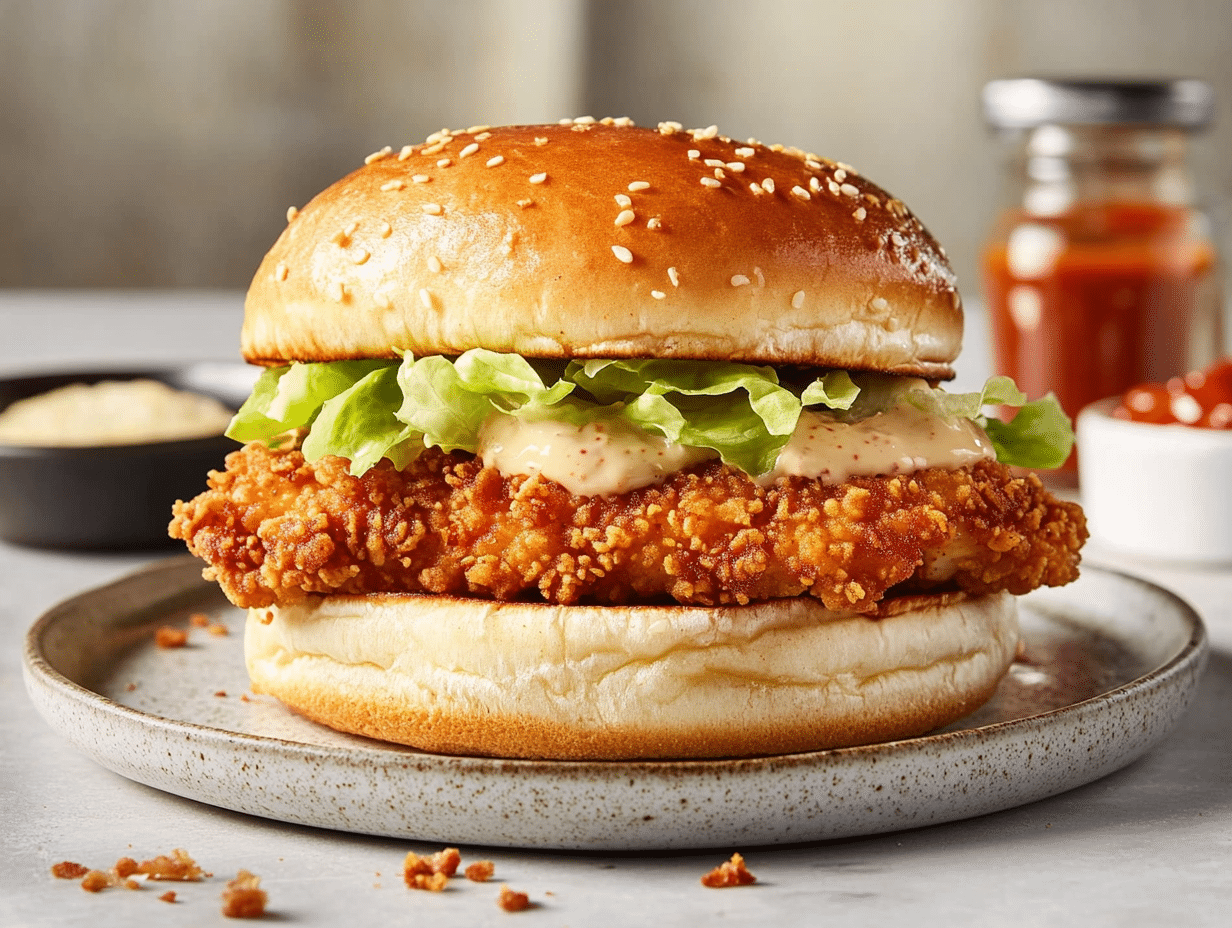
The McDonald’s McSpicy Chicken Sandwich has earned its place as a fast-food icon across the globe, becoming a staple in menus from Singapore to the UK, celebrated for its bold seasoning, juicy interior, and fiery heat. In markets like Asia and the Middle East, where spice-loving palates are the norm, the McSpicy stands out as a crowd favorite. But despite its popularity, the McSpicy isn’t always available worldwide; it’s often a regional offering with recipe variations based on local flavor profiles. That’s where the inspiration for this homemade version was born—a desire to bring the global favorite into our own kitchens, with the added benefit of ingredient control, freshness, and the satisfying experience of making it from scratch.
The essence of the McSpicy lies in three core components: the marinade, the crispy coating, and the sandwich assembly. In the McDonald’s proprietary kitchen, much of the prep work is streamlined and standardized, but at home, going back to traditional cooking methods allows us to elevate the experience without straying far from what made the original great.
Let’s start with the heart of the sandwich: the chicken. In commercial versions, the McSpicy often features a formed chicken patty or seasoned thigh meat pressed into uniformity. In this recipe, instead of forming patties from ground meat or using pre-processed cuts, we’re opting for whole skinless boneless chicken thighs. This cut ensures a tender and juicy bite, with enough fat content to stay moist through the frying process. Because chicken breast can easily dry out, especially with deep frying, thighs are a superior choice for retaining succulence and flavor. The recipe does offer the option to substitute with breast meat for a leaner bite, but aficionados of the classic sandwich should stick with thighs for authenticity.
The marinade is where flavor infusion begins. Much like buttermilk-brined fried chicken, the combination of buttermilk and hot sauce not only tenderizes the meat but also ensures layers of flavor penetrate every bite. This technique draws from Southern culinary traditions where buttermilk is prized for its acidity and natural enzymes that break down proteins. The addition of hot sauce, such as Frank’s RedHot or Sriracha, boosts the heat level right from the start, layering the spice instead of just adding it at the coating stage. Marinating for at least 30 minutes gives decent flavor, but if you can let it sit for several hours or overnight, the results are better still—an amplification of flavor and tenderness that sets homemade versions apart.
Now, the coating—the secret to that shatteringly crisp exterior. Unlike store-bought or fast-food renditions that may rely on commercial breading systems or fryers designed for speed and consistency, this homemade version uses a straightforward, yet carefully balanced, dredge of flour and cornstarch. Cornstarch is the secret weapon here—it reduces the amount of gluten in the coating and helps achieve an ultra-crisp texture reminiscent of tempura or high-end fried chicken. The flour blend is seasoned with cayenne, garlic powder, smoked paprika (for a subtle smokiness and color), and freshly cracked black pepper. Cayenne is the driving force behind the heat, and it can be increased or decreased based on your spice tolerance, making this recipe adaptable to a variety of palates.
The dredging process is more than just a coating step—it’s where the crunch is born. Pressing the seasoned flour mixture into every crevice of the chicken creates the kind of craggly, deeply textured crust that mimics fast-food authenticity while giving you control over just how much breading each piece gets. Letting the breaded chicken rest for five minutes before frying allows the coating to hydrate slightly and adhere more firmly, reducing the chance of it flaking off during cooking.
Frying is performed at a consistent 350°F (175°C), the sweet spot for golden-brown perfection. Too hot, and the exterior burns before the inside cooks; too low, and the coating absorbs excess oil and turns greasy. A kitchen thermometer comes in handy here, but a quick test with a breadcrumb can help as well—it should sizzle and float when the oil is at the right temperature. Draining on a wire rack preserves that hard-earned crispiness by allowing steam to escape, whereas paper towels can sometimes steam the chicken from underneath, softening the crust.
The assembly of the sandwich is simple yet crucial. A lightly toasted burger bun provides the base and top, giving not only structure but also a buttery note that complements the spiced meat. Spreading mayonnaise on both halves provides creamy contrast to the crunchy chicken and helps balance out the heat. For those chasing even more spice, a spicy mayo variation (mayo mixed with sriracha and lemon juice) adds a welcome kick and tang. Iceberg lettuce, often maligned for its simplicity, is actually ideal here: cold, crisp, and neutral, it adds crunch and temperature contrast without trying to compete with the other elements.
From an ingredient perspective, making the McSpicy at home allows for sourcing organic meats, adjusting salt and fat levels, and eliminating preservatives often found in fast food. It also opens the door for customization—think of cheese additions like a slice of pepper jack for extra creamy spice, or even swapping in a brioche bun for a richer experience.
Finally, there’s nostalgia. For many, the McSpicy captures a memory of youth, late-night runs to the drive-thru, or a reliable bite during travel. Recreating it at home ties together those memories with new traditions—be it family weekend dinners or spicy food challenges with friends. It’s comfort food that brings both familiarity and creativity to the table. By mastering this recipe, you’ll be able to enjoy a globally inspired fast-food favorite while showcasing your culinary chops, creating something that’s not only comparable to the original but, in many ways, exceeds it.
This homemade McSpicy is about bringing that international flavor and fast-food magic into your kitchen—only juicier, fresher, and far more customizable. Whether you’re a seasoned home cook or a passionate fan of the original, this recipe is a spicy, crunchy love letter to one of McDonald’s most flavorful offerings.
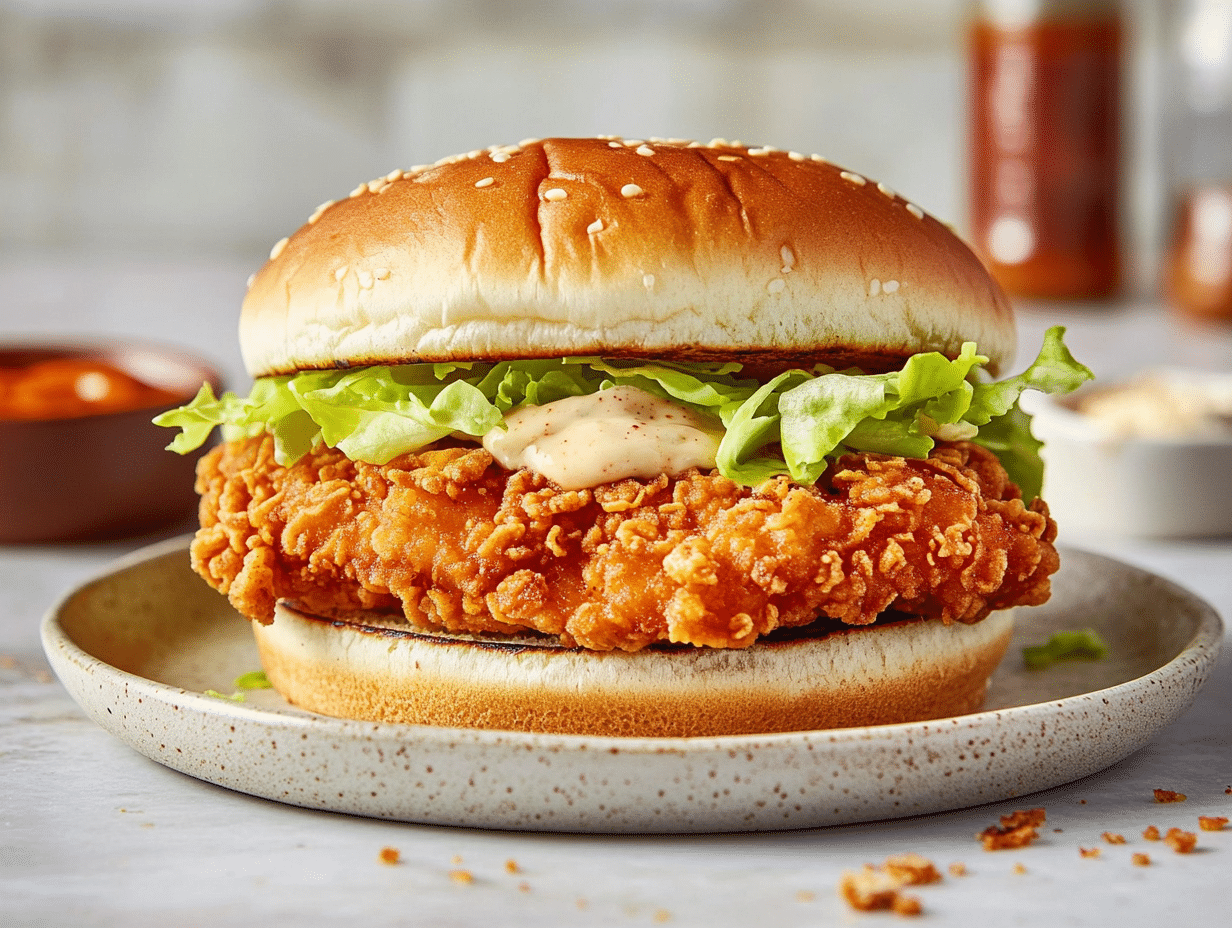
Homemade McSpicy Chicken Sandwich

Ingredients
For the Marinade:
- 4 pieces boneless chicken thighs skinless, trimmed
- 1 cup buttermilk or whole milk with 1 tbsp lemon juice
- 1 tbsp hot sauce like Frank’s RedHot or Sriracha
- 1 tsp kosher salt
For the Crispy Coating:
- 1 ½ cups all-purpose flour
- 1 tbsp cornstarch for extra crunch
- 2 tsp cayenne pepper adjust to heat tolerance
- 1 tsp garlic powder
- 1 tsp paprika preferably smoked
- ½ tsp black pepper freshly cracked
For Assembly:
- 4 pieces burger buns toasted
- ½ cup mayonnaise or spicy mayo for more heat
- 1 cup iceberg lettuce shredded
- 2 cups vegetable oil for frying
Instructions
- Marinate the Chicken: In a bowl, mix the buttermilk, hot sauce, and salt. Submerge chicken thighs and marinate for at least 30 minutes or up to 12 hours chilled for deeper flavor and tenderness.
- Prepare the Dredge: In a shallow tray, combine the flour, cornstarch, cayenne, garlic powder, paprika, and black pepper. Mix thoroughly to evenly distribute spices.
- Dredge the Chicken: Remove chicken from the marinade, allowing excess to drip off. Dredge in seasoned flour until evenly coated, pressing firmly so the mixture adheres. Transfer to a rack for 5 minutes to set the crust.
- Fry the Chicken: Heat vegetable oil in a heavy pan or deep fryer to 350°F (175°C). Fry chicken one at a time for 5–6 minutes per side or until golden brown and internal temp reaches 165°F (74°C). Drain on wire rack.
- Assemble the Sandwich: Toast burger buns lightly for texture. Spread mayo on both halves, place crispy chicken on the bottom, top with iceberg lettuce, and close with top bun.
Notes
- Use thigh meat for juicier results, or breast for a leaner version.
- Add a slice of pepper jack cheese for a creamy, spicy twist.
- For a spicier mayo, mix mayo with a teaspoon of sriracha and lemon juice.