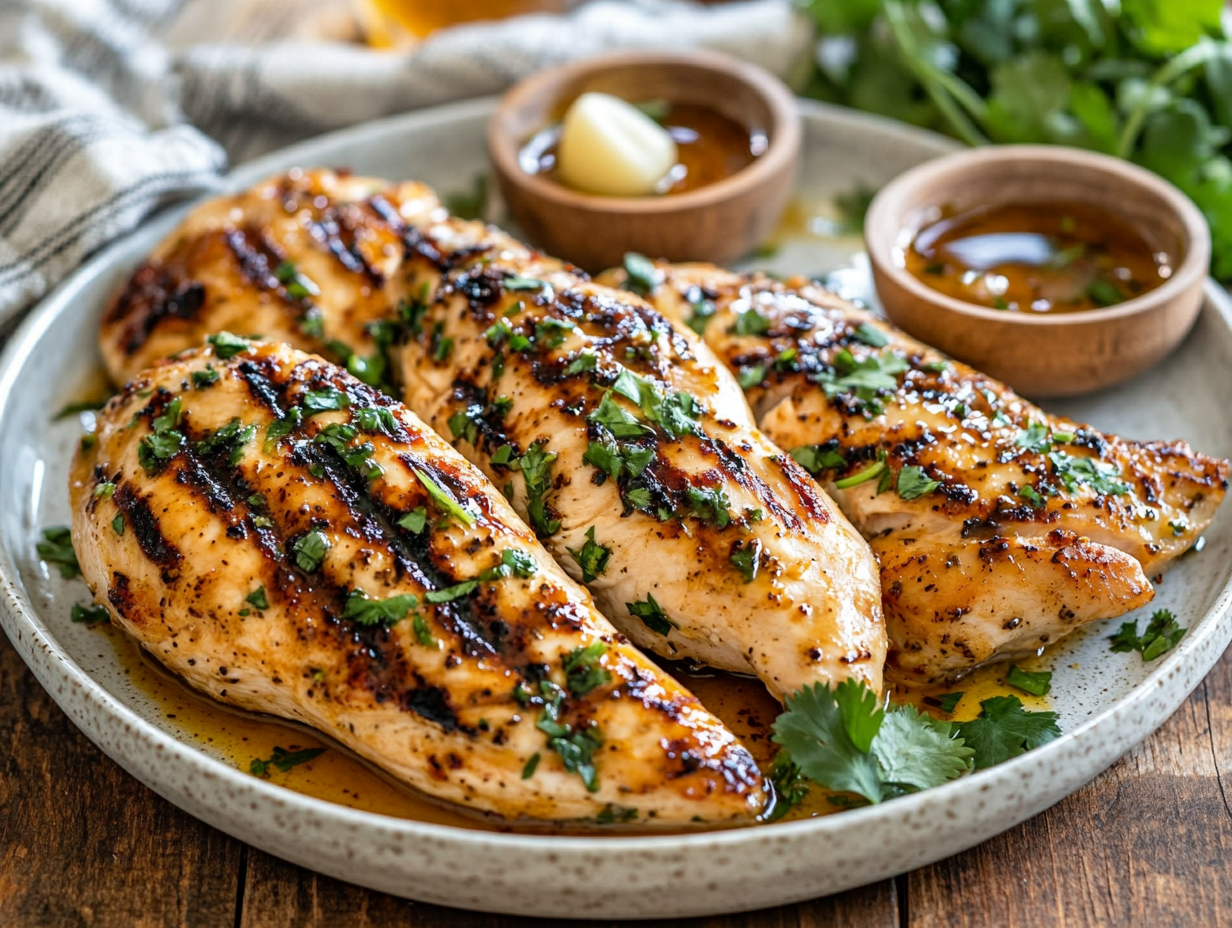
This is grilled chicken breast with a quick pan sauce built from calamansi juice, garlic, soy sauce, and honey, thickened with a cornstarch slurry. The whole thing comes together in 35 minutes. If you want a bright, citrusy chicken dish that isn’t another lemon-herb situation, this one delivers.
The technique that matters
Two things decide whether this dish works. First, the sauce: you need to keep stirring once the cornstarch slurry goes in. Stop stirring and it scorches on the bottom or sets unevenly into lumps. Medium heat, constant motion, and pull it off the burner the moment it coats the back of a spoon — that’s the window. Second, resting the chicken after grilling. Chicken breast is lean and tight; cut it immediately and the juices run straight out onto the board. Give it three to four minutes under a loose foil tent and the meat stays moist enough to actually absorb the sauce when you drizzle it on.
Smart swaps
- Calamansi juice: Fresh calamansi is the right call here, but it can be hard to find outside Filipino grocery stores. Bottled calamansi juice (look for brands like Tropics or Zesto) works fine. If you’re completely stuck, a 50/50 mix of fresh lime and fresh orange juice gets you close — skip the bottled lemon juice, it’s too flat.
- Light soy sauce: Regular soy sauce will make the sauce noticeably saltier and darker. If that’s all you have, start with 2 tablespoons and taste before adding more.
- Honey: Maple syrup substitutes well at the same quantity. Avoid agave — it doesn’t reduce the same way and the sauce stays thin.
- Chicken breasts: Boneless, skinless thighs work and stay juicier on the grill, though they need a minute or two longer. Either way, pull the chicken at an internal temperature of 165°F (74°C) — no exceptions with poultry.
What can go wrong
- Sauce seizes into a gummy clump: You added the cornstarch slurry to a sauce that was boiling too hard. Next time, drop the heat to a gentle simmer before whisking it in, and add it slowly.
- Sauce tastes flat or too sweet: Calamansi varies in acidity depending on ripeness. Taste the sauce before you thicken it and add a small squeeze more juice if it needs sharpness.
- Chicken sticks to the grill grates: The grates weren’t hot enough or weren’t oiled. Preheat fully, then wipe the grates with a folded paper towel dipped in oil held with tongs — do this right before the chicken goes on.
- Chicken is cooked outside but raw in the middle: Thick breasts are the usual culprit. Pound them to an even thickness of about ¾ inch before seasoning, or butterfly them. This also cuts grill time and keeps the outside from drying out.
- Sauce skins over while the chicken finishes cooking: Press a piece of plastic wrap directly onto the surface of the warm sauce in the pan. It stays smooth and pourable until you’re ready to serve.
Leftovers and meal prep
Cooked chicken keeps in an airtight container in the fridge for up to three days. Store the sauce separately — it thickens considerably when cold, but a 30-second warm in a small saucepan with a splash of water loosens it right back up. For freezing, the chicken freezes well for up to two months; the sauce can be frozen too, though the cornstarch can turn slightly grainy after thawing. If that happens, reheat it gently and whisk hard — it usually comes back together. To reheat the chicken without drying it out, slice it first and warm it in a covered skillet over low heat with a tablespoon of water for about four minutes rather than microwaving it whole.

Filipino Calamansi Garlic Sauce with Grilled Chicken

Ingredients
For the Calamansi Garlic Sauce
- ½ cup Calamansi juice Freshly squeezed, about 10-15 calamansi
- 4 cloves Garlic Minced
- 3 tablespoons Soy sauce Light soy sauce preferred
- 2 tablespoons Honey
- 1 teaspoon Cornstarch Mixed with 1 tablespoon water
For the Grilled Chicken
- 4 pieces Chicken breasts Boneless, skinless
- 2 tablespoons Olive oil
- 1 teaspoon Salt To taste
- ½ teaspoon ground black pepper Freshly ground
Instructions
- Prepare the Calamansi Garlic Sauce. In a small saucepan over medium heat, combine the calamansi juice, minced garlic, soy sauce, and honey. Stirring continuously, bring to a gentle boil.
- In a small bowl, mix the cornstarch with a tablespoon of water to create a slurry. Slowly whisk it into the saucepan. Continue stirring until the sauce thickens to a syrupy consistency, about 2-3 minutes. Remove from heat and set aside.
- Season the chicken breasts with olive oil, salt, and freshly ground black pepper. Ensure an even coating for a balanced flavor.
- Preheat a grill (or grill pan) to medium-high heat, approximately 200°C (390°F). Grill the chicken for 6-8 minutes on each side, or until fully cooked with an internal temperature of 75°C (165°F). Grilling imparts a smoky flavor that complements the tangy sauce.
- Once grilled, let the chicken rest for a few minutes. Drizzle with the calamansi garlic sauce right before serving or serve on the side for dipping.
Notes
Nutrition
FAQ
Can I use bottled calamansi juice instead of fresh?
Yes, bottled calamansi juice works in this recipe. Look for 100% juice with no added sweeteners, since the honey in the sauce already handles the sweetness balance.
How do I know when the sauce is thick enough?
Dip a spoon in the sauce and run your finger across the back — if the line holds without the sauce running back through it, it’s ready. It will also thicken a little more as it cools, so pull it slightly before it looks perfect in the pan.
Do I need a grill, or can I use a stovetop pan?
A cast-iron grill pan on the stovetop works well. Heat it over medium-high for at least three minutes before the chicken goes in so you get actual sear marks and color rather than steaming.
My chicken breasts are very thick — do I need to adjust the cook time?
Pound them to about ¾-inch thickness before cooking so they cook evenly in the stated time. If you skip this step, the outside will overcook before the center hits the safe internal temperature of 165°F (74°C).
Can I make the sauce ahead of time?
Yes, the sauce can be made up to two days ahead and stored in the fridge. Reheat it gently in a small saucepan over low heat, whisking in a teaspoon of water if it’s too thick.
Is this dish spicy?
No, the base recipe has no heat at all. The recipe card notes you can add a pinch of chili flakes if you want some — start with just a pinch, since the sauce is tangy and the heat builds quickly.